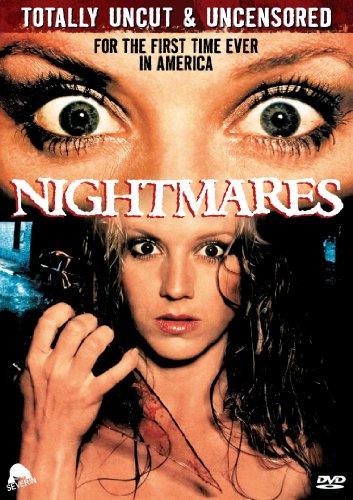
Ann Gentry (Anjanette Comer) is a social worker with a new case, one that she specifically sought. She has been assigned to the Wadsworth family. It consists of a terrifying matriarch (Ruth Roman), sexpot daughters Germaine (Marianna Hill) and Alba (Suzanne Zenor), and Baby (David Mooney, credited as David Manzy), a grown man with, apparently, the mental development of an infant. But Ann suspects Baby is capable of more, and that there is something fundamentally wrong going on at the Wadsworth residence. The Wadsworths, meanwhile, do not take kindly to Ann’s prying, and will stop at nothing to preserve their way of life.

In 2007, writer-directors Jaume Balaguero and Paco Plaza created [REC], a truly frightening horror film. Considering their subject matter is so familiar to audiences it proved a major challenge not to fall into clichés. Somehow, against all odds, [REC] remained fresh by blending the elements so well… nasty contagion and fast zombies ala 28 Days Later captured in documentary-syle videography made famous by The Blair Witch Project. Add likable lead characters, natural dialog, horrific gore and scream-at-the-screen suspense; sprinkle in clues of a disturbing spiritual origin to the mysterious virus and you end up with one of the scariest and most effective additions to both the zombie and “found footage” horror sub-genres.

The third BloodRayne film (and second with Nastassia Malthe in the title role) sees the titular dhampir slicing up Nazis, and so the chronology of the third film rejoins that of the first game. During a raid on a death camp train, Rayne accidentally infects a Commandant Michael Paré. Becoming a dhampir himself (a human/vampire hybrid), he and Mengele-figure Clint Howard (because who else are you going to cast as a Nazi scientist other than Clint Howard?) plan to use Rayne’s blood to grant Hitler immortality.

A mockumentary is a piece of satirical entertainment that is shot like a documentary except it is fictitious and never really happened. Like my first marriage, HEYOOOO! (okay, not really) They can be funny or serious but they are often shot to be of the former. Sometimes, they can be pretty interesting or funny but more often than not, they tend to be just like most documentaries. Boring, pointless and liable to cure insomnia. We shall proceed to investigate Brother’s Justice which mocks movie making.

I’ve seen some dysfunctional families on television over the years. Haven’t we all? It’s fun to laugh at someone else’s flaws. Along comes Showtime, and it’s rather hard to classify the series The United States Of Tara. This one takes dysfunction to a whole new level. Tara (Collette) suffers from multiple-personality disorder. Laughing yet? She has managed to control the problem by using medications and attending frequent therapy sessions. But the medication is sapping her creative ability.

I’ve got to admit that for a long time, Four Weddings and a Funeral was in a category of movies that I had no intention or curiosity to see because of the title, the cast and the story. Hugh Grant was a significant step down towards the emasculation of man, where we start wearing large sweaters, hang out in pseudo-Starbucks coffee shops and talk about what happened on American Idol or some lame thing along those lines.

I’ve got to admit that for a long time, Four Weddings and a Funeral was in a category of movies that I had no intention or curiosity to see because of the title, the cast and the story. Hugh Grant was a significant step down towards the emasculation of man, where we start wearing large sweaters, hang out in pseudo-Starbucks coffee shops and talk about what happened on American Idol or some lame thing along those lines.

Renée Zellweger is Jane, a former country singer who has lost the will to live since an accident left her in a wheelchair. Forest Whitaker is Joey, who can talk to angels and ghosts since he witnessed the death by fire of his family. These two wounded souls bond and bicker, and when Joey finds a letter from Jane’s son, whom she gave up for adoption years ago, he decides that she must see him.

Rango (Johnny Depp) is a chameleon with an enormous imagination. In his terrarium, he has developed a social network with inanimate objects that would be the envy of Castaway’s Tom Hanks. He essentially lives inside his head, but then reality (perhaps – the film maintains a certain ambiguity here) suddenly intervenes and he finds himself cast from his safe, hermetic world. Marooned in the desert, he arrives in the town of Dirt, where his inclination for the dramatic has him claiming to be a sharp-shooting, quick-drawing hero.

“Look, you got what you wanted, I'm officially out of control.”

Based loosely on (Executive Producer) Mark Walberg’s meteoric rise to fame, Entourage has always been a male bonding fantasy; it plays like a boys-will-be-boys version of Sex in the City. Following Vincent Chase (Adrian Grenier) and his posse’s misadventures through the decadent lifestyles of the hyper-rich and fabulously famous carried with it a certain insider’s credibility and made for fun, if not slightly debauched TV voyeurism.