If you don’t already know and love the format, you will be inclined – and well advised – to stay far away from Jackass 3. For some oversensitive souls, the sight of adult males getting smacked, slugged, stomped, shocked, slimed, kicked, catapulted and covered with excrement is simply unappealing. I know, sissies, right? But if you relish the notion of seeing men take abuse that makes them moan, bleed and barf, then the third and final (please, Lord) pseudo-documentary in the series is a guaranteed gross-out of a maximum degree. Heck, if you’re lucky, you might even toss your cookies as violently as some of the movie participants themselves.

Johnny Knoxville, the only real actor among these delinquents (he was excellent in The Ringer, A Dirty Shame and Grand Theft Parsons), demeans himself once again, presumably for cash, and possibly because he knows that by turning 40 on March 11, he knows darn well that he better not let himself be run over by a buffalo or crushed by a professional linebacker ever again. And ringleader Knoxville takes the gentlest bashings in the bunch. Experienced victims Bam Margera, Ryan Dunn and Steve-O go through ordeals that are designed to make the audience cringe and the Jackass gang guffaw like drunken donkeys. (There is a real donkey in the film, by the way. It gets the honor of repeatedly kicking one of the guys in the crotch.)

There have been very few films of this stature that I have not had the chance to see over the years. Even if I don't think I might enjoy a particular movie, there are those titles that have become so well known or a part of the culture that one feels a sense of obligation to take in. For years The Last Tango In Paris was one of those films for me. Thanks to a new Blu-ray release by MGM, I was finally afforded the opportunity.

The plot of the film is almost irrelevant. It's not about a story at all. Marlon Brando plays a man who has just lost his wife to suicide. But we quickly learn that he had lost her really long before she took her life with a razor blade. She was having an affair with a man who lived in the hotel they ran. It was an odd affair. She insisted that her lover take on the habits and appearances of the husband she was running away from. She required that he wear an identical robe and drink the same booze, or at least have the bottle on hand. She went so far as to tear the wallpaper from the bedroom walls with her fingernails so that the room would appear as hers. One gets the impression that this would have been the more compelling story. Alas, that is not meant to be.

"This is Fairfax County in the state of Virginia. I was born here. It's peaceful, beautiful, and a long long way from Wyoming; beautiful, too, in its special way. Vast, proud and lonely; it's my country now, Wyoming. But not exactly a peaceful one."

"A child born into a world with helicopters lives in a world where the miraculous is commonplace, a world where doctors swoop down from the sky..."

That's the world of the helicopter. Straight Up: Helicopters In Action was an IMAX feature created by the Smithsonian for the Air And Space Museum IMAX theater. A quick check of the museum's website reveals that the film is no longer part of the schedule. And, while this wasn't one of the bigger name IMAX films to make the circuit, it provides plenty of the exhilarating imagery that has made the format famous.

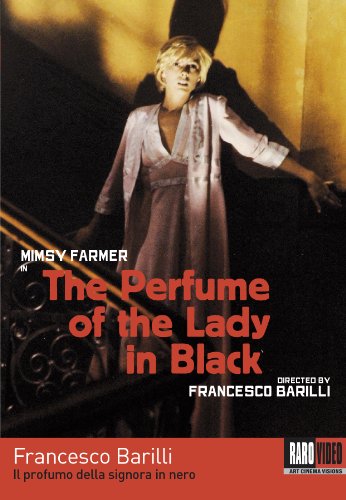
Monica Guerritore is an unnamed wealthy socialite (all of the characters in the film are unnamed) who catches her husband in flagrante with another woman. To add insult to injury this woman is a TV personality of a sort unknown in North America, but common in France and Italy – an attractive woman whose only job is to let you know what's coming up next – and, rightly or wrongly, can represent, as is the case here, a certain form of empty glamour.

At any rate, Guerritore, sexually humiliated, heads off on the road with no particular destination in mind. She encounters exuberant cartoonist Gabriele Lavia (also the director of the film, but best known on these shores for his roles in Beyond the Door and Dario Argento's Deep Red and Inferno). The two begin an affair that rapidly spirals out of control, crossing all the boundaries of passion (that's the idea anyway) and veering rapidly towards self-destruction. All in about twelve hours!

I must admit, I came at The Storm Warriors with very little knowledge of its creators, the Pang brothers, but as someone who appreciates Asian cinema, I felt that I had the sensibilities to enjoy the film. The movie deals with a Japanese invasion of China by a dread warlord named Lord Godless. As the film opens, we learn from an almost impossible to follow title sequence, he has captured China’s mightiest heroes and is preparing to execute them. Being invincible, Lord Godless is almost assured of victory, unless two of the aforementioned Chinese heroes, Wind and Cloud, can combine their power to defeat him and his army.

We learn all this and much more in the first two minutes of the movie.

"Good morning, young Prince."

The forest is alive with the news. It travels from tree to tree, from animal to animal. A new prince has been born, and the creatures of the woods gather to welcome the young fawn. His name is Bambi, and he soon wins the hearts of the entire population of the forest. From his first attempts to stand on his wobbly legs to his discovery of the things that surround him in this brand new world, Bambi takes us on an emotional journey through the circle of life.

"Detroit ain't so bad, in fact it's kind of charming."

Director Benny Boom decided to move the S.W.A.T. franchise away from L.A. and bring it to Detroit. But he's not going to be winning any accolades from the Detroit Chamber of Commerce anytime soon. He openly admits that he picked the city because he was attempting to create an environment with a lot of decay. He jokes that by filming in Detroit there was no need to create those conditions because they were free for the taking in the city. The main character begins the film by insulting the city. It'll be interesting to see if Boom is invited back for a future project.

It's my great pleasure to welcome the latest addition to the Upcomingdiscs family.

Bob Ross was the Tampa Tribune's film critic from 1985 to 2007. Before that, he worked as a proofreader, reporter and pop music critic. He also helped manage the first video store in Tampa in the early 1980s. A Florida resident since 1956, he graduated from Ocala High School and Eckerd College, where he majored in political science. A lifelong movie buff, he has published more than 4,000 reviews for the Tribune in addition to writing two weekly video columns and hundreds of entertainment-related feature stories. Now semi-retired, Bob is still a member of the Florida Film Critics Circle. He's also a Facebook addict, easily reached at www.facebook.com/bob.ross1.

There are two ways to address a familiar film plot. The easy route, of course, is to dismiss it as recycled fluff, reciting the similarities to its predecessors. The more discerning course is to give the newcomer a chance to prove itself as a creative variation on the theme. That’s how you can give Due Date its due. In the first few minutes, you’ll notice the script verges on carbon-copying Trains, Planes and Automobiles, the 1987 John Hughes hit about two utterly mismatched men on a comically catastrophic cross-country road trip.

Check the parallels: One of the guys is an uptight, super-straight, slightly pompous type who has a powerful reason to get home by a certain time. In the original, it’s Steve Martin struggling to make it for Thanksgiving. In the update, we get Robert Downey Jr. , desperate to witness the imminent birth of his first child. Each man’s plans are shattered by a walking disaster – a free-spirited jinx whose apparent sincerity is overshadowed by an uncanny ability to turn any given situation into pain, inconvenience and humiliation.