
“This film is dedicated to the victims of war violence in El Salvador, and elsewhere throughout Latin America and the rest of the world.” – Ernesto Melara
Had to do a bit of research for this one. There is quite a bit of historical importance with this film, and I wanted to make sure that I could speak on it intelligibly. Fireflies at El Mozote is deeply rooted in the historical reality of the 1981 El Mozote massacre, the systemic, tragic killing of hundreds of civilians (primarily women and children) by the Salvadoran Armed Forces over a 48-hour period starting December 11, 1981. This marks Ernesto Melara’s feature film directorial debut. The film stands as a deeply personal and significant milestone in his career, as it was his only feature-length directing credit before his death. Melara, a U.S.-Salvadoran filmmaker, began developing the project years prior, drafting a script based on the infamous 1981 massacre. Through his handling of the writing, directing, and cinematography, the project became a closely-authored independent production. My first impression was that the film would be a strict depiction of the events based on survivor accounts, a borderline documentary in all likelihood. What I got was so much more.
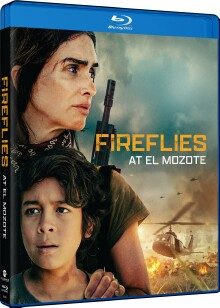
The film’s narrative followed a 10-year-old José Guevara (played by Mateo Honles), who survived the horrific slaughter of his village by government forces during the Salvadoran Civil War, tracking his subsequent quest for justice alongside a rebel group and an American journalist. With the massacre serving as the film’s catalyst and through the eyes of our young protagonist, the bulk of the film was centered on the aftermath, such as Jose being discovered by and being taken in by guerrilla fighters. These rebels operate Radio Venceremos, an underground transmitter used to broadcast messages exposing the government’s human rights atrocities to the oppressed population. Within the camp, José forms a surrogate bond with Alma (Paz Vega), a protective rebel fighter who has lost her own son. Their bond and shared experiences are significant for both characters’ development, as Alma fiercely objected to Jose’s involvement in the cause, not wanting to put a child in danger. However, José, traumatized and consumed by a desire for vengeance, stubbornly demanded to fight back. The rebel commander, Aurelio (Juan Pablo Shuk), eventually yields to the boy’s persistence, leveraging his thirst for retribution.
Parallel to the jungle warfare, the narrative tracks an American journalist named Sarah (Mena Suvari) and a character named Randall Walker (Jeff Fahey). The guerrillas actively collaborate with international press to expose proof of the genocide to the global stage. This incenses Colonel Reynaldo Montenegro (Yancey Arias)—a character heavily based on the real-world historical figure Colonel Domingo Monterrosa. In an effort to destroy the radio responder once and for all, Montenegro orchestrates relentless scorched-earth raids to hunt down the resistance.
Based on my research, the film shifted away from historical survivor accounts (such as that of the real-world survivor Rufina Amaya) to craft a fictionalized parable about child soldiers. José plays a pivotal, active role in this parable, with the film’s sobering conclusion, which showcased the loss of innocence and framed both the army and the guerrilla leadership as two sides of the same coin. And while Jose acted as the film’s emotional anchor, Paz Vega’s Alma was its moral conscience, as the one that initially opposed José’s involvement and tried to shield him from violence. Paz Vega was among the familiar faces (the others being Mena Suvari, Jeff Fahey, and Yancey Arias), and it was her performance that I resonated with the most. There was a duality to her role, a push and pull, because she wanted to do what was in Jose’s best interest, but she herself was dedicated member of the guerilla faction. This resulted in a great deal of tension for her character, which I found to be very vital for the portrayal.
The film ends on a grim, reflective note rather than a triumphant one that fully showcased the loss of innocence and an epiphany for our protagonist. And in my opinion, I do not believe that the film could have ended in any other way. Given the tragic historical event that the film was bringing to light, there was never going to be any prospect of a happy conclusion. And while there may have been some deviation from reality, I do believe that what was showcased had truth behind it.