Posts by Archive Authors

When last I left you, the viewer, I was in the midst of frantically typing “Yo” so that I could be a participant of the chat with Warner Brothers Home Video, to ask about any coming next-gen titles from the studio. What we found out was fairly illuminating. The Warner hits L.A. Confidential, Poltergeist, Deliverance and the Kenneth Branagh version of Hamlet will all appear on HD-DVD and Blu-ray this year, with Heat and The Music Man to come out in 2008. They also reconfirmed ...hat other Stanley Kubrick films, along with Blade Runner, should be on their way out as well.

In other, perhaps tastier Blu-Ray news, Bill Hunt managed to get a quick look at a large though not complete look at the Universal titles on HD-DVD for most of the coming year. Titles include Midnight Run, The Big Lebowski, Lost in Translation, Mallrats, Being John Malkovich, Born on the Fourth of July and The Bourne Identity. How much of a dent Universal makes remains to be seen, but at least they finally may have some activity worth talking about.

On its surface, Coastlines is a modestly produced film that was written and directed by Victor Nunez (Ulee's Gold), telling the story about a guy who was just released from prison for dealing drugs, but bites the prison bullet for the favor of a friend. He comes out and is looking for the financial windfall promised him, but also tries to get back in touch with his roots. On a deeper level, Coastlines, well, doesn't go that much deeper I guess.

The ex-con in question is Sonny (Timothy Olyphant, Deadwood), who quickly reunites with the criminal element of his past in Eddie and Fred Vance (played by Josh Lucas, Hulk, and William Forsythe, The Rock, respectively), who also give him the opportunity to get back into business for himself. He finds a bit of a conflict in this, because he is close friends with Dave (Josh Brolin, Into the Blue), who happens to be a Sheriff in town. Sonny also has feelings for Dave's wife Ann (Sarah Wynter, Species II).

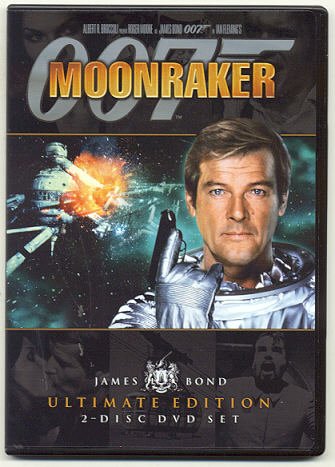
If you want another reason to hate George Lucas, it's that James Bond film producer Albert Broccoli decided to fast track the production of Moonraker ahead of For Your Eyes Only to capitalize on the proverbial Star Wars effect that was occurring through box offices worldwide. However in this one, written by Christopher Wood, who wrote the epic film Remo Williams: The Adventure Begins and directed by Lewis Gilbert (who had just done The Spy Who Loved Me), Roger Moore rides a shuttle into space and takes the dynamic of the film with it.

In this Bond film, Moore's 4th and the franchise's 11th, James tries to find out who is terrorizing the planet using a soon to be astronaut vehicle called the space shuttle and a space station to do it. So James gets a chance to test out the means of NASA, but not before going through the spacious locales of Rio de Janiero and France, eluding the harm and capture of Jaws (Richard Kiel, Billy Madison), who reprised his role from The Spy Who Loved Me due to popular demand. The villain in this film is Hugo Drax (Michael Lonsdale, Munich), who may be soft-spoken, but his plans to mass murder the population are far from rational.

Poor Roger Moore. He does get a bit of a bum rap when it comes to James Bond movies, but I think that in terms of the character, he actually fits the jacket, Walther PPK and shaken martinis fairly well, but the problem for his work was that it faced a lot of new technology, and thus was subjected to a lot of ridicule as a result. New things like walking in space and the computer revolution were given a tongue in cheek look, and in between this and the visual effects simply not catching up to the imaginations, then sure, some of the films look and feel a bit silly.

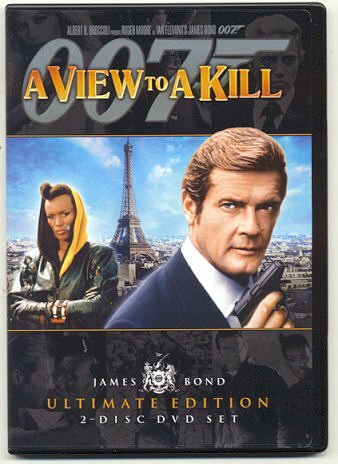
Take the case of A View to a Kill. The film was Moore's seventh (and last) as Bond, and he already had one foot out the door when he made Octopussy. But in this one, Moore may have stuck around a little too long. By my math, he was approaching 60 at the time the film was released to theaters, and seeing him with a Bond girl like Stacey Sutton (Tanya Roberts, Sheena) really wasn't all that believable anymore. The story itself surrounded a microchip that was purchased by a fanatic named Max Zorin (Christopher Walken, The Deer Hunter), who apparently was genetically enhanced somehow or was a descendant of a elite German during World War II.

Posted in Disc Reviews by Joshua Noyes

Two guys who were used to drinking beer for fun suddenly become fierce competitors in the “Beer Drinking Olympics” in Germany. Todd Wolfhouse (Erik Stolhanske) and his brother Jan (Paul Soter) are from a German-American family but have never visited the Old Country until their grandfather dies and they fly to Germany to scatter his ashes. Todd and Jan arrive during the annual Oktoberfest celebration and accidentally discover a secret competition, "Beerfest," in which the world's leading beer guzzlers determine who ca... handle the most brew during several days of heated drinking games. Todd and Jan are no lightweights when it comes to downing brew and offer to compete, but the German branch of the family, the Von Wolfhausens, hesitate at their desire to enter the contest and inform them no mere Americans stand a chance winning the Beerfest honors. Determined to prove Americans can drink beer with the best of them, Todd and Jan bring their drinking buddies to Germany to defend America;s honor and prove to their German relatives that they too can drink as well as anybody.

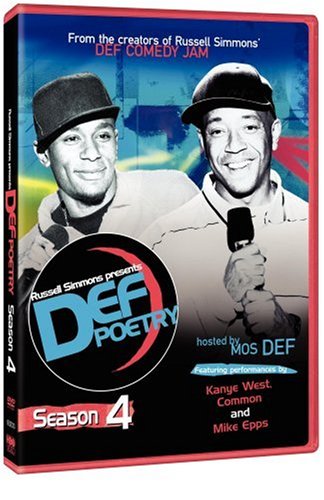
In the continuing need for media mogul Russell Simmons to produce an HBO show and put the word "Def" in front of it, musician Mos Def approached Simmons with the opportunity to present a weekly show for urban spoken word artists to show off their wares. And surprisingly, not only has the show survived, but has thrived into a fourth season that has come out on DVD, with ten episodes in all, split over two discs.

The layout of the show is pretty straightforward, as Mos Def introduces the beginning and end of the shows and the acts in between. The latter is mostly done on a voiceover, however he does introduce the acts on stage from time to time. The show usually ends with a more recognizable name at the end, along with some words of wisdom by Simmons himself. And while most of the acts appear to be people who spend their time on anti-Israel message boards and in Starbucks whipping up vente lattes, the familiar names are fairly eclectic. Among the people you'll recognize are Ani Defranco, Kanye West, Ruby Dee and KRS One.

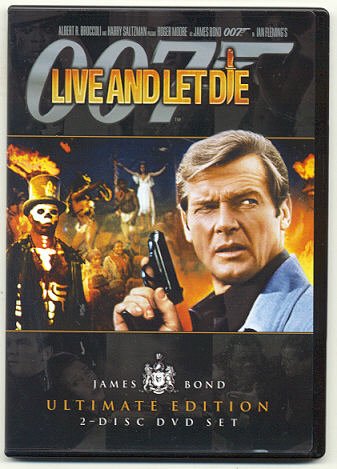
As a relatively topical fan of the James Bond franchise (though not so topical that I'd buy all of the films on DVD), I had a cursory knowledge of the actors who played Bond and the times that they had been cast. Little did I know however that by the time Roger Moore had signed onto the role in Live and Let Die that this was the third attempt to bring him aboard, and that maybe producers Harry Saltzman and Albert Broccoli were hoping that the third attempt brought the proverbial charm. Moore had been approached for the role as early as the Dr. No days, but was in the midst of doing The Saint television show, and Connery was chosen. Connery left and the opportunity came to Moore again, however he was not available and George Lazenby came on to do On Her Majesty's Secret Service. He left, Connery did one more and then finally, Moore was available to take the reigns.

And he came aboard to a Bond film that is probably his best and one of the best Bond films in the franchise. In Live and Let Die, James has to go to America (and subsequently, the Caribbean) to research the deaths of several British agents. He goes into Harlem to try and find out the whereabouts and criminal motivations of a mysterious boss named Mr. Big, and eventually makes his way to a fictional island called San Monique, where a United Nations delegate named Kananga (Yaphet Kotto, Homicide: Life on the Street) is waiting for his arrival, and using the results from a tarot card reader named Solitaire (a very young Jane Seymour, Dr. Quinn, Medicine Woman), he plans for the demise of Bond.

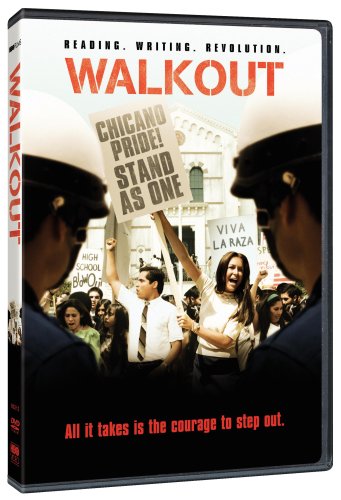
I don't mean for this to be a joke, but when Paul Mooney recently said that he was glad that Hispanics got their (and I'm paraphrasing here) "African-American wake up call" in the midst of the illegal immigration debate of 2006, the problem wasn't whether or not the Hispanics were being treated fairly or not. The problem was that this discussion has been going on in some manner or fashion for almost four decades now without a large-scale epiphany that required action. However back in 1968, there was some action (which led to the coordinated efforts of students to walk out of their classes in Los Angeles High schools as a protest of the conditions there), and Walkout helps to tell the tale.

In this film that was directed by Edward James Olmos (Miami Vice) and produced by Moctesuma Esparza (who was one of the organizers of the protest), the film details the activities of Paula Crisostomo (Alexa Vega, Spy Kids) who is a pretty good achiever in school who hangs out with friends like Bobby (Efren Ramirez, Napoleon Dynamite). She has an influential teacher in Sal Castro (Michael Pena, World Trade Center) who helps inspire her to take action. When latino kids are punished for speaking Spanish in class, they are disciplined for it and the manner it's done is offensive. When latino kids are forbidden to use bathrooms during lunch because the inside of school is locked, they're forced to urinate outside in the courtyard. And even as she sees these things, she's dissuaded by her father Panfilo (Yancey Arias, Live Free or Die Hard). However in an era where Bobby Kennedy and Martin Luther King are touchstones for action, Paula thinks the same thing should be done, lawfully, to protest the conditions.

There's definitely no doubt in my mind that the Superman films, particularly the first two, will always be remembered as excellent pieces of film not only because they introduced the world to the late, great Christopher Reeve but also because they're simply great films. When word first came around that Superman director Richard Donner had filmed an ENTIRE version of the 2nd film only to have it scrapped at the last second, the interest of fans immediately piqued. What was so risqué about the Donner cut that made Warner Brothers basically shelve the film for some 20+ years? Well thanks to renewed interest in the Superman stories via Superman Returns, Warner has finally decided to let fans see for themselves what Donner's visionary ideas were all about by showing us his cut of Superman II.

A bit of back-story for those of you interested. Originally hired to film both Superman and Superman II back-to-back, Donner was soon fired by the Salkinds over a stupid dispute they were having with actual Superman II director Richard Lester over some films he shot for them. Instead of actually working out an agreement between all parties, the Salkinds decided to fire Donner and bring in Lester to film the story. The end result is a film that's good in its own right but seemingly was missing a big part that made the original so great. Laughs seemed force, the romance seemed out of place, and the climatic battles seemed kind of dull in retrospect.

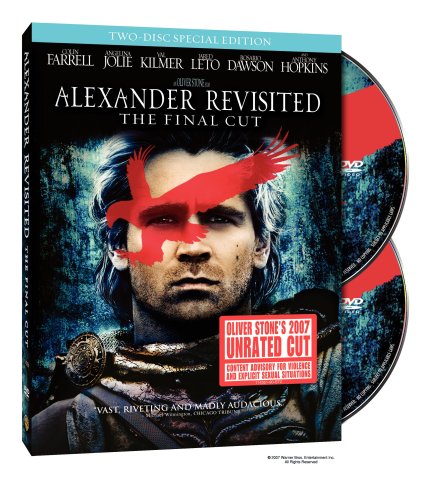
The return of the historical epic hit Hollywood hard in 2005/2006. Troy, Kingdom of Heaven, King Arthur and the two Colin Farrell vehicles, The New World and Alexander, all hit theaters pretty close to each other... and all flopped. The basic complaint was the same about all these films; they were too long, the pace was too slow and they were hard to follow. As much as these huge pictures cost, the studios quickly looked to the DVD cash cow to try to recoup some of the production co...ts. The first to hit was King Arthur, which was released in the theatrical PG-13 format (full screen only), and the director's preferred extended unrated cut (presented in widescreen). Antione Fuqua's fighting with the studio over the final cut of the film was widely known, so it was nice to get to see the director's original, more violent, vision. Audiences were pleased too, as this new cut was widely regarded as superior to the original.

A very similar thing happened with Ridley Scott's Kingdom of Heaven. The theatrical release was regarded as average, as it was on DVD. When Scott re-cut the film and released it as a four-disc special edition, however, consumers and critics went wild, declaring this new extended cut far superior to the original theatrical version. In fact, this new vision was named the DVD of the year last year by many critics. Scott has since said that this new cut represented more of his original vision for the story, but that the studio feared that it was far too long for theater audiences. (Remember, these are the same audiences who had complained that the film was too long to begin with, proving that filmmakers' would be best served creating their films on their own terms, without the input of the general public.)