Posts by Archive Authors

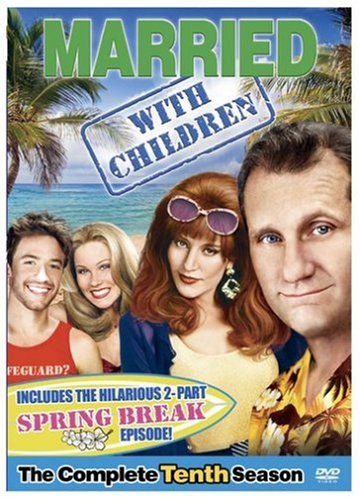
The irreverant, politically incorrect Married With Children returns to DVD, this time in its fifth season, and I first want to say, "It's about time." How long has it been? I've lost count. All I know is, I better not have to wait this long again. Al, Peg, Kelly, and Bud, return to torment the newly divorced Marcy Rhoades and any other poor sap, who gets in their way. In contrast, life dishes out enough misery to the Bundys to keep us all happy for a very long time. It's a funny dynamic, which the show plays t... the extreme... Bundys hate life, and life hates Bundys. I could watch the two struggle all day (with the Bundys always... well, nearly always... coming out on bottom), and never get tired of it. In this particular collection, we get more of the tragedy and the triumph with some of the greatest episodes heaped atop each other, one after another.

Follow a disgraced Al Bundy as he steps into the role of softball hero and gives one of the most stirring speeches of the series in "Unnatural" (Highlight: "In closing, I just want to say, 'I hate you all... and I thank only me for this accomplishment.") Join Kelly as she moves in to her first apartment and kindles Al and Peg's love in "One Down, Two to Go." Tia Carrere also finds out how painful it can be to cross a Bundy in "Kelly Bounces Back." And Al must face the demons of his football past in the classic "All Night Security Dude." We also get the first appearance of Weenie Tots and Jefferson D'Arcy. With 25 episodes of Bundy classics, being miserable has never been this fun.

The sad thing about building a strong acting career is one usually has to take on roles better forgotten to get to the pinnacle of success. I'm sure Johnny Depp still has the occasional nightmare of being associated with Private Resort (on an artistic level anyway); and he is about to be reminded of this forgotten-with-good-reason teen sex comedy as Sony debuts it in the digital format just in time for summer. The release Sony offers bills Depp as the main star, and while his role is substantial, the film is m...re of a vehicle for Rob Morrow, and a paycheck for Hector Elizondo. You even get to see a pre-"Diceman" Andrew Clay playing his typical Brooklyn street tough self. I will say this: next time you feel the need to attack abysmal teen sex comedies of today, take this as Exhibit A that these foul, odorous wastes of celluloid are actually getting better... even at their worst.

Private Resort takes place in Florida during Spring Break. There are enough misunderstandings and ambiguous hijinx to fuel an entire season of Three's Company, but none are as well executed in the environment of this film. Depp and Morrow are "two sex-starved teens" spending their spring break at a posh Florida resort, where there is but one order of business... getting laid. Unfortunately (for them and us), they must contend with a ruthless jewel thief (Elizondo), an eccentric barber, a villainous security guard, and a stereotypically obnoxious jock before that can happen. Will they or won't they? It doesn't matter. I guarantee you it will not be a concern as this 82-minute crap fest drones on. Follow Depp's career post-superstardom. This work from his early days has nothing to offer in comparison.

War movies, in my opinion, are one of the rarities in film, where the most recent pics are usually the best ones. I need only cite films such as Full Metal Jacket, We Were Soldiers, and Saving Private Ryan to argue my cause effectively. But that doesn't mean all of the older ones were bad. Most were because they took more of a silly ra-ra viewpoint in relation to the reality of war. They didn't show the nasty details because, in many ways, they were recruiting tools. But Decision Before Dawn> was one earlier work, which took chances with its dramatization. This 1951 film refuses to jump on any bandwagons, instead telling a captivating, and sometimes tragic, story about a strange kind of hero... one that comes not from within our own ranks, but from those of our World War II enemies. In fact, the main character of Decision Before Dawn is a captured Nazi soldier, who makes the decision to spy for the U.S. army - not for freedom, but redemption.

It's no wonder a film such as this was nominated for the 1951 Best Picture - and it's also no surprise it didn't win. This type of subject matter has never been able to avoid controversy, and the Academy hates to honor controversy. However, director Anatole Litvak's handling of the George Howe novel Call It Treason makes for an exciting and tasteful motion picture that was sure to win over audiences - even in its time - with the tale of Lieutenant Rennick, a German POW, who has agreed to go back to his home country and betray his old side to the Allies. Tension builds as Litvak plays with the possibilities of trust. Neither the Allies nor the Nazis know what to think of Rennick, and for a time, neither do we. But as the film progresses, Rennick shows there may be more to his decision of assisting the Allies than simply the proverbial "get out of jail free" card. He's one well-drawn character at the center of an important motion picture, which dared to paint an uglier face on war, and call in to question the line between treason and heroism.

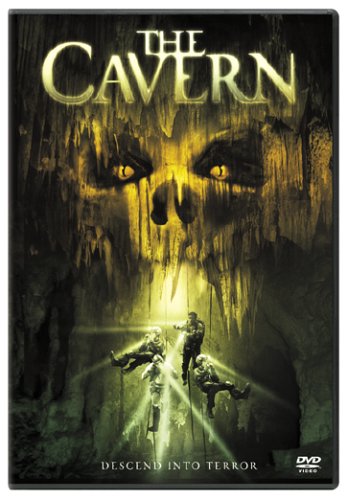
At the end of the day, The Cavern is an old-school monster movie (of sorts) with some really annoying habits. The shaky camera technique can only take one so far. When a filmmaker tries to use it in place of suspense, it grows old very fast. And when this crew of cave divers enter the mysterious crawlspace of the film's title, writer-director Olatunde Osunsanmi goes hog wild with every gimmick angle he can think of. The result of such activity is the remnant of a good horror film, which builds mood nicely with...some gritty settings, but quickly descends into shoddiness rather than terror. The plot centers on a cave in the deserts of Central Asia, where a team of explorers coping with a tragedy have reunited to explore a neglected passage deep in the earth's crust. Little do they know, someone - or something - has beaten them to the site, and is now intent on keeping the finding for itself in any violent way possible.

Some of the best films are spawned from the simplest of ideas. And The Cavern has a cast, which does its best to capitalize on such simplicity. Despite the film's budget and obscurity, these performers give it their all, and have nothing to be ashamed of; because, for all the film's failures, they keep it from turning into a laughable college film class production from some obscure midwestern university. They do so by actually knowing how to act, and taking the content seriously... even if it doesn't return the favor. Osunsanmi is the real blame for this missed opportunity. He tries so hard to flex his directorial muscles the entire 81 minutes comes across as numbing and disorienting. And while 81 minutes isn't very long in normal film terms, it seems like a lifetime when you are using every moment to try and figure out what the heck is going on.

Synopsis

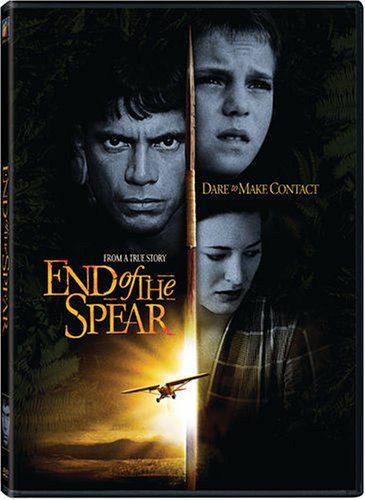
The Waodani tribe of the Amazon is, we are told, so violent that they have almost hunted each other to extinction. Oops. Anyway, in 1956 a group of missionaries and their families arrive to live with the Waodani and do the missionary thing. A misunderstanding leads to the missionaries being slaughtered, but their wives decide to stay. The film follows the journey of the son of one of the five men, and the whole thing is all about forgiveness.

Synopsis

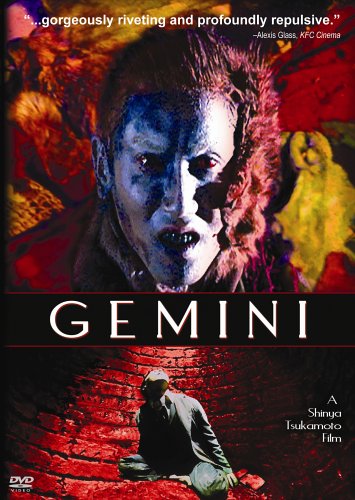
Masahiro Motoki plays a well-to-do doctor, very much concerned with class difference, eager to distance himself from slum-dwellers, whom he regards as barely human. He is deeply in love with his fiancée, a woman suffering from amnesia. His life collapses in chaos when his parents are murdered by a prowler, who then throws him down a dry well. This prowler turns out to be his twin, who proceeds to take over his identity.

Synopsis

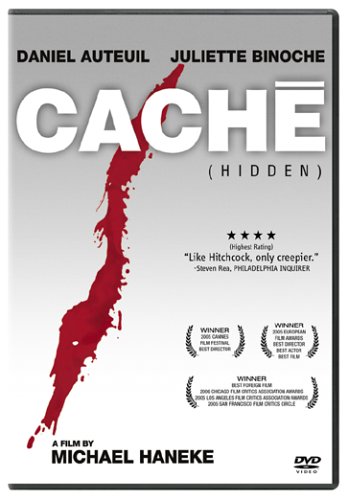
Daniel Auteuil, host of a literary TV talk show, and his wife Juliette Binoche begin receiving strange videotapes. These are hours-long recordings of the front of their house. Nothing else. No explanations. Then child-like but disturbing drawings start to accompany the tapes, and the recordings begin to be of other locations, suggesting that all of this has something to do with Auteuil’s distant past.

The world of politically charged films has certainly grown in the past few years. Films like Farhenheit 911 have seen big success, while other films like Rupert Murdoch’s OutFoxed have seen more of a critical success. Both of these films had extreme media attention, one obviously more than the other, prior and after their releases. Both asked questions and demanded answers to topics and issues we, as people, wondered about but never really asked about as a simple person can’t really enact a high success...rate in terms of results. However, if you have a name like Michael Moore or Rupert Murdoch attached to the bill, people will probably pay attention. A similar note is given to the recent political thriller Syriana starring George Clooney. Even though Syriana had actors like Matt Damon and George Clooney attached to the bill, would this be enough to make the film’s questions seem important enough to make an impact?

Syriana, to sum up the film in three words, is about oil and money. The film begins with one of the Gulf States agreeing to supply the up and coming China with some of its oil. Texas based company Connex, views this deal as a huge defeat. At the exact same time as this deal is happening with Connex, another company, Killen, has signed a deal to drill for oil in Kazakhstan. Connex, obviously, announces an immediate merger with Killen, thus giving them the oil. Wait one second. This sounds pretty familiar doesn’t it? Naturally the Justice Department intervenes and the movie starts to accelerate.

On August 22nd, Sony Pictures Home Entertainment will release Silent Hill in separate Widescreen, Fullscreen, and Blu-Ray releases; all of which will be presented with a Dolby Digital 5.1 (English) audio track. Extras will include an audio commentary (by Director Christophe Gans), deleted/extended scenes, and a six-part production diary documentary.

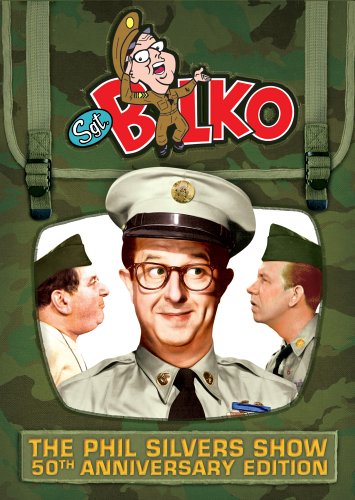
The Phil Silvers Show was groundbreaking for several reasons, but to look at the list of those who appeared on the show during its four season run is to look at a "Who's Who" of television ancestry and history. Allen Melvin played Sam the Butcher on The Brady Bunch, Harvey Lembeck previously appeared in Stalag 17 and his son Michael became an accomplished television director. Joe Ross played one half of the cop team in Car 54, Where Are You? next to a guest star of the show, a guy named Fred Gwynne, who also appeared in a show called The Munsters. Billy Sands went on to appear in McHale's Navy with a friend (and other Silvers show guest star named George Kennedy). Dick Van Dyke even showed up once in a blue moon.

Sometimes with projects like that, the stars in space seem to last longer than the television planet they orbit. But with The Phil Silvers Show and its star of the same name, there was an irreverent comic talent that not only was hilarious in his own right but helped to complement other members of the cast and giving them their chances to shine. Based around the fictional Ernie Bilko and the soldiers stationed on Fort Baxter, Bilko was sharp and a bit of a schemer, and his schemes involving other soldiers were the perfect vehicle to help Silvers offload some prime comedic moments to other actors. With Silvers and his co-creator Nat Hiken, the two managed to put together a show based on their sensibilities and wrote it the way they wanted to.