Posted in: Disc Reviews by Archive Authors on October 28th, 2011
Ken Burns has achieved a rare feat in the world of filmmaking: he makes clean, concise, uncontroversial documentaries and yet has somehow become a household name, or as close as any documentarian can get in this society. It also depends, I suppose, on the ratio your household's television is tuned in to PBS compared to, say, Spike TV. Burns has made his name making huge, sweeping films that take in gigantic aspects of American history and culture, like The Civil War, Jazz, and my personal favourite, Baseball. His latest documentary, which he co-directed with Lynn Novick, ranks right up there with his best work. Prohibition is vast, covering a huge time period in American history, contains tons of detail, and still manages to be focussed, concise, and tremendously entertaining.

The first part, A Nation of Drunkards, starts its story before the Civil War. It sets the scene by painting a picture of a nation obsessed with alcohol. Saloons are such an integral part of the landscape that huge numbers of the working class and immigrant labourers were giving up most of their pay buying liquor. Spousal and child abuse was rampant, and Temperance Unions grew out of the need to protect and shelter women and children from abuse and neglect as much (or more) than they did out of religious zealotry.
Posted in: No Huddle Reviews by Archive Authors on October 25th, 2011
By Natasha Samreny
“Now don't get me wrong, you'll see very many impressive things on this tour. But there are no aliens to be found in Area 51.”
Posted in: No Huddle Reviews by Archive Authors on October 22nd, 2011
By Natasha Samreny
“General, he was stronger than the others. That's why he lasted so long. I don't know why General, but he seems to be getting stronger all the time.”
Posted in: No Huddle Reviews by Archive Authors on October 20th, 2011
Comedians like to use bad words. Late night talk show hosts don’t. They are not supposed to because the people who pay them get very mad at them if they do. Craig Ferguson is a late night talk show host. The person who pays him is David Letterman, who is paid by CBS. So when Craig says a bad word on CBS they put a flag over his mouth and a recording of ooh-la-la to cover up the offending vocabulary.
It is harder and harder to understand the standards and practices that deal with offensive material on the old boob tube. Over the years attempts have been made to mold these rules to conform to community standards. That is where the problem comes in. What are community standards anymore? They certainly are not what they were 20 years ago…or 50 years ago. Yet sometimes attempts are made to take a stand. Just recently a national group took credit for the cancellation of the NBC show The Playboy Club. Was it any worse than dozens of other shows on the air? No, probably not, but it was an easy target. Parents have always hated Hugh Hefner for reducing the moral standards of the country, so it was time for payback.
Posted in: No Huddle Reviews by Archive Authors on October 18th, 2011
The film isn’t billed as Kevin Smith’s Red State. It’s just Red State, but Kevin Smith is an independent counterculture auteur diva so to speak. It’s pretty widely thought that Kevin Smith has a cool and honest and don’t-give-a-crap attitude. Kevin Smith is a brand, but he knows he’s not a mainstream big blockbuster brand. He is indie.
I think of Quentin Tarentino and Kevin Smith as similar. They both are super-smart geeks who educated themselves and saved themselves due to their writing. They both embrace their roots and stick close to what they grew up on. They both are names or brands or whatever name best describes an independent force. They make different kinds of films, but they are kindred spirits. They do things from the gut. They wear their heart on their sleeve. They do what they do for people who are like they are. Geeks.
Posted in: No Huddle Reviews by Archive Authors on October 15th, 2011
By Natasha Samreny
South of Heaven carried far too much violence and gore for me to look past. Maybe enjoy isn't the best word, but I had a hard time stomaching and therefore appreciating the film fully because of its nature. If you're not a fan of such horror movies, even with beautiful design, cinematography and acting elements, don't watch this.
Posted in: No Huddle Reviews by Archive Authors on October 13th, 2011
By Natasha Samreny
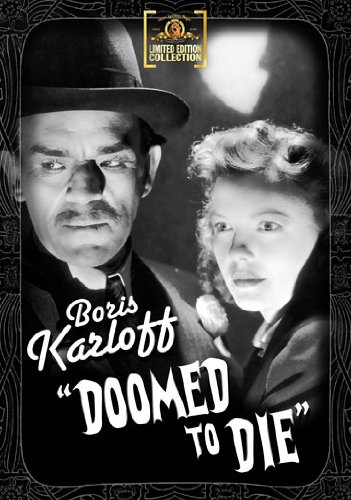
In a world where people still got land-line phone calls in restaurants and $1 cocktails were considered expensive, Boris Karloff is detective James Lee Wong. Better known as Mr. Wong, the Chinese sleuth is based on author Charles Wiley's mystery series character. In Doomed to Die, Wong works the case of a shipping magnate's mysterious death.
Posted in: No Huddle Reviews by Archive Authors on October 13th, 2011
By Natasha Samreny
Terrorist. Revolutionary. Activist. Each word is charged with emotional and political meaning. Advocate. Leader. Liberator. How could they all refer to the same person? This documentary tells the story of the Earth Liberation Front (ELF), an international movement dedicated to oppose and expose profit-driven practices that destroy the environment. By the turn of the 21st century, the FBI said it considered the ELF the major domestic terror in the United States.
Posted in: The Reel World by Archive Authors on October 12th, 2011
Written by John Delia
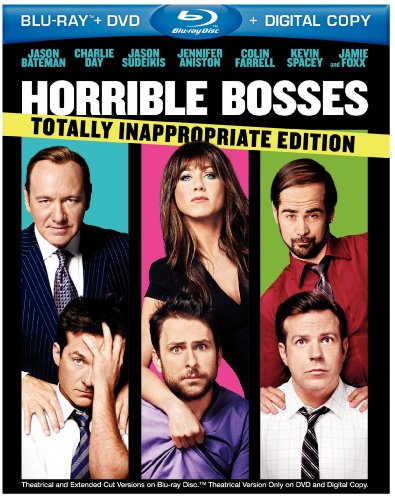
Most everyone would like to be the boss, but in most instances there’s only one. I hope my readers don’t have a boss as despicable as the ones in Horrible Bosses, a nicely funny comedy directed by Seth Gordon. Filled with a lot of hilarious situations, this film is perfect for mature adults. If you are not offended by sexuality and a lot of crude language, then run to see Horrible Bosses.
Posted in: No Huddle Reviews by Archive Authors on October 9th, 2011
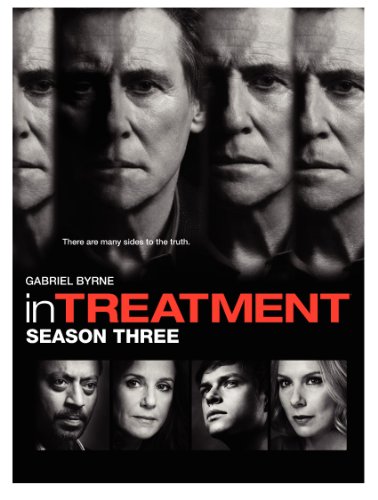
In Treatment is one of HBO’s least flashy and lowest profile series. That doesn’t prevent it from being amazing in many ways. Large parts of America are not used to a show that is essentially two people sitting in a room talking. Those kinds of people are considered to have short attention spans. HBO’s The Sopranos served up the idea of regular therapy sessions, but those shows were enlivened by brutal behavior and gruesome killings. That is no knock on The Sopranos, because it was a great and intellectually complex show. In Treatment is a special case that deserves to be nurtured because it is not flashy or easy. It is uncompromising in its way, and that is a good thing.
Psychotherapy is a mystery to many Americans. It is frequently treated as the butt of a joke, but don’t tell that to the millions of people who suffer countless forms of mental anguish. Of course, the therapy part is still discounted because so many people today are just shuffled drugs to cope. Therapy often just seems like a time-consuming waste. It is a labor-intensive job and, to some extent, it depends on who is doing the labor. How good the therapist is becomes essential. The therapist in In Treatment is very good. but that doesn‘t mean he doesn’t have problems.
Gabriel Byrne is the therapist, and he has his own therapist. This is an essential part of a psychotherapist’s process. He needs to be constantly audited by a colleague. This was a main part of a great Dudley Moore flick called Lovesick. He was a psychiatrist who was so messed up that his frequent therapy sessions were not enough. He also had to frequently talk to the ghost of Sigmund Freud. Freud and Carl Jung are the subject of a new movie by David Croenenberg called A Dangerous Method, which is something that is a long time coming. The work of Freud and Jung are long overdue to be examined by the general public. People like Tom Cruise and other members of Scientology certainly think so. They liken it to voodoo.
So the obvious question is, "Is therapy a good thing?" The answer is, it depends. It depends on the therapist. In Treatment is basically about the therapist that Byrne plays and the ways that he interacts. It becomes a question of whether he is a good therapist and can he balance all the personal problems in his life with his professional responsibilities.
Now is a good time to talk about the therapist’s problems. He had marital problems in the first two seasons, and now he is divorced. He is dealing with parenting issues and now is showing signs of what he believes to be Parkinson’s. His father died of Parkinson’s a couple of years before. He has been uprooted from Baltimore to Brooklyn. The therapist is also suffering from the oppressive weight of 25 years of trying to help people with problems that may be beyond help. He suffers from guilt that he may have failed many of his patients. So the therapist is under stress dealing with people under stress, but such is life. Byrne’s therapist has also changed from Diane Weist to Amy Ryan, and that change is also stressful.
The episodes generally play out in real time like a play. We get snippets of Byrne’s real life before we delve into a therapy session. The sessions usually are a ticking time bomb of increasing tension, and when the clock runs out, you’ll have to come back next week. That is the advantage of having the DVD. You don’t have to wait. There are 28 sessions on Season Three which should be enough for quite a marathon. These sessions are split between four people. Three are patients and one is a therapist, and each situation has its own arc and unpredictable moments. The show played four different sessions weekly for seven weeks when it was run on HBO.
The four segments are all different. The first is about an Americanized Bengali family that puts the father in therapy. They complain he is unresponsive and unhygienic. He turns out to be a very intelligent and thoughtful man. (I confess this is the most satisfying and intense of the extended sessions.)
The second is about a famous actress played by Debra Winger. She is the sister of a former patient who is now dying of breast cancer.
The third is with a gay teenage photographer who seems to have flippant anxiety about lots of subjects, most notably the out-of-the-blue contact from his unknown birth mother.
The fourth is his attempt to start with a new therapist while he starts to discover unsettling problems with his old psychoanalyst.
Some of us have gotten our information on psychiatrists from Woody Allen movies where his characters seemed to be perpetually in treatment and never seem to get to the bottom of their problems. Clearly with this show, there is some expectation that things will be brought to some form of conclusion by week 7.
What becomes evident is that the most important moments in these people’s lives become compressed in these short hours. These sessions come from real pain, and the purpose is to express that pain. The purpose is further to resolve that pain, hopefully before something cataclysmic happens in their lives.
The show is an acting showcase. It is a perfect place to show the depth and complexity of character. Only terrific actors can thrive here, and many have, most notably rising star Mia Wasikowska (Alice in Wonderland).
There are no specific extras on this 4-disc set. The show is not yet ready for an in-depth revisionist overhaul. At this point the show speaks for itself. The production is pristine and perfect in it’s own way. I will give Mark Wahlberg big props for adding to his impressive resume as executive producer.
This is probably the final season. It is obvious this show is not for everyone. The format was a bit unwieldy when it would play every night of the week. That’s a bit of a commitment for a show that is not about blowing things up or shooting people. It is a noble experiment that does demand that you invest yourself in these people’s lives. It expects you to be able to care. The guiding spirit of the show is the intense compassion the therapist displays. The therapist must cope with the struggle to guide these suffering individuals through this small window each week and then watch him wonder if he has lived up to his responsibilities.
I can only speak for myself in saying how much I enjoy this special show. This stands alone quite well, and I don’t think it is essential to have seen the earlier seasons. I would recommend the other seasons as well. It is educated, probing, and engrossing show. The show has won many awards in this incarnation and in its previous one on Israeli television. It has many devoted fans, but one can easily say that it is a cult audience. That’s another way of saying a small audience. So I recommend this show highly to a discriminating audience. That’s another way of saying a well-paid, highly educated audience. I know some people might be insulted by that kind of discrimination, so let’s just say that if you complain about the show being slow, then you are probably slow.
I do feel that it is necessary to warn people. I think I have taken pains to make sure you are the right kind of person for this show. If not, I can give you a referral to another show.
All that aside, I can only speak for myself. I agree with some people who call the show addictive. I found it difficult to put down. If it were a book, it would be a page turner. It is comforting and compelling to watch a humane and intelligent man show his compassion and attention to real people with real problems. More importantly, this therapist is a real person with real problems.