Posted in: Disc Reviews by Archive Authors on June 30th, 2011
Written by Bamboo
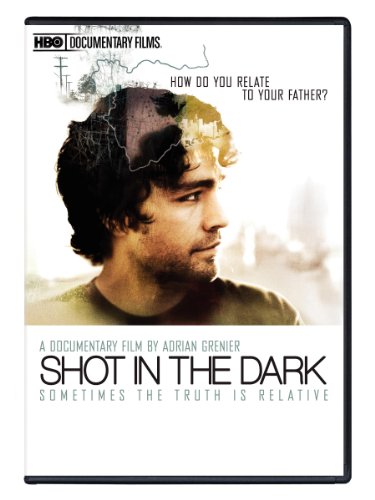
Shot in the Dark is a very well done documentary by Adrian Grenier (before he starred on HBO’s Entourage) about what it means to be a father. The film starts as a series of interviews with random people in New York, as well as Adrian’s friends and family members. Adrian has not seen his father in over eighteen years. He feels as though he doesn’t know what it means to have a father or how he should feel about not having a father around while he was growing up. Adrian hopes to gain some insight through this documentary.
Posted in: Disc Reviews by Archive Authors on June 24th, 2011
Most film-goers could identify a Michael Bay film just by the techniques he uses — quick edits, sun drenched color palette, and lots of action. This usually means that Bay is suited more for low-brow action movies as opposed to high-concept films. In Pearl Harbor, Bay proved that he couldn’t handle anything that didn’t explode — resulting in a lopsided film. The first hour was a tedious love story; the last 90 minutes were better — including an excellent recreation of the surprise attack.
The same is true in The Island. Bay can’t wait to make things explode, and once they do — Bay is very much at home. Though while the explosions are very well choreographed, The Island becomes another action movie that would have worked better had the concept been given more thought.
Posted in: Disc Reviews by Archive Authors on June 2nd, 2011
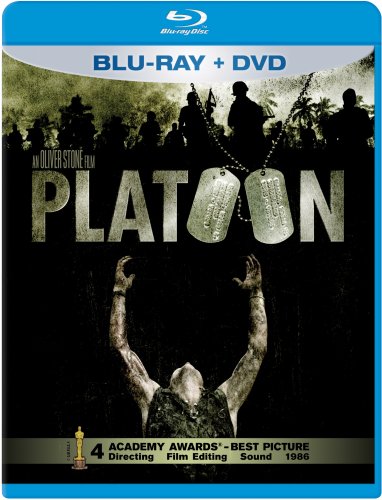
There are a good number of people who have labeled Oliver Stone as a fan of conspiracy theories, out to destroy foundations of conservative ideology, while at the same time re-visiting 60’s nostalgic icons. Despite the jokes and the stereotyping, one has to admit that, as a filmmaker, he has helped bring to screen some of the most talked-about cinematic experiences of our time, including Midnight Express, Scarface, not to mention Conan the Barbarian. As a director, his works, such as The Doors, Nixon, JFK and Natural Born Killers, have generated discussion both within and aside from the technical merits. Platoon was his most personal work, and is widely regarded as one of the defining films of the Vietnam War.
Platoon relates the experiences of Chris Taylor (Charlie Sheen, Major League), who, like Stone, dropped out of college, and volunteered to serve in Vietnam. His battles are everywhere, be it the enemy, with his surroundings, some of his fellow soldiers, or with his identity. He is thrown into a platoon with several characters, each with their own distinguishing characteristics. Sergeant Barnes (Tom Berenger, The Big Chill) is riddled with facial scars, a veteran of many skirmishes in country, perhaps to the point where emotions have dwindled, as he is left a hard-nosed leader. Sergeant Elias (Willem Dafoe, To Live and Die in L.A.) tries to forget the memories and experiences through drugs, but acts as a spiritual center, if one could find that within a war movie. Other actors in this cast include John C. McGinley (Scrubs), Forest Whitaker (Bird), and a very young Johnny Depp (Finding Neverland), among others. They encounter many things during the time there, including ambushes and firefights. They experience the loss of fellow platoon members, either via combat or by other reasons, either wounded or serving their full tour of duty in country. The story and characters are done so well, when watching the movie, their losses are our own. When Taylor leaves his platoon following an injury during combat, the closing shot of the movie is his sobbing on the floor of the chopper taking him out. You could say the sobbing is due to finally being out, or to the friends that he lost, but it is without question that his (and our) experiences leave him a totally different person that when he arrived.
Posted in: Disc Reviews by Archive Authors on May 27th, 2011
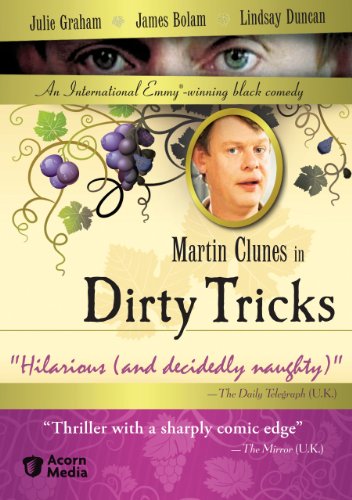
Dirty Tricks stars Martin Clunes as Edward, an underachieving English teacher. Edward meets an accountant (Neil Dudgeon) and begins an affair with his wife, Karen (Julie Graham). When Karen unfortunately passes away, the aging detective (James Bolam) assigned to the case, suspects Edward is involved. Edward is a charming protagonist at first and suddenly the lies and absurdities begin piling up. On the outside, the film resembles a typical comedy and as the film unfolds it becomes a mystery. Is Edward who he continues to say he is? Or, is Edward making appeals of innocence to both the audience and the characters within the film? As a viewer, you will struggle with this question throughout. British television enthusiasts will not be disappointed with this effort.
Martin Clunes plays the role of Edward to perfection. The subtleties of his performance are remarkable. His lying springs the famous George Costanza line to mind “it’s not a lie, if you believe it”. There is an organic quality to his performance which is the most appealing. Clunes is perfectly cast and the film would not be a third as entertaining without him. The other performances are not as dazzling as Clunes. However, within the narrative of the film, they are a nice compliment to a great performance.
Posted in: Disc Reviews by Archive Authors on May 25th, 2011
I’m kicking myself. Martin Scorcese’s The Color of Money has long been a favorite of mine, but for some reason I never knew it was a sequel to The Hustler, a film 25 years older and three times better.
Starring a young Paul Newman (Road to Perdition) in a role that earned him his second Oscar nomination, The Hustler is about a cocky pool player hustling his way to the top. When “Fast Eddie” Felson (Newman) challenges undefeated straight-pool champ Minnesota Fats (Jackie Gleason,…Requiem for a Heavyweight) to a high stakes game, the talented young hustler shows he has the skills to be the best, but self-destructs toward the end of the 25-hour marathon match. Left near-penniless and without the managing partner who helped him get started in the seedy world of pool hustling, Eddie faces an uphill struggle to regain his confidence. Shacking up with smart, attractive and similarly self-destructive Sarah (Piper Laurie, Carrie) proves to be a decent diversion while Eddie wallows in misery, but while he uses her as a crutch, he becomes the cause of her destruction when he agrees to play for Bert Gordon (George C. Scott, Patton), a ruthless, greedy manager, and brings her along when they hit the road.
Posted in: Disc Reviews by Archive Authors on May 20th, 2011
The Usual Suspects is a most unusual movie, and in this case, that is a good thing. The Usual Suspects keeps you interested throughout its entirety by making you think and trying to figure out what will happen next. If only today's movies did the same thing!! As this has been one of my favorite movies of all time, the excitement I felt when I received this in the mail today could only be compared to a young child on Christmas morning.
A boat, thought to have $91 million in cocaine on board, is docked at a pier in San Pedro, near Los Angeles. Within seconds a thunderous explosion takes place. Soon after twenty-seven dead bodies are found at the scene. Miraculously, there are two survivors: a Hungarian gangster who clings to life in a local hospital and Roger “Verbal” Kint, a crippled con man from New York. As U.S. Customs Special Agent David Kujan conducts his grueling inquisition, Kint weaves a tale that begins six weeks earlier, at a police lock-up in New York. Five felons, accused of hijacking a truckload of gun parts in Queens, are brought in for a lineup. They are suspects. Strangers. With one thing in common: Keyser Soze — a criminal so feared and fabled. While an FBI sketch artist struggles to complete his rendering of Soze before the witness dies, Verbal Kint sits in the District Attorney's office, taking Kujan through the steps that led him there. The questioning is extensive. Agent Kujan is relentless and questions Kint for hours. In the end the surprise of all surprises takes place.
Posted in: Disc Reviews by Archive Authors on April 27th, 2011
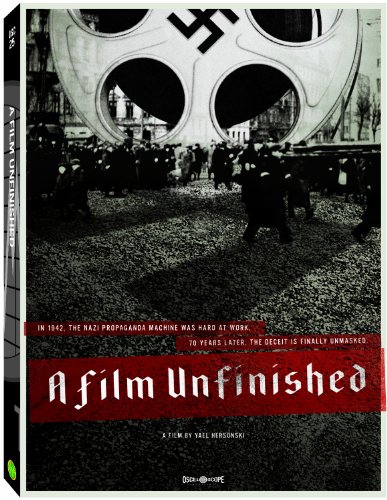
In 1954 several canisters of film were found in a German archive, simply entitled “Das Ghetto”. Inside were reels of film shot in the Warsaw ghetto in 1942, mere months before the zone was shut down and the people sent off to death camps. For years this footage was considered an important historical document, as its raw footage chronicled day-to-day life in the ghetto and was unlike any footage existing at that time.
Some forty-five years later, however, another reel was found that shed new light on the veracity of the original footage.This new reel contained what appeared to be outtakes from the other reels and clearly showed that much of the original footage had been carefully staged.
Posted in: Disc Reviews by Archive Authors on April 25th, 2011
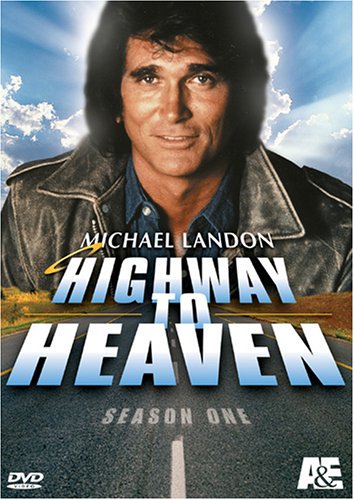
Highway to Heaven was a television series that ran from 1984-1989. Jonathan Smith (Michael Landon) is an angel on a mission from God or “the boss”. After quickly finding employment as a handyman, Smith teams up with the ex-cop Mark Gordon (Victor French) to solve problems and help people with their everyday struggles. This series has plenty of sentimentality, spirituality, nostalgia, and unintentional comedy. As a newcomer to the series, I found myself unable to look away.
Michael Landon has an undeniable charisma. I am too young to have seen Bonanza or Little House on the Prairie. However, from watching this series I found myself struck by his screen presence. The camera remains fixed on his face during the majority of scenes and audiences are drawn in. Highway to Heaven is constantly delivering a message; the show looks at the human condition and questions why we operate the way we do. The delivery can sometimes be implausible. For example, during a physical altercation, Smith begins quoting scripture to the wrong doers. This blatant attempt at focusing on religion as the message can easily turn viewers off. However, within the realm of this show, audiences are able to give it some leeway.
Posted in: Disc Reviews by Archive Authors on April 12th, 2011
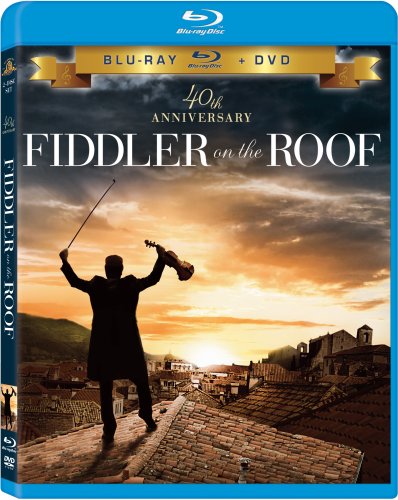
Adapted from the hit stage musical, Norman Jewison’s film version of Fiddler on the Roof has established itself as a classic over and over again since its release in 1971.
“He loves her. Love, it’s a new style… On the other hand, our old ways were once new, weren’t they?” I’ll hardly be the first to write it, but the reason Fiddler on the Roof, a story about Jewish people and their culture, is so popular, is that its themes have universal appeal. In fact, in a way it hardly matters that the characters are Jewish. As we learn from a famous anecdote, when the first Japanese production of the stage musical opened, the show’s creators traveled to Japan to meet the producer. He said to them, “I don’t understand, I don’t know how this piece can work so well in New York. It’s so Japanese!”
Posted in: Disc Reviews by Archive Authors on March 30th, 2011
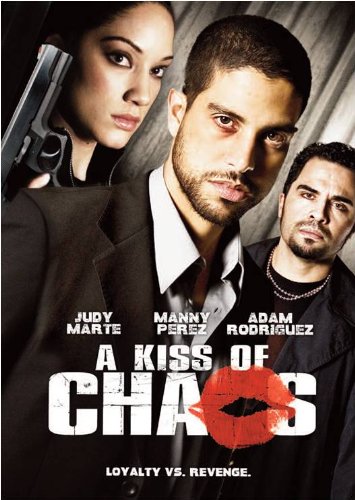
Phoenix is having a rough night. Her scumbag ex boyfriend has just shown up in her apartment with a gunshot wound and a sack of stolen cocaine and her psychotic HIV positive prostitute sister has also shown up, having just shot a john in the face. Plus there are gangsters after the cocaine who will stop at nothing to get it back. Plus there’s her lesbian friend downstairs whose brother is involved on multiple levels and wants to drag her into a plot to steal and sell the cocaine. Plus it’s her birthday.
Phoenix is the central character in A Kiss of Chaos, the unfortunately titled offering from Maya Entertainment. She is played with sullen competence by Judy Marte and surrounded by a cast of “where do I know that dude from?” Latino actors in a basic drug/gangster/crime movie that is clearly aspiring to be more. For one, the character of Phoenix is supposed to be an artist of some kind. We know this because there are a couple of flashes of her on a stage in some kind of coffee shop, apparently reading entries from her diary, which, as her lesbian friend tells her, “sound like poems”. We must, however, take this on faith, since the only tidbit we hear is the enticing entry, “November seventh; I’m in love with the wind”. I’m serious.