Posts by Brent Lorentson

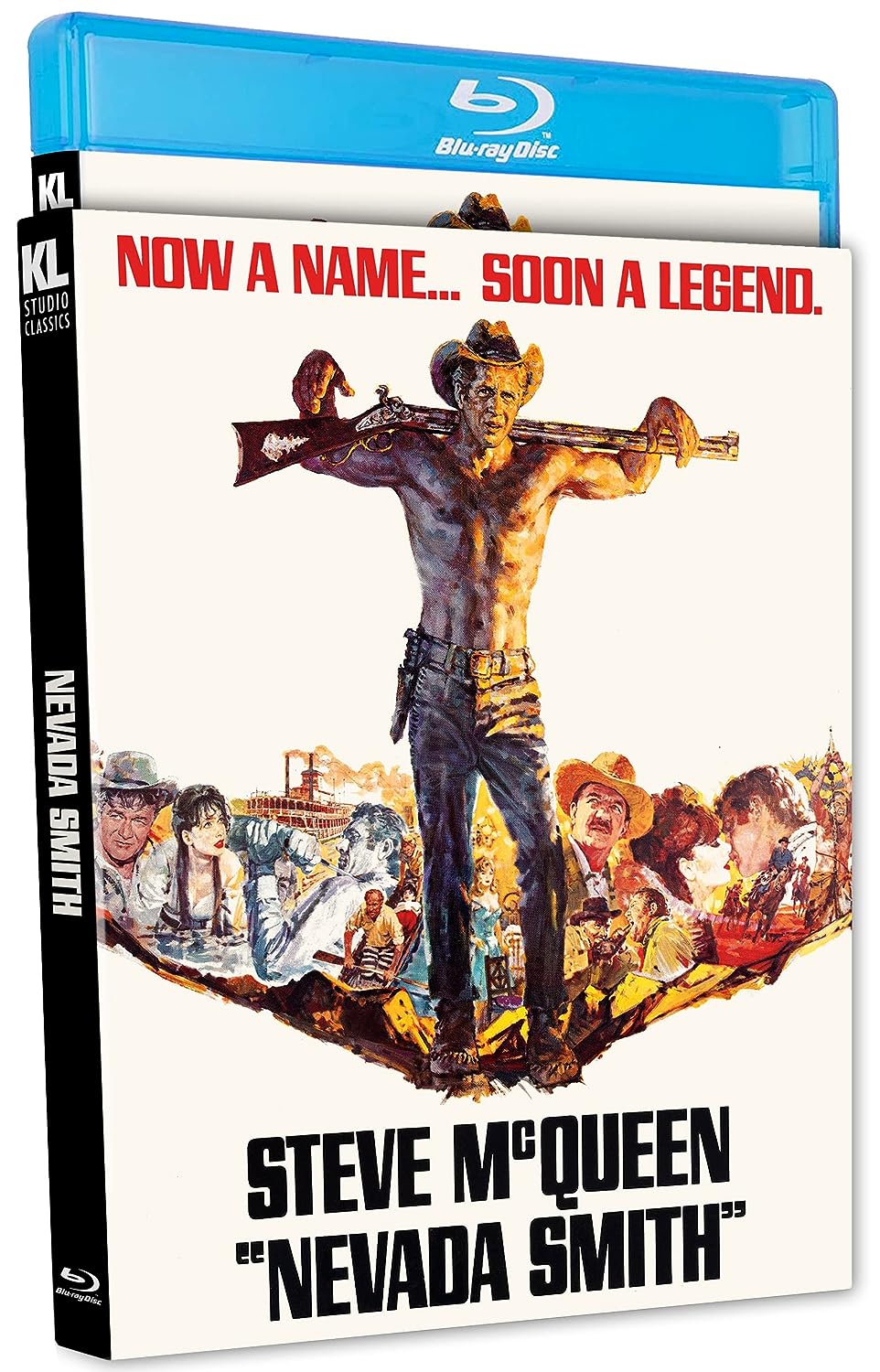
Steve McQueen is one of those actors who will always be an icon of the silver screen and an actor who just personifies cool. The Getaway (1972) is easily my favorite film of McQueen’s. He has several other films one could argue that are “better”, but for me it will always be the Sam Peckinpah classic. Over his career he’s played a variety of roles from being a cowboy, a detective, a race car driver, to a professional thief and so forth, and for the most part I could believe him in all of these roles, but Nevada Smith is the first time I had to put up my hands and just go “are you kidding me?” For some reason they felt the audience would buy that a 35-year-old McQueen could play a 16-year-old half-Native-American character. Now if you can get past that kind of absurd casting and just go into the movie and accept as a western / revenge film, then Nevada Smith is a helluva good time with gunslinging action with beautiful locations and a terrific cast.

The film opens up with Max Sands (McQueen) coming home to discover that his Native American mother and his father have been killed by a trio of men looking to steal some gold.  Max wastes little time to mourn his family as he sets out for revenge, only the trouble is he doesn’t know where to go or even how to shoot. This leads him to encounter Jonas Cord (Brian Keith), who takes pity on Max and decides to train and feed him for a bit. When the two part ways, we can see that Max is a little more prepared to continue his journey for revenge, but is he really able to take a life? The first of the men he encounters is Jesse Coe (Martin Landau), who is a knife expert, and this builds up to an entertaining confrontation and some nice stunt work by those involved. I love that this confrontation didn’t take the typical easy approach and just have the two men square up in the middle of the road and pull guns on each other … Instead we get a shootout, cattle running amuck, and a knife fight, and this is only Max’s first of three major confrontations, so it definitely sets the tone for what is to come, and it doesn’t let the audience down.

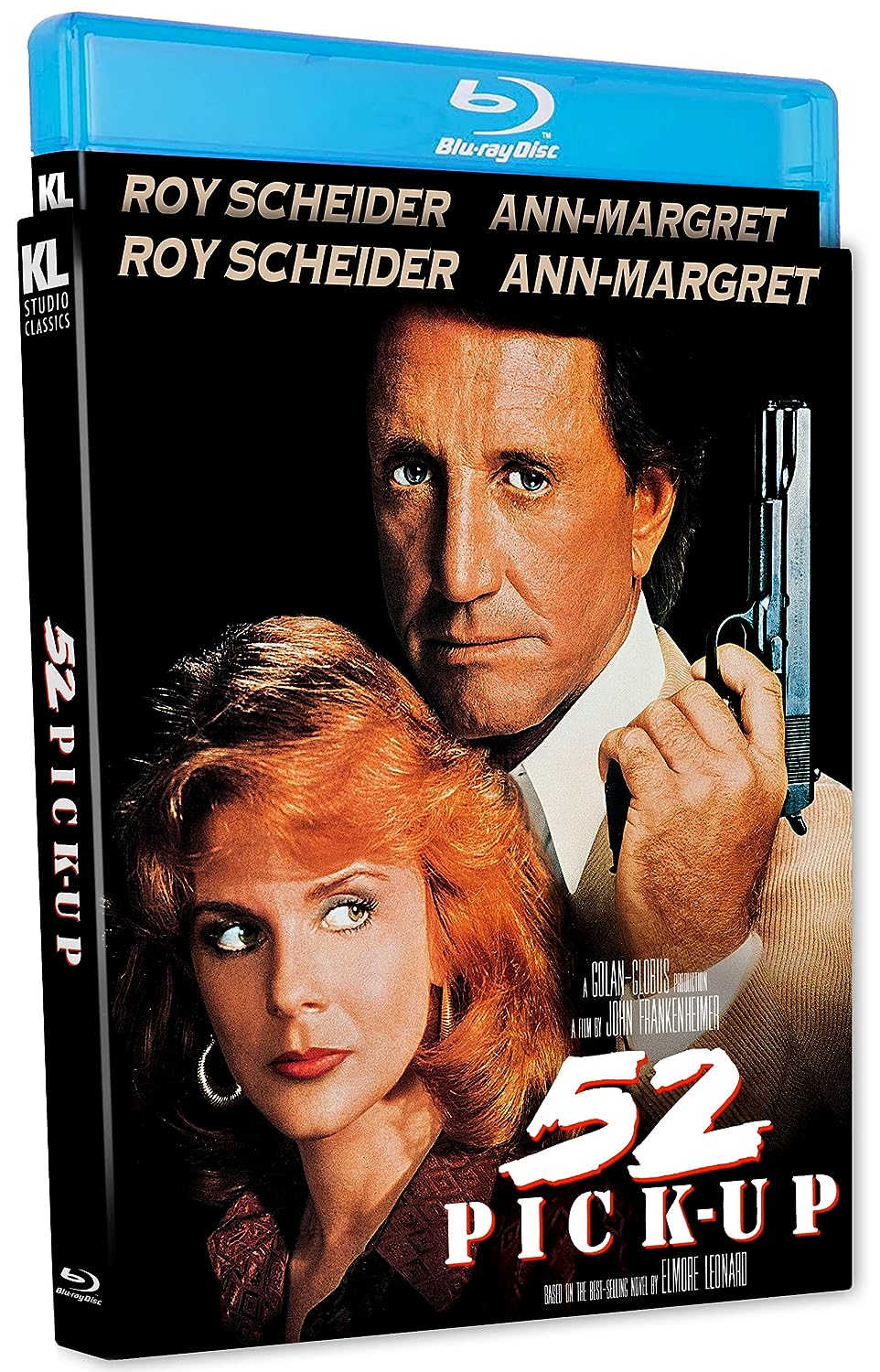
When it comes to writing crime, I don’t think anyone has ever done it better than Elmore Leonard.  When you look at his books and you see the number of quality films and TV series that have been adapted from his work, it is pretty impressive. 3:10 to Yuma, Out of Sight, Jackie Brown aka Rum Punch, Justified, Get Shorty … I could keep going, but that’s just a glimpse of what the man is responsible for. I discovered his books in high school, and I have been a fan ever since. When he passed away in 2013, it was a pretty sad day for me. He was an icon and one of my major influences on becoming a writer. So when the chance came along to review the release of the 1986 film 52 Pick-Up, I was more than eager to get my grubby paws on this one. This isn’t my first time watching the film. My first time was back in the 90s when I picked it up on VHS at the local mom & pop video store, but to be fair, I don’t think I’ve seen it again since.

The film starts up simple enough with entrepreneur Harry Mitchell (Roy Scheider) being blackmailed by three pornographers. They have video of Harry caught in an affair with a young twenty-something girl, and they threaten to hand over the tape to his wife unless he pays the men. It seems simple enough, but when it comes to a story from Elmore Leonard, that magic isn’t so much in the story but in the unique and colorful characters that litter his tales and the directions that he takes them. Sure, you can guess that Harry is going to want to fight back against these blackmailers, but it’s the way he gets them to turn on one another that makes this one a fun one to watch.

Fritz Lang is an iconic Hollywood director who was successful in the silent era and was able to transition and be successful into the “talkie” era. His work in Germany is what he is most known for, Metropolis (1927) and M (1931) but in 1934 he fled Nazi Germany, even after being offered to be the head of the German Cinema Institute and came to America where he signed a contract with MGM studios where his career flourished despite having a reputation for being difficult to work with. He’s a director that if you go to film school you will learn about, and you’ll either appreciate his films or find yourself falling asleep during them.  Despite my appreciation for M and Metropolis, I have to admit I really never explored the filmmaker’s work beyond those films, so when the chance came to check out Human Desire, I was curious to see how it was.

Jeff Warren (Glenn Ford) is a Korean War vet who returns home, and the first thing he wants to do is get back to work as a railroad engineer. As he’s getting used to life back home, he’s living with his fellow engineer Alec Simmons (Edgar Buchanan) and his family. Immediately he is reunited with Alec’s daughter, Vera (Diane DeLaire) who apparently has always been infatuated with Jeff, though he always viewed her as a younger sibling … now that he’s back from the war, Vera seems more grown up as well as being more forward with her intentions, but Jeff seems to have other plans. Then there is Carl Buckley (Broderick Crawford) who works for the railroad and has a hotheaded temper; this temper of his gets him fired. This brings us to Vicki Buckley (Gloria Grahme), the young and beautiful wife of Carl who may be her husband’s only chance of salvaging his job. Though to get her husband’s job back it means talking to an old family friend, and despite himself, Carl can’t help but get jealous of what his wife may or may not be up to, and his temper once again gets the best of him, and this time it leads to murder on a train.

Wes Anderson is pretty much the perfect example of being a cinematic auteur. He has such a unique style that you can simply look at a couple seconds of his work, and you just know immediately you’re watching a Wes Anderson film. Even from his early days with Bottle Rocket and Rushmore to The Fantastic Mr. Fox and now Asteroid City, these films are all very different, but still one would say are uniquely Wes Anderson. His films are a bit divisive, and I completely understand, but those who are fans tend to really love his work.  Personally the only my favorite from him is Moonrise Kingdom; it was a perfect blend of style, charm, and heart; then he has a film like The French Dispatch that got plenty of critical love, but I just couldn’t really get into it. That brings us to his newest release, Asteroid City, which boasts a huge ensemble cast with many familiar faces from his previous films and some big-name stars we get to see him work with for the first time.  Is this a trip to the desert worth taking, or should you simply take a viewing detour?

The film is done in a unique way.  The black & white portions are dramatized portions about a play that is being produced for a 50’s style TV show by a famous playwright, Conrad Earp (Edward Norton).  We get to see the drama unfold as the production of the play comes to life for the TV show with the stars played by Jason Schwartzman and Scarlett Johansson. Then there is the director of the show, Schubert Green (Adrien Brody), who has his own sort of drama with his wife and his cheating ways.  Maybe I missed something, but none of this was hinted at in the trailers, and to be fair, this really took me out of the film, because the behind-the-scenes action of the TV show is constantly interrupting the pace of “Asteroid City”, which is basically a movie within a movie.

"Where the hell did you come from?”

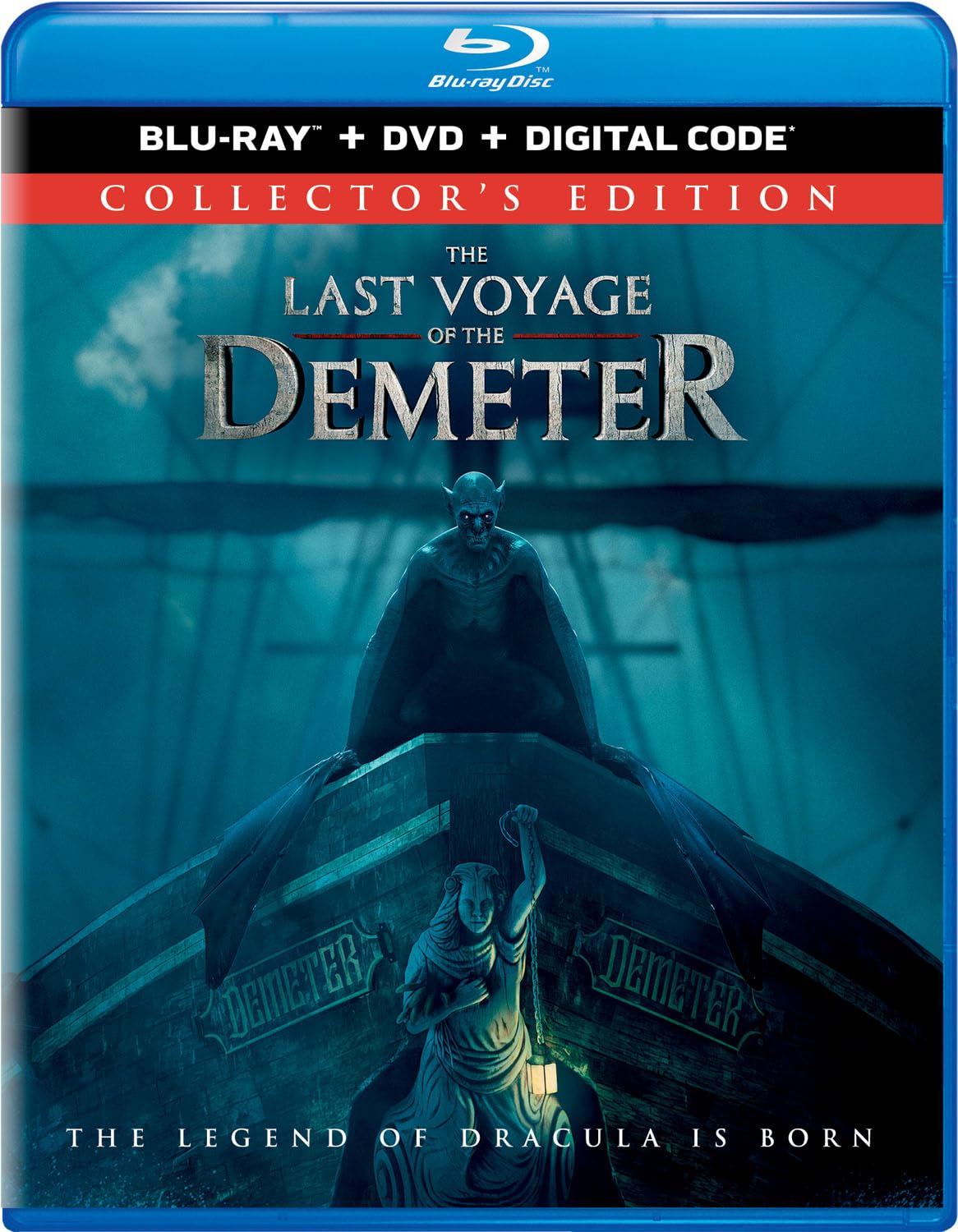
When you consider just how many films have been made about Bram Stoker’s novel “Dracula”, I’m surprised it has taken this long to get a film like The Last Voyage of the Demeter. I’m not a huge fan of the novel, but the chapter that centers around Dracula’s voyage from Carpathia to London is a section that I always enjoyed. It’s a chapter told through journal entries from the captain of the ship and how the crew is killed one by one by a mysterious menace aboard the ship. In the movies that have come before, this moment of the film is usually mentioned as an afterthought or simply gets a couple minutes of screen time. So is this the fresh take on the beloved horror icon that cinema-goers have been waiting for, or is this just a lame attempt to revive the vampire genre?

In 2017 What the Waters Left Behind made some waves as a horror film that came out of Argentina.  It was shot on a pretty low budget, but it seems it was successful enough to warrant a sequel. I actually stumbled across What the Waters Left Behind on a streaming service one late night when I couldn’t sleep. The film is pretty much made for late-night viewing; it has a fun midnight movie vibe. The first film follows a group of documentary filmmakers that are traveling to the town of Epecuen that was wiped out in the 80’s, and the filmmakers want to check out the ruins of the town. What follows is a fun Texas Chainsaw Massacre meets The Hills Have Eyes romp filled with plenty of gore and the terrible demise of this film crew that wandered where they didn’t belong. Now it is five years later, and we have the sequel What the Waters Left Behind: Scars.  This was unexpected, but just what did I think about this Latin-flavored bloodfest? Well, it’s pretty much what I expected, and that’s a good thing.

This time around instead of a documentary film crew we are getting to follow The Ravens, a rock band that is winding up their tour with a last gig in a small bar and an even smaller fan base. The band is ready to head home after the gig, but the drummer has other plans when he hooks up with a local girl who promises them a place to stay if they give her a ride home.  She just happens to live in Epecuen.

“Now, I am become Death, the destroyer of worlds.” 

It is hard to ignore the hype around the film Oppenheimer. Any time a Christopher Nolan film has come out, it has become a pretty big deal for cinema fans, whether it was for his The Dark Knight trilogy, Interstellar, Inception, or Tenet, his films carry the same kind of respect alongside the names of Stanley Kubrick and James Cameron, and his films can be just as divisive. But the anticipation for the release of Oppenheimer feels like a different beast entirely. The release coming out the same day as Barbie has created such a stir on the internet that the term Barbenheimer has become a part of the zeitgeist of modern day. Then another aspect is how the film was literally shot on 70mm film, which is unheard of in today’s digital-hungry climate, and the film is being released in certain theaters on 70mm prints that reportedly weigh around 600lbs. And now with critics finally getting to see the film, I can’t scroll through my news feed without seeing headlines that tout the film as not just being the most important film of the century, but the best film of the century as well. So what’s my take on all this hype, and is it worth it? Is Oppenheimer the film that will save cinema?

For me it’s crazy to see that The Truman Show is turning 25 years old. I was graduating high school when this had come out, and television was just an entirely different landscape back then. In 1998 when this film came out, the only reality shows were pretty much COPS and then The Real World on MTV, I really don’t believe anyone could have expected just how big reality TV would become. The same year in competition for box office dollars was Ed TV. Oddly enough, Ed TV would be a little closer to the mark on what the reality TV landscape would look like, taking a regular guy and making him a star overnight because he was on TV.  The Truman Show I always felt was the superior film in just about every aspect. In many ways it is what I had hoped reality TV could be, but unfortunately it seems what viewers wanted in their reality programming was something more scandalous and absurd, more akin to a Jerry Springer episode than someone living in an idyllic world that was out of an episode of Ozzie and Harriet or Leave It To Beaver.

Jim Carrey stars as Truman Burbank, an insurance salesman who lives in an idyllic white-picket-fence town and is just living his life. The only the problem is, the world he lives in is not real; it’s all manufactured, and he’s really living in the world’s largest television studio, and everyone around him is acting, all because the reality is Truman is unknowingly the star of the world’s biggest reality show. This was such a departure for Jim Carrey. At the time he was the biggest comedy star on the screen and was known for being over the top and playing larger-than-life characters, but the role of Truman required him to be toned and down and seem even boring. The result is perhaps his most enduring performance to date (or at least tied with his massively underappreciated film, The Majestic).

In 1986, long before Luc Besson gave us such classics as Taken, The Fifth Element, or Leon: The Professional, he helped co-write and produce the wacky sci-fi/thriller Kamikaze.  I’m a fan of Besson, and not only had I never seen this film, I had never heard of it, so I was more than happy to check it out. In my opinion Luc Besson is one of the best action filmmakers out there. Whether he is writing, directing, or producing, he manages to put out an enjoyable product on a more consistent basis than many others.  If you are unfamiliar with the guy’s work, go ahead and take a moment to check him out on IMDB, and I’m pretty sure you’ll find a few titles on his resume that you’ve enjoyed.  Now in the 80’s you can say he was still cutting his teeth and trying to make a name for himself and had some moderate success. Subway (1985) is a fun little standout, and in 1988 he had The Big Blue.  In that time he handed off the script for Kamikaze to Didier Grousset, his Assistant Director from Subway, to direct the film, and as they say, the rest is history.

The film opens up with Albert (Michel Galabru) being fired after working with the company for 30 years.  He’s a brilliant scientist and inventor, but he’s also a bit lonely and a bit nutty.  He’s bitter about how he’s been treated and decides that he’s on a permanent “vacation”.  Albert ends up staying awake and watching television virtually non-stop and develops an obsession/hatred for the reporters during the news broadcast, and this inspires him to create a unique little gizmo. This device he creates allows him to shoot at his television, and it will blast the announcer he was aiming at, causing their guts to explode.  It’s silly, it’s absurd, but it sure does make this movie a lot of fun.  Don’t think about the logic of how this is possible, because you simply can’t.

Back in 2013 the remake for Evil Dead came out. I enjoyed the film, but it just didn’t feel right not having Bruce Campbell on the screen fighting off the deadites in that crazy cabin in the middle of the woods. But I could still appreciate the gore, and I felt the filmmakers did a decent job at capturing the tone of the franchise.  The film has kind of grown on me over the years. Then fans got hit with the Ash Vs. The Evil Dead series, which was three seasons of bliss that really did a fantastic job honoring the trilogy that Sam Raimi had created. Now in 2023 we have a new film, Evil Dead Rise, a film that ignores pretty much everything fans of the franchise have known and loved for 40 years.  It did great at the box office, but where does the film stand on its own and in relation to the legacy before it?

The film shifts its location from the middle of the woods to an apartment in the city. This was a nice, refreshing change in my opinion, kind of like how Scream decided to leave the small town of Woodsboro this year and move things to the Big Apple. The location shift simply opens up so many new possibilities, and when you consider the havoc that some deadites can bring to this new setting, it is something worth getting excited about. Instead of a group of friends, this time the film is centered on a family.  There’s the newly single mom of three, Ellie (Alyssa Sutherland), her youngest daughter, Kassie (Nell Fisher), and then the other two siblings, Bridget (Gabrielle Echols) and Danny (Morgan Davies). As an unexpected surprise to the family, they get a visit from Ellie’s sister, Beth (Lily Sullivan), who has to stepped away from her rock-star life after discovering that she is pregnant. There are other people who share the same floor as Ellie, but the film’s focus is on this family, and for the most part just this floor, which is one of my problems with the film. It offers so much potential with a bigger location, but chooses to isolate itself, which defeats the whole purpose of leaving the cabin.