Posts by Gino Sassani

“Don’t expect too many mistakes from this man. After all, he does seem rather more interesting than just another reader researcher. For example; has he gone into business for himself? Was he turned around? Does someone operate him? Is he homosexual? Broke? Vulnerable? Could he be a soldier of fortune? Did he arrange the hit? Is that why he’s still in flight? Still, he may be innocent. But why didn’t he come in gently?”

Sydney Pollack might have been channeling the essence of Alfred Hitchcock when he directed 3 Days Of The Condor. It’s hard not to see the similarities to some of Hitch’s work. But he might also have been having a bit of precognition at the same time. The later novels and films about Jason Bourne bear a striking resemblance to this 1975 thriller.

"This is The Batman we're talkin' about here."

In 1992 Batman: The Animated Series hit television sets all over the country. It was perhaps the biggest comeback for the Dark Knight since Adam West went camp with the cowl in the 1960's. Yes, the Tim Burton film and its sequels went a long way to bringing the bat back into the popular culture, but the series is what took the fans by storm. Kevin Conroy became, for many, the definitive Batman when he was hired to voice the series, and Mark Hamill finally got out of the shadow of Luke Skywalker with his voice rendition of the Joker. The show was a hit, and around the early years it was decided to do a direct-to-video movie called Batman: Mask Of The Phantasm. Somewhere in the production Warner Brothers had a change of heart. They decided to roll the dice on a theatrical release of the animated feature, likely assuming the series fans would flock to their multiplexes in droves.

“Space … the final frontier. These are the voyages of the starship Enterprise. Its continuing mission, to explore strange new worlds. To seek out new life and new civilizations. To boldly go where no one has gone before.”

Nearly 20 years after the original Star Trek left the network airwaves, Gene Roddenberry set out to discover whether he could catch lightning in a bottle once again. Some say he did an even better job with Star Trek: The Next Generation. There are times I tend to agree. The Star Trek sequel series had a lot more advantages from the moment it was conceived. Star Trek, a series that barely registered on the ratings during its three-year primetime voyage, became a huge sensation in syndication. By the time The Next Generation came on the scene, the original show had been syndicated in over 20 different languages all over the world. It had launched an animated series, and a fifth feature film was already in the early stages of consideration. So it isn’t quite fair to judge the success or quality of The Next Generation over the original series. One thing is inarguable. The second would never have existed if not for the first.

"Do you give people hope? Are you moving through your city like a guardian angel? Do you make a difference? That bolt of lightning chose you. Don't ever forget it."

There's one thing about being the fastest man alive. You get to the end faster than anyone else ... the finish line, if you will. But not so for Barry Allen, best known in the world of comic books as The Flash. When Arrow debuted back in 2012, no one could have foreseen where it was all going to lead. Greg Berlanti and a few others had created what we all thought was just another comic book hero television show. The Green Arrow wasn't one of the better known heroes, but he was part of the Justice League for many years, and he had a rather interesting origin story that could be told over the longer form of a television series.

Anna May Wong might be one of Hollywood's biggest stars that most film fans have never heard of. Thanks to KL Studio Classics, you now have the opportunity to get to know the actress a little better and sample three of her films. For those of you who take the time to add this to your collection, you won't be disappointed. She's not the kind of name who appears in many conversations these days, but she left behind a body of work that is more impressive than many of the golden era names you do know. Her real name was Wong Liu Tsong, and she appeared in about 50 films from 1920 in the Silent Era until about 1950 when she made her way to television screens for another 16 years, appearing in such hit shows as Mike Hammer with Darren McGavin and I Spy with Robert Culp and Bill Cosby. In the Silent Era she was frustrated that she had been typecast in the typical, often stereotypical roles of Asian women and left Hollywood for Europe where she continued to be disappointed. Throughout her career she went back and forth between Europe and America and even toured China for several years. While she fought to get prominent parts, she was often thwarted by her heritage and ended up in mostly budget films throughout her career. But these budget films have found their way back to the surface, and you get to catch three of them here

"Batman's a fascist!"

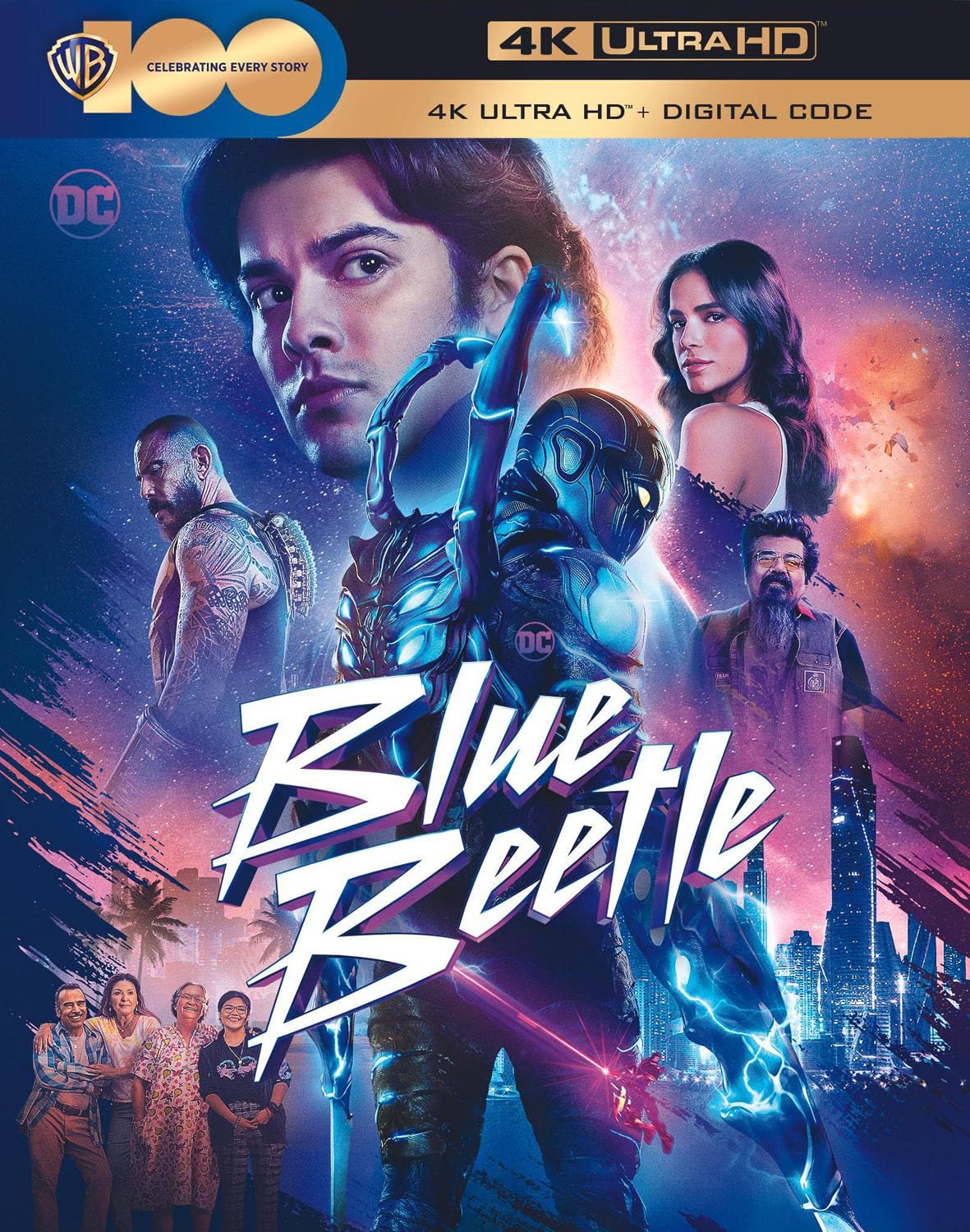
Let's address the elephant in the room, shall we? Hello there, big guy. How ya doing? There now let's continue. I have to tell you it was hard to get motivated to watch Blue Beetle. I didn't want to like it, and I wanted to try to watch it without letting myself get too involved in the whole thing. This had nothing to do with the character. I know little about him and have only read a few comics featuring the character, mostly the Ted Kord character along with his buddy Booster Gold. But none of this had anything to do with my reluctance on the part of the film. It's Warner Brothers/DC and James Gunn. All we've been hearing lately is how this new regime is going to change EVERYTHING. It all starts with the upcoming Superman film, and everything we see before then is merely filler, I guess. Yes, the Snyderverse had a ton of issues, and I'm frankly glad to see it go away. But the franchise had some solid moments and pretty strong characters and actors starting with Gal Gadot as a powerfully compelling Wonder Woman. Yeah, the second movie sucked, but that had nothing to do with the actress or the character.

"It's always open season on princesses."

Roman Holiday is one of those classic films that had an extremely hard time getting made. Frank Capra had the rights to the story for several years. Most of what he had was based on a screenplay by Dalton Trumbo, but that was extremely problematic, as Trumbo was one of the original Hollywood Ten and was blacklisted. They were a group of Hollywood people who refused to answer questions before the Joe McCarthy-led House Un-American Activities Committee that was pretty much rooting out communist with little regard to whether they were there or not. The committee ruined thousands of lives, and in 1947 the group had turned their attention toward Hollywood. Many played along by attending the hearings, and some even passed on names of others to avoid trouble for themselves. The Hollywood Ten stood up to the madness, and it got them blacklisted.

"In northern California, the Santa Lucia Mountains, dark and brooding, stand like a wall between the peaceful agricultural town of Salinas and the rough-and-tumble fishing port of Monterey, fifteen miles away It's 1917 just outside of Monterey."

James Dean was somewhat of a brief candle. Very much like Marylin Monroe, he came upon Hollywood so bright and hot only to burn for a short time. And while Norma Jean had a few good years in which to shine, Dean would have less than a handful. In those few years he made three incredible films. His last was Giant, and before that was perhaps his best known, Rebel Without A Cause. East Of Eden was the first of this trilogy of films that would pretty much make up the career of James Dean. All three films were made in the years 1955-1956, and just as suddenly as Dean had come upon the scene, billed as the next Marlon Brando, he was gone.

Been waiting on this one for some time, ever since we were introduced to the character in the Justice League movie and it was announced that the film would cover the Flashpoint Paradox storyline, which is one of my favorite comic storylines. My enthusiasm was tempered a bit with the film being delayed and the actor’s subsequent troubles (for the purposes of staying on the topic at hand, that will be my only mention of that situation). However, it is finally here, and after viewing it I can say that it was well done and well received. It is also a bit bittersweet, as it signifies the conclusion of the DCEU as we know it. While I have complete confidence that the future of DC is safe in James Gunn’s hands, it is difficult to say farewell to the only thing that we’ve known since Cavill first donned the suit. Back on topic: in my opinion, while this adaptation does have some slight deviations from the source material, I can confidently say that the film does the source material justice (pun intended).

"Hello. My name is Robert Montague Renfield. And just like these decent folks, I'm in a destructive relationship. When I met him, I was a real estate lawyer hoping to make a deal that would change my life and my family's lives forever. Oh, and it certainly did."

After nearly 90 years, the Universal horror cycle stands as one of the most enduring collection of horror movies today. Their influence on modern horror is unmistakable. There have been literally thousands of incarnations of Dracula, the Wolf Man, and Frankenstein's Monster, but the first image that comes to your mind will always be the nightmare creations of those Universal films. Studio head Carl Laemmle, Jr. was trying to break away from his father's control and create a studio culture of his own. The results would start in 1931 when an unknown Hungarian actor named Bela Lugosi jumped from the stage to the screen in Dracula, directed by Tod Browning.