Posts by Gino Sassani

"Them clothes got laundry numbers on them. You remember your number and always wear the ones that has your number. Any man forgets his number spends a night in the box. These here spoons you keep with you. Any man loses his spoon spends a night in the box. There's no playing grab-ass or fighting in the building. You got a grudge against another man, you fight him Saturday afternoon. Any man playing grab-ass or fighting in the building spends a night in the box. First bell's at five minutes of eight when you will get in your bunk. Last bell is at eight. Any man not in his bunk at eight spends the night in the box. There is no smoking in the prone position in bed. To smoke you must have both legs over the side of your bunk. Any man caught smoking in the prone position in bed ... spends a night in the box. You get two sheets. Every Saturday, you put the clean sheet on the top ... the top sheet on the bottom ... and the bottom sheet you turn in to the laundry boy. Any man turns in the wrong sheet spends a night in the box. No one'll sit in the bunks with dirty pants on. Any man with dirty pants on sitting on the bunks spends a night in the box. Any man don't bring back his empty pop bottle spends a night in the box. Any man loud talking spends a night in the box. You got questions, you come to me. I'm Carr, the floor walker. I'm responsible for order in here. Any man don't keep order spends a night in..." 

You guessed it ... the box. Enter our anti-hero, Luke. The anti-hero has become somewhat cliche today. What was once an artistic expression of the gray line between good and bad guys has morphed to the glorification of the just plain bad guy. We end up loving and rooting for such vicious characters like Vic Mackey, Tony Soprano, and Dexter Morgan. These are killers with nary a pang of conscience. Their deeds are always self-serving no matter what they pretend they might be. But if you go back far enough -- most credit Marlon Brando's coda performance in The Wild One -- you'll find there was once a far more nuanced kind of anti-hero. One of the industries best examples of this was Paul Newman's troubled teenager, Luke. Luke wins us over with a charm and an honest belief that he's a good guy. The archetype would later be pruned to perfection by Jack Nicholson in One Flew Over The Cuckoo's nest several years later. McNulty and Luke have a lot in common, and their environments and motivations aren't all that different. In the end they're both "broken" by the establishment, conforming to a code that did not allow guys like this to live happily ever after. Times and sensibilities have certainly changed, but performances like Paul Newman's Luke remain to remind of us of a time when audiences just wouldn't have been ready for the likes of Hill Street's Detective Buntz. Ironically, it would be Marlon Brando again who would be the first to make us root for a cold-hearted killer named Vito Corleone.

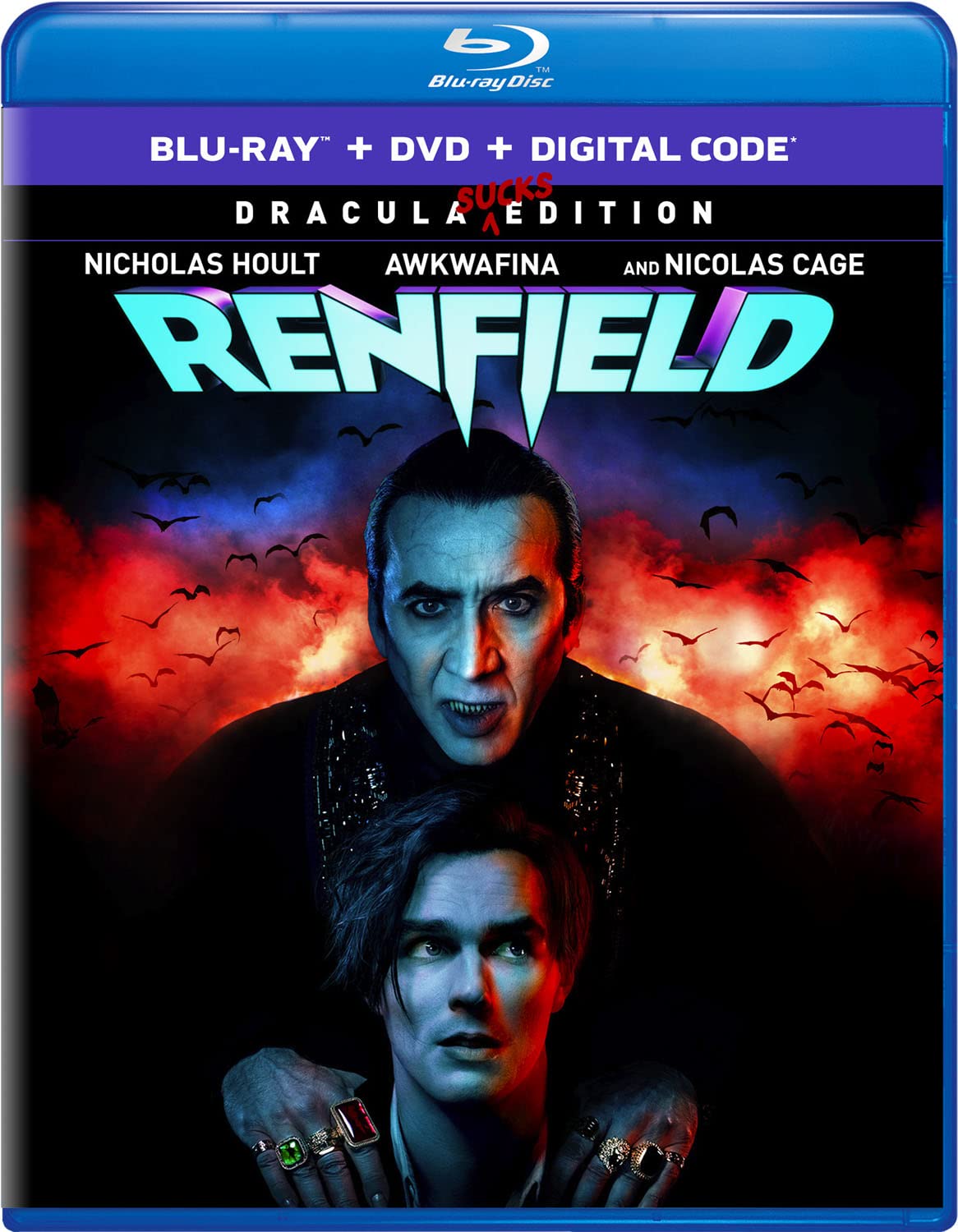
" Some call me the Dark One. Others, the Lord of Death. To most, I am... Dracula!"

After nearly 90 years, the Universal horror cycle stands as one of the most enduring collection of horror movies today. Their influence on modern horror is unmistakable. There have been literally thousands of incarnations of Dracula, The Wolf Man, and Frankenstein's monster, but the first image that comes to your mind will always be the nightmare creations of those Universal films. Studio head Carl Laemmle, Jr. was trying to break away from his father's control and create a studio culture of his own. The results would start in 1931 when an unknown Hungarian actor named Bela Lugosi jumped from the stage to the screen in Dracula, directed by Tod Browning. Laemmle's niece, Carla Laemmle, is the girl in the coach headed for Borgo Pass as the film opens to the musical strains from Swan Lake. She is reading a travel brochure about vampires and thus speaks the very first lines ever spoken in a horror film in the era of sound. Lugosi was mesmerizing, and the film was a hit. There was a depression on, but that didn't stop crowds from lining up around theater blocks to be hypnotized by Lugosi's Dracula. The cycle of horror films that followed literally saved the studio from bankruptcy by the time it had all come to an end and the horror baton was passed along to England's House Of Hammer. Since then Universal hasn't really known exactly what to do with these prize IP's.

"In 1539 The Knight Templars of Malta paid tribute to Charles V of Spain by sending him a Golden Falcon encrusted from beak to claw with rarest jewels --- but pirates seized the galley carrying this priceless token, and the fate of the Maltese Falcon remains a mystery to this day."

What is not a mystery today is the significant role that The Maltese Falcon has played in cinema history. The film itself was a remake. In fact, it was actually Warner's third attempt to film the Dashiell Hammett novel in a single decade. The first version came in 1931 and starred Ricardo Cortez as Sam Spade. That film also featured Dwight Frye as Wilmer Cook. The film was a moderate success but never really delivered on the potential of the source material. Five years later Warner would attempt a comedy version of the story in Satan Met A Lady. It was a total flop. It would only take another five years before the studio took its third crack at the material. In this case, the third time certainly was a charm.

12 Angry Men is one of those rare films that appears to defy all the Hollywood constants and yet become one of the best films of its kind ever made. The setting is entirely too claustrophobic. With the exception of two bookend scenes, the entire film takes place in the tight quarters of a jury deliberation room. The story had only a couple of years earlier been the subject of a live television drama, so the story was far from a fresh idea. The director was a complete unknown who had not at that point directed a major picture. Enter Henry Fonda, the only member of the cast who was a strong A-list name. He was also the driving force behind getting the film made. He produced the film and was involved with most of the major decisions. With all of these elements going against it, you would expect the film to fail miserably, and that’s exactly what it did. During its premier run, the film only lasted a week and was a complete financial failure. It happens all the time, and we would expect the story to end there, but it didn’t.

Enter the 1970’s. There was a rush of independent television stations that were looking for anything and everything to fill up air time. This constant need for programming meant pretty much any film that could be had cheaply was bought and aired, often for an almost nauseating number of showings. 12 Angry Men was one such film, but something amazing happened. People began to notice just how brilliant the film actually was. By then that first time director, Sidney Lumet, had gone on to rather remarkable success. Films like Fail-Safe, Dog Day Afternoon, Serpico, Murder On The Orient Express, and Network had exposed just how much talent the young man actually had. Suddenly the kid from Philly was hot, and the public became interested in his earliest work. Everyone discovered what Fonda already knew back in 1957: Lumet was a genius. These television airings led to revival screenings at local movie houses, and before the first year of the 1980’s this one-time failed film was an admired classic.

"You think I know every human being with a mustache wearing an identical outfit with a hat with the letter of his first name on it? Because I don't!" 

That's the big caveat for this review of The Super Mario Bros. Movie. You might be asking yourself a simple question. If I don't know anything about the Nintendo or Super Mario Bros. games and world, will I be able to enjoy this film? The answer is that you will still be able to enjoy it, but you'll walk away feeling like you've been left out of the joke. That's how I felt after the press screening for the film. I got to hear many of my fellow critics talking with great excitement about all of these wonderful Easter eggs and subtle homage moments, and I didn't get a single one. Check that. I did get one of them, and I'll explain that next.

"Him is he who bays and slavers forever outside time and space, who shambled down out of the stars when Earth was new and spawned abominations in the seas and blights upon the land. Woe to man when He comes again. To gaze upon his form is to invite madness. That is why in order to serve Him I chose to make some adjustments. Him, The Lurker is on the threshold, and behold, He is coming..."

The latest release from the Warner Brothers animation team in the world of DC Comics is Batman: Doom That Came To Gotham. This series of animated films is no longer part of any shared universe as the many that came before might have been. At least for now these animated adventures are standalone stories, often with their own atmosphere and universe. That's certainly true of Batman: Doom That Came To Gotham. This is likely the most uniquely-styled entry in the series of animated feature films.

"Space...The Final Frontier. These are the voyages of the Starship Enterprise. Its 5-year mission: to explore strange new worlds, to seek out new life and new civilizations, to boldly go where no one has gone before!"

Since the relaunch of Star Trek on television via the Paramount + streaming service, I must admit to being a little underwhelmed. It's truly bad when Alex Kurtzman makes me pine for the days of Rick Berman. There have been some pretty good moments in the various new Trek shows. Picard has shown promise and has improved with a third season that looks very exciting. Lower Decks is just too campy for my tastes, and Discovery has so many ups and downs I feel like I'm on a rollercoaster. So along comes Strange New Worlds, and this is the Star Trek I've been waiting for these last decades.

“You got everything money can buy, except what it can’t. It’s pride. Pride is what got you here. Losing is what brung you back. But people like you, they need to be tested. They need a challenge.”

There have been a ton of boxing films. They’ve been popular going back to the silent era. Most of them have many of the same themes. But there was always something about Rocky that stood out above all of the rest. That “something” can’t really be described or defined. As the Supreme Court once said about the definition of obscenity: “I can’t define it, but I know it when I see it.” That’s all you can say about Rocky. Some might call it heart. That’s about as good a word for it as anything else. Rocky himself would call it “stuff in the basement”. It almost demeans it to put a word on it at all. Whatever you call it, you don’t necessarily see it in Rocky … you feel it. Now the first 4 films are out together on UHD Blu-ray in 4K.

"The Colosseum. The Roman Empire distilled to its most basic essence. It is a symbol of conquest. It's a symbol of dominance. It's a symbol of imperial power radiating throughout the Roman world. Any emperor had the Colosseum at his disposal to use as a tool to reassert his power and authority. The message of the Roman people is that life is a combat. It was also a judicial warning: do not test the power of Rome."

After over 2000 years of both heavy use and neglect, much of the structure still remains. It survived the many sacks of Rome and its rebirth as a Christian empire. The building survived the bombings and invasions of two World Wars, and it remains. Its history is a testament to the best and worst of human nature. Now History has given us a series of eight television episodes that explore both the mystery and the majesty that was the Roman Colosseum.

"There is an old saying that blood is thicker than water."

We've had Keeping Up With The Kardashians, Gene Simmons with his Family Jewels, and even Snoop Dog's Father Hood. It's become a bit of a trend to follow these celebrity families around and watch the drama of their privileged lives unfold on our television screens. You might think it's a relatively recent phenomenon, but would you believe they were doing it back in the infant days of television when we followed around a musician named Ozzie and his wife way back in 1952? No, we're not talking about Ozzie Osbourne and his family. I'm talking about Ozzie and Harriet Nelson. They were television's darling family before we ever heard about Lucy and Desi. The show actually started on radio like many of the fledgling industry’s early hits including the likes of Gunsmoke. Four years after the radio brought us The Adventures Of Ozzie And Harriet, they moved to television. While their two sons were played by actors on the radio, both David and Ricky Nelson joined the television show, and it went on to make television history, breaking records, some still held today. It was the first television series to ever hit 10 seasons, finishing with 14 still a sit-com record. It lasted from 1952 to 1966 with 436 episodes. Until The Simpsons, it was the longest running scripted television comedy and remains still the longest live-action scripted comedy ever on television. And while the stories were, of course, fictional, most aspects of the show were quite real. Their television home was modeled after their real home. Many of the family's life stories found their way to the series. The four family members were quite real, and you just couldn't fake these relationships.