Posted in: Disc Reviews by Gino Sassani on November 10th, 2006
In the wake of cable television’s recent success in the horror anthology genre, TNT brings us 8 tales from the mind and pen of Stephen King. Showtime’s hugely popular Masters of Horror series set a high standard while proving that this time-honored method of storytelling could survive. Cable’s unique ability to circumvent many of the censorship problems that plague network television puts them at a distinct advantage. Here it’s easier to tell compelling stories, with limitations, for the most part, only in the imag...nation of the story teller himself. And oh, what an imagination to cultivate, that of Stephen King. In his garden some of our most frightening nightmares are tended like the fragile leaves of a new basil plant. Here our fears are planted in fertile ground indeed, as fertile as graveyard dirt. These stories are what set apart this series from the many that have come and gone before. Most of the stories carry a feel very much like the 1990’s Outer Limits episodes we saw on Showtime a decade or so ago. You can almost hear the controller’s voice delivering a sober moral as each piece fades away. There are 8 episodes, each about 45-50 minutes spread out over 3 discs.
Disc 1
“Battleground” The teleplay is by Richard Christian Matheson, son of the great Richard Matheson who brought us many Twilight Zone adventures as well as “I Am Legend”, basis for a third version starring Will Smith, coming soon. The father also wrote the teleplay for the famous “Prey” segment of Trilogy Of Terror. This story is very much an almost remake of that episode. The story is unique in several ways. The most obvious is that there is no dialogue in the entire hour. I found it slowed the story down quite a bit, particularly in the overlong setup. Here William Hurt plays an assassin who slowly breaks into the headquarters of Morris Toys, where he apparently was hired to kill Morris, the owner. He commits his dirty deed and steals a music box dancer as a souvenir. Back at his plush penthouse apartment, we see he has collected many of these trophies over the years. In Battleground, we find that payback’s a bitch. A mysterious package arrives by carrier. Inside is a chest full of plastic army men and play equipment. These guys are pretty much like the versions we all had as kids. The toy regiment comes complete with choppers and jeeps as well as a “surprise item”. Our killer’s apartment becomes the titular Battleground when the toys come to life and terrorize the man. The f/x here are simply amazing as the toys wage a war with our gunman. There are even shades of another King classic, “The Ledge” from the Cat’s Eye collection here. After that slow start, things move at a brisk pace now that the battle is on. The Zuni Doll from the original Trilogy Of Terror episode also makes a cameo in this story. It acts as a nice moment of foreshadowing. Hurt has to carry the story, at least until the real action kicks in. You’ve just got to have some patience and it will finally be paid off.
Posted in: Disc Reviews by Gino Sassani on November 9th, 2006
Ultraman is a huge part of Japanese culture and pretty much has been since the original live action show in 1966. Perhaps Godzilla started the ball rolling, but Ultraman brought us these monsters on a regular basis. In Japan, Ultraman is like our Superman. He’s an iconic hero and a huge part of the pop culture. Since the 60’s he has appeared in many forms, most of them animated. But it is this 1966 series that made a ton of us kids fall in love with him and an entire genre. Yes, there were many from the era: Space ...iants featured a giant fighting robot who fought monsters sometimes converted into a spaceship (yes, before transformers were ever thought of); Johnny Socko had his giant robot; and the list goes on. But it was Ultraman that started it. Eiji Tsuburaya, who created the original Godzilla, formed a new company outside of Toho Pictures. Ultraman was pretty much the first thing out of the new shop.
Ultraman was a space being who was chasing an escaped monster. When his spacecraft collided with that of Science Patrol Officer Hayata, he inadvertently killed the young man. To make up for his mistake and also offer Earth a way to fight the endless row of monsters unleashed, he merged his life with Hayata. Now, whenever a monster threatens, Hayata uses his “beta capsule” and morphs into Ultraman. Complete with martial arts moves and an array of ray weapons, Ultraman fights these creatures in hand to hand combat. The downside is that Ultraman’s solar energy diminishes rapidly in Earth’s atmosphere. As he weakens, a light on his chest flashes. A narrator reminds us each time that if it stops, Ultraman will die.
Posted in: Disc Reviews by Gino Sassani on November 9th, 2006
William Keane (Lewis) has apparently lost his daughter, abducted from a New York Subway station. The film opens with a frantic Keane searching for anyone who might have seen her. But did any of it really happen? At first Damian Lewis’s performance completely sells the abduction. Every nuance of his acting tugs at our heartstrings for his horrible loss. His incessant searching and constant probing of his own memory draws us deeper and deeper emotionally into the set-up. It doesn’t take us very long at all to questio... the event and Keane’s sanity. In short time the story begins to unravel along with Keane’s mind. Again, it is a superb performance by Lewis that makes it all so real. It is this compelling performance that makes any of this interesting to us at all.
Keane, both the film and the man, is a detailed character study into the mind of a seriously troubled man. His troubles run far deeper than the possible missing child. Barely surviving in a hotel room with no job, we soon learn he is on some kind of disability. We are pretty sure what that’s all about. Keane spends a great deal of his time either drunk or high on coke. While it is almost impossible to have any kind of sympathy for this man, we are hooked into caring what happens to him, and more importantly what he might do next. Perhaps it’s the same concept as watching a train wreck, because we never believe this story’s going to end well for Keane or the young mother and daughter he befriends at the hotel. With this relationship our suspicious nature is aroused. Now we’re never really sure if Kean’e state of mind is a result of the substance abuse, or rather the reverse. A meltdown in a bar and a growing paranoia starts to scare the hell out of us, yet we simply can’t look away. Again, credit Lewis and his amazing performance.
Posted in: Disc Reviews by Gino Sassani on November 8th, 2006
One of the longest running and most successful television sitcoms came to an end on February 28th 1983. It was an event to end all events. Goodbye, Farewell, and Amen was perhaps the greatest series finale in television history. It was certainly the most watched. Night workers called in sick. Some businesses either suspended work or offered sets for workers to see this long anticipated conclusion. What a fitting end it was. Each character was given what amounted to the best moments in the run. More serious than fun...y, this 90 minute movie explored the end of the Korean War and the effect it had on this family of people who spent eleven long years away from home. Of course, the actual war lasted only a fraction of that time. Still, this collection is worthy of owning, if only for that single episode..
Not that there wasn’t a wonderful collection of MASH moments to be had in the final year leading up to this dramatic conclusion. Trick or Treatment was a hilarious Halloween show. Paranoia sets in when BJ announces the greatest practical joke of all time will be played in just a day’s time in The Joker Is Wild. An Enemy Mine relationship develops in Give and Take. Everyone involved knew from the first episode of the season that MASH was going to end in the spring. Rather than go through the motions as too many “lame duck” series have done, MASH never let up for a second. It was the professionalism from the writers to the actors that allowed the team eleven years on the air and the chance to go out in style. Mission accomplished.
Posted in: Disc Reviews by Gino Sassani on November 8th, 2006
The DVD is basically one of those HBO comedy stand-up presentations. George Carlin’s been doing them for years, but Lewis Black ain’t no George Carlin. He’s just an angry middle-aged liberal with an agenda. As Terry Bradshaw is fond of saying: “That ain’t funny.” Say it again, Terry. The crowd seems appreciative enough, so maybe there’s about 1500 DVD sales there. I had heard very little about Black before this DVD came my way, so I had really no expectations going in. Somehow I had managed to miss any of his mater...al, and now I know why. It just isn’t very good. Now, if you’re looking for some harsh potshots at Republicans and the current administration, you’ll likely eat this stuff up. You won’t really laugh, but you’ll feel warm and fuzzy inside. You could just hug a teddy bear and skip the antics. To his credit, he does take one shot at Kerry, but somehow manages to bring it around to another jab at Bush. All of the so called jokes are merely DNC speaking points, yelled at times to attempt to make them funny. Hell, maybe they should do a Howard Dean HBO comedy special. I’d pay good money for that one. But Carlin does the same thing, you might say. Sure. But Carlin’s funny as hell.
Video
Posted in: Disc Reviews by Gino Sassani on November 1st, 2006
Another long running series finally comes to an end … almost. The 7th and Final Season of MacGyver does not include the tele-films that really closed out the series. Unfortunately this is an abbreviated season with about half as many episodes. This is also another one of those running out of gas years that many quality shows end up doing before the series is mercifully put to rest. One never tires of seeing Richard Dean Anderson come up with his home brewed innovations, but by now it is clear that Anderson has tire... of bringing them to us. The show finally jumps the shark when Mac is sent to the Court of King Arthur an episode more appropriate to Anderson’s subsequent role in SG-1. Fan favorite villain, Murdock, returns again to taunt MacGyver in one of the season’s few shining moments.
Video
Posted in: Disc Reviews by Gino Sassani on October 27th, 2006
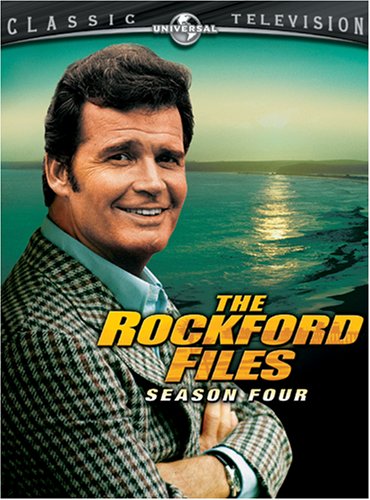
The networks finally achieved what drug lords, mobsters and even zombies could not. Year four meant the end of Starsky and Hutch. Unfortunately the show was running out of gas quickly, so this was not near the quality of the previous years. It looks too much like David Soul and Paul Michael Glaser were pretty much ready to move on to other things. Neither of the men would make the impact again they made with Starsky and Hutch. Huggy Bear is not to be found near as often as he had been, so a ton of the humor was mis...ing from the season. Many of the storylines were recycled from previous episodes, like the one partner in the hospital while the other tracks down the bad guys routine. Still, even just going through the motions, the boys are worth watching one more time.
Video
Posted in: Disc Reviews by Gino Sassani on October 25th, 2006
Wasn’t it just yesterday that The Fast and the Furious raced across our theatre and soon after took the checkered flag on DVD in our own living rooms? I guess not, because Fast and the Furious: Tokyo Drift is upon us, and it’s the third and least imaginative of the franchise. Unfortunately, none of the previous films’ characters return for this third outing. I don’t count the clever little cameo that serves as the film’s coda. Gone are also the cool American muscle cars that gave the franchise its edge. The souped ...p autos this time around don’t stand out beyond the bright paint jobs. Lucas Black is quite one dimensional as a teen who has been busted one too many times street racing. He’s forced to move to Japan where his father is stationed, where he pretty much takes up where he left off. This time around the film concentrates its energy on a driving style apparently popularized in Tokyo called drifting. Hence the name. Drifting is the ability to make sharp turns by basically sliding sideways. Boy, that can’t be easy on the tires.The trouble is, the maneuver is pretty boring to watch. It might better please the figure skating crowd, but not the hard core NOS driven racing nuts that seek out these films. The only character worth caring about is Twinkie (Bow Wow), the fish out of water ghetto kid on the streets of Tokyo. The love interest this time around is a gangster girlfriend, Neela (Kelley) but she shows about as much emotion as the cars. And it’s the cars where this thing quickly runs out of gas.
Video
Posted in: Disc Reviews by Gino Sassani on October 20th, 2006
From the rather twisted mind of Stephen King, Pet Sematary is actually one of my favorite of his horror novels. It’s scary to think the story was never meant to be published and only offered up to finish a contract with his earlier publisher. As has been the Stephen King plague at nearly every turn, something ends up lost in the translation. In the novel, the deeper subtexts that King is so adept at take several hundred pages to set up and ultimately pay off. Unfortunately a mere couple of hours of celluloid never ...eem to scratch the graveyard surface soil. Pet Sematary is, sadly, a definitive example. While the original work taunts us with its mystic undertones that always seem far more believable than they ought to be, the film lays down a path as overgrown as the one leading to the titular graveyard. At first the two works are not so convergent, and a great deal of hope is to be had. Soon, however, the movie descends into the typical shock horror film so common in recent years. Startles and zombies begin to dominate the experience, while the story’s deeper and far more frightening elements lie as dead as the bones of the neighborhood pets.
The plot points are pretty faithful to the King work. For ages the kids in this suburban Maine neighborhood have been burying the remains of their beloved pets, often victims of a dangerous road, in the barren soil of the local Pet Sematary, misspelled by the countless kids who christened the field untold years ago. But beyond the pet graveyard is a more mysterious and foreboding place. It was here that Indians brought the dead back to life. Our unfortunate family is about to discover that perhaps “dead is better”.
Posted in: Disc Reviews by Gino Sassani on October 20th, 2006
This could have been a pretty good film. I just don’t know. The advance material and the jacket suggest this is a “gripping thriller” with timely themes of terrorism and war. As soon as the film opens, it becomes immediately obvious that something entirely different is at work here. A news report suggests that a tyrant is showing his compassion and generosity when he commutes the sentence of a prisoner about to go to the guillotine. What does he commute the sentence to? Death by hanging. What a guy. I think my mood...was determined at that point. With the evident conflict, I begin to wonder just what the intent really was. Is this a satire? Do they really think this is “gripping” stuff? It’s hard to believe that the satirical nature of this script could be accidental. The entire film presents us with awkwardly comedic elements mixed with rather brutal images of death and torture. So what the heck is this film after all?
The film opens with an explanation that this undisclosed nation has been ruled by a brutal tyrant for many years. Upon the man’s suspicious death, his inept son, affectionately called Jr., takes over. The trouble is Jr. is worse than his father and is far more concerned with making bad action films than actually running the country. Campaign ads remark that you should “re-elect President for life and Things Will Be OK”. An underground revolutionary leader has been in prison for over ten years. He uses the time to write quaint words of wisdom on the walls of his cell in excrement while enticing his guard to his political beliefs. What follows is an expected coup followed by yet another brutal dictatorship. As the soldier wisely remarks, “Before the revelation it was man exploiting man; after the revelation it has reversed”. It is in this second act that the film attempts to jettison its comedic style and be the serious effort it claimed to be. More brutal images assault us at every turn, but by now it’s too late..