1080p

John Wayne Gacy was one of Chicago's most infamous killers. He most remembered for the images of him as a clown. He used to entertain at parties in the costume. While it was never really part of his killing life, he was forever known as the Clown Killer. Gacy would entice young men, often gay hookers, into his home where he would drug them and have sex with them. He would also trick them into putting on handcuffs, and he would strangle them to death. He buried the bodies of his victims in a crawlspace beneath his house, where the mass grave's discovery would lead to his arrest and conviction. A bit of a surprising development was that Gacy himself ended up drawing an accurate map of where each of the bodies could be found, because he didn't want them to rip up his floors. Of course, it should have been clear to him by then that he wasn't going to be living there ever again.

We all know the story. There have already been countless films and documentaries as well as books dealing with every aspect of the killer's life and crimes. Apparently, there was another little known story that hadn't gotten quite the same amount of attention. In the 14 years that Gacy was incarcerated awaiting his eventual execution for the murders, he was quite the communicative butterfly, writing to many of the folks who wrote to him in prison. He would attempt to manipulate these people from behind his own prison cell. One of these pen pals was criminology student Jason Moss. Moss would later write a book about his experiences with Gacy called The Last Victim. In the book he described the correspondence that led to him actually visiting with Gacy in the last days leading up to his execution. Obviously, there are going to be some liberties with the film, but it is nonetheless a fascinating character study of a relationship that got terribly out of hand.

Bryce and Juli first meet in the second grade. Juli is convinced that Bryce is walking around with her first kiss, while Bryce is not returning any sense of being similarly infatuated with Juli. As the years pass by, Bryce manages to keep her at bay, until things “flip” (as it were) and it is Juli who may be veering away from Bryce.

This will-they won't-they (probably will) romance is told by trading the point-of-view and narrator between Bryce and Juli. This tactic makes the story more interesting to take in, despite the potential tedium of having the entire story essentially being told twice. The audience is privy to the continuous compare and contrast happening between Bryce and Juli's thoughts and feelings and so we get a more immediate understand of who they are, and what they are motivated by.

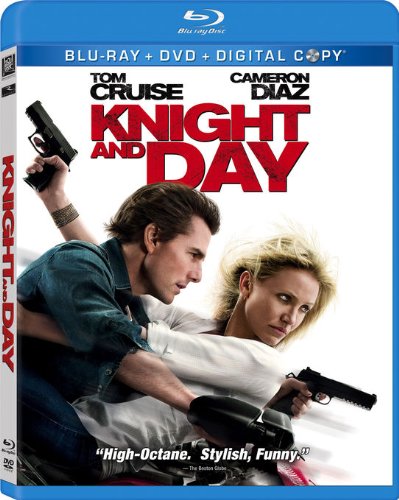
A suave Tom Cruise and a flustered Cameron Diaz (wow, what a stretch for both actors) bump into each other at Wichita airport, and a few minutes later do so again. Diaz thinks she might be on to something with the charming hunk, but she is more accurately into something, and in far out of her depth, as the plain flight turns into a gun battle and forced landing. Before she knows it, she doesn't know where to turn and whom to trust: the various menacing government officials (headed up by a sinister Peter Sarsgaard), or the cheery but possibly psychotic rogue Cruise. There will be many a narrow escape and an international location visited before she knows the answer.

Tom Cruise's return to action-adventure films was almost more notable for the off-screen backstory than the on-screen action. This, of course, was the film he chose to do when he backed out of the darker-edged Salt, where he was replaced by the rather more convincing Angelina Jolie, and which proceeded to beat Knight and Day at the domestic box office. (In fairness, neither film was a giant hit, and the overall worldwide business of both was pretty close.)

"The war between sorcerers was fought in the shadows of history, and the fate of mankind rested with the just and powerful Merlin. He taught his secrets to three trusted apprentices, Balthazar, Veronica and Horvath. He should have trusted only two."

It was one of the most memorable Walt Disney moments in the long history of animation. The Sorcerer's Apprentice segment in Fantasia would become the most recognizable piece of the film. It would be released many times over the years since 1940, so that even people who had never even heard of Fantasia recognized Mickey Mouse as the sorcerer's apprentice who abused the power he had learned to bring a broom to life and do his chores while he slept. The magic got out of his control and mayhem ensued. The images linger still. Now the combination of Jerry Bruckheimer, Jon Turteltaub, and The Walt Disney Studios has teamed up for a new adventure film very loosely based on that original material. This is the same team that brought us the National Treasure films and part of the team that continues to bring us the Pirates Of The Caribbean films. If you liked those franchise films, you can expect more of the same in The Sorcerer's Apprentice.

"Nobody thinks of it from the whale's point of you."

I think this is the very first film I've ever seen that was made in Iceland. Of course, Iceland isn't one of those movie-making meccas known throughout the world for their movie magic. The truth is, there haven't been too many films set in Iceland and even fewer shot on location there. Now that Harpoon has come along, I don't expect that is going to change any time soon.

And the George Lucas Award for the filmmaker who has mined the most out of his movie this year....the envelope please. It's James Cameron for releasing not one, not two, not three, but four different versions of Avatar in less than a year. But I'll have to give him a pass, just this once. This 3-disc collection offers enough goodies that it will tempt you to trade in your still-new version for this complete collection. Better yet ... put it at the top of your Christmas list. The film comes in three versions. One with 8 minutes added. Another with 16. What's the point of having the new version if not to see the most extensive edit?

I grew up on the Peanuts creations of Charles M. Schulz. Most of us have, in some way or another. His newspaper comic strip is one of the longest running and most successful strips of all time. The work has been translated into every language currently spoken on the planet. The images of Charlie Brown, Snoopy, Linus, and the rest of the Peanuts gang have appeared on just about any kind of product imaginable. Our pop culture contains too many references to the strip to mention briefly. For me, it was the television specials starting in the mid 1960’s that brought the gang into my life. The classics are running annually, still after nearly 50 years. A Charlie Brown Christmas, A Charlie Brown Thanksgiving and It’s The Great Pumpkin, Charlie Brown are the most mentioned and certainly beloved by generations of children and adults. I thought I never missed an airing.

A Charlie Brown Christmas

"September 19th. Dear Diary, as I sit here thinking about picking up the pieces of what used to be my life, I realized something. Every room in this house holds a painful memory for me. Even though he's suffering, something somewhere in me wants him to suffer more. A few months and a divorce can take you through just as many emotions as 18 years in a marriage. And I'm starting to feel all of them at once. But the one that is clear is rage. Signed, a Mad Black Woman."

Lately I've had an opportunity to watch a ton of Madea on Blu-ray. Lionsgate is bringing out all of the Tyler Perry collection on high-definition Blu-ray of late. It makes sense that this wave of releases would also include Diary Of A Mad Black Woman. This is where Madea's cinematic life began. Watching these films has been a bit of a blessing and a curse. The blessing part comes from some of the pure hilarity that can be Madea. The curse comes in the form of Perry's Jekyll and Hyde style of presenting these absolutely classic comedy moments with tales of faith and redemption. Again, both styles are admirable and good on their own. I just have trouble with the mix. However, Diary Of A Mad Black Woman is better than most of his efforts in that department. Because Madea relates more integrally with the other story, it doesn't come across near as awkward as some of the others. This was probably the best of this recent wave of Tyler Perry movies. And so it seems I saved the best for last.

Truth is I don’t do very well with Christmas movies. Most of them reek of bad acting and a whole mess of clichés. One of my least favorite movies of all time is A Christmas Story, a masterpiece of absolutely awful movie making. So, needless to say when I received Thomas Kinkade’s Christmas Cottage, I wasn’t exactly abundant with anticipation. Let’s just hope that we don’t want to shoot our eye out over it or anything.

The year is 1977. Thomas Kinkade (played by Jared Padalecki) is busy at working drawing his girlfriend, Hope (played by Gina Holden) as she models (don’t worry, this is a Christmas movie, so all we get is some bare shoulder action). However, he has to stop what he’s doing and go home for Christmas. Where is home you might ask? Why, that’s Placerville, California. The little town also happens to be known as the Christmas Tree capital of the World.

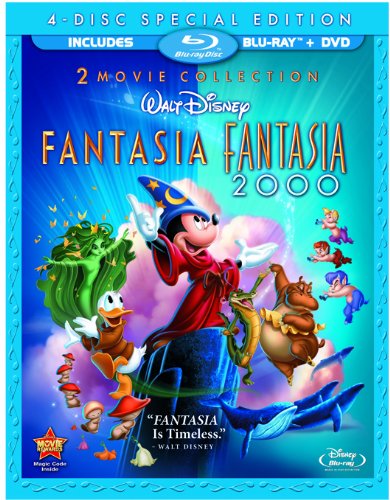
"How do you do? My name is Deems Taylor, and it's my very pleasant duty to welcome you here on behalf of Walt Disney, Leopold Stokowski, and all the other artists and musicians whose combined talents went into the creation of this new form of entertainment, Fantasia. What you're going to see are the designs and pictures and stories that music inspired in the minds and imaginations of a group of artists. In other words, these are not going to be the interpretations of trained musicians, which I think is all to the good."

Just three years after Walt Disney introduced the world to the animated feature in 1937, Uncle Walt was already experimenting with the idea. The man was always fascinated with music as much as he was with animation and the wonderful fairy tales that would become his studio's trademark. It was inevitable that he would come up with the idea of blending music with animation to create something quite unique in the world of entertainment. You have to remember that not only had there only been three years since the first animated feature, but that sound itself in motion pictures was still only a couple of decades old. By 1940 Walt Disney had combined both elements to create something truly magical.