BD-Live

"Did you ever notice how you let a Mexican into your home just because he's got gardening tools? I mean, no questions asked. You just let him right in. He could have, you know, a chainsaw or a machete."

The last year has been a hot year for the illegal immigration debate, between the Arizona law and the various politicians to the vigilante groups that volunteer to arm up and patrol the borders. As the debate rages on and the violence increases, it was only a matter of time before someone exploited it all for your entertainment pleasure. Who better than Robert Rodriquez and his usual cast of suspects?

"I have come to tell you a story..."

Director Phillip Noyce is no stranger to the spy-and-espionage genre. His father was an intelligence officer with the Australian government, and he spent many years of his childhood listening to tales of derring-do. He often recounts in interviews how he would play spy as a young man. He would pick out some stranger he'd see while out and about. For the next several hours he would follow that person, noting their actions, all the while practicing not getting caught. He'll tell you that his nerve got the best of him or he might have very well found himself following in the footsteps of his father. Perhaps someone else would have been making films about his exploits. Instead he gravitated to the next best thing. He decided to make movies about such things. Some of those films like Clear And Present Danger and Patriot Games are solid examples of the genre. Others might not be quite so successful at the box office but are often better than their numbers might indicate. Count Salt in that category. Salt was obviously intended to start a new franchise. The ending doesn't even hide the setup for another film. But the reality is that the movie made only about $118 million on a $110 million budget. $7 million might sound like a lot of money to you or me, but in Hollywood those aren't the kinds of numbers on which solid franchises are built. Too bad, really, because Salt is a pretty entertaining film.

"The war between sorcerers was fought in the shadows of history, and the fate of mankind rested with the just and powerful Merlin. He taught his secrets to three trusted apprentices, Balthazar, Veronica and Horvath. He should have trusted only two."

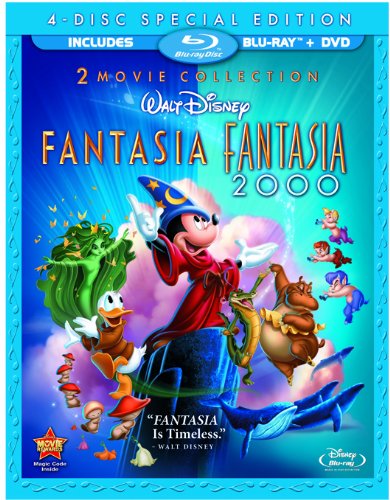
It was one of the most memorable Walt Disney moments in the long history of animation. The Sorcerer's Apprentice segment in Fantasia would become the most recognizable piece of the film. It would be released many times over the years since 1940, so that even people who had never even heard of Fantasia recognized Mickey Mouse as the sorcerer's apprentice who abused the power he had learned to bring a broom to life and do his chores while he slept. The magic got out of his control and mayhem ensued. The images linger still. Now the combination of Jerry Bruckheimer, Jon Turteltaub, and The Walt Disney Studios has teamed up for a new adventure film very loosely based on that original material. This is the same team that brought us the National Treasure films and part of the team that continues to bring us the Pirates Of The Caribbean films. If you liked those franchise films, you can expect more of the same in The Sorcerer's Apprentice.

And the George Lucas Award for the filmmaker who has mined the most out of his movie this year....the envelope please. It's James Cameron for releasing not one, not two, not three, but four different versions of Avatar in less than a year. But I'll have to give him a pass, just this once. This 3-disc collection offers enough goodies that it will tempt you to trade in your still-new version for this complete collection. Better yet ... put it at the top of your Christmas list. The film comes in three versions. One with 8 minutes added. Another with 16. What's the point of having the new version if not to see the most extensive edit?

"How do you do? My name is Deems Taylor, and it's my very pleasant duty to welcome you here on behalf of Walt Disney, Leopold Stokowski, and all the other artists and musicians whose combined talents went into the creation of this new form of entertainment, Fantasia. What you're going to see are the designs and pictures and stories that music inspired in the minds and imaginations of a group of artists. In other words, these are not going to be the interpretations of trained musicians, which I think is all to the good."

Just three years after Walt Disney introduced the world to the animated feature in 1937, Uncle Walt was already experimenting with the idea. The man was always fascinated with music as much as he was with animation and the wonderful fairy tales that would become his studio's trademark. It was inevitable that he would come up with the idea of blending music with animation to create something quite unique in the world of entertainment. You have to remember that not only had there only been three years since the first animated feature, but that sound itself in motion pictures was still only a couple of decades old. By 1940 Walt Disney had combined both elements to create something truly magical.

"Man, we'll die with you. Just don't ask us to do it twice."

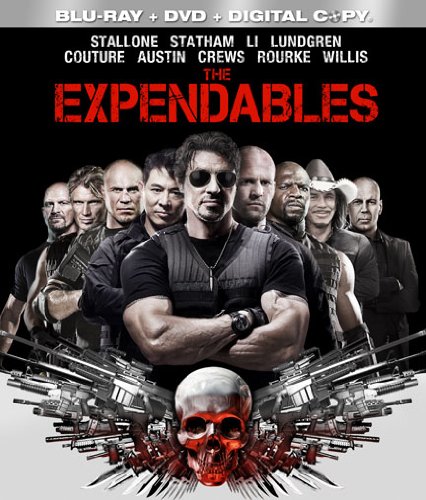
Remember the old days of the action movie? Those films where someone like Stallone or Schwarzenegger would run around and take out armies of bad guys while barely breaking a sweat. You know the kind of movie I'm talking about. The ones where the hero goes up against a hail of bullets and explosions and manages to pick off the bad guys without catching a single slug himself. These were the days when a guy like Bruce Willis could fall thirty floors, get a spike impaled in is ribcage, have a ton of concrete wall fall on his head and get run over by a truck but still manage to take out the bad guy while muttering some witty little catch phrase that we would all be repeating, because if we can deliver the line just right that meant we were tough guys too, and we didn't even have to fall out of an airplane to prove it. Well, you won't have to remember. You just have to watch Sly Stallone's love letter to the action movie fans. It's called The Expendables, and it's out right now on high definition Blu-ray from Lionsgate.

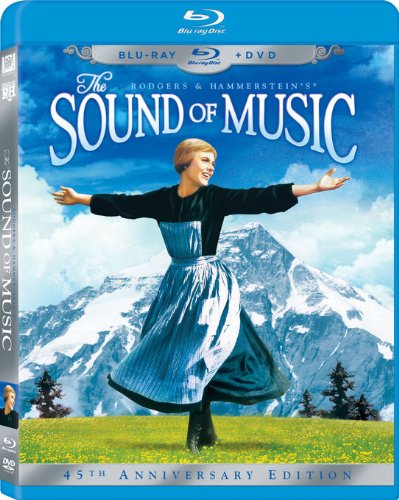
"The hills are alive with the sound of music..."

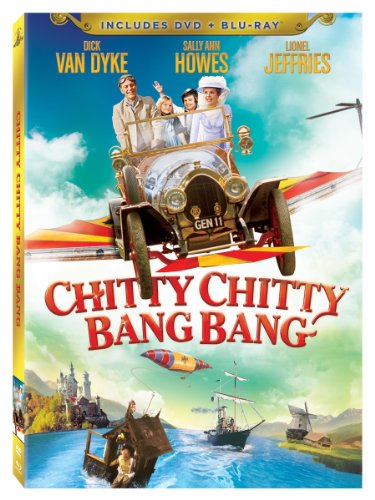
His name was Fleming, Ian Fleming, and he would go on to create the most famous spy in literary history. James Bond would actually be based on Fleming's own experience in Her Majesty's Secret Service. But Fleming had another side. It's hard to believe that the man who gave us such ubervillians as Dr. No and Goldfinger brought us one of the most enchanting children's stories of our time. Chitty Chitty Bang Bang's bond association doesn't end with its celebrated author. Albert "Cubby" Broccoli might have been just as instrumental for the success of Bond as Fleming himself. It was Broccoli who saw the potential and snapped up the rights to the spy series. He turned it into the famous Bond film series that still carries on the same traditions today, only at the hands of his daughter Barbara Broccoli. So it is only fitting somehow that Cubby would be the one to bring Fleming's children's story to life in movies, as well. The Bond associations don't end there. Director Ken Hughes brought us Casino Royale. The comic villain of the movie would be almost unrecognizably played by Gert Frobe, none other than Auric Goldfinger himself.

MGM has long been known for its epic musicals. The studio had a reputation for sparing no expense while delivering some of the most sweeping musical films known to mankind. Complete with complicated dance numbers and casts of thousands, the MGM grand-style musical was once something to behold. But Chitty Chitty Bang Bang wasn't really the model for these impressive spectacles at all. In fact, this movie follows more closely the Walt Disney model that it is one of the most misidentified films in the popular conscience. In a survey taken in the 1980's, only 1 out of 4 respondents correctly identified the film as an MGM production. The rest were confident that Uncle Walt and his Mouse House had given us the popular children's musical.

I'm not exactly sure what it is that audiences expected when Splice hit the box offices in June. I will have to admit that the trailers were not all that impressive. But I guess that most people didn't see what I saw when I looked at the early promotion for the film. I was fascinated by the appearance of the "creature", and the overall Frankenstein overtones were too much for me to resist. The movie compelled me from the first images and descriptions. Apparently, that wasn't the case in general. Splice tanked at the box office. It barely made $17 million. That's bad news, because the film cost $30 million to make. That figure is actually quite impressive. This was a small movie for one so ambitious. It looks like something that cost twice that to make. It didn't matter, in the end. You stayed away in droves. Back in June, you just might not have known any better. Lucky for you, my gentle reader, you have me to help to guide your home video purchases to get the most bang for your hard-earned buck. In this case, to also correct a serious miscarriage of justice. Splice is the best film you never saw.

Clive (Brody) and Elsa (Polley) are a husband-and-wife super-science team in the field of genetics. They work for a small pharmaceutical company where they develop designer life-forms in the hope of generating new drugs and compounds for the company to market. They are driven by William Barlow (Hewlett) to produce. When they do finally create a creature with drug potential, the company scraps any future gene-splicing. They want the couple to now focus on synthesizing the important compounds they can generate with the life they've already created. But the couple, particularly Elsa, wants to take their process to the next level. They want to incorporate human DNA in their experiments. Even though the company has closed them down, they continue in secret. The result of their undercover work is Dren. The specimen grows at an incredible rate, allowing the couple to study an entire life cycle in compressed time. But, the experiment gets complicated as Dren matures and evolves, making it harder to keep the creature a secret. They move her to a farm that was once part of Elsa's family home. There the couple begins to deal with the consequences of their actions.

When Wes Craven delivered his first Nightmare On Elm Street film back in 1984, there wasn't much expectation for the film to do anything but deliver a little profit for the new independent studio New Line Cinema. The film did quite a bit better than that. It made the small studio into a player in the industry with the budget to make mainstream films that would have never been possible if not for Craven's little Nightmare. You could say that The Lord Of The Rings owes its very existence, at least in the form of the Peter Jackson films, to Freddy Krueger. Of course, the studio just couldn't help itself, and they continued to cash in on the franchise time after time. After the 7th film, it appeared that even the fans were about done with Freddy Krueger. A misguided attempt to pit Freddy against Friday The 13th's Jason might have pulled in good money at first. But the film ultimately disappointed, and a follow-up became very unlikely, indeed. But, like all good cinema monsters, you can't keep a good fiend down. A Nightmare On Elm Street joined the increasingly long line of horror films that received the remake/reboot/reimagining/regurgitation treatment.

A lot of the 70's and 80's slasher films have been remade by now. All of the big franchise names have been reborn. Michael Myers, Jason, Leatherface, and now Freddy Krueger have all been given the reanimation treatment. With most of these bad guys, there was little problem with replacing the man behind the mask. No one actor had played any of these characters exclusively throughout the franchise run. While Kane Hodder came closest with both Freddy and Leatherface, he was not the only performer under the hood for either monster. Freddy Krueger was different, however. In all of the Nightmare films of the original run, Robert Englund had been the only actor to play Freddy. There was an attempt to replace him in the early goings of the second film, but the filmmakers discovered rather quickly that you can't just put a stuntman in the makeup and turn him loose. Freddy had a personality that had become quite intermingled with that of Englund. So the very first question that had to be answered when the subject of a do-over came up was who was it going to be in the red and green sweater wielding that knife glove. Could anyone but Robert Englund make the part work?