Posted in: Disc Reviews by Gino Sassani on November 9th, 2010
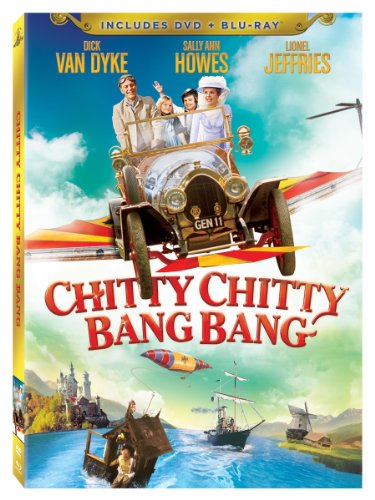
His name was Fleming, Ian Fleming, and he would go on to create the most famous spy in literary history. James Bond would actually be based on Fleming's own experience in Her Majesty's Secret Service. But Fleming had another side. It's hard to believe that the man who gave us such ubervillians as Dr. No and Goldfinger brought us one of the most enchanting children's stories of our time. Chitty Chitty Bang Bang's bond association doesn't end with its celebrated author. Albert "Cubby" Broccoli might have been just as instrumental for the success of Bond as Fleming himself. It was Broccoli who saw the potential and snapped up the rights to the spy series. He turned it into the famous Bond film series that still carries on the same traditions today, only at the hands of his daughter Barbara Broccoli. So it is only fitting somehow that Cubby would be the one to bring Fleming's children's story to life in movies, as well. The Bond associations don't end there. Director Ken Hughes brought us Casino Royale. The comic villain of the movie would be almost unrecognizably played by Gert Frobe, none other than Auric Goldfinger himself.
MGM has long been known for its epic musicals. The studio had a reputation for sparing no expense while delivering some of the most sweeping musical films known to mankind. Complete with complicated dance numbers and casts of thousands, the MGM grand-style musical was once something to behold. But Chitty Chitty Bang Bang wasn't really the model for these impressive spectacles at all. In fact, this movie follows more closely the Walt Disney model that it is one of the most misidentified films in the popular conscience. In a survey taken in the 1980's, only 1 out of 4 respondents correctly identified the film as an MGM production. The rest were confident that Uncle Walt and his Mouse House had given us the popular children's musical.
Posted in: Disc Reviews by Gino Sassani on November 8th, 2010
I'm not exactly sure what it is that audiences expected when Splice hit the box offices in June. I will have to admit that the trailers were not all that impressive. But I guess that most people didn't see what I saw when I looked at the early promotion for the film. I was fascinated by the appearance of the "creature", and the overall Frankenstein overtones were too much for me to resist. The movie compelled me from the first images and descriptions. Apparently, that wasn't the case in general. Splice tanked at the box office. It barely made $17 million. That's bad news, because the film cost $30 million to make. That figure is actually quite impressive. This was a small movie for one so ambitious. It looks like something that cost twice that to make. It didn't matter, in the end. You stayed away in droves. Back in June, you just might not have known any better. Lucky for you, my gentle reader, you have me to help to guide your home video purchases to get the most bang for your hard-earned buck. In this case, to also correct a serious miscarriage of justice. Splice is the best film you never saw.
Clive (Brody) and Elsa (Polley) are a husband-and-wife super-science team in the field of genetics. They work for a small pharmaceutical company where they develop designer life-forms in the hope of generating new drugs and compounds for the company to market. They are driven by William Barlow (Hewlett) to produce. When they do finally create a creature with drug potential, the company scraps any future gene-splicing. They want the couple to now focus on synthesizing the important compounds they can generate with the life they've already created. But the couple, particularly Elsa, wants to take their process to the next level. They want to incorporate human DNA in their experiments. Even though the company has closed them down, they continue in secret. The result of their undercover work is Dren. The specimen grows at an incredible rate, allowing the couple to study an entire life cycle in compressed time. But, the experiment gets complicated as Dren matures and evolves, making it harder to keep the creature a secret. They move her to a farm that was once part of Elsa's family home. There the couple begins to deal with the consequences of their actions.
Posted in: Disc Reviews by Gino Sassani on November 8th, 2010
When Wes Craven delivered his first Nightmare On Elm Street film back in 1984, there wasn't much expectation for the film to do anything but deliver a little profit for the new independent studio New Line Cinema. The film did quite a bit better than that. It made the small studio into a player in the industry with the budget to make mainstream films that would have never been possible if not for Craven's little Nightmare. You could say that The Lord Of The Rings owes its very existence, at least in the form of the Peter Jackson films, to Freddy Krueger. Of course, the studio just couldn't help itself, and they continued to cash in on the franchise time after time. After the 7th film, it appeared that even the fans were about done with Freddy Krueger. A misguided attempt to pit Freddy against Friday The 13th's Jason might have pulled in good money at first. But the film ultimately disappointed, and a follow-up became very unlikely, indeed. But, like all good cinema monsters, you can't keep a good fiend down. A Nightmare On Elm Street joined the increasingly long line of horror films that received the remake/reboot/reimagining/regurgitation treatment.
A lot of the 70's and 80's slasher films have been remade by now. All of the big franchise names have been reborn. Michael Myers, Jason, Leatherface, and now Freddy Krueger have all been given the reanimation treatment. With most of these bad guys, there was little problem with replacing the man behind the mask. No one actor had played any of these characters exclusively throughout the franchise run. While Kane Hodder came closest with both Freddy and Leatherface, he was not the only performer under the hood for either monster. Freddy Krueger was different, however. In all of the Nightmare films of the original run, Robert Englund had been the only actor to play Freddy. There was an attempt to replace him in the early goings of the second film, but the filmmakers discovered rather quickly that you can't just put a stuntman in the makeup and turn him loose. Freddy had a personality that had become quite intermingled with that of Englund. So the very first question that had to be answered when the subject of a do-over came up was who was it going to be in the red and green sweater wielding that knife glove. Could anyone but Robert Englund make the part work?
Posted in: Disc Reviews by Gino Sassani on November 4th, 2010
"The Toys Are Back In Town"
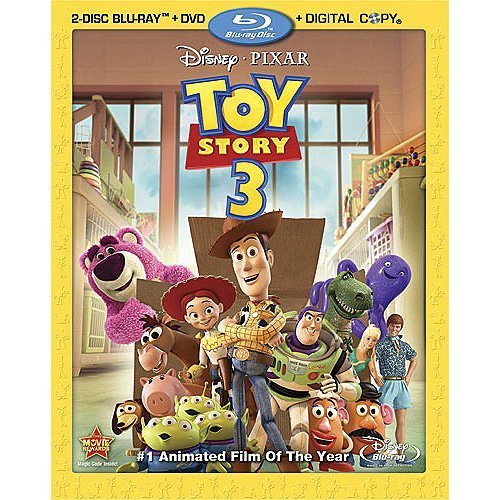
That's right. All of your favorite toys are back in Pixar's latest great film Toy Story 3. This time the toys are dealing with the inevitable. Andy (Morris) is about to go off to college. It's been a long time since he's played with his friends, and they are getting desperate and worried they will get tossed away. Although Andy bags them to be stored in the attic, a misunderstanding sends them to the curb and a date with the garbage truck. After that close call they decide to get themselves donated to Sunnyside Daycare, where they hope to live out their lives with tons of children to play with them. But things aren't all that sunny at Sunnyside. The place is ruled by the iron paw of Lotso Bear (Beatty) and his cronies. The bad guys include Big Baby. He and Big Baby once were accidentally abandoned by their owner and Lotso was replaced, making him bitter. Now the toys have to escape the armed camp of Sunnyside.
Posted in: Disc Reviews by Gino Sassani on October 28th, 2010
Anyone who is looking for a direct sequel to the 2008 sleeper hit with Kiefer Sutherland or even a connection to the original Asian ghost film might tend to be disappointed in the direct-to-video Mirrors 2. This is absolutely one of those films where the name is used merely because of its franchise value, and the film's associations are mostly just a few familiar names. Add the same basic idea of a haunted mirror at the center of it all, and you pretty much have all of the connections this movie makes to either of the original projects. With that said, there is a bit more to like about Mirrors 2 than you might suspect on the surface.
This time it's Nick Stahl who plays a down-on-his-luck security guard at another branch of the Mayflower Department Store. He is Max, who has been dealing with a great deal of guilt of late. His fiancée was killed in an auto accident by a drunk driver. But Max was driving and wasn't paying attention to the road. He was playing a game of "find the ring" with his girlfriend when the tragedy occurred. As it turns out, Max's father (Katt) is the owner of the Mayflower Department Store, which is about to reopen its doors in New Orleans. The previous night watchman cut himself quite severely and quit his job, apparently going crazy during a night shift. Of course, we saw what really happened. It was an image in the main mirror that caused his injuries. The grand opening has been plagued with mishaps. Eleanor Reigns (Honore) has been missing for several weeks. Max discovers her spirit in the store mirror on his first night on the job. He also sees a vision of the store's executive buyer, Jenna (Romano) lose her head, literally. Later that night, he discovers that the woman really was decapitated by a shower door. He begins to see other prophetic images and decides something is seriously wrong here.
Posted in: Disc Reviews by Gino Sassani on October 27th, 2010
In June of 1987 many of us took to our local theaters to watch two future state governors tackle an alien creature in the jungles of southeast Asia. Director John McTiernan had combined the Rambo mercenary-styled film with that of a creature feature. The result was an impressive $60 million on a mere $15 million budget, and a franchise was born. From its first reveal in those Asian jungles, the Predator was an impressive sight. The creature was highly intelligent, to be sure, but it possessed those baser instincts of hunting and survival. It was a monster, but one who utilized advanced technological weaponry to accent its own fearsome brutal nature. It was the stuff that new nightmares would be made of. A sequel featuring Danny Glover and placing the creature in an urban setting soon followed. While that film is widely disregarded, I found it to be a rather good film. I still think it's an underrated monster movie.
It didn't take very long before the fan boys in Hollywood started getting their imaginations running wild. The inevitable question, since Frankenstein's Monster met up with The Wolfman -- who would win if we put the Predator against the Alien. It was a heavyweight fight just itching to play itself out at the box office. And, it did ... twice. The result might have destroyed both franchises. It seemed that these creatures had finally met their match, and it wasn't each other. Bad writing and wayward filmmaking brought down both creatures. It appeared as if they were both gone, forever.
Posted in: Disc Reviews by Gino Sassani on October 26th, 2010
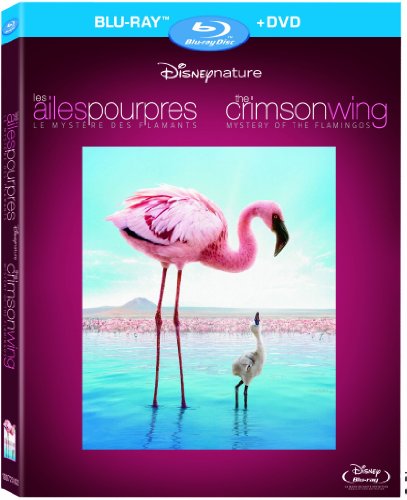
"The flamingo is said to be the inspiration for the crimson-winged Phoenix, the ancient symbol of transformation and rebirth. At the end of its life, the Phoenix is consumed by fire. It is then reborn from the ashes."
In one of the more specific full-length documentary features that I've seen in a long time comes Disney Nature's The Crimson Wing. Here the focus is on one species of bird. This is your all-flamingos all-the-time station. Have you ever thought to yourself, "You know, I just can't get enough flamingos"? Look no farther.
Posted in: Disc Reviews by Gino Sassani on October 26th, 2010
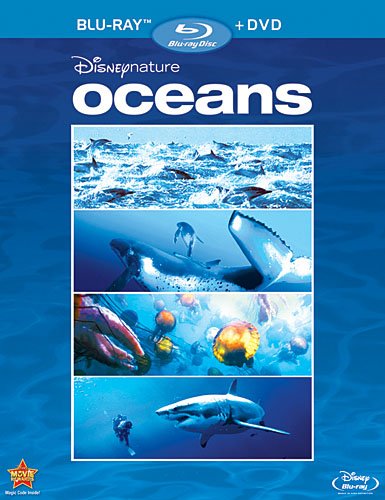
"A boy comes running up, and he asks: 'what exactly is the ocean?' 'What is the sea?' You could hit him with a lot of statistics and Latin names. But the answer isn't something you'll find in a book. To really know what the ocean is, you have to see it for yourself. You have to hear it. And taste it. You have to feel its power. To really know the ocean, you have to live it."
And live it you will with Disney Nature's latest entry into their award-winning series of natural documentaries. Walt Disney Studios is no stranger to the world of nature. While the brand is more quickly identified for its animation and other family fare, the tradition of nature specials goes back to the very roots of the company itself. For decades Disney provided some of the most exotic television documentaries on its many outlets that included The Wonderful World Of Disney. The studio was one of the first to take experienced camera crews and equipment out into some of the most remote places on Earth. And, while Disney had appeared to fall behind in the field for some decades, that all turned around with their groundbreaking Earth series. Suddenly Disney Nature was back in the forefront of frontier footage. The tradition is honored here with one of the latest entries in the family: Oceans.
Posted in: Disc Reviews by Gino Sassani on October 18th, 2010
"I never wanted a war. I just wanted people to know what happened here. 98 men, women, children ... my husband. And yet no one believed. They rebuilt the town. Life went on. But I was already dead inside. I never wanted a war."
In October 2007 30 Days Of Night was unleashed at the box office to less than stellar numbers. In fact, the film took in only $39 million off of a $30 million budget. That's not usually a good sign for any potential franchise. But the film was received very well by the folks who did like it. I was one of those people. I found myself defending the film to a lot of others who were obviously not so impressed with the take on the vampire legend. The film was about a mythical town in Northern Alaska that experiences 30 days of nightfall each winter. The residents either leave or they dig in for the duration of the month-long darkness. As it turns out, the setup was the perfect situation for vampires, who could feast on the remaining citizens without fear of a rising sun putting a wet blanket on their free-for-all picnic. The film followed a few survivors as they fought back against the creatures of the night. It was based on a cult-favorite graphic novel. It all seemed like a pretty solid idea. But it wasn't the location and month-of-darkness scenario that seemed to turn many horror fans away from the movie. What caused that unfortunate movement was the same thing that I found to be the film's strength.

Posted in: Disc Reviews by Gino Sassani on October 6th, 2010
The legacy of Walt Disney and the studio he created requires little explanation. The studio invented the idea of a feature-length cartoon and has been on the cutting edge of animation since the 1930’s. No other studio can claim ownership of as many animated classics as Disney. From Mickey Mouse to Pixar, the studio has churned out one masterpiece after another for over 60 years. What tends to get lost in this great body of feature-length classics is that the studio was also producing some very high-quality shorts over these years. Whether it’s Disney favorites like Mickey, Donald, Minnie, or Goofy or it’s strictly one-off characters gathered to tell a wonderfully animated story, Disney has a record that simply hasn’t been and likely will never be matched.
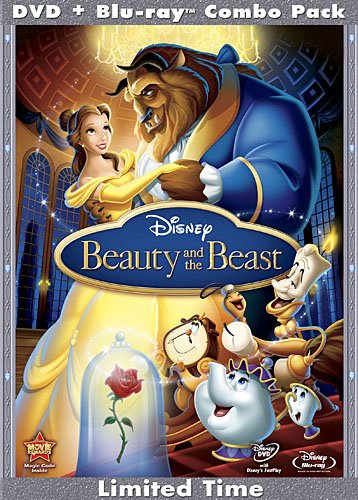
The Disney magic faded for a little while during the 1980's. There were still animated features, but they weren't the groundbreaking triumphs of the studio's golden age. All of that changed as we entered the 1990's. The Little Mermaid is considered the first of the new wave of Disney classics. It certainly signaled a change in the direction of animation at Disney. While the change may have begun there, I believe it was Beauty And The Beast that started a wave of productions that would peak with The Lion King. With Beauty And The Beast everything is cranked up a notch from the mediocre affairs the studio had been churning out for a time. Beauty And The Beast had the epic proportions, fluid animation, and bright colors that set the Disney Express back on track.