Dolby Digital 2.0 (English)

The Mother Superior of a medieval convent is tormented by visions. Torn by her own desires, she sees herself confronted by Mary Magdalen on a throne with a demon by her side. Magdalen challenges the nun's beliefs that sex is bad, but this notion is reinforced by another vision, this one of a skeleton in nun's habit. The poor nun's torment is compounded by other visions of all sorts of carnal hell breaking loose.This is a real oddity. The writer/director is Nigel Wingrove, who, the case informs us, is the founder of Redemption Films. That outfit was one of the pioneers of deluxe re-issues of 70s Eurotrash horror and sexploitation, with plenty of nunsploitation tossed in. So here is a new exploitation film, very much a love letter to those earlier films, and is such an exercise in personal expression that it raises the question: can such a labour of love really count as exploitation. Then there's the problem of how wordy the script is. So while there is a fair bit of naked female flesh on display (apparently waxing was de rigeur in the Middle Ages), the rather stiff philosophizing takes up the lion's share of the screentime. The film is ambitious, and has some startling imagery, but doesn't scale the rarified heights of such tour de force efforts as School of the Holy Beast.

Audio

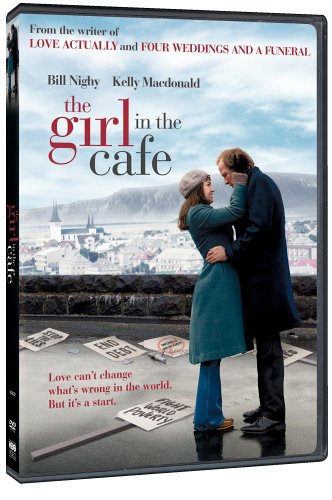
The Girl in the Café is an interesting idea for a movie. It’s a blend of romantic comedy with a political agenda. The film doesn’t really work, but it’s nice to see something different. The romantic pair is played by Bill Nighy and Kelly MacDonald. Both are fine actors, and they have an awkward, engaging chemistry. Nighy plays a lonely civil servant and MacDonald plays a damn sexy woman. They “meet cute” in, you guessed it, a café, and they end up going to the G8 summit in Iceland (go figure). The scri...t is written by Richard Curtis (of Love Actually). Curtis seems to have a flair for the unconventional in his scripts. He doesn’t quite pull off the last act, but (for most of the ride) The Girl in the Café is worth a look.

Audio

I love it when a DVD as advertised as a “hit series” on the back of the box, yet I have never even heard of it. Granted, I am not this product's target market, but you would still think that I would have at least come across the title of this show somewhere. I am familiar with all of the products advertised on this disc, so I know I am not completely out of the loop.

This show tells the adventures of Lopaka, a boy who has made friends with a dolphin with the original (?) name of “Flipper”. It seems that Flipp...r has somehow taught his earth-bound buddy how to live and breathe underwater. Now, I know this is a cartoon, and it is supposed to fanciful, but come on! I am all for teaching kids to think outside the box, but I don't know of anybody who can “learn” to breathe underwater. Yo have to have a strong command of reality to live outside the box.

I love it when a DVD as advertised as a “hit series” on the back of the box, yet I have never even heard of it. Granted, I am not this product's target market, but you would still think that I would have at least come across the title of this show somewhere. I am familiar with all of the products advertised on this disc, so I know I am not completely out of the loop.

This show tells the adventures of Lopaka, a boy who has made friends with a dolphin with the original (?) name of “Flipper”. It seems that Flipp...r has somehow taught his earth-bound buddy how to live and breathe underwater. Now, I know this is a cartoon, and it is supposed to fanciful, but come on! I am all for teaching kids to think outside the box, but I don't know of anybody who can “learn” to breathe underwater. Yo have to have a strong command of reality to live outside the box.

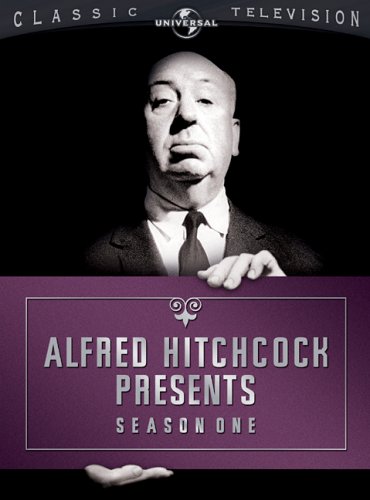
1955 was a very significant year in the life of filmmaker Alfred Hitchcock. He received his American citizenship and he changed the face of the young television industry forever. Alfred Hitchcock Presents came before all of the other classic anthology shows. The show combined Hitch’s trademark gallows humor with his unerring instinct for suspenseful storytelling. The show was the first overnight success, drawing millions of viewers with its first episode, no small feat for 1955.

Hitchcock was ahead of his time. He was one of the first to believe that you could apply the same standards of big budget film making with the limited scope of the newly discovered smaller screen. While Hitchcock did rely on some very talented people to provide the day to day work on the series, his presence could always be felt in every detail. Hitch himself was active in selecting stories as well as cast. The show was both entertaining and thought provoking. Hitch himself began and ended each show with some clever observations and sketches that made him a household name. He tempted fate by constantly poking fun at his own sponsors, a habit that was not always taken in good fun. Hitch also poked fun at the moral code that existed at the time for television. Bad guys were never allowed to get away with their crimes. Instead of adjusting his scripts, Hitch demanded they be unchanged. To “settle the score” as he used to call it, he would inform us of some unfortunate luck the bad guy fell into after the events of the story.

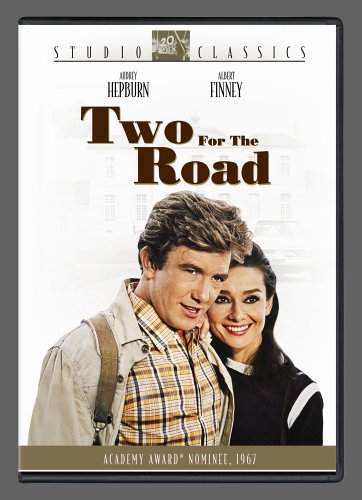
Audrey Hepburn and Albert Finney are a couple whose marriage appears to be reaching its end. They travel through France, which was the scene of so many other memories, and they (and we) experience, through interlocking flashbacks, the history of their relationship.From the moment the animated credit sequence and Henry Mancini score begin, one is clearly watching a Stanley Donen film from the peak of his career (the presence of Hepburn is yet another reminder of Charade from just a couple of years prior). The flashbacks-within-flashbacks structure might initially seem daunting, but the film is light on its feet, and is never confusing. Finney's character is sufficiently cranky even in the early stages of the relationship that one might be forgiven for wondering what Hepburn ever saw in him, but the scenery is pretty and the dialogue zings.

Audio

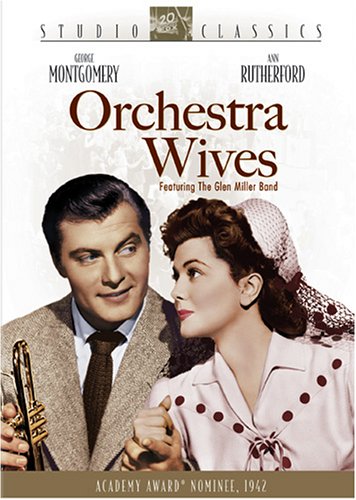
George Montgomery plays the lead trumpet for the "Gene Morrison Band" (the Glen Miller Band). As they set out on tour, he falls in love with, and marries, audience member and big fan Ann Rutherford, much to the displeasure of Lynn Bari. The film then uses the tensions between the various significant others during the tour to cobble together a plot that connects the various musical numbers.From the point of view of plot and character, this is nothing to write home about. But as a record of one of the greats of the Big Band era in action, it is a valuable document, and certainly manages to entertain, if not much else.

Audio

Synopsis

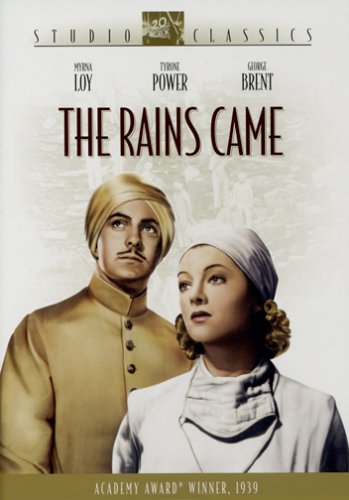
India, 1938. Dissolute ex-pat Brit George Brent is amused when old flame Myrna Loy, now married to an aging aristocrat, arrives, but is less amused when he sees her set her sights on Indian doctor Tyrone Power (all done up in dark make-up). Power is so decent that Brent doesn’t want him corrupted. But it soon turns out that Loy really loves Power, as she demonstrates by helping selflessly after the city is savaged by torrential rains, flooding and an earthquake.

Synopsis

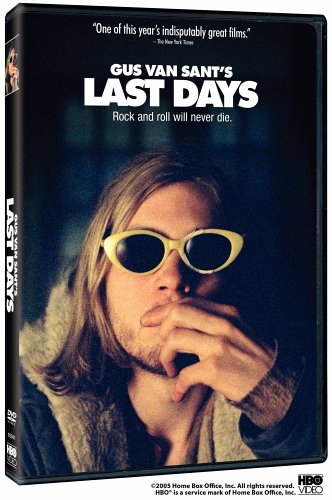
In his mansion and forested estate, a rock star (played by Michael Pitt and named Blake, but obviously supposed to be Kurt Cobain) wanders about in a terminal drug stupor. Hangers on, business associates, Mormons and salesmen besiege him, but his flees human contact, withdrawing completely into himself.

Synopsis

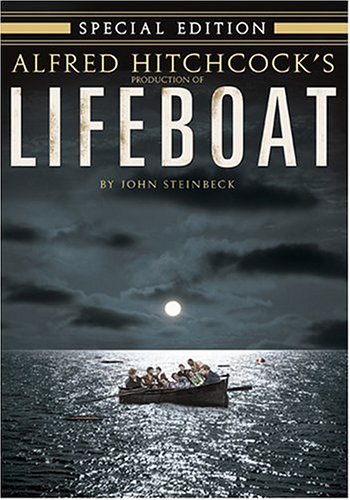
A merchant ship is sunk by a U-boat, but the submarine is itself destroyed by the ship’s shells. All of this happens prior to the credits. The survivors of the ship wind up in a damaged lifeboat, and they pick up a survivor of the U-boat. Is he a mere crewman, or the captain himself? What ensues is a tense drama of conflicting personalities, ranging from the plotting German to the hard-headed newswoman unforgettably incarnated by Tallulah Bankhead. Despite the claustrophobic setting, the fil... never feels constricted. The script may be overly didactic at times, but the results are never less than compelling and suspenseful.