Posted in: Disc Reviews by David Annandale on July 2nd, 2009
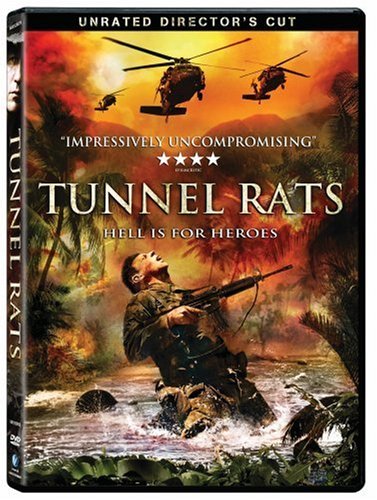
Behind the on-screen title of 1968 Tunnel Rats lurks a vision of Hell. We first get to know a unit of American soldiers tasked with clearing out the networks of underground tunnels constructed by the Viet Cong. Even before the action shifts to the tunnels, the terrible toll of war is on display, with the Lieutenant (Michael Paré) ordering brutal executions and morale very low. Then the operation begins, and everything goes to horribly wrong very quickly.
I haven't noticed the sun turning black or any angels breaking seals today, but the Apocalypse must be upon us, because I have now seen a good Uwe Boll film. The picture succeeds admirably on two fronts. In the first act, as we get to know the troops, Boll turned his cast loose to improvise dialogue and come up with character back stories. While there are no fully rounded characters here, and clichés abound, there is certainly enough here to make these men recognizable human beings. One shot in particular is striking: a prolonged close-up of the sympathetic sergeant breaking down in tears. Then the real lesson about the hellishness of war kicks in, and does so with a vengeance. No character is safe from gruesome demise, and the claustrophobic horror of the setting is milked for all its worth (if you're not reduced to the cold sweats by a scene where a solider finds himself trapped in a tunnel between two corpses, you're already dead). But there are no monsters here – the Viet Cong are not faceless automatons. Instead, we see a group of people, trapped on opposite sides of a ghastly conflict, struggle to stay alive.
Posted in: Disc Reviews by Gino Sassani on June 29th, 2009
“A long time ago in a land far, far away, way East of Chicago, in a place called Brooklyn, actually, a great man named Mel Brooks was born. And, that man begat this and that, and then some, and then he did this…”
This, was Spaceballs. Brooks had tackled pretty much every genre of film before Spaceballs. He took on horror films with Young Frankenstein. He tore up the old West and the Western with Blazing Saddles. He was bold enough to offer us a take up on the Silent Movie. On television he took on James Bond by giving us Agent 86 in Get Smart. With the success of Star Wars and the consistent top box office performance of the science fiction films, it was only a matter of time before he turned his trademark Jewish wit towards the space opera. While Spaceballs aims primarily at the first Star Wars franchise, there is plenty of fun poked at everything from Star Trek to Alien. Certainly there have been quite a few such spoofs since then, but most of them have been the standard dry slapstick in the Airplane mold. With Brooks there’s always a certain amount of class to go with your comedy. He always gives you a little meat to go with all of that cheese.

Posted in: Disc Reviews by Michael Durr on June 29th, 2009
Transformers are something near and dear to my heart. I grew up with them, watched all of the episodes, read many of the comics and watched the animated movie more times than I care to think about. When the original Rhino DVD set came out a few years back, I bought all of the volumes despite the hardship that roughly $50 a volume would cost me. Now, with the 25th anniversary of Transformers upon us, Shout Factory has gained the rights to the series and has re-released the first season to coincide with the release of the second live-action film. Is this simply an attempt to cash in on the mega movie hit of the summer? We shall see.
A civil war is ongoing on the planet of Cybertron. Fierce battles between the Autobots and the Decepticons have tore the planet apart and the energy sources at critical levels. The heroic Autobots decide to go to the planet Earth on the theory that these resources exist there for them to be able to use. However, the Decepticons decide to follow. Once in space, the Decepticons attack under the leadership of Megatron. Optimus Prime and the Autobots try to hold them off but soon both sides crash into the Earth.
Posted in: Disc Reviews by Gino Sassani on June 24th, 2009
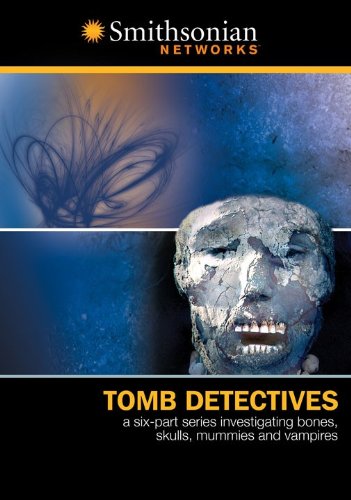
The whole trick to watching the new educational series from the Smithsonian Channel is to keep your head. Someone once said that was the key to battle, to keep your head while those around you are losing theirs. Well, it appears a ton of folks have been losing their heads for centuries. On the surface Tomb Detectives is a real life Bones. The half hour episodes explore ancient bodies, usually merely skeletal remains, and attempt to answer some basic questions: How did they die? What was their life like? What kind of cultural traditions might have been involved with the death? Was this an execution or an inevitable result of battle? Where these ancient victims the willing participants in a religious sacrifice, or were there criminal elements at play? The series gives you a close up look at these remains and then introduces you to a team of scientists who will attempt to answer these burning questions. It’s sort of like the team from CSI trying to solve murders that are as much as 2000 or more years old. Of course, there is no statute of limitations on murder. We follow the team into the lab where various experiments provide clues to these answers. There are often very low budget dramatizations of the various theories the scientists come up with. The first two stories deal exclusively with ancient beheadings, and the theme pops up pretty consistently throughout the rest of the series. Someone has a serious head fetish here.
The episodes pretty much play out as your standard cable documentary with a bit more drama added on for effect. As we are introduced to each scientist there’s a freeze screen and an X-Files scroll that tells us who they are and what their specialty happens to be. Unfortunately, even in 26 minutes there is a ton of repetition in these shows. We see the same dramatization scenes over and over. There’s a lot of dry in the lab talk that might put you to sleep if the images themselves weren’t enough of an eye-opener. The show attempts to delve into a little history surrounding the discoveries in an attempt to put the find into some historical perspective. The narration, however, tends to point out the obvious and isn’t incredibly entertaining. In the end it’s a matter of seen one, seen them all kind of a thing. Your best bet is to try and catch the episodes on rerun at the Smithsonian Channel.
Posted in: Disc Reviews by Gino Sassani on June 19th, 2009
A group of amateur ghost hunters armed with cameras and other equipment pose as documentary producers for the Discovery Channel. They head for the isolated town of Goldfield, where an abandoned haunted hotel is rumored to be one of the 7 portals to “the other side”. Their car breaks down just outside of town near an old cemetery in the middle of the night. A local bartender appears to be the caretaker for the old hotel and the town’s historian. He gets the exposition that sets up the story for the kids. He hands out the keys to the hotel, but warns them not to go into room 109. Of course, I don’t have to tell you where they go.
The film shows the past events in sepia tone flashback sequences. A woman was brutally tortured and killed in the hotel many years ago. One of the kids has a connection. Her grandmother was involved in the tragic events. Mostly, the kids stumble around drinking, having sex, and pinching a few of the hotel’s antiques. Until the ghost decides to join the party.
Posted in: Disc Reviews by Gino Sassani on June 17th, 2009
“Don’t forget that at the end of the day, it’s just a snake, a big messed up snake”.
Boy, if one word of dialog ever summed up a film before, this one does a pretty good job of it. Carnivorous is a low budget answer to the Anaconda series. Throw in the plot from Pumpkinhead and you pretty much have the entire film down, without ever having to have seen it. I wasn’t so lucky.
Posted in: Disc Reviews by Michael Durr on June 17th, 2009
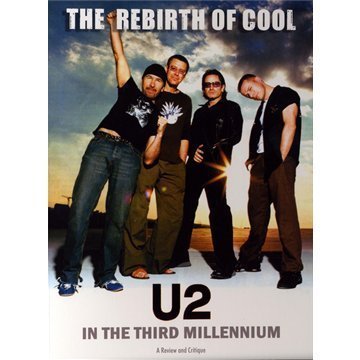
U2 was formed in 1976. Back then they were just teenagers figuring out how to play their instruments. But by the mid-80’s, they were one of the best bands in the world. Currently, they have sold more than 145 million albums worldwide and have won 22 Grammy awards. Rolling Stone has them listed as #22 in the greatest artists of all time. They appear frequently at the head of many human rights causes promoting social justice like Bono’s DATA (Debt, AIDS, Trade in Africa) campaign. The Rebirth of Cool: U2 in the Third Millennium takes a look at the band from the failed release of “Pop” to their reborn commercial success in 2000 with “All That You Can’t Leave Behind” and continued superstar greatness in “How to Dismantle an Atomic Bomb” in 2004.
“Pop” was released in March of 1997. It was an attempt at combining techno, dance and eletronica with U2’s traditional hard rock sound. It was unfortunately a failure in the overall scheme of things. It sold the least among any U2 album (1+ million in the US, 2+ million worldwide) and distanced a lot of fans from the band. U2 knew they had to take a different direction. They quite simply had to reapply for the job of the best band in the world.
Posted in: Disc Reviews by Gino Sassani on June 15th, 2009
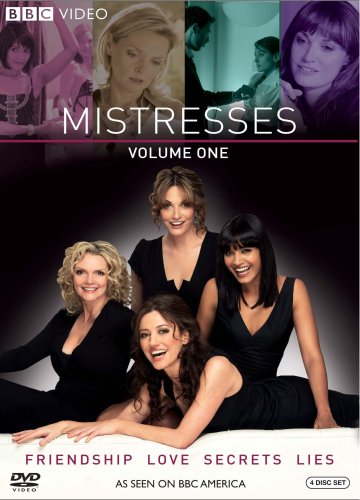
We’ve seen many instances of American television shows that have been inspired by or directly copied from British shows. This has been particularly true of comedy series and is not a new phenomenon. All In The Family and Sanford And Son from the 1970’s are great examples of American sit-coms based on British hits, Till Death Do Us Part and Steptoe And Son respectfully. Recently The Office has been a successful British import. In the inspired by category you have to include Mistresses. There’s no question that the show comes from a combination of Desperate Housewives and Sex In The City. Like those shows, this series tells the story of friends who have somewhat risqué love lives. The episodes delve into their quests for sexual excitement. It’s very much a chick thing. Unfortunately, we don’t have any members of the fairer sex here at Upcomingdiscs, so I ended up with the short straw. I got to see Mistresses.
The problem with this series is that it’s not even terribly exciting from the bedroom point of view. The plot is so slow and plodding that the girls talk a lot more than they do. If there’s one thing I learned as a writing minor in college it’s the old axiom: “Show us. Don’t tell us.” This series never took that writing class, and so I’m afraid we hear a lot more than we ever see. None of the girls are that particularly interesting. The show takes on the pace of a daily soap opera with far less installments. The whole thing is a big tease.
Posted in: Disc Reviews by Gino Sassani on June 15th, 2009
“The power of the Sun drives the seasons, transforming our planet. Vast movements of ocean and air currents bring dramatic changes, create some of the greatest wildlife spectacles on Earth.”
The Planet Earth series from the BBC brought with it critical acclaim and 11 hours of some of the most spectacular video footage from around the globe that we’ve seen on television. It was a particular treat to anyone who was fortunate enough to catch it on an HD broadcast. Not content with that work, the same team assembled once again to create this follow-up series, Nature’s Most Amazing Events. At first I was a bit skeptical and more than a little worried when I read that the series was going to focus on the effects of global climactic phenomena. I immediately expected another propaganda piece on global warming. If that’s what you fear/hope for out of this series, it’s going to surprise you. Instead the BBC crew takes the Planet Earth cameras to some of the most extreme climactic places on Earth. The piece examines not so much the climate, but the animals that thrive under these intense conditions.
Posted in: Disc Reviews by Gino Sassani on June 8th, 2009
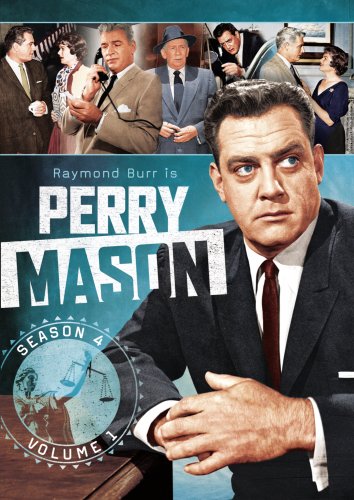
At this rate it’s going to be quite some time before you complete your collection. I’m not even sure that DVD will still be a viable format before the end of the series on DVD. It’s another half season, and the episodes continue to fly at us at a snail’s pace. But, slow and steady wins the race, and as long as the quality episodes continue to deliver that classic Mason charm and style, I guess folks like us will continue to come back for more.
Erle Stanley Gardner wrote crime fiction, and while many of his 100 or so works are unknown to most of us, he created a character that has become as identified with criminal lawyers as any other in fiction. It was in these crime novels that Perry Mason first faced a courtroom. He developed a style where he would investigate these terrible crimes his clients were on trial for. He would find the real killer, and in what has become a Hollywood cliché, reveal his findings in a crucial moment during the trial. While we may not remember the novels, we all remember the man in the persona of Raymond Burr. Burr had a commanding presence on our screens and enjoyed a well deserved 11 year run as the clever lawyer. What makes this run so amazing is that the show followed pretty much the same pattern the entire time. We always know what’s going to happen, but we wait eagerly for that gotcha moment when Perry faces the witness on the stand. We know when he’s got the guy squarely in his sights, and we can’t sit still waiting for him to pull the trigger. OK, so maybe that’s a little over the top, but so was Perry Mason. From the moment you heard that distinctive theme, the stage was set. To say that Perry Mason defined the lawyer show for decades would be an understatement. Folks like Matlock and shows like The Practice are strikingly similar to Perry Mason. If you haven’t checked this show out, this is your chance. See where it all began.