Dolby Digital 5.1 (English)

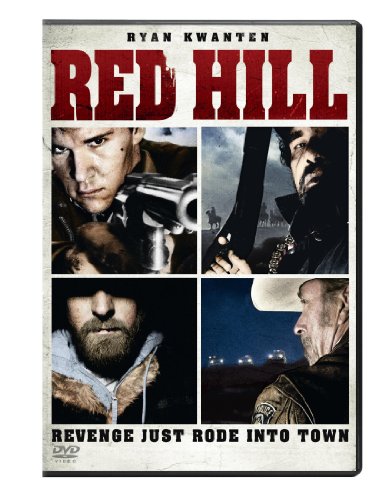
Westerns are fun movies to typically review because they usually don't deviate much from a basic formula. There is usually a criminal and there is usually a good guy out there to shoot that varmint. Technically, that is all there is to it. Furthermore, the budget (unless big stars are involved) is small, making for some creative storytelling. Today, we get to review an Australian western: Red Hill. Let's see if it differs from the typical American one.

We overlook a lush Australian landscape (aren't they all this way?) and pause to look at some horses. Suddenly, there is a disturbance in the distance and the horses run. Dun dun dun. Scene shift. Shane Cooper (played by Ryan Kwanten) is up and getting ready for first day of work. His wife, Alice (yes...Alice Cooper, played by Claire van der Boom) who apparently got her Frankenstein fed is very pregnant. They talk about his first day and soon he goes off to work.

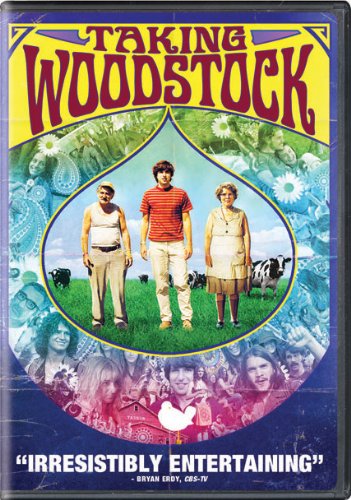
A young man wants to stimulate the economy of his tiny community, mostly for the sake of his parents struggling motel, and inadvertently welcomes what would become the original Woodstock festival into his back yard (literally).

Based on the true origins of this music festival that changed the world, we do not see the happenings of the stars onstage like other Woodstock films might. From beginning to the end, we only witness the muddy setup of the campsites and the infamously congested highway leading to the stage.

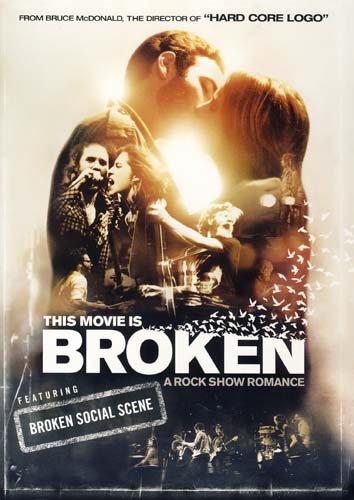
Not quite a concert film, not quite a drama. This film follows a young man named Bruno, who sleeps with his life long crush, the night before she moves from Toronto to Paris. On this final night, Broken Social Scene are playing a free show and Bruno uses a connection to get backstage passes as a last ditch effort to win over his crush. All the while, we are treated to a multi camera view of that very same concert, running the duration of the entire film.


Some concert films separate the songs with behind the scenes moments of the band leading up to that same show, but here we are separated from all that with the fictional romance plot. As things progresses, the music does what a soundtrack is supposed to do, and highlights the emotions of the scenes it accompanies, but since we are privy to the live performance of that same soundtrack, the passion of the musicians playing syncs up with whatever the actors are doing or feeling. There is a symbioses between the concert and the drama, making each better than they ever would have been simply on their own.

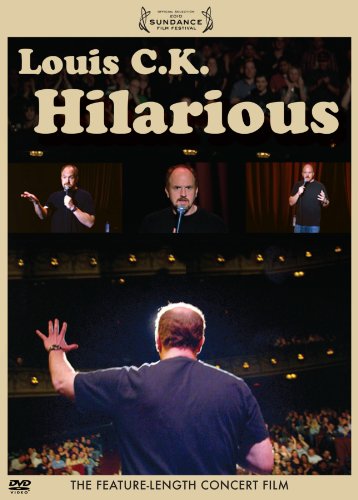
If one were to look at my media collection, one would probably assume in advance that I have a lot of stand-up comedians. On the contrary, I have only a few stand-up discs because I tend to be critical of their replay value. I have the classics such as Richard Pryor, Robin Williams, George Carlin as well as a couple of more recent acts such as Joe Rogan and Lewis Black. However, my curiosity was peaked when I heard about Louis C.K. He has been called the George Carlin of today, a very tall order. Well here is hoping that he lives up to most recent special: Hilarious.

The Pabst Theater in Milwaukee, Wisconsin was home to a Louis C.K. performance in April of 2009. For about 79 minutes he entertained a packed house of people with jokes on a variety of topics including the single life, misused words and being a divorced dad with a couple of children. The show did so well that it was even made into movie theaters across the country as a limited engagement. Eventually it found its way into our homes for everybody to enjoy.

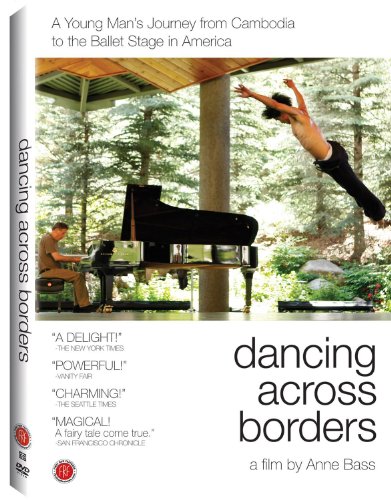
A young Cambodian boy, named Sokvannara “Sy” Sar, is spotted performing a traditional dance by the film's director and American Dance patron Anne Bass. She immediately takes note of his smooth talent and figures he has massive potential as a classical ballet dancer. Sy is given a rare chance to audition at the School of American Ballet in New York and then proceeds on a unique and fast-paced journey through a new world of dance, in a nation that is completely alien to his homeland.

This film would be interesting simply for the fact that it displays many parts of what it means to train as a professional ballet dancer and student, but is all the more engaging because of S's situation; that being the lone Cambodian to take on such a quest. Sy may come from poor roots, but his is by no means a sob story of an underdog, but that does not make it any less special or rare an opportunity. This film gives us the chance to see more than just his home, family and friends, as well as the many stages he earns a spot performing on, but we are privy to what can happen when chance falls upon the sort of  person who has the passion to take hold of it and elevate themselves in something that was a total unknown to himself and his fellow countrymen.

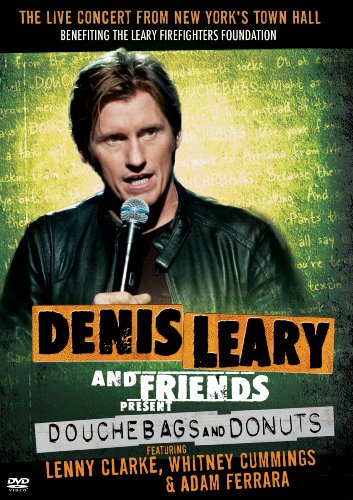
Denis Leary and Friends presents: Douchebags and Donuts includes stand up sets from Adam Ferrara, Lenny Clarke, Whitney Cummings and Denis Leary. Also, there are musical performances by The Enablers featuring the Rehab Horns.  All proceeds from this event (as well as portions of the DVD sales) went/go to Denis Leary’s charity, The Leary Firefighters Foundation. The support and charitable disposition that Denis Leary has maintained toward firefighting is well documented and it is nice to see his attitude has not changed.  I am certain that all of you can guess the material that will be explored in these performances and the majority of you will not be surprised whatsoever.  However, there are some laughs throughout.

Denis Leary’s meal ticket throughout his career has been to pull no punches and leave no stone unturned.  His material is usually always motivated by his unwavering hatred toward popular culture and his throwback mentality.  Leary’s set is his typical abrasive self. A popular theme in stand-up comedy is to have screens on stage to emphasize the comedian’s set and also provide some visual aids to help their performance.  Leary has added this to his comedic repertoire and it works well with his material.  My only critique with his set is that it can often be redundant.  If a particular joke does not go as expected, Leary tends to yell his punch lines louder and I found myself annoyed.  Other than that, his set is a standard profanity laced tirade against any and all things in popular culture.

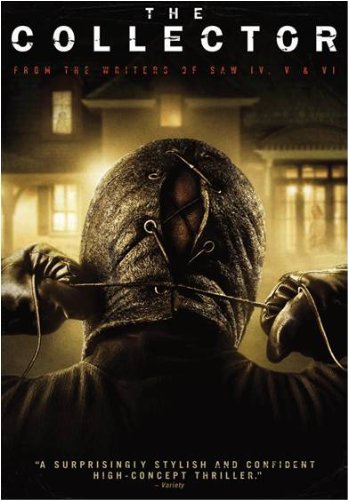
An ex-con trying to pull one last heist is sucked into a booby trapped house and must face against a madman who is torturing the family within. The makers of 3 SAW films (and not the first three) have ventured into familiar territory of nonsense gore, whisper thin plot, and then even more nonsense gore.

The title of the film, and a couple lines of dialogue, suggest our madman is a collector of people...and perhaps animals (?). How does this fact play into the film's action? It doesn't really. If he is indeed a collector, then he certainly has no sense of “mint condition” as he spends his entire time damaging and removing pieces of the very things he plans to collect. In fact, if the title could change to “The Trapper,” then suddenly the film might make more sense for it is all about the elaborate traps he sets, and how they are designed to horribly maim, and even kill in a couple of cases. He doesn't seem to be collecting anything. Yes, one of his previous victims is kept in a crate, but even that character explains that he's just bait to lure in the types of people he wants. This “Collector” has gone to insane lengths setting up this family's house with booby traps, and seems to want nothing more than to torture and kill, not collect.

Written by Diane Tillis

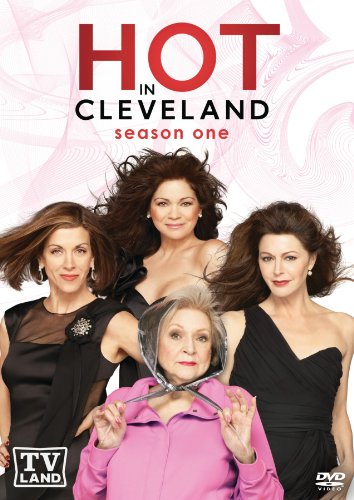
When I first heard about Hot in Cleveland, I thought the show would be a modern remake of The Golden Girls. Both shows have four older, single women, living under one roof, as they try to survive each day with a little bit of humor. Before watching the show, I was worried that Hot in Cleveland would appear to be a hasty decision by TV Land because they wanted to jump on the Betty White bandwagon. However, I truly enjoyed the first season more than I thought I would. Hot in Cleveland is not a rip-off of The Golden Girls. While they have many similarities, they also have more differences.

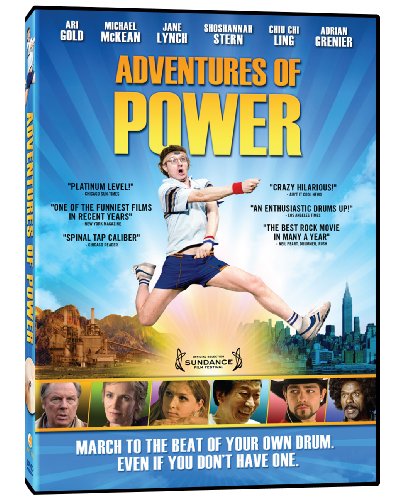
A young dreamer named Power is fired from his mining job just before his union-leader father instigates a strike. Wishing he could be a drummer, but never getting the chance to play an actual kit, Power does not know what to do with his constant ambitions that make him air-drum 24/7. Fate steps in and he discovers an underground movement of air-drumming that all leads to a major event in New York city where he will have a chance to face off against a billionaire country-music star, who just so happens to be the son of the evil Copper Mine owner who is treating his Union friends, and family, so unfairly.

This film does spend a good chunk of time riding on the one-note quirkiness of its man child lead character and his oddball dreams of air-drumming, and does not get saved by the token love interest or ethnically broad supporting characters. But this film does find moments where it moves past the potential to be another rehashed, super-quirky Napolean Dynamite clone (though it strays close). It clings tightly to the RUSH worship of other contemporary comedies such as I Love You Man into rides it into a sentimental and surprisingly moving story about spirit. This almost exclusively occurs in the third act so the audience will have to hold tight until then.

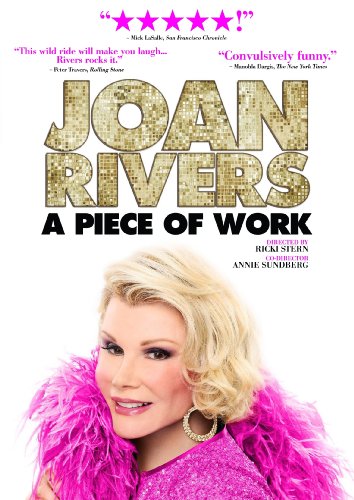
This documentary tracks a year in the life of Joan Rivers. We begin at a relatively low ebb in her career, with her finding it difficult to land desirable gigs. She throws herself into the production of an autobiographical play that debuts in Edinburgh, and her hope is that the London reception will be glowing enough to provide enough momentum for a Stateside production. Meanwhile, she and daughter Melissa are contestants on Celebrity Apprentice. As the film follows the ups and downs of these efforts (concentrating particularly on the play), Rivers opens up about her life and career.

This is a very smart, enormously entertaining, and very funny documentary. There is plenty of footage of Rivers in performance from all stages of her career. For those whose exposure to her has been limited to snippets of red carpet interviews and jokes about her plastic surgery (and I am one of those benighted souls), this film will be a revelation. There's a reason why this woman became famous in the first place – she is one ferocious stand-up comic, and as good as the footage here is, it leaves the viewer hoping for more. That's a good thing. There are, though, one or two less felicitous gaps in an otherwise very revealing doc, most notably what, precisely, was behind the erratic behavior and unexplained disappearances by Rivers' long-term manager. But this is a trivial quibble. The film is a piece of work indeed: sterling work by directors Ricki Stern and Anni Sunderberg, and brave work by Rivers.