Dolby Digital 5.1 (English)

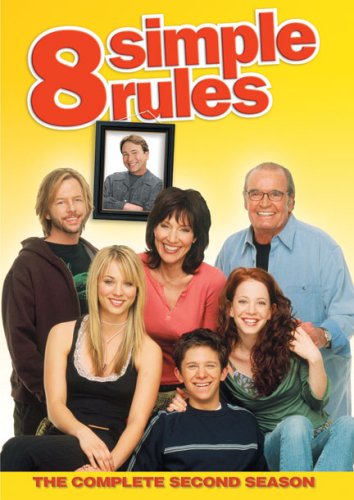
John Ritter never really had much of a chance in his early career to show just how good his acting chops could be. Let’s face it. While Three’s Company had quite a loyal following, it was never mistaken for anything more than a parody. Ritter was never asked to stretch himself here, and the role likely cost him better opportunities over the years. Fortunately, while 8 Simple Rules wasn’t a great show either, it did offer quality enough work to allow Ritter to thrive. Unfortunately he would not live long enough to reap the rewards he was earning for himself. Who knew Katey Segal wasn’t a one trick pony riding on the coattails of Peg Bundy? Who also knew you could find teenage girls who could act and satisfy the “other” attributes often necessary from female actors on television these days. The casting on this show is well above average. The supporting cast also includes James Garner, in a very refreshing role for the aged icon. David Spade joined the show halfway through this season as Cate’s nephew C.J. He’s the kind of guy who can’t stop getting in trouble.

There is nothing worse than forced comedy. You know exactly what I’m talking about, don’t you? You can see a character reaching so far for a joke, it’s a wonder their lips don’t have stretch marks. Good comedy flows naturally. You don’t have to work the jokes into the tapestry; the tapestry is the joke. Family sit-coms have been done to death. There isn’t an angle that hasn’t been explored from the Father Knows Best all American family to the dysfunctional Bundy family from Married With Children. We’ve had the musical Partridges and the 2 dads nontraditional families popular in the 1980’s. So how do you make a tired old concept work? You don’t try so hard, that’s how. Let the dynamic between the characters sell the story. There aren’t any gimmicks here, and sometimes plain vanilla tastes like heaven on a hot summer afternoon.

It was the best of times. It was the worst of times. No, I’m not having a Charles Dickens flashback or reliving Star Trek II. I’m talking about the new Trek release The Best Of Star Trek: The Next Generation. It does feature one of the best Trek episodes of any of the shows, the Borg extravaganza The Best Of Both Worlds. In fact this really does contain 4 of the show’s best episodes. The problem is that there are only 4. With the fan collectives already taking up Yesterday’s Enterprise, it’s not that great a bargain for the real Trek fan.

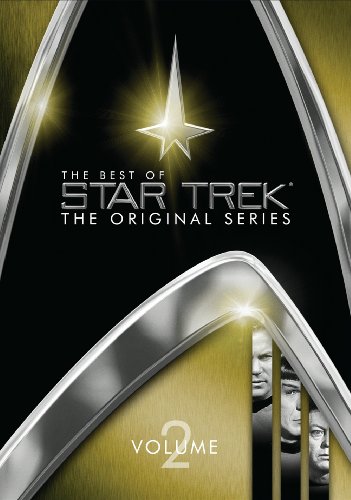
With the original series I see no reason at all to buy into a 4 episode release. This stuff has already appeared countless times in the last 5 years or so. The episodes appeared in double episode discs originally. Then there were the complete seasons. There was the remastered DVD season sets. Finally, the best news yet, the release of these episodes in high definition on Blu-ray. So, why is Paramount releasing these single disc DVD’s now? There’s no question that they picked 4 of the best episodes, and they are the remastered versions.

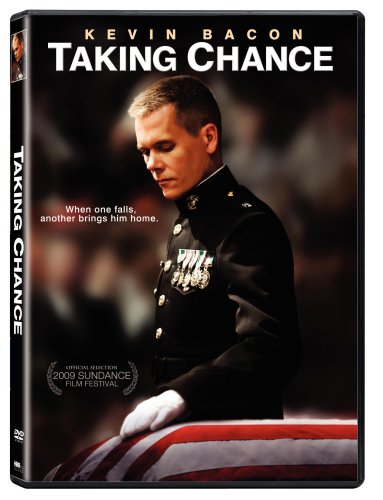
 Taking Chance gives audiences another perspective into the Iraq war.  Lt. Colonel Michael Strobl (Kevin Bacon) volunteers to escort the remains of a recently deceased Lance Corporal Chance Phelps.  During the trip across America’s heartland, Strobl gets to see how the Iraq war is implicating not just the families involved, but the nation as a whole. The film is also based on true events, which adds to the stories levity. The film manages to give alternative perspectives on the war and also manages to be objective at the same time.


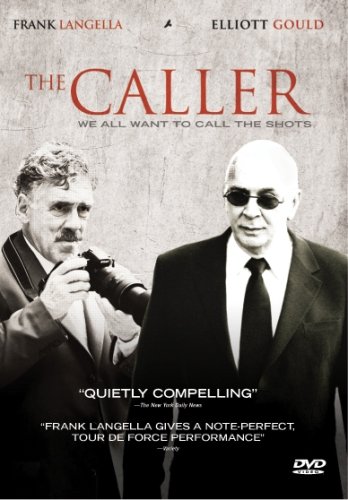
The Caller is a film starring Frank Langella and Elliott Gould. It is a tense thriller about corporate foul play and voyeurism, wait, what year is it?  With the recent critical acclaim of Langella, it seems only fitting to market his name on a low-budget film. Unfortunately for the film, Langella’s performance is one of the only shining moments. Langella plays an aging VP of an energy company that decides to blow the whistle on the corporate wrong doings that are going on. Understanding that he’s written his own death certificate, Langella hires a private investigator (Gould) to follow him to help catch his eventual killer.

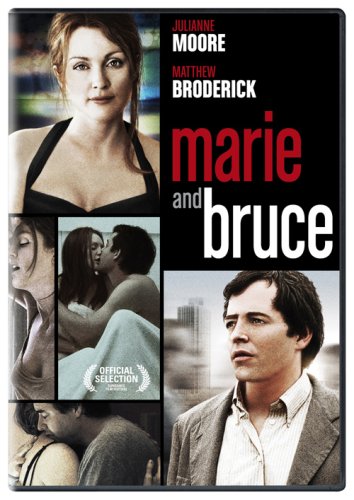
Based on a play by Wallace Shawn (who also co-wrote the screenplay), this film is a day in the life of an unhappily married couple, played by Juliane Moore and Matthew Broderick, who don't know what to do about said unhappiness. The story is simple but the paths each character take is not. After a bitter breakfast scene, they separately go about their day before meeting at a party in the evening where Marie may or may not leave Bruce once and for all.

The dialogue is very reminiscent of a meta-theatrical stage production as the characters are able to freely address the audience in narration or monologues. When speaking to each other, they are terribly open and leave no feeling hidden as they express every thought in a highly unnatural and stylized manner. This leads to some very biting humour as Marie explains her disdain without mercy towards either Bruce or anyone he associates with, while Bruce feels no qualms about detailing the state of is genitals after a one night stand he had 11 years prior. At the same time, this strange and often venomous dialogue is peppered with the persistent use of endearing terms such as “darling” when one of the two addresses the other, which turns into a nice device used by the writers to squeeze out more of a satirical view of decaying, modern couplehood.

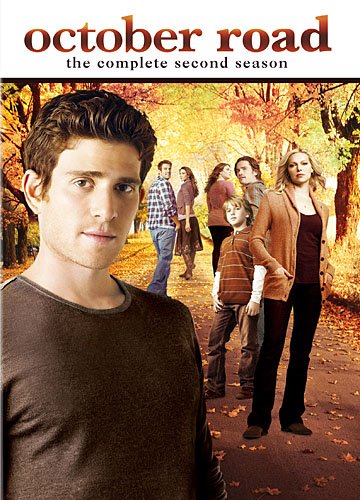
It’s the end of the October Road for Nick and the gang. If you want to blame anyone, there’s plenty to go around here. First of all, the writers’ strike didn’t do anyone any favors by delivering only a 6 season first year. While the cast was made up of good actors, there is never any kind of chemistry between them. They look like actors thrown together because they have to be. The writing is uneven. Did anyone ever really plan out what this show was really about? There are fans; every show has some. But there was never enough to make this one fly at all. Blame me, if you like, for not being kind to the first release and repeating those same criticisms here. The truth is, it was never a good show, and a DVD release isn’t going to change that. You do get to see all of the episodes here. At last count, ABC was not necessarily planning to air all of the completed episodes. That makes it a good buy for the fans. If all 6 of you pool your money, maybe you can share one set.

Enter Nick Garrett. He’s a writer who has published a hugely successful best selling novel. It’s been made into a major film, and busty women approach him in clubs to tell him how much it has affected their lives. The audio version is read by Johnny Depp. You would think Nick has it made. The trouble is that Nick doesn’t have a clue how to begin to write his next book. His solution is to take a trip back home to the places that inspired the first book. His hope is to make a quick hit and run visit, but he ends up staying for a while. Nick soon discovers that you really can’t go home again. Everything and everyone changes, as Nick is finding out. Not everyone is happy about how they feel they might have been portrayed in the novel, and Nick might even have a son. If this is starting to sound a bit like a soap opera, then you have October Road pegged.

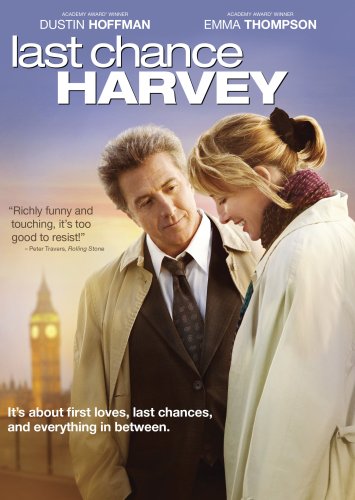
Dustin Hoffman is the titular Harvey, a morose jingle composer who, with his job hanging by a thread, arrives in London for his daughter's wedding. He is a complete outsider at the rehearsal dinner, and feels even more cut off when his daughter informs him that she wants her stepfather to give her away. Meanwhile, the scarcely more cheerful Emma Thompson spends her time being set up for disastrous blind dates and being constantly harangued on the phone by her mother. These two losers at the game of love meet, and something blossoms between them.


And that is really about it as far as plot goes. The script is so insubstantial that it threatens to waft away on the first gentle breeze. The film is quite watchable, however, and that is due to the sheer force of its leads. They make the enterprise seem considerably more substantive than it is, their pained expressions conveying worlds to us. The film is at its strongest when it sits back and lets the two banter, and the relationship that develops feels easy and natural. It is all the more disappointing, therefore, that writer/director Joel Hopkins feels it necessary to shoehorn in the obligatory Romantic Comedy Third Act Falling Out by the most contrived and Deus Ex Machina-like of means. This is a turn of events that is a poke in the eye to any viewer who thought his/her intelligence was going to be respected.

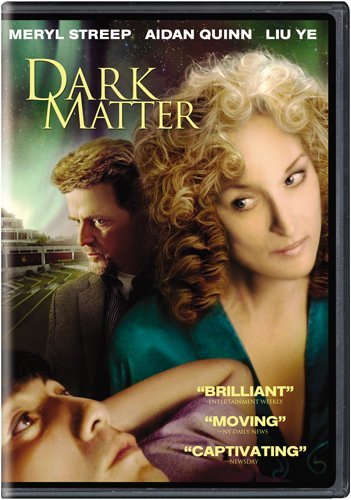
Based on actual events at the University of Iowa in 1991 (which I did not know when I began watching), this film follows a young Chinese student named Liu Xing (played by Liu Ye) as he is accepted into a prestigious Cosmology research team based out of a Utah University. While working for a respected Cosmologist named Jake Reiser (played by Aidan Quinn) he makes his own revelations and theories that challenge that of his employer and mentor. This creates an obvious conflict between them which places his dreams of a Nobel Prize, and even just graduating at state if he decides to continue with his own theories and not Reiser's.

The film is sometimes chaptered by Chinese characters, each referring to something in nature, whose profundity is a bit lost on me since they are inconsistently peppered throughout the film and come off as non sequitur since the title and main subject of Dark Matter refers to the unknown parts of the outer universe, not the natural and Earthbound. Letters that Liu Xing sends back to his parents make for far better markers to indicate shifts in the plot and mood. In fact, all of the stylized elements seem to fall flat, such as the aforementioned Chinese characters, musical portions, and CG trips into some sort of dream scape for Liu Xing during points of despair, whereas the film finds its true effectiveness when showing what is actually happening to the characters. The simplest parts to Dark Matter are the most moving.

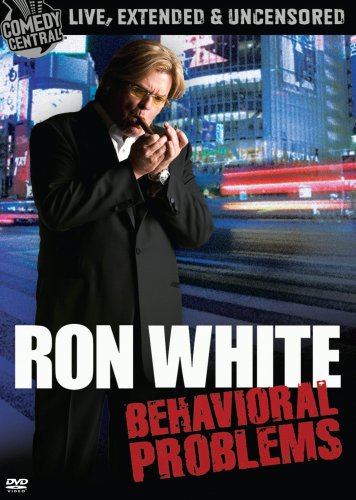
With the gigantic success that the Blue Collar Comedy Tour has accumulated, it was only a matter of time before each one of the comedians received their own HBO or Comedy Central special.  Jeff Foxworthy is associated with the “Are you smarter than a 5th grader?” game-show. Larry the Cable guy is showcasing his acting range with box office phenomena (i.e. Witless Protection and Delta Farce). Bill Engvall has struggled to find his niche and seems to be on every sitcom pilot that has come out in the last two years.  And then there’s Ron White, if you’re anything like myself, this is your next question, who?  

Ron White is a stand up comedian that gained notoriety with his red neck self-deprecating genre of comedy. White did not want to be associated with Blue Collar TV because he was not interested in being typecast as a blue collar comedian. Unfortunately, his routine begs to differ.  His set is riddled with low brow humor and a genre of observational comedy.  There are still a few laughs and his recounting of his recent drug arrest is well told.  However, multiple times throughout the set, his rants feel forced and the result is tiresome.  There are similarities between this set and Lewis Black’s newer material.  At least Black’s comedic performances take firm political and social stances.  Any political or social stances that White takes are buried beneath piles of profanity, ethnic slurs and sexual humor. The high points of this set are when he struggles with his material. White stammers on his own words and laughs it off. The audience gets to see the natural, unforced side of his humor and these are true comedic moments. If low brow, uncouth and foul mouthed comedy is your interest, this DVD is for you.