Dolby Digital 5.1 (English)

A couple of years ago, I was out a trip to New Jersey on business with my boss. When we got there, he wasn’t feeling well, so I had him sit down while I went to the clinic down the hall to see if some medical attention could be given to him. As I turned the corner with an attendant, that’s when I saw him hit the floor. After a few moments of stabilization he was taken to the hospital, where it was determined that he had a stroke. A co-worker and I stayed with him for the duration of the next couple of days until his family could get there, and over that time, he suffered several smaller strokes in the process. One minute he could talk rather lucidly, and like flipping a switch his facial muscles would sag and be nonresponsive. Once his family came, we managed to get the chance to come home, and he spent several more days in the hospital, remarkably without any repercussions from this incident, and came back to work, where we still talk (I’ve moved to another company) and share the occasional gallow humor about what happened.


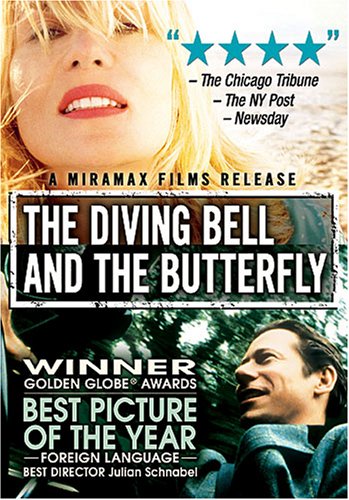
He was lucky, though there are others that have experienced far worse situations. The Diving Bell and the Butterfly is a look at the life of Jean-Dominique Dauby. The editor of the French version of Elle magazine led a somewhat glamorous life,and one day had a severe cerebrovascular incident, whereby he was left paralyzed, but responsive in his left eye, which allowed him to communicate solely by blinking. With the help of speech therapists, he was able to state his thoughts in his book by the same title, as a metaphor of his useless body, labeled as the “diving bell,” ironically clashing with his free spirit, your “butterfly,” if you will.

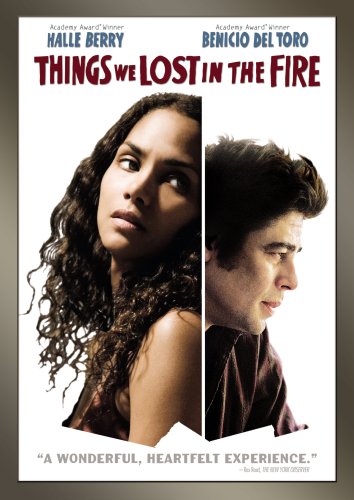
It’s hard to peg a movie like Things We Lost in the Fire. While people want to slam it and say that it’s not an uplifting movie, I think that upon further review, they might want to examine those behind it, and see that it’s another solid effort from them.

Written by Allan Loeb in his writing debut and directed by Susanne Bier, the talented Danish director behind the film Brothers, the film centers on a recent widow named Audrey, played by Halle Berry (X2), who lost her husband Brian (David Duchovny, The X-Files) to a murder in tragic circumstances. After notifying Brian’s friend Jerry (Benicio Del Toro, Traffic) about the murder, Jerry doesn’t seem to take it so well. Brian and Jerry have been friends since they were kids, and while Brian went onto a life as a successful architect, Jerry was a lawyer before becoming addicted to cocaine and heroin, and was spending his days at a sleazy dive apartment getting high. Yet Brian would come and visit Jerry, to catch up and talk about his family. When Audrey would be skeptical of how Jerry might be exploiting Brian, Brian stuck by him. So what Audrey winds up doing is inviting Jerry to live with them. In the process, Jerry helps Audrey and her kids cope with their loss, while trying to strike the delicate balance of sobriety.

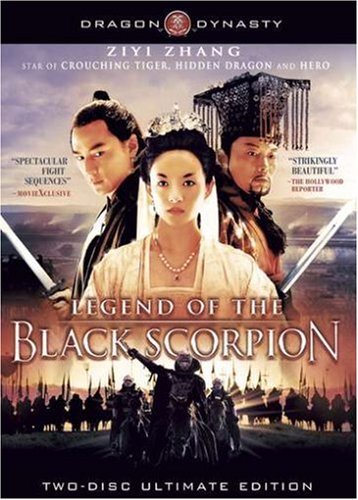
Retelling of classic tales has been a fodder for movie scripts for years. Take something that has worked for ages, spin it just so and you got a movie that might be gold. They have been doing this with Romeo & Juliet for years. The results can be great or sometimes they are one step of having the creator roll around in his grave with pain and anguish. Take Hamlet for example, the classic Shakespearian tale about a prince who takes revenge on his uncle Claudius who has murdered his father the King and taken the throne and the king's wife too. It has treachery, corruption and a little good ole fashioned incest to wet the palette. Now take that piece of journalistic tragedy and set it after the fall of the Tang Dynasty in China. Insert popular Asian actors like Ziyi Zhang & Daniel Wu and you might just have something.

Emperor Li (played by You Ge) has taken over the throne from his brother by murdering him. In the process, he has also taken the brother's wife Empress Wan (played by Ziyi Zhang) as his own for the good of the kingdom (and cause she's hot). An attack is also staged on the Prince, Wu Lan (played by Daniel Wu) who has devoted his life to the arts and is found at a nearby village of actors. After an elaborate fighting scene, he escapes with his life and makes his way to the castle to confront his step mother, the Empress (which we find out they shared romantic feelings toward each other) and expose his father's murderer, the Emperor.

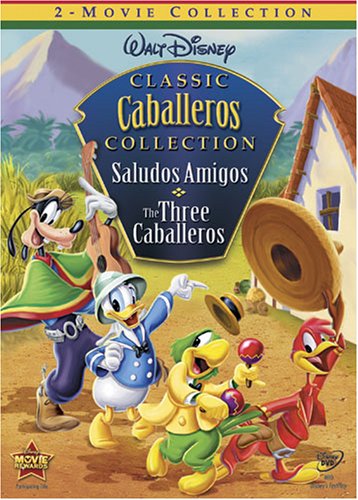
In the 1940’s Walt Disney was asked by President Roosevelt to take a good will tour across Latin America as an ambassador of sorts. He declined the invitation, protesting that he wasn’t the handshaking kind and that the cause would be better served using someone else. Not to be deterred, Roosevelt made a counter offer. What if Walt would go to Latin America with a film contingent and then create some kind of a production out of the tour. A government subsidy was even offered. Walt accepted the invite but turned down the subsidy. And so, with a large party of animators, writers, and production crew, they took a whirlwind tour and left with what Walt himself described as a wealth of material. The footage obtained and the experience gained would feed into Disney productions for decades.


A question to ponder before we head into this review. What do you get when you mix anime or japanese animation with a healthy dose of John Woo? Besides a ton of falling gun shell casing and cute characters performing acrobatics in the air while taking down a dozen bad guys? You get a movie that goes full speed for over a hundred minutes and makes you realize that this is truly the perfect avenue for John Woo and style of films. However, just don't expect there to be a completely solid story behind it.

In the future, the world is annihilated by itself. However, out of the dust & debris, Olympus rises as a utopian society. The new society has a group of soldiers called the ESWAT (wasn't this a game for Sega Genesis? sorry, *turns off video game knowledge*). These warriors protect the peace and serve in the utopian society's best interest. The warriors consist of cyborgs and humans. Bioroids or genetically engineered humans serve as diplomatic leaders over ESWAT due to their calm and collective nature.

A government project goes badly awry, as all government projects do, and, just as inevitably, a plague of zombies is loosed upon the local community. A group of high school students are the only ones able to mount any kind of defense against the flesh-eating ghouls. Sounds reasonable to me.

Writer/editor/director Steven C. Miller and friends put this together for a mere $30 0000, and for that, they should be applauded. The effort is surprisingly slick and sick, and many of the gore effects are effectively done. The zombies themselves, though, are a bit slapdash in appearance. The high school characters are so familiar, furthermore, that they barely qualify as characters. Then there’s the odd decision to shoot the action so that all movements have the herky-jerky, headache-causing aspects that suggests that the entire film was shot on a cell phone. And did I mention that the film ends on a “To Be Continued” cliffhanger?

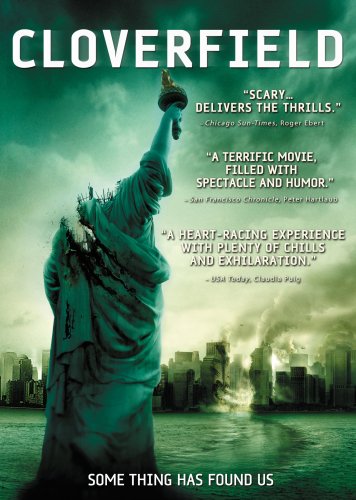
Does ultra realism make for a better movie? There have certainly been examples of startling realistic moments in cinema that have been quite effective, but mostly because they create an experience for us that actually reaches us in a way that we’ll never be able to forget. The storming of Normandy in Saving Private Ryan was one such incidence. Those of us who have never been to war walked away from that scene feeling like we’ve now experienced the closest thing possible without actually being there. It was the kind of movie moment that brought tears to men who had really been there. That’s the kind of visceral moviemaking J.J. Abrams might have been hoping for when he made Cloverfield.

As we know by now, Dragon Dynasty is the Criterion of Kung Fu movies. They take any Kung Fu movie, clean up the audio and video where needed and provide a slew of extras for us to enjoy. From featurettes to commentaries with expert Bey Logan, it always provided the Hong Kong kung fu fans with a presentation second to none. However, as with Criterion classics, the movie isn't always second to none.

Kong Ko (played by Wu Jing (Jacky Wu))was a member of the National Kung Fu Team. He now spends his off time at an opera house performing for the folks a blend of descriptive dance and his fancy moves. A group of thugs come in one night and try to recruit the young warrior to fight in the underground fighting circuit they take care of. At first Kong doesn't wish to participate. However, his co-worker/love interest Siu Tin (played by Miki Yeung) convinces him otherwise after striking a deal with the circuit gang.

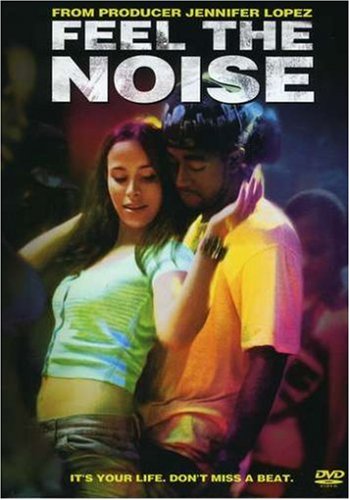
Dance movies can be interesting especially when it involves hot sweaty bodies and bodacious moves along a club floor. Did I just say bodacious? "Pauly Shore is on line one, please pick up the white courtesy phone". I'll ignore that for now. Dirty Dancing or Footloose are great examples. Some should be drag into the street and shot. I knew that Feel the Noise looked bad the minute I looked at the cover. What was that clue on the cover you might ask? Produced by Jennifer Lopez would be a very good start.

Rob Vega (played by Omarion Grandberry)is a straight up hip-hop rapper who gets shot at one night while he's trying to perform. His mother decides to send him off to Puerto Rico to live with his father Roberto (played by Giancarlo Espositio)and his family. There he meets his half brother Javi (played by Victor Rasuk) and is introduced to Reggaeton, music that blends Reggae and Hip-Hop. The two team up for a single and eventual album as Rob tries to peace back a normal life which eventually leads him back to his home in New York where he has to face his demons.

I couldn’t find her name anywhere on the credits, but I simply cannot believe that Rosie O’Donnell didn’t have anything at all to do with the film Conspiracy. The film is a thinly veiled pot shot at the current administration, or at least Dick Cheney. Gary Cole plays a guy named Rhodes, who is really intended to represent Cheney. Rhodes controls a multibillion dollar corporation that has managed to set itself up in Iraq making millions from the war thanks to corrupt government officials. His company, Halicorp, is obviously intended to be Haliburton. Rhodes has also taken control of a small Arizona border town. Here his vigilante friends patrol the border, turning back, and even killing, Mexicans attempting to enter the United States. He justifies his deeds in the name of counterterrorism, but the truth his he holds the entire town in fear. Enter MacPherson (Val Kilmer) who recently lost his leg in the Marines in Iraq. When he returns home he comes to Rhodes’s town looking for a Mexican comrade in arms. He finds that there’s no trace of his friend, and his questions have drawn all the wrong kind of attention. After some rather silly plot developments, MacPherson becomes a one man army to challenge Rhodes’s control. Apparently someone has watched Clint Eastwood’s Pale Rider one too many times here. Now Kilmer has grown old and rather obese in recent years, so the film needs to take that into account with his fighting style. After all, no one’s going to believe he’s got any real fight in that couch potato body. He wins his fights mostly by being able to duck really well. And returning a bowl of chili he recently ate on someone’s shoes. Figuring that Eastwood scowl was already done, Kilmer appears to be half asleep during each fight. I know I was. He does pack a mean nail gun, and you should just see what he can do with some rolled up paper. When they finally do put some real fire power in his hands, the rest just gets too comical.