Dolby Digital 5.1 (French)

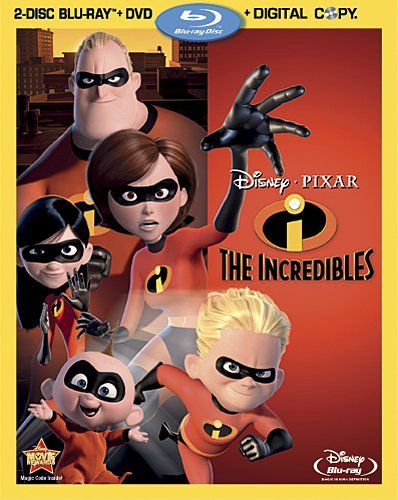
I've long held the belief that the folks at Pixar are really just children who have refused to grow up. That doesn't mean that they don't have to deal with the realities that adulthood thrust upon each of us. I'm sure they have families and are responsible citizens and parents. They consistently make movies, that while there is certainly appeal for children, are obviously intended for adults, adults like them, who have decided to never grow up. If you ever required proof of that concept, The Incredibles should prove the point quite nicely. Brad Bird and his team weren't writing about superheroes. They decided to do a movie about themselves. Finally out in high-definition Blu-ray the team now calls all of us like-minded souls to join the fold. This Blu-ray serves as our membership card and absolutely grants all of the privileges of membership right from your most comfortable home theatre seat. Count me in.

Bob Parr (Nelson) has a secret identity. He's in reality Mr. Incredible. He is a superhero who has dedicated his life to fighting crime. He has super strength and other abilities. He's not the only one. There is his best friend Lucius (Jackson) better known as the cool hero Frozone. There's also Helen (Hunter) who protects the city as Elastigirl. She has the same powers that The Fantastic Four's Mr. Fantastic has to stretch her body. Bob and Helen get married and join their superpowers with two super kids. Dash (Fox) has super speed and Violet (Vowell) has the abilities of The Fantastic Four's Susan Storm. She can become invisible and create powerful force fields. Unfortunately, the world has had enough of masked heroes. Lawsuits cause the heroes to turn in their capes, and they are put into a sort of witness protection program where they must swear off crime fighting. That's been hard for Bob and Lucius who do a little rescue work on the side while their wives think they're out bowling. It's a good thing, too. A new super-villain has emerged, and now it will be up to the Parr family to save the world from Syndrome (Lee), a one-time stalker fan who has decided to get revenge on the hero who once spurned his advances to join him.

"So far every person I've met in this strange place suffers from the most florid delusions, chasing green mists and looking for lost lords. I can only assume that this is the result of poor diet, or they're all just barking mad."

C.S. Lewis created an incredibly imaginative world when he wrote his Chronicles Of Narnia. The stories were an escape, of sorts, from a war-torn Europe. They integrated elements of Christianity in an effort to provide a semblance of hope in the form of a children’s fairy tale. And like all such tales, the world of Narnia was first and foremost a place of magic and bewilderment. It was a place where fantastic creatures of both good and evil thrived, living out epic lives of adventure. It was also a world where only children could enter. The stories became hugely popular, first in England, and eventually around the globe. Since that time we live in a different planet than the one Lewis was attempting to offer a respite from. Still, the images and ideals are remarkably relevant today. With such sweeping grand adventures and marvelous creatures, it’s no surprise that the franchise has found its way into films. The only real mystery is why it took so long. Perhaps it was necessary for the technology to finally catch up, providing a far more realistic and captivating experience. Some credit must also go to the enormous success of the Harry Potter and even the Lord Of The Rings films. With the investment of time and money required to bring such a world into existence on celluloid, there must be some reasonable assurance that, if done correctly, there was a large enough profit to be found. These earlier, and continuing, franchises have overwhelmingly proven that point. It was only a matter of time before the studio that practically invented movie magic would find such a place as Narnia and claim it for their own. When you combine these extraordinary histories together, can there be any question as to the results?

"We all know the story. Virginal girl, pure and sweet, trapped in the body of a swan. She desires freedom, but only true love can break the spell. Her wish is nearly granted in the form of a prince, but before he can declare his love, her lustful twin, the Black Swan, tricks and seduces him. Devastated, the White Swan leaps off a cliff, killing herself, and in death finds freedom."

Darren Aronofsky made a huge name for himself with The Wrestler. That film was a great comeback for Mickey Rourke, who was ripped off at that year's Oscars by the more politically correct Sean Penn. Aronofsky considers The Black Swan to be a companion piece to that film. You will certainly be able to see what he's talking about, but he's missing one important element in this film. He doesn't get near the powerful performance out of Natalie Portman that he did from Rourke. She was also nominated for an Oscar, but unlike Rourke, she didn't deserve to win it. She didn't.

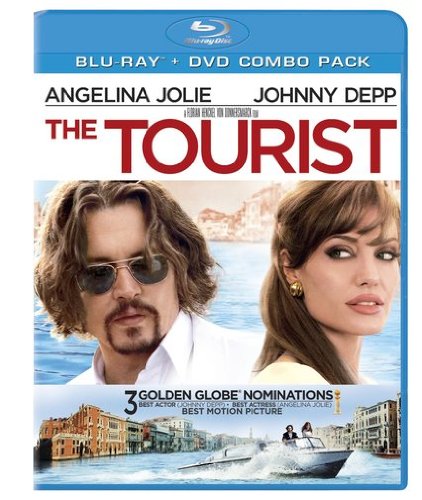
All eyes are on Angelina Jolie; okay, so that's not much of a surprise, is it? But, I'm talking about the opening scenes of Jolie's partnership with Johnny Depp in the remake of the French spy thriller Anthony Zimmer, retitled for the American audience, The Tourist. Her character Elise is attracting a lot of attention from men hidden away in vans with surveillance equipment trained on her every move and from every angle. No, it's not the paparazzi this time. Elise is being followed because the intelligence community believes she will lead them to their real target, an elusive master criminal named Alex. Instead Elise merely receives a letter which she proceeds to burn and walk away. The agents swarm on the smoldering paper, convinced it's a message from Alex and a clue to his whereabouts. It seems he's gotten away with a ton of money, and sources say he has used some of those riches to alter his appearance, and Elise is the only clue they have left.

The note has instructed her to take a specific train and locate a random person that approximates his size. The idea is to convince the agents that the rube is Alex, thus distracting them from their true quarry whom she is to meet in Venice. On the train, Elise chooses math teacher Frank Tupelo (Depp) for the ruse. She develops an odd attraction for the man and invites him to stay with her in her lavish hotel suite. A series of mistaken identity gags gives Depp a chance to shine in the role, while Jolie offers the window dressing and emotional attachment for the team. Expect plenty of misdirection and red herrings.

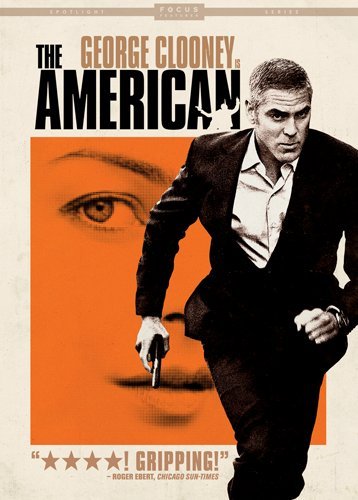
The cover of this DVD is, depending on which signals you pick up on, either misleading or perfectly accurate. If all you see is George Clooney running with a gun, and you therefore come to the conclusion that this is going to be some action-packed thriller, and that is what you're hoping for, then you're going to be disappointed. If, on the other hand, the orange colour and the rather retro look to Cloney's image, not to mention the rather uninformative title, makes you think of the 1970s, then you're on the right track.

Clooney plays the titular American, an intelligence operative whose last job results in rather more bloodshed than it should, and people are clearly after him. Nonetheless, he is given a new assignment, and he takes it. He is to craft a specialized assassination rifle, and he does so while holed up in a hillside Italian village. There he meets a priest and a prostitute, encounters that will alter the course of his life.

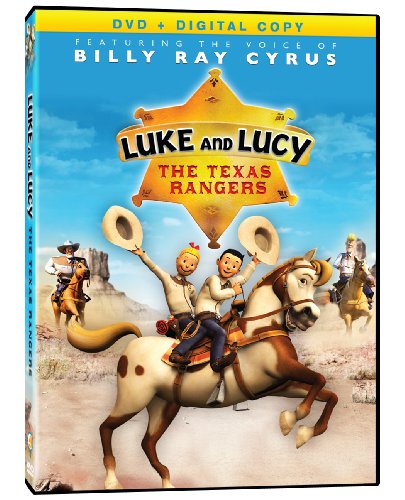
A Wild West overlord is plotting to shrink the world's population. This evil plot is running along smoothly until a shrunken Texas ranger escapes in a whiskey bottle and finds himself saved by a plucky sibling duo named Luke and Lucy, along with their gaggle of wacky friends. The group become honourary rangers and set out to battle evil.

The character design, and over the top sense of adventure, are reminiscent of the Tintin series as these characters are based on those that appeared in Belgian comics under the same Herge banner that Tintin shares. Sadly, the CGI animation takes most all the life out of them with rigid movements and very poor lip syncing. Of course, being originally produced in Dutch, one can forgive some of the mismatched dialogue-to-mouths, but some more work could have been done to smooth it out.

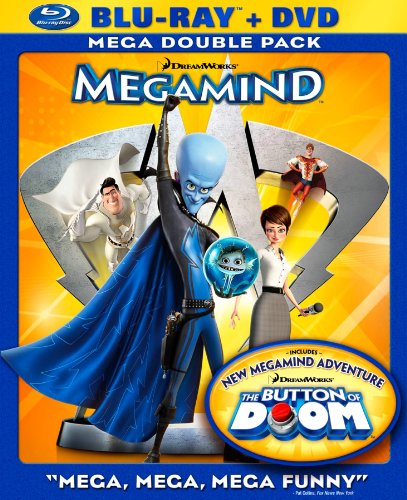
It's funny how the zeitgeist works, in that it is hardly unusual for two films with very similar high concepts to hit the screens at close to the same time. Dante's Peak and Volcano. Deep Impact and Armageddon. Hell, The Towering Inferno came about as a result of Fox and Warner cooperating in order to avoid making identical films. And this year, two animated features with super-villains as their protagonists: Despicable Me and our current subject: Megamind.

His childhood consistently ruined by the budding Metro Man (Brad Pitt), Megamind (Will Ferrell) becomes the super-villain he feels he was destined to be. But when his latest scheme actually succeeds in destroying Metro Man, he finds life curiously empty, and so sets about creating a new super-hero: Tighten (Jonah Hill). But Tighten, it turns out, is more villain than hero, while Megamind, thanks in no small part to a budding relationship with reporter Roxanne Ritchie (Tina Fey), moves ever closer to hero territory.

A Chicago man has a strange genetic disorder that makes him involuntarily travel through time. This film follows the unimaginably complicated romance he has with a woman who he has known since she was a little girl and they never get to age chronologically together, and sometimes share different memories of the past (which might be the future for the other...I know...I told you its complicated).

Based on the extremely popular book of the same name, this film sometimes seems to be more an exercise in adapting a very challenging screenplay than it is an engrossing romance. Rachel McAdams and Eric Bana do glow when interacting, as they make the love their characters share convincing and helps us stay with the story when the time line gets a bit convoluted. Meanwhile, the dialogue doesn't do them any favours and occasionally bogs things down.

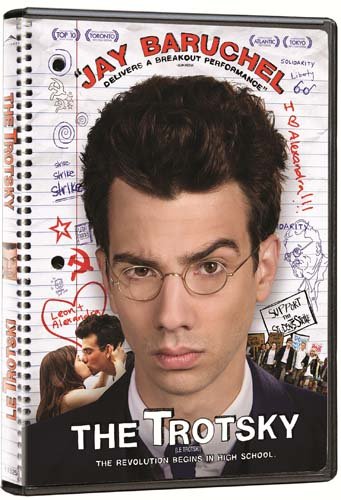
Leon Bronstein (Jay Baruchel, in a knockout performance) is convinced that he is the reincarnation of Leon Trotsky, and is determined to live out his life in the same way, right down to getting himself assassinated (“hopefully somewhere warm” his note appends). He also has only three years left to find Lenin, but in the meantime, his attempts to kick-start the revolution are meeting with little success. His struggle to unionize his father's factory manages only to embarrass and anger his father, who retaliates by removing him from private school and packing him off to a public one run by the tyrannical Colm Feore. Delighted to have worth enemy, Leon sets about mobilizing the student body, while trying to romance Alexandra (Emily Hampshire). Not only does she bear the name of Trotsky's first wife, the age gap between the two (she is almost ten years older) is the same. It must be destiny

This is enormous fun. Baruchel's Leon could easily be a figure of ridicule, and though he is funny, he is also possessed of such indomitable will and the desire to change the world for the better, not to mention a complete imperviousness to social humiliation, that it is impossible not to get behind him. Writer/director Jacob Tierney makes good use of his Montreal setting, adding the city's quirks to his characters', and the cast is engaging mix of new faces and veteran Canadian actors (Feore, Geneviève Bujold, Saul Rubinek). Sharp, witty, and unapologetically optimistic, this is about as feel-good as feel-good gets. And, as an added bonus, the film features the most hilarious riff on the Odessa Steps sequence from Battleship Potemkin I have ever seen.

"If I had a world of my own, everything would be nonsense. Nothing would be what it is because everything would be what it isn't. And contrariwise what it is, it wouldn't be. And what it wouldn't be, it would be, you see?"

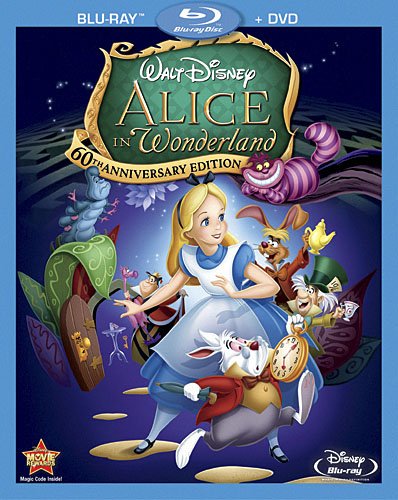
To be perfectly honest with you, I have never read either of the two Lewis Carroll books on which this film has been based. Under ordinary circumstances, that would put me at a decided disadvantage in both watching the film and certainly in providing an insightful review of the movie. But these are not ordinary circumstances. The characters and their stories, originally told in both Alice's Adventures In Wonderland and Through The Looking Glass And What Alice Found There, have become an indelible part of our culture. One need not have read a word to be intimately familiar with Alice and her fanciful friends and rivals from Underland, which Alice herself interprets for us as Wonderland. There have been animated features as well as other live action attempts. The characters have become iconic and have appeared in advertising campaigns and even an episode of Star Trek. The surprise isn't that I feel like I know this story without having read the source material. The real surprise would be if there was anyone out in the civilized world who wasn't familiar with these characters. They were originally oral stories told to a group of sisters, one of which was Alice Little, the inspiration for the tales. They would only end up in book form at the insistence of the young Alice.