Dolby Digital 5.1 (French)

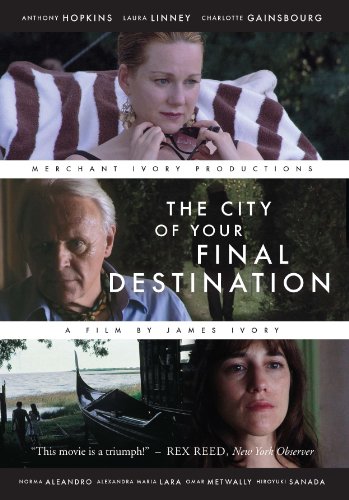
Omar (Omar Metwally)desperately needs to write the biography of author Jules Gund if he wants to hang on to his academic post. In order to do this, he will have to secure the cooperation of the reclusive author's surviving family: his wife (Laura Linney), his mistress (Charlotte Gainsbourg) and his brother (Anthony Hopkins). Pressured by his girlfriend to make something of himself, Omar heads off to Uruguay and essentially invites himself into the Gund residence, an isolated mansion in a state of genteel decay. Hopkins and Gansbourg are quick to agree to the project, but Linney resists, and Omar is gradually entangled in the family's complicated web of relationships, while drifting into an affair with Gainsbourg.

I haven't read Peter Cameron's novel which which the film is based, so I can't say whether this story's vision of academic life is the same as the book's, but I will say that what we have here is rather bizarre. Yes, there is some truth to the old “publish or perish” saw, but Omar's desperate career straights are ludicrous. So the film starts off with a shaky premise, and is further saddled with a distinctly callow protagonist. Though he is clearly supposed to be a rather weak figure, he is so difficult to care for that the film has a void at its centre. As for Linney, Hopkins and Gainsbourg, these are people who could make a recital of the phone book interesting, and their time on the screen is compelling, even if the film itself isn't quite.

Written by Diane Tillis

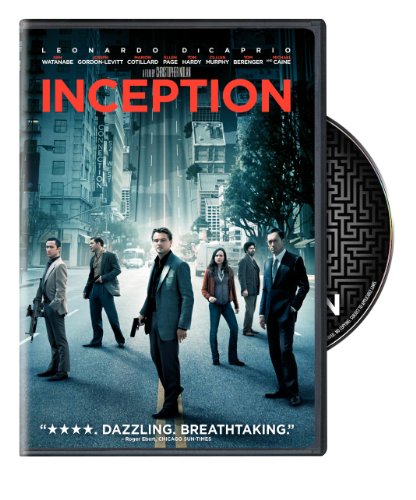
It is hard to talk about Inception without spoiling something. It is also hard to read any review and get a full feel for the film. Inception truly needs to be seen to understand why it is so amazing. On one level, it is an incredible action film that revolves around the heist scenario set in exotic locations such as France and Japan. On another level, the core purpose of the film is a complex discovery into dreams and the subconscious, and the consequences that come with manipulating the mind of another person. Inception is packed with inventive action, high drama, ideas and emotion. It is a masterpiece; whether it makes a billion dollars or not, it is a triumph for mainstream cinema. As the complexities of the film unravel themselves on the screen, Inception stands as a reminder that there is more to mainstream cinema than mindless entertainment. It forces the audience to think and question everything they are experiencing. If you give Inception the opportunity, I promise you will not be disappointed. In fact, you will want to talk more and more about the film once the credits roll to figure out what it all means. This is a sign of great cinema! Just for precaution, possible spoilers ahead!!

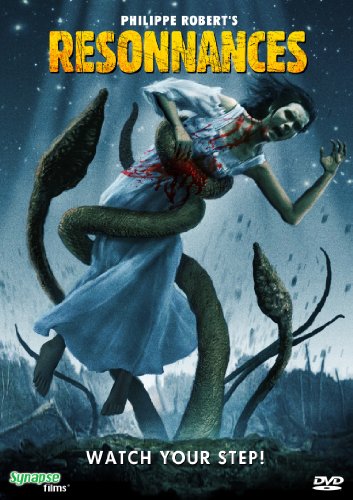
Six young men and women head off in two cars for a weekend trip in rural France. Along the way, the car with the three guys runs out of gas, fortunately within pushing distance of a filling station. There, our boys inadvisedly pick up a hitchhiker, who turns out to be an escaped psychopath. But no sooner have they started to worry about their new passenger when a mysterious fog and a ghostly vision send them careening off a cliff. Wounded and lost, they find that not only do they have a killer to contend with, but there is something monstrous and huge under the ground that is hunting all of them.

Clearly shot on a shoestring, but very ambitious in its special effects (an opening prologue featuring a meteor strike in 17th-Century France, giant tentacles reaching of the ground to grasp a helicopter), this is a film that certainly pulls out the stops. The plot is pretty packed, too, what with a ghost, a killer, AND a monster. But for all that, what the film needs is something quite inexpensive: a stronger script. The characters are set up quite well, but nothing much is done with them, and they wind up playing out in fairly conventional ways (the loser is the hero and vice versa, for instance). And for all the elements that are tossed into the mix, much of the running time still involves racing around to little effect in dark woods. Still and all, there is some fun monster work, and the just how much this little movie attempts to pull off, whether it fully manages to or not, is worthy of admiration.

Written by Dave Younger

Young Adam (2003, 98 min.), set in drab postwar Glasgow, Scotland, combines the kitchen-sink dramas of late 50s/early 60s northern England with a Hitchcockian tale – what if you discovered your girlfriend floating dead in a river?  Throw in explicit full-frontal NC-17 sex (most movies, like Blue Valentine, will do anything to avoid this kiss of death, but Young Adam embraces it; they wanted to cut Ewan McGregor’s junk for the American release, but he fought to keep it in) with the sexually-charged characters of Joe (McGregor), Ella (Tilda Swinton), and Cathie (Emily Mortimer), and you have more than enough angry young men and women to overcome the tedium of being one of the working poor in the grimy, coal-infused landscape of the docks of Glasgow.

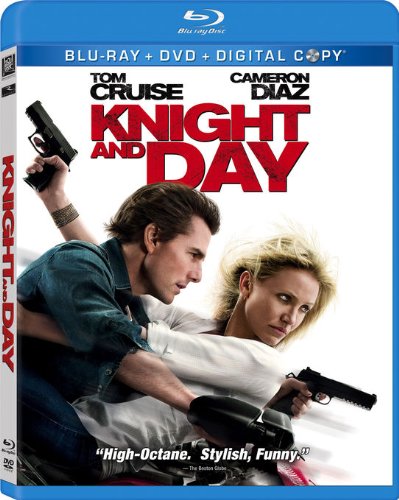
A suave Tom Cruise and a flustered Cameron Diaz (wow, what a stretch for both actors) bump into each other at Wichita airport, and a few minutes later do so again. Diaz thinks she might be on to something with the charming hunk, but she is more accurately into something, and in far out of her depth, as the plain flight turns into a gun battle and forced landing. Before she knows it, she doesn't know where to turn and whom to trust: the various menacing government officials (headed up by a sinister Peter Sarsgaard), or the cheery but possibly psychotic rogue Cruise. There will be many a narrow escape and an international location visited before she knows the answer.

Tom Cruise's return to action-adventure films was almost more notable for the off-screen backstory than the on-screen action. This, of course, was the film he chose to do when he backed out of the darker-edged Salt, where he was replaced by the rather more convincing Angelina Jolie, and which proceeded to beat Knight and Day at the domestic box office. (In fairness, neither film was a giant hit, and the overall worldwide business of both was pretty close.)

As one could expect, I read a lot of books when I was a kid. I stuck with the classics from Ronald Dahl, Tolkien, and even Charles Dickens . But among all of the male authors in this boy's life, I also read a few female ones too. One stands out in particular, Beverly Cleary. From Henry Huggins to Runaway Ralph and the beloved Dear Mr. Henshaw , I clearly enjoyed her work. But I must confess, I even read the beloved Ramona books, so naturally I was delighted to see Ramona and Beezus on my doorstep.

Ramona Quimby (played by Joey King) is 8 and three quarters and attends the third grade. She would be a normal student if it weren't for one thing: her overactive imagination. It gets her into trouble more often than not and leaves her at the mercy of her third grade class. Apparently, it also leads to less than desirable grades and a report card that she has to hide when she gets home.

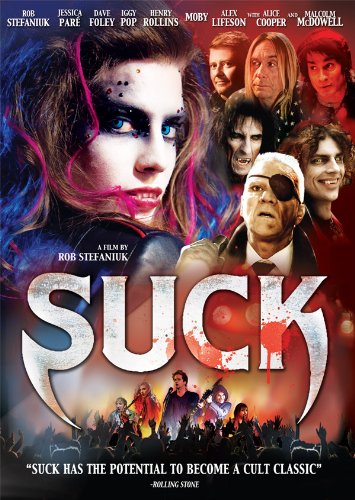
The Winners are anything but, being an undistinguished rock band playing to tiny, apathetic audiences in nowhere bars. Their time has not only passed, it never arrived. But just as they seem headed for the scrapheap, their bass player (Jessica Paré) is bitten by a vampire. Though her newly acquired taste for blood is a bit of an inconvenience, leading to some extremely messy murders to clean up, she now mesmerizes audiences, and the band catches fire. Leader Rob Stefaniuk is so desperate to catch a break that he is willing to turn a blind eye to just about anything. But complications loom, not least of which is Malcolm McDowell in full Van Helsing mode, heavily armed and sporting an eye patch.

Suck has the potential to become a cult classic,” reads the blurb from Rolling Stone, and that might well turn out to be the case. But Suck also rather desperately wants to be a cult classic, and that desire can stand in the way of its becoming the genuine article. It pulls all the right moves – black humour, full musical numbers, rock star cameos, outrageous gore, Malcolm McDowell – but those moves feel just a bit too self-conscious. The songs are rather bland, and the humour is hit and miss – though to its credit, when the film is funny, it is very funny (Iggy Pop's deadpan turn is one highlight). The flashback scenes of McDowell's traumatic first vampire encounter are very well done, cleverly incorporating repurposed footage of a young McDowell. In the end, while not everything works here, what does work, works well enough to make this worth a rental.

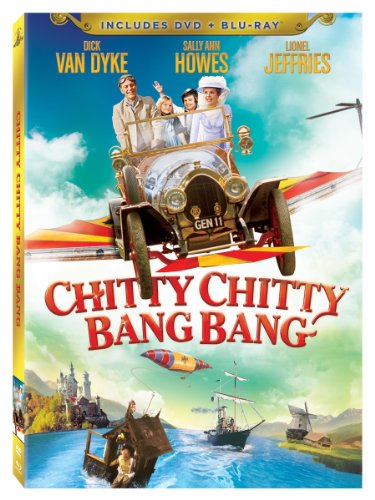
His name was Fleming, Ian Fleming, and he would go on to create the most famous spy in literary history. James Bond would actually be based on Fleming's own experience in Her Majesty's Secret Service. But Fleming had another side. It's hard to believe that the man who gave us such ubervillians as Dr. No and Goldfinger brought us one of the most enchanting children's stories of our time. Chitty Chitty Bang Bang's bond association doesn't end with its celebrated author. Albert "Cubby" Broccoli might have been just as instrumental for the success of Bond as Fleming himself. It was Broccoli who saw the potential and snapped up the rights to the spy series. He turned it into the famous Bond film series that still carries on the same traditions today, only at the hands of his daughter Barbara Broccoli. So it is only fitting somehow that Cubby would be the one to bring Fleming's children's story to life in movies, as well. The Bond associations don't end there. Director Ken Hughes brought us Casino Royale. The comic villain of the movie would be almost unrecognizably played by Gert Frobe, none other than Auric Goldfinger himself.

MGM has long been known for its epic musicals. The studio had a reputation for sparing no expense while delivering some of the most sweeping musical films known to mankind. Complete with complicated dance numbers and casts of thousands, the MGM grand-style musical was once something to behold. But Chitty Chitty Bang Bang wasn't really the model for these impressive spectacles at all. In fact, this movie follows more closely the Walt Disney model that it is one of the most misidentified films in the popular conscience. In a survey taken in the 1980's, only 1 out of 4 respondents correctly identified the film as an MGM production. The rest were confident that Uncle Walt and his Mouse House had given us the popular children's musical.

When Wes Craven delivered his first Nightmare On Elm Street film back in 1984, there wasn't much expectation for the film to do anything but deliver a little profit for the new independent studio New Line Cinema. The film did quite a bit better than that. It made the small studio into a player in the industry with the budget to make mainstream films that would have never been possible if not for Craven's little Nightmare. You could say that The Lord Of The Rings owes its very existence, at least in the form of the Peter Jackson films, to Freddy Krueger. Of course, the studio just couldn't help itself, and they continued to cash in on the franchise time after time. After the 7th film, it appeared that even the fans were about done with Freddy Krueger. A misguided attempt to pit Freddy against Friday The 13th's Jason might have pulled in good money at first. But the film ultimately disappointed, and a follow-up became very unlikely, indeed. But, like all good cinema monsters, you can't keep a good fiend down. A Nightmare On Elm Street joined the increasingly long line of horror films that received the remake/reboot/reimagining/regurgitation treatment.

A lot of the 70's and 80's slasher films have been remade by now. All of the big franchise names have been reborn. Michael Myers, Jason, Leatherface, and now Freddy Krueger have all been given the reanimation treatment. With most of these bad guys, there was little problem with replacing the man behind the mask. No one actor had played any of these characters exclusively throughout the franchise run. While Kane Hodder came closest with both Freddy and Leatherface, he was not the only performer under the hood for either monster. Freddy Krueger was different, however. In all of the Nightmare films of the original run, Robert Englund had been the only actor to play Freddy. There was an attempt to replace him in the early goings of the second film, but the filmmakers discovered rather quickly that you can't just put a stuntman in the makeup and turn him loose. Freddy had a personality that had become quite intermingled with that of Englund. So the very first question that had to be answered when the subject of a do-over came up was who was it going to be in the red and green sweater wielding that knife glove. Could anyone but Robert Englund make the part work?

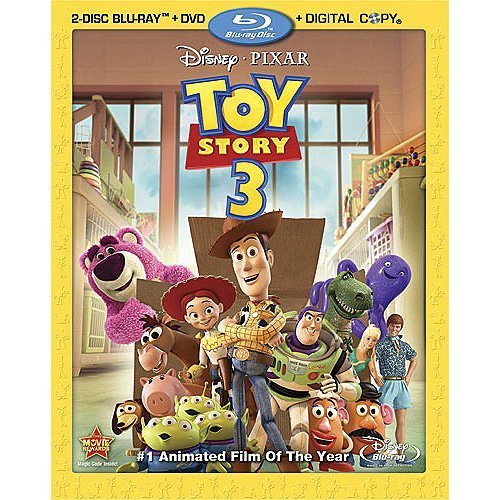
"The Toys Are Back In Town"

That's right. All of your favorite toys are back in Pixar's latest great film Toy Story 3. This time the toys are dealing with the inevitable. Andy (Morris) is about to go off to college. It's been a long time since he's played with his friends, and they are getting desperate and worried they will get tossed away. Although Andy bags them to be stored in the attic, a misunderstanding sends them to the curb and a date with the garbage truck. After that close call they decide to get themselves donated to Sunnyside Daycare, where they hope to live out their lives with tons of children to play with them. But things aren't all that sunny at Sunnyside. The place is ruled by the iron paw of Lotso Bear (Beatty) and his cronies. The bad guys include Big Baby. He and Big Baby once were accidentally abandoned by their owner and Lotso was replaced, making him bitter. Now the toys have to escape the armed camp of Sunnyside.