Dolby Digital 5.1 (Spanish)

Why god must you do this? Why does Hollywood in all its limited wisdom try to remake any and everything with the hopes that it will be good, when it just winds up becoming another EPIC FAIL? They’ve done it with The Grudge, they’ve done it with The Eye, and now I hear they might be remaking Oldboy and The Host. We’re coming up on sacred cow territory here, and quite frankly, I don’t know why these films have to be “Americanized” to appeal to the unwashed masses; I thought the whole point of them was to be appreciated on their own merits. But sure enough, the horror film genre is guilty of cannibalizing product like anyone else. See what I did there?

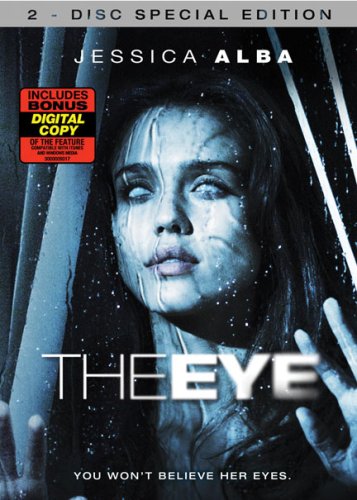
Moving on, The Eye is based on the 2002 Hong Kong film Gin gwai, but Tom Cruise’s CW Production studio bought the American rights, and Sebastian Gutierrez (Snakes on a Plane) adapted the screenplay for American audiences, in a film that David Moreau and Xavier Palud (Them) directed. Sydney Wells (Jessica Alba, The Love Guru) is a classically trained violinist who has been blind most of her life. Upon receiving a corneal transplant (the eyes people, work with me here), she starts to see visions that shock and terrify her. Her sister Helen (Parker Posey, Best In Show) doesn’t know what to do for her, and her doctor (Alessandro Nivola, Grace is Gone) thinks she’s crazy, even though she walks around with strange markings on her hands and arms. So she tries to find out where her donor eyes came from, and the person who had them before saw unimaginable horror, and those visions are transferred to Sydney.

For as much as I might viscerally disagree with the creation of a film or its sequel, I lay much of the blame at you, the viewer and movie-going public. You created the furor around the Step Up series of films. You all went in droves to the first film when it was released in August 2006, when movies were winding down in the blockbuster season and thus helped it make $65 million domestically and more than $110 worldwide. It’s your fault that another film was inevitable, so in the down-turn of this past February, we got a second one. That one made about the same domestically, but made $30 million or so more and almost brought in $150 million worldwide. Count on the fact that another 90-minute film about teens dancing will be made and that the Step Up trilogy (I threw up in my mouth a little when writing that) will be complete.

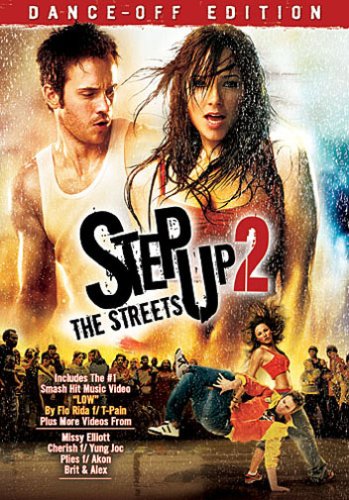
Step Up 2 was written by Toni Ann Johnson (Mean Father) and Karen Barna, which begs the overall question of why TWO people needed to write a movie about dancing, but I digress. John Chu (When The Kids Are Away) directed. Andie is played by Briana Evigan, and if the name is familiar to you, she’s the daughter of Greg Evigan of BJ and the Bear fame. Briana does not look like a chimp, for the record. She decides to become friends with Chase (Robert Hoffman, She’s the Man) at a school the two go to in Maryland. They try to join an exclusive dance crew named the 410 and are rejected, so they start their own dance crew to go against the 410 in a dance competition. That’s the story, but the main focus is on the film and the dancing. The dancing carries the film from beginning to end and is peppered excessively throughout, and that’s what people cared for and what people saw.

I’m not sure how many people are familiar with the process of moviemaking, but when a film is not up to studio expectation and takes a long time to finally arrive to theaters after filming has wrapped, the result is sometimes due to financial issues with the studio. But most of the time it’s due to the fact that the studio has seen the final product, and it’s so abhorrent and without any value, redeeming, comic or otherwise, that it will be released as quietly and without recognition as possible. Now I don’t know if there were any financial issues surrounding Strange Wilderness, but I will say this: the film was shooting as far back as December 2005 and was released in February 2008, and at this point on rottentomatoes.com, there is not one positive review from the three dozen that are on the site. I’ll leave it to you to decide what the reasons why are.

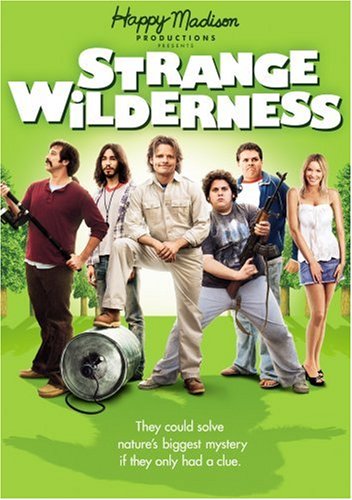
Strange Wilderness was written by Peter Gaulke and co-written (and directed) by Fred Wolf. Both of whom were writers on Saturday Night Live. Wolf, in fact, is the head writer for the show to this day. The film is based on a series of shorts the pair would put together, and in the feature, Peter (Steve Zahn, Rescue Dawn) is the son of a nature reporter and enthusiast, and does a show extolling nature, but things aren’t going his way. So, after an unproductive meeting with his network executive (Jeff Garlin, Curb Your Enthusiasm), he decides to go on an expedition for well-known wilderness legend Bigfoot. So he packs up his crew, which include Cooker (Jonah Hill, Superbad), Junior (Justin Long, Walk Hard), Fred (Allen Covert, Little Nicky) and Danny (Peter Dante, Big Daddy), and they all head out into the woods to find Bigfoot. Peter’s crew is a couple of cans short of a six pack, so wacky hijinks ensue.

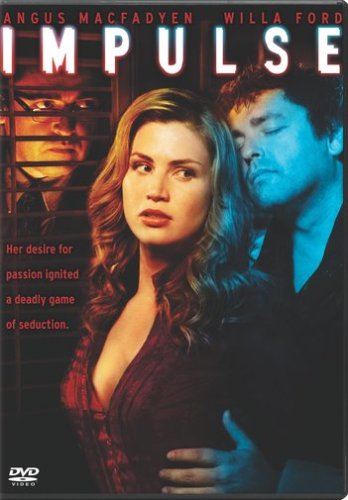
ABC has made a killing from the bored housewife situation. It shouldn’t come as any surprise that films would attempt to put those kinds of situations into their plots. The film is billed as an erotic thriller; however it’s really two separate films. The first half works the erotic side of things. There’s plenty of nudity and sexual situations, starting with three chicks all over each other for a photo shoot. Here we meet Claire Dennison (Ford). She’s a successful businesswoman, perhaps selling porn to the Japanese. She’s married to Jonathan (MacFadyen), a psychiatrist that she appears to love. The problem is she wants to have a baby and she’s bored with their sex life. She attempts to spice things up through role playing but gets little response from her work-obsessed husband. One night while out of town in a hotel she spots her husband in a bar playing the part of “Roberto” a role she earlier encouraged him to take on. She plays along, and things get pretty hot and steamy for the couple. The rendezvous is repeated on another trip, and she seems ecstatic with the newfound passion her husband has discovered. That is until one morning she gets a call from her husband while he’s still in her bed. It turns out she’s been having an affair with his perfect double. When she discovers her huge mistake, she hustles poor “Roberto” out of bed and out of the door. Unfortunately for her “Roberto”, really Simon, isn’t planning on going away that easily.


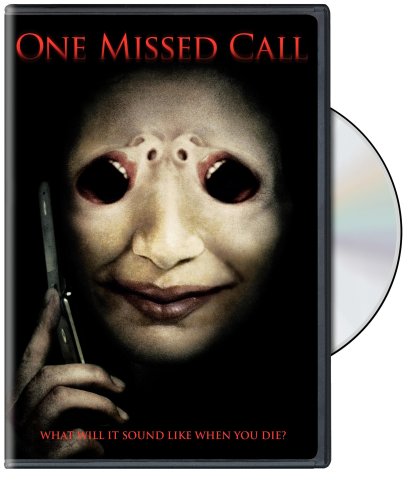
I’m going to admit right from the start, I hate cell phones. They’re evil, and I didn’t need a horror film to tell me about it. The world would be a safer and certainly a more courteous place without them. Just last week I was run of the highway by a Werner semi because the idiot driver was on his cell phone. So it didn’t come as any surprise that someone was bound to include them as part of a horror film. One Missed Call is simply the latest Asian Invasion film to be retooled for American audiences. What started with The Ring, which was a truly original and suspenseful film, has also given us losers like The Grudge. Unfortunately this film falls into the latter category. Believe me, I wanted so much to love this film. I was the annoying guy cheering the trailer at the local cineplex.


A couple of years ago, I was out a trip to New Jersey on business with my boss. When we got there, he wasn’t feeling well, so I had him sit down while I went to the clinic down the hall to see if some medical attention could be given to him. As I turned the corner with an attendant, that’s when I saw him hit the floor. After a few moments of stabilization he was taken to the hospital, where it was determined that he had a stroke. A co-worker and I stayed with him for the duration of the next couple of days until his family could get there, and over that time, he suffered several smaller strokes in the process. One minute he could talk rather lucidly, and like flipping a switch his facial muscles would sag and be nonresponsive. Once his family came, we managed to get the chance to come home, and he spent several more days in the hospital, remarkably without any repercussions from this incident, and came back to work, where we still talk (I’ve moved to another company) and share the occasional gallow humor about what happened.


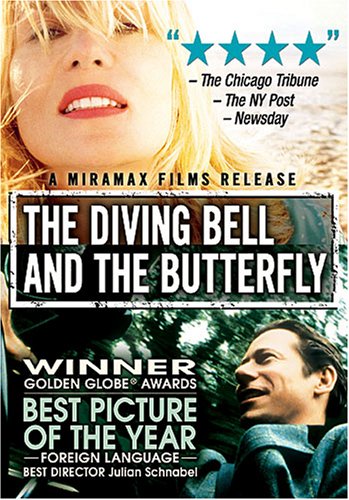
He was lucky, though there are others that have experienced far worse situations. The Diving Bell and the Butterfly is a look at the life of Jean-Dominique Dauby. The editor of the French version of Elle magazine led a somewhat glamorous life,and one day had a severe cerebrovascular incident, whereby he was left paralyzed, but responsive in his left eye, which allowed him to communicate solely by blinking. With the help of speech therapists, he was able to state his thoughts in his book by the same title, as a metaphor of his useless body, labeled as the “diving bell,” ironically clashing with his free spirit, your “butterfly,” if you will.

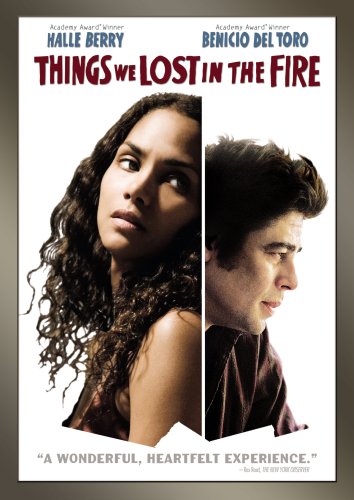
It’s hard to peg a movie like Things We Lost in the Fire. While people want to slam it and say that it’s not an uplifting movie, I think that upon further review, they might want to examine those behind it, and see that it’s another solid effort from them.

Written by Allan Loeb in his writing debut and directed by Susanne Bier, the talented Danish director behind the film Brothers, the film centers on a recent widow named Audrey, played by Halle Berry (X2), who lost her husband Brian (David Duchovny, The X-Files) to a murder in tragic circumstances. After notifying Brian’s friend Jerry (Benicio Del Toro, Traffic) about the murder, Jerry doesn’t seem to take it so well. Brian and Jerry have been friends since they were kids, and while Brian went onto a life as a successful architect, Jerry was a lawyer before becoming addicted to cocaine and heroin, and was spending his days at a sleazy dive apartment getting high. Yet Brian would come and visit Jerry, to catch up and talk about his family. When Audrey would be skeptical of how Jerry might be exploiting Brian, Brian stuck by him. So what Audrey winds up doing is inviting Jerry to live with them. In the process, Jerry helps Audrey and her kids cope with their loss, while trying to strike the delicate balance of sobriety.

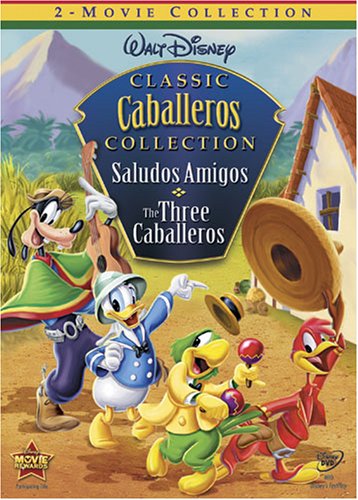
In the 1940’s Walt Disney was asked by President Roosevelt to take a good will tour across Latin America as an ambassador of sorts. He declined the invitation, protesting that he wasn’t the handshaking kind and that the cause would be better served using someone else. Not to be deterred, Roosevelt made a counter offer. What if Walt would go to Latin America with a film contingent and then create some kind of a production out of the tour. A government subsidy was even offered. Walt accepted the invite but turned down the subsidy. And so, with a large party of animators, writers, and production crew, they took a whirlwind tour and left with what Walt himself described as a wealth of material. The footage obtained and the experience gained would feed into Disney productions for decades.


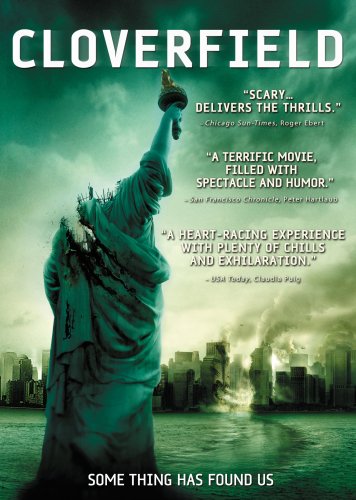
Does ultra realism make for a better movie? There have certainly been examples of startling realistic moments in cinema that have been quite effective, but mostly because they create an experience for us that actually reaches us in a way that we’ll never be able to forget. The storming of Normandy in Saving Private Ryan was one such incidence. Those of us who have never been to war walked away from that scene feeling like we’ve now experienced the closest thing possible without actually being there. It was the kind of movie moment that brought tears to men who had really been there. That’s the kind of visceral moviemaking J.J. Abrams might have been hoping for when he made Cloverfield.

Will Smith finds himself in a bit of a career quandary if you ask me. Sure, one of the good sides to being as as he is is that he’s quite the popular guy that nobody wants to see get killed. But the popularity has seemed to stymie him a little bit. When he does dramatic work, it’s clear that the push is for him to win an Oscar, like in Ali and The Pursuit of Happyness. So when people look past that intent, even when he might want to do dramatic work, he’s forced to take on slightly darker roles in action films, which I guess serves as his happy medium of branching out while still pleasing the people. I Am Legend is another one of those examples, very similar to another Smith sci-fi film named I, Robot.

I Am Legend is based on the Richard Matheson novel and is loosely inspired by Charlton Heston’s 1971 film The Omega Man. This version is adapted by Akiva Goldsman, who won a Screenplay Oscar for A Beautiful Mind, and directed by Francis Lawrence, whose first feature effort was the supernatural comic book film Constantine. But in case you don’t know much about the film or really had a concern to go see the Smith film, he plays Robert Neville, an Army virologist. Robert was responding to an effort of a virus that ironically was supposed to be a cure for cancer. But instead of ridding the body of cancer, it became a bug that infected humans, turning them into psychopathic, ultraviolent zombies, out to kill any members of the living. Neville continues to work on a cure for the virus, even after it has decimated the world’s population.