Posted in: Disc Reviews by Gino Sassani on November 13th, 2008
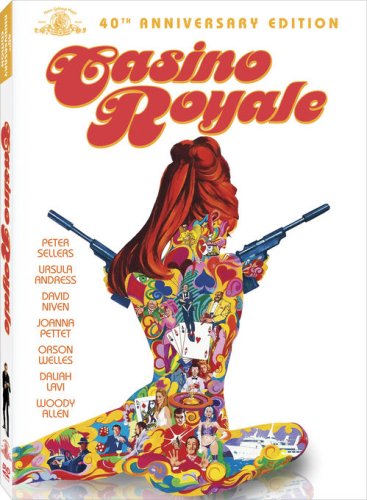
Casino Royale was the only one of Ian Fleming’s James Bond novels that was not a part of the deal with Ion Productions. It was the only Fleming story that was off limits even though it was the first Bond story written. Until recently it was never filmed as part of the official Bond franchise. However, there was a version made back in 1967 that has been deservedly long forgotten. After 40 years it remains unclear who originally came up with the idea for this farce, and after watching the results, I’m not expecting anybody to stand up and take credit any time soon. This is a James Bond film, but in name only.
Posted in: Disc Reviews by Gino Sassani on June 17th, 2008
The voices aren’t the same. The animation has lost that classic charm. The story is completely contrived. What remains is a dim reflection of a few beloved characters from a bygone year of vintage Disney magic. This sequel of the classic Disney telling of Rudyard Kipling’s The Jungle Book looks more like a direct to video knockoff. I was actually quite amazed to note the film did have a box office run.
Posted in: Disc Reviews by David Annandale on June 12th, 2008
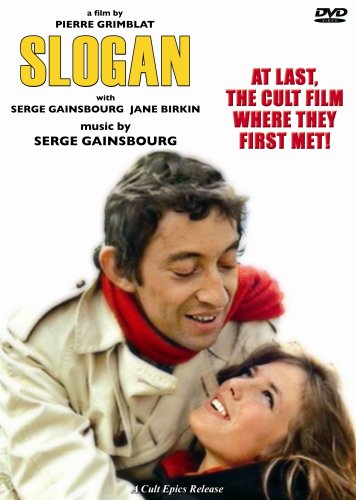
Serge Gainsbourg and Jane Birkin were the “it” couple in France during the late 60s and early 70s. This is the film that brought them together, their To Have and Have Not, if you will. Musician Gainsbourg (who, for the uninitiated, had a singing style that was a cross between Leonard Cohen and Tom Waits) plays a married director of successful TV commercials. He begins an affair with an 18-year-old (Birkin). Their relationship hits most of the predictable moments of such movie romances from that period.
And it is almost completely uninteresting. There is zero chemistry between the leads, but neither has much by way of screen presence to start with. Gainsbourg is startlingly ugly, and Birkin is strikingly beautiful, but that's hardly enough to keep us watching. Neither character is remotely likeable, and the self-referential moments in the film were smug clichés already in 1969. The film holds some interest as a pop culture trivia answer, but for anyone unfamiliar with Gainsbourg and Birkin, it's an intolerable bore.
Posted in: Disc Reviews by David Annandale on March 8th, 2008
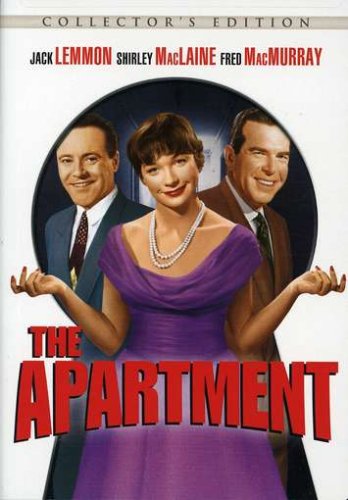
Jack Lemmon is a rather meek insurance company employee who is slowly working his way up the corporate ladder by lending his apartment to married executives looking for a place to take their girlfriends. Life is rather inconvenient, as he is locked out of his home at all hours, but things become even more complicated when the big boss (Fred McMurray) takes an interest. The good news is that Lemmon gets another promotion. The bad news is that McMurray’s affair is with Shirley MacLaine, the elevator girl for whom Lemmon is carrying a torch.
Billy Wilder’s follow-up to Some Like It Hot certainly has plenty of funny moments, most involving Lemmon’s doctor neighbour (Jack Kuschen). But the film doesn’t shy away from the darker implications of its storyline (up to and including a suicide attempt). The result is a romantic comedy-drama that is sweet without being sentimental, and hard-nosed without being cynical. And the audience’s emotions are thus sincerely earned.
Posted in: Disc Reviews by David Annandale on February 22nd, 2008
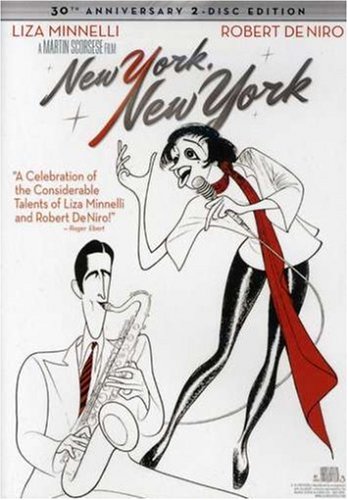
World War II has just ended, and the recently discharged Robert De Niro hits New York on the prowl for sex. He runs up against WAC Liza Minnelli, and the more she resists his advances, the more determined he becomes. There is more: he is a saxophonist, and she (of course) is a singer). So begins a tempestuous relationship between two artists whose enormous talents and equally enormous personalities mean they can neither live with nor without each other.
The idea of Martin Scorsese taking on the form of the classic musical is so bizarre that it had to happen, and here it is. Scorsese’s conceit is ingenious: all the conventions are there (the meet cute, the songs, the artificial sets and colours), but they collide with the naturalism of the performances and the emotions. A perfect case in point: wandering the streets at night, De Niro sees a sailor and his girl perform a dance together. It is a classic musical moment, but the only sound is that of a train passing. It is a scene of extraordinary beauty, grit, and cinematic truth. And it belongs in an extraordinary film.
Posted in: Disc Reviews by David Annandale on September 20th, 2007
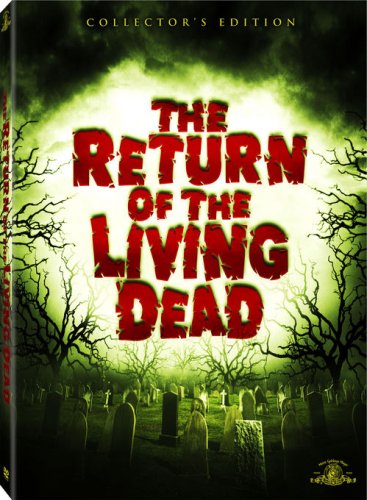
It’s back, yet again, and looking for more brains. Dan O’Bannon’s lively zombie comedy tells the tale of a toxic spill reanimating corpses who, not content with wanting to eat your brains, are going to give you lip about it at the same time. Notable for its mix of horror, punk rock, gore, humour and nudity (this is the film that established Linnea Quigley as a horror starlet), the film has since been bested in terms of wit and gore by both Dead/Alive and Shaun of the Dead, but it was there first, and remains great fun. Never having caught the film in the theatres, I haven’t noticed anything amiss with the soundtrack, but the chatter out there among the film’s fans lets it be known that some of the songs have been truncated, so be warned on that front. Otherwise, have a blast.

Audio
Posted in: Disc Reviews by Archive Authors on September 19th, 2007
Based on a popular 1957 novel by Alistair MacLean, The Guns of Navarone was a smash hit in 1961, and the highest grossing film of that year. It’s a World War II movie, and for its time was considered to be packed with excitement. While it definitely has some great action sequences, for modern standards the film has nowhere near the fast pace or high action-to-dialogue ratio we’ve come to expect from the genre.
So many years later, can a slow, talky action movie still excite audiences? And is The Guns of Navarone – 2-disc Collector’s Edition a worthy upgrade over the 2000 special edition release? Read on to find out.
Posted in: Disc Reviews by David Annandale on August 1st, 2007
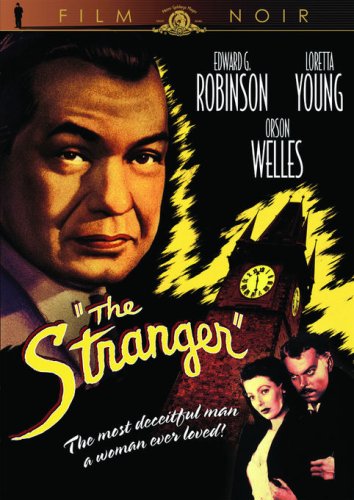
Edward G. Robinson is the war crimes investigator on the relentless hunt for the fugitive Nazi who masterminded the Final Solution. He arranges for the one man who knows his face to escape imprisonment, and follows him to a small Connecticut town. There he loses his quarry, but evidence soon points to Orson Welles, who, under the identity of Charles Rankin, is now a college professor and new husband to Loretta Young. Welles stops at nothing, including murder, to protect his secret, but little by little Young is forced to realize who her husband really is.
Welles’ third film as a director is far more conventional than Citizen Kane or The Magnificent Ambersons, and it isn’t quite up to its predecessors. Robinson is terrific as a detective who must become almost as cold-blooded as his prey, but Welles’ performance is too big: his character might as well be wearing a “NOT A NAZI WAR CRIMINAL†name tag. That said, the suspense is powerful, and the cinematography pure, gorgeous noir.
Posted in: Disc Reviews by David Annandale on July 31st, 2007
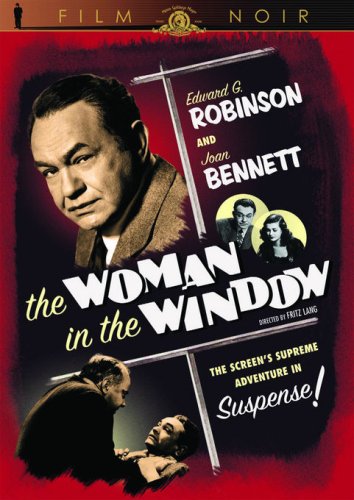
Left alone when his family leaves town to visit relatives, professor Edward G. Robinson hangs out at his club with his two cronies, one of whom is DA Raymond Massey. He is fascinated by a striking portrait of a young woman, and one night, leaving the club late and alone, he runs into the portrait’s model (Joan Bennett). Though he knows better, he accompanies her back to her apartment. A jealous lover bursts in and attacks Robinson, who murders him in self-defense. Panicked by the situation, Bennett and Robinson cover up the event, but both the authorities and a blackmailer circle closer and closer.
Robinson is magnificent as a basically decent man whose one lapse in judgment leads him to catastrophe. His eyes radiate a desperate desire to turn back the clock, and the audience squirms along with him. Bennett’s character is interesting as the unintentional femme fatale: she never has any desire to cause trouble for Robinson. Director Fritz Lang holds the audience in a lethal grasp, which never loosens in the slightest until the unfortunate cop-out ending.
Posted in: Disc Reviews by David Annandale on July 22nd, 2007
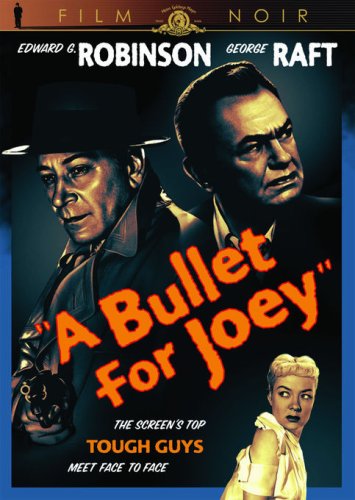
George Dolenz is the Montreal scientist working on an atomic something-or-other. Foreign spies (could they be.... Communists??!!) hire exiled American gangster George Raft to get Dolenz and his secret into their clutches. His secret weapon for this project is the seductive power of Audrey Totter. Working for the angels is RCMP detective Edward G. Robinson. The expected race against time ensues.The Montreal setting is unusual, as is the idea of Robinson as a Mountie, so that's fun. Rraft is very much the aging gangster by this point, but still rasps it out with the best, and the film is really about his redemption. Not only is Dolenz' research a pure McGuffin, so is he, his character nothing more than the means to have Robinson and Raft play cat and mouse. This isn't in the top rank of films noir, but it is still a lesson in how to pack a lot of entertainment into an economical 87 minutes.
Audio