Posted in: Disc Reviews by David Annandale on March 20th, 2010
Cult Epics here presents us with their second box set of films by ex-pat Spanish surrealist/'pataphysician/provocateur Fernando Arrabal. These are more recent works, and are, arguably, even more of an acquired taste than the earlier set, though not necessarily for the reasons one might think.
Car Cemetery is the 1983 TV version of his 1958 play. In a dystopian future, the punk/S&M/whatnot inhabitants of the titular setting live through a rock-n-roll version of the Passion. What would have been a hell of a taboo-buster in 1958 hasn't aged well. Quite apart from the very 1980s costume design of the film (in the most unfortunate ways), the religio-political points, clearly aimed at Franco's Spain, no longer have the same bite when re-staged in the post-Franco era, and today seem altogether precious and rather twee.
Posted in: Disc Reviews by Gino Sassani on November 18th, 2009
“Sometime in the 23rd Century the survivors of war, overpopulation, and pollution are living in a great domed city, sealed away from the forgotten world outside. Here in an ecologically balanced world, mankind lives only for pleasure, freed by the servo-mechanisms which provide everything. There’s just one catch. Life must end at thirty unless reborn in the fiery ritual of Carousel.”
Logan’s Run started life as a pretty successful novel by William F. Nolan and George Clayton Johnson. The source material was really quite dark and more like Ridley Scott’s Bladerunner than the 1976 film based on the work. For some reason it was decided that this dark reflection of the future wasn’t as marketable. So, the decision was made to make this a very bright film with only hints at the nefarious realities of this future world.

Posted in: Disc Reviews by Gino Sassani on May 21st, 2009
“Don’t expect too many mistakes from this man. After all he does seem rather more interesting than just another reader researcher. For example; has he gone into business for himself? Was he turned around? Does someone operate him? Is he homosexual? Broke? Vulnerable? Could he be a soldier of fortune? Did he arrange the hit? Is that why he’s still in flight? Still, he may be innocent. But why didn’t he come in gently?”
Sydney Pollack might have been channeling the essence of Alfred Hitchcock when he directed 3 Days Of The Condor. It’s hard not to see the similarities to some of Hitch’s work. But he might also have been having a bit of precognition at the same time. The later novels and films about Jason Bourne bear a striking resemblance to this 1975 thriller. Whatever connection Pollack might have been making, he managed to direct a film that was timeless while being very much a product of its time. We are reminded of that long gone era of the 1970’s with generous shots of the just built World Trade Center towers. Ads and shots of Eastern Airlines planes bring back some memories. These images securely place the action in a specific time. Still, it works maybe even more today than it did in 1975.
Posted in: Disc Reviews by Michael Durr on May 19th, 2009
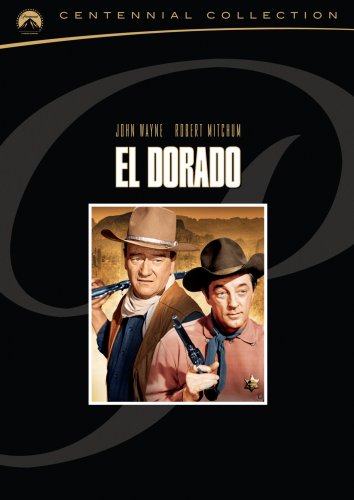
My history with Westerns isn’t exactly a vast one. I watched a bunch of Westerns with my dad growing up and I continued to watch the bigger ones of the modern era like Tombstone and Unforgiven as I progressed through my teenage years and young adulthood. John Wayne is kinda a mystery to me. He’s a huge gritty guy with a lot of patriotism and a funny way of talking. For lack of a better analogy, Sylvester Stallone is my generation’s John Wayne. Or Chuck Norris I guess. El Dorado is an interesting western flic because it was shot later in John Wayne’s career but he had still had the swagger of earlier pictures. A true classic revisited by the minds at Paramount.
Cole Thornton (played by John Wayne) is a gunslinger for hire. He’s been hired by Bart Jason (played by Ed Asner) for some help in a ranch dispute with the McDonald family. Cole rides into El Dorado and is approached by his friend: Sheriff J.P. Harrah (played by Robert Mitchum) who tells him the real tale of the ranch dispute. Cole also finds out that Jason eventually would have put him in a gunfight with the Sheriff. This is something that he didn’t want to do.
Posted in: Disc Reviews by David Annandale on April 28th, 2009
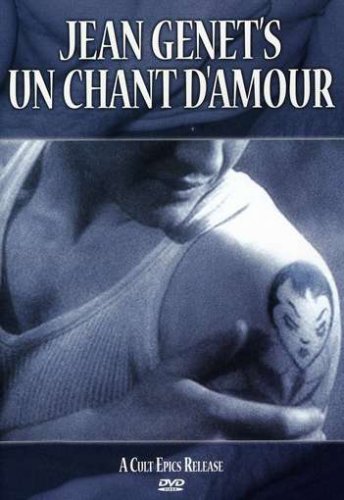
A while back, Cult Epics released a 2-disc limited edition of Un Chant D'Amour. This single-disc reissue features a number of the features (though not all) from the limited release. The actual film and transfer quality are the same, and so much of this review is likewise the same.
Long the bad boy of French novelists, Jean Genet directed this 25-minute short in 1950. Borderline pornographic, it is a silent portrayal of (literally) imprisoned desire. Two prisoners convey their longing for one another through the prison walls, while a voyeuristic guard watches, becoming aroused and frustrated to the point of violence. poetic, fetishistic, and intensely personal, it is a startling and historic piece of underground cinema.
Posted in: Disc Reviews by Gino Sassani on April 2nd, 2009
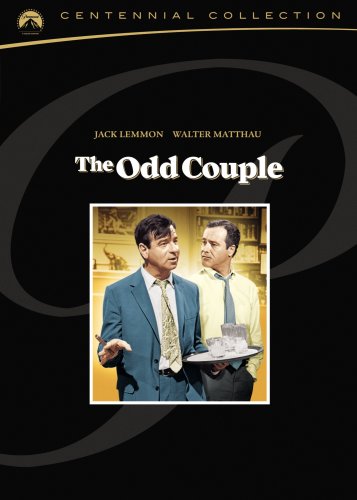
The Odd Couple began as a concept when playwright Neil Simon observed his recently divorced brother share an apartment with another divorced guy. He developed it into a very successful play. In the original play Walter Matthau played Oscar, but it was The Honeymooners star Art Carney who played Felix. Both actors were offered the parts for the film. Carney declined. It was because of the onscreen chemistry between Matthau and Jack Lemon on the film The Fortune Cookie that led to Lemmon being cast as Felix. The decision was a stroke of genius. If you look at it on its surface, there really isn’t much of a story here at all. It is the connection and relationship between these characters, and subsequently these actors, that made this film the classic that it is. Also returning from the play to reprise their roles were Monica Evans and Carole Shelley as the amusing Pigeon Sisters, roles they would actually repeat for the television series two years later.
When I watch this film, I will admit that it’s often a little hard to get the images of Jack Klugman and Tony Randall out of my mind. Most folks have had far more exposure to that 5 year television series than they have with the original film. To me, they will always be those characters. In fact Klugman replaced Matthau on the stage as Oscar before he took the role on television. Still, even with that bias, it is awfully hard not to get drawn into this film. For me characters and performances can be everything. That’s what makes this film have the lasting power it has enjoyed. Most of the film, as the play, takes place inside the apartment. There is a very limited cast, often just Felix and Oscar on the screen. Certainly there are some great moments with the poker buddies and the Pigeon Sisters, but most of the film takes place in a limited environment with just two actors. If you can make that work at all, let alone create a classic experience from it, that’s saying something. There were a few outside locations utilized in the film that were not part of the original play. These were placed there just to give the viewers a change of scenery but were totally unnecessary.
Posted in: Disc Reviews by Gino Sassani on March 2nd, 2009
The French Connection had one of the best film endings a show of this kind could ask for. There was absolutely no need for a sequel. Obviously the success of the first film laid the groundwork for another adventure. In reality the case was rather left open, so there was certainly room to follow up the action. The problem is that none of the elements from the first film remain in the second beyond Gene Hackman’s portrayal of Popeye Doyle and the return of Fernando Rey as the villain Charnier. Friedkin would not return to direct, and even though he was replaced by an even greater director in John Frankenheimer, not much of the original crew remained. Neither Egan nor Grosso were used to consult on the film, and of course, Grosso’s character along with the corresponding Roy Scheider were gone from this film. The gritty streets of New York were replaced by the streets of France. Even the Poughkeepsie line used in the film’s early minutes is a throwaway line meant merely as a wink to the audience. The film has none of the police procedural drive and passion that the original had. In short, this sequel lacks almost everything that made the first a great film. But in spite of all it did not have, it managed to at least be a good film.
None of this film occurs in New York. We begin with Doyle (Hackman) arriving in France to track down “Frog #1”, Charnier (Rey). He doesn’t attempt to hide his contempt for the French and so does little to endear himself with the local police here. Instead they’ve invited him merely to be a target to lure Charnier out of hiding. It backfires, and Doyle is captured instead and hooked on heroin so that Charnier can find out what they know. The film becomes far more of a personal journey for Doyle and less about catching the bad guy. Fortunately Hackman is up for the job and puts in a highly emotionally charged performance. He has to play Doyle, first as a forced junkie, then in the throes of detox. Here we find the film’s best moments. He has a rather long interaction with a French detective (Fresson). This scene is priceless and alone worth the price of admission. In the end it’s a film about obsession as large as the great white whale in Moby Dick.
Posted in: Disc Reviews by Gino Sassani on February 18th, 2009
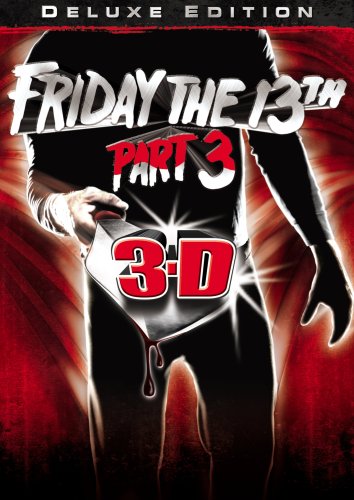
It didn’t take the Friday The 13th film series long to reach down into the gimmick bag. The sad thing is that the franchise didn’t really need a gimmick. Steve Miner returned to the director’s chair, and he delivered an important, if not great entry into the franchise’s history. Jason would, for the first time, don the hockey mask that would make his image the iconic horror visage it remains today. This was also an important film because a young makeup artist from this staff would break out to become one of the best in the business. Stan Winston was an uncredited artist on this film. Of course, I have no way of knowing what was his, but can there be any doubt that he left his mark throughout the film? Winston didn’t often talk about the film at all. It’s almost as if he never considered it a part of his resume, but he’s likely the biggest thing to come out of the movie.
There’s nothing new at all in the story. A fresh group of teens converge on another section of the banks of Crystal Lake. This time we’re on a farm that just so happens to border the bloody lake. Jason sets about doing what Jason does, and soon there are less and less of the teens going around. In 2D the film looks silly at times. There are so many obvious scenes intended strictly for the quick 3D effect. These moments include a wash pole, an eyeball in the hands of a Crazy Ralph clone, a snake, and a passed joint. Unfortunately these stretches make this the slowest of the Jason films. Still, there’s plenty of killing to go around, and while the effects don’t quite catch up to Tom Savini’s work in the first film, there are more creative moments here than the second film. With a new system in place, the MPAA didn’t feel the need to go crazy in chopping the film, so it benefits from a smoother edit than the second film had.
Posted in: Disc Reviews by Archive Authors on January 31st, 2009
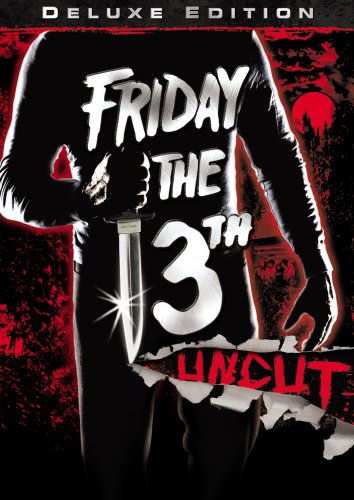
It’s 1980. The Reagan Years are upon you. The country is hopeful it will soon come out of the toilet bowl it was in for the last four years, and while things may seem bleak, you’re one of the lucky ones that still have a job, a girl, and a reason to live. As April becomes May and the days grow considerably hotter a little at a time, what better way to take a break from it all than driving you and your sweetie down to the local movie house for opening night of a new horror film you really haven’t heard all that much about entitled Friday the 13th?
Posted in: Disc Reviews by Archive Authors on January 14th, 2009
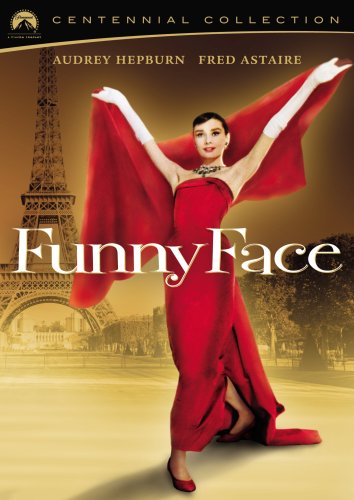
It’s hard being the bad guy, but sometimes you just don’t like a film that seemingly everyone else does. Such is the case for me with Funny Face, the classic Audrey Hepburn-Fred Astaire teaming that sees a bookish young lady go from the obscurity of her lonely library to the glitzy Paris lights as a high-profile fashion model. A little bit Cinderella and a whole lot of singing-and-dancing, Funny Face fails to engage with characters and story, relying solely on its lavish spectacle to do the trick. For legions of fans, it worked. For me, it didn’t. But like comedy, it’s all subjective, and if you’re in to fancy costumes, skilled choreography, arguably catchy music numbers, and healthy doses of nostalgia, then this one’s a no-brainer. But if story and deeply written characters are your things, sorry they don’t live here.
Astaire and Hepburn are a good pairing, and they work well together for each song-and-dance piece, but their love story gets very little chance to shine in between, and their normally solid acting abilities are buried in a heap of lifeless Broadway mini-productions that result, ultimately, in a showcase for all the wrong skills. When I watch a movie, I’ve got to be at the very least emotionally invested. If a film can engage my intelligence as well, that’s icing on the cake. Funny Face did neither. And as a fan of Ms. Hepburn’s work in Breakfast at Tiffany’s, believe me: no one’s more disappointed at that statement than me. The best thing about it is the overpowering, show-stealing performance of Kay Thompson as pushy magazine editor Maggie Preston. She dominates the camera whenever it’s on her. It’s just too bad our stars didn’t get that same chance to shine.