Posted in: Disc Reviews by Gino Sassani on April 23rd, 2009
“You are invited to a reunion.”
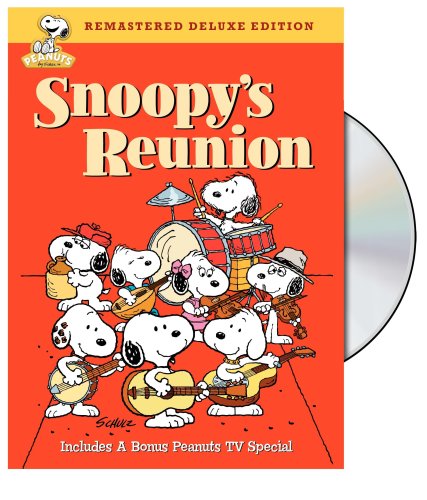
I grew up on the Peanuts creations of Charles M. Schulz. Most of us have in some way or another. His newspaper comic strip is one of the longest running and most successful strips of all time. The work has been translated into every language currently spoken on the planet. The images of Charlie Brown, Snoopy, Linus, and the rest of the Peanuts gang have appeared on just about any kind of product imaginable. Our pop culture contains too many references to the strip to mention briefly. For me, it was the television specials starting in the mid 1960’s that brought the gang into my life. The classics are running annually, still after nearly 50 years. A Charlie Brown Christmas and It’s The Great Pumpkin, Charlie Brown are the most mentioned and certainly beloved by generations of children and adults. I thought I never missed an airing. Somehow 1991’s Snoopy’s Reunion has managed to escape my notice all of these years. Why isn’t this particular special among the classic cartoons of that era?
Posted in: Disc Reviews by David Annandale on June 8th, 2007
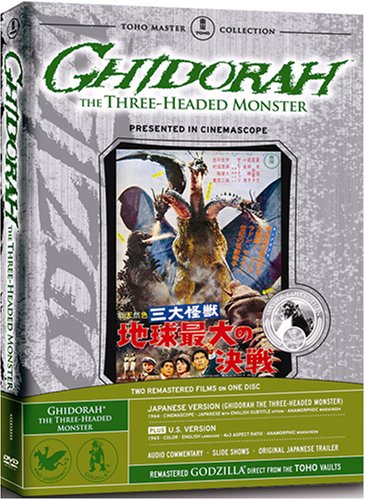
There's a heat-wave in January, and dozens of meteorites are falling from the sky. The plane carrying a princess explodes, but the princess has somehow survived, though she has no memory of her former self and believes herself to be Venusian, come to warn humanity of impending calamity. In due course, this calamity arrives as one of the meteorites transforms into King Ghidorah. Earth will be destroyed unless Mothra manages to convince Godzilla and Rodan to stop fighting each other and instead take on King Ghidorah.
This follow-up to Mothra vs Godzilla marks the point at which the series definitively took a deliberate turn for the comic, for good or ill. The slapstick had already been present in King Kong vs Godzilla, but now it would be here to stay. The storylines would also become more and more outlandish. The monster battles here are largely in the countryside, thus cutting costs on the expensive destruction of city miniatures. Whatever one's feelings on the direction the series took from this point on until the late 70's, the wrasslin' is still a lot of fun, both exciting and funny. However, it is far too long in coming. The monsters have far too little screen time, taking backseat to the rather uninteresting (but much cheaper to film) human stories.
Posted in: Disc Reviews by David Annandale on June 8th, 2007
A mysterious new planet is discovered, and an expedition there discovers a civilization under threat from King Ghidorah. The inhabitants of Planet X ask to transport Godzilla and Rodan to their home for help. Earth agrees, and at first it seems that all has gone well, as Godzilla sends Ghidorah packing. But then it turns out that the Xians are actually invaders, and plan to use all three monsters to subjugate Earth.
If you thought Godzilla grabbing at his butt after being zapped by Ghidorah in Ghidorah, ...he Three-Headed Monster was silly, just wait for the infamous victory jig here. So yeah, the juvenile nature of the series is pretty much set in concrete by this point. This is also the first time of many that aliens will plot our conquest and using monsters somehow figures into their dastardly scheme. That said, the plot is livelier and more entertaining than the previous entry’s.
Posted in: Disc Reviews by David Annandale on April 2nd, 2007
A ferocious typhoon washes up a giant egg on Japan's coast. Unscrupulous entrepreneurs lay claim to it, planning to exploit it as a tourist attraction. The egg in fact belongs to Mothra, now nearing the end of her life cycle, and the twin fairies from Infant Island come to Japan in the hopes of having the egg returned. No such luck, but when Godzilla returns and begins another rampage, this time it is the inhabitants of Infant Island who are turned to for help in the hopes that Mothra will come to Japan's aid.
This was one of the Godzilla films that was least hacked about for its American release (the running times between the two versions here differ by less than 30 seconds), and of the first series of Godzilla films (running from the 1954 original to 1975's Terror of Mechagodzilla, this is arguably the best after the first. Colourful and exciting, with lively monster battles that never undermine the dignity of the creatures, this is Toho at the top of its game.
Posted in: Disc Reviews by David Annandale on April 2nd, 2007
Godzilla and Anguirus are discovered duking it out on a deserted island by two pilots working for a fishing fleet. Before long, the brawl makes its way to Osaka, devastating the city.
And that, as they say, is just about that, as far as plot goes. There's a fair bit of business about our heroes' friendship, and references to their private lives, but nothing that really has much of an impact on the plot, which remains one of the most basic in the entire Godzilla series. Lacking all of the first film's tragic grandeur and emotional punch, this film stands or falls on the strength of the monster scenes, and these, it must be said, are pretty damn good. The fight in Osaka is especially satisfying, and there is none of the horsing around that would show up in the later movies. The climax is overlong and rather static, a real disappointment after the spectacular second act. Still and all, for too long the film has been available only in the butchered US version, and on an VHS recorded in LP mode, so for Godzilla fans, this is an exciting release.

Posted in: Disc Reviews by Archive Authors on March 29th, 2007
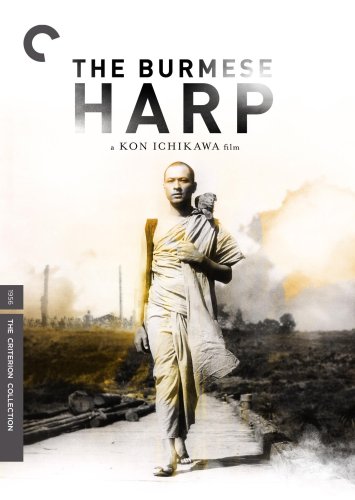
Criterion has surprised me once again with this beautiful film. It amazes me ow they continue to find these “diamonds in the rough”. Films that couldn't possibly exist, yet here they are, widely available on the mas market. The Burmese Harp is a Japanese war film that is decidedly anti-war, and features some truly beautiful music.
At the end of World War II, a group of Japanese soldiers find themselves in Burma, held by British forces as prisoners of war. One soldier from the party has spent his free t...me in Burma learning to play a native harp. This skill proves valuable upon capture, until an unfortunate incident leaves him in a state where he is thought to be dead. Upon recovery, the soldier finds true enlightenment, and takes the viewer along on the journey.
Posted in: Disc Reviews by Archive Authors on February 11th, 2007
Portions of this review were lifted from the previous Criterion Collection edition review. Now on to the review...
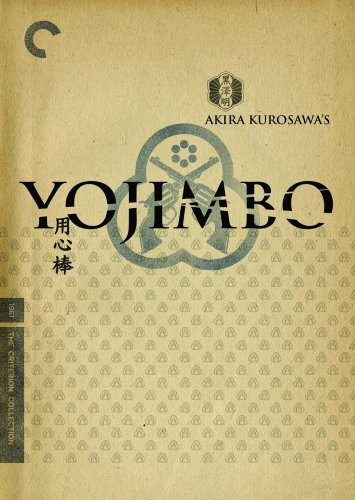
After making such internationally renowned samurai period films such as Rashomon and The Seven Samurai, Akira Kurosawa did make another film, Yojimbo, with a decidedly different tone, bordering on dark comedy. The opening shot is of Sanjuro (Toshiro Mifune, Throne of Blood), a samurai without a master, who look at a mountain, and suddenly scratches his head, as if his hair is on too tight. It's almost the breaking down of a facade, helping to show you that the film will be bit different from other Kurosawa samurai films. The introductory cards say that the film is set in the 1860s, and the samurai comes into a town ruled by rival gangs. He doesn't know this when he comes in, but the first thing he sees in town is a dog carrying a human hand. People have said that the way that this film was told reminds them a lot of the Clint Eastwood/spaghetti westerns that came out several years later, and it's easy to understand why, with the quiet main character whom you can never really tell if he's a hero or villain. He deals with some situations with a toothpick in his mouth, reminding me of Chou-Yun Fat in Hard Boiled. Kurosawa does action flicks? That's probably the best way to characterize it, but he does it well, without a lot of one-liners or lack of common sense seen within a lot of today's action films.
Posted in: Disc Reviews by Archive Authors on February 10th, 2007
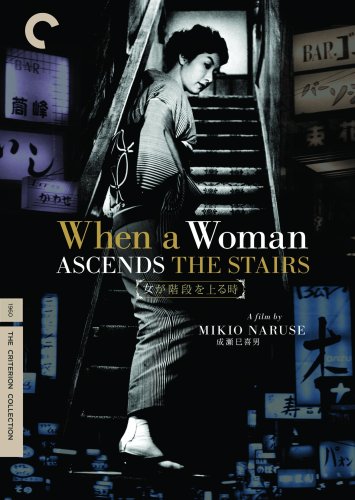
Let me get this out of the way right up front; I really enjoyed Memoirs of a Geisha. Now, I am certainly smart enough to understand that the film was not entirely realistic, and there were some plot developments that pushed suspension of disbelief pretty far, but I wound it charming and entertaining. It was so charming, in fact, that it was often times easy to forget that you were essentially watching a movie about whores. You can romance it all you want, but at the end of the day a Geisha is really nothing mo...e than a high-paid escort.
When a Woman Ascends the Stairs is sort of the realistic companion piece to Memoirs. The story here revolves around a modern-day Geisha, where the lifestyle has moved out of the Geisha-houses and into the bars. The lifestyle is still basically the same; women are “companions” to wealthy male bar patrons, making long-term relationships with one woman. The women pay a portion of their income to the owner of the bar, and keep the rest for themselves (though most of it is spent on kimonos and personal upkeep). Our heroine, Mama, is a Geisha that is well-respected amongst her peers, but she is starting to feel the pressure of age. As she is advancing in years, she is not able to rely as much on her youthful good looks. The time has come for her to either get married or open a bar of her own. As she is so well liked, it is not too long until she has suitors offering to pay for her own bar. Now she must decide how she is to proceed with the rest of her life.
Posted in: Disc Reviews by Archive Authors on October 31st, 2006
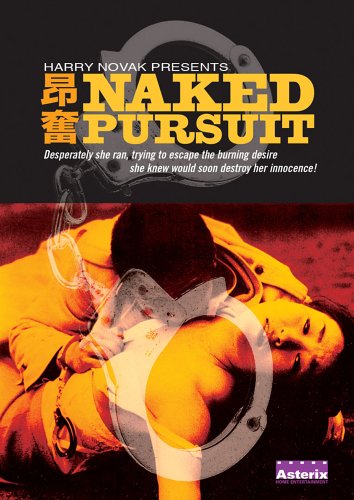
Synopsis
A student radical, wanted for the murder of a police officer, is also being held for rape. In the interrogation room, the woman he attacked refuses to press charges. Neither speaks. The rest of the film is a flashback. Fleeing custody, the man encounters the suicidal woman on a deserted island. He assaults her repeatedly, but also falls in love with her, and she with him. It’s all very tormenting for the two of them. The end.
Posted in: Disc Reviews by Archive Authors on October 18th, 2006
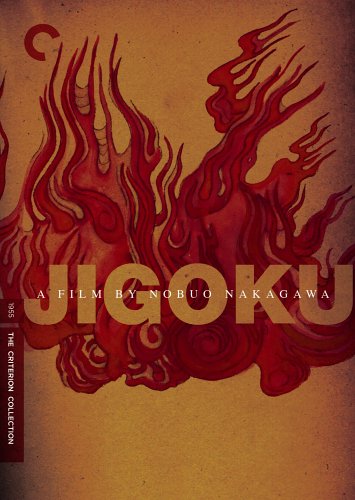
Japanese horror films are all the rage these days, with the originals hitting DVD in the States, and the remakes showing up in the theaters. Therefore, it stands to reason that even Criterion would get in on the trend, offering up a film from famed director Nobuo Nakagawa, widely regarded as the father of the Japanese horror film.
Jigoku is both strange and fascinating. The film tells the story of two friends that are involved in a hot-and-run accident. While one of the young men is cool, calm and collected, the other is wracked with guilt over their actions. While the family of the murdered man begins to close in on the guilty parties, strange things begin to happen to the man with a conscience.