Posted in: Disc Reviews by Gino Sassani on March 2nd, 2009
The French Connection had one of the best film endings a show of this kind could ask for. There was absolutely no need for a sequel. Obviously the success of the first film laid the groundwork for another adventure. In reality the case was rather left open, so there was certainly room to follow up the action. The problem is that none of the elements from the first film remain in the second beyond Gene Hackman’s portrayal of Popeye Doyle and the return of Fernando Rey as the villain Charnier. Friedkin would not return to direct, and even though he was replaced by an even greater director in John Frankenheimer, not much of the original crew remained. Neither Egan nor Grosso were used to consult on the film, and of course, Grosso’s character along with the corresponding Roy Scheider were gone from this film. The gritty streets of New York were replaced by the streets of France. Even the Poughkeepsie line used in the film’s early minutes is a throwaway line meant merely as a wink to the audience. The film has none of the police procedural drive and passion that the original had. In short, this sequel lacks almost everything that made the first a great film. But in spite of all it did not have, it managed to at least be a good film.
None of this film occurs in New York. We begin with Doyle (Hackman) arriving in France to track down “Frog #1”, Charnier (Rey). He doesn’t attempt to hide his contempt for the French and so does little to endear himself with the local police here. Instead they’ve invited him merely to be a target to lure Charnier out of hiding. It backfires, and Doyle is captured instead and hooked on heroin so that Charnier can find out what they know. The film becomes far more of a personal journey for Doyle and less about catching the bad guy. Fortunately Hackman is up for the job and puts in a highly emotionally charged performance. He has to play Doyle, first as a forced junkie, then in the throes of detox. Here we find the film’s best moments. He has a rather long interaction with a French detective (Fresson). This scene is priceless and alone worth the price of admission. In the end it’s a film about obsession as large as the great white whale in Moby Dick.
Posted in: Disc Reviews by Gino Sassani on February 18th, 2009
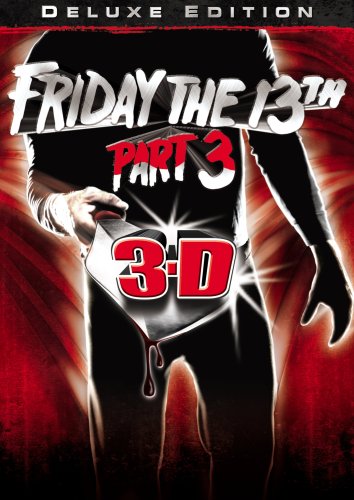
It didn’t take the Friday The 13th film series long to reach down into the gimmick bag. The sad thing is that the franchise didn’t really need a gimmick. Steve Miner returned to the director’s chair, and he delivered an important, if not great entry into the franchise’s history. Jason would, for the first time, don the hockey mask that would make his image the iconic horror visage it remains today. This was also an important film because a young makeup artist from this staff would break out to become one of the best in the business. Stan Winston was an uncredited artist on this film. Of course, I have no way of knowing what was his, but can there be any doubt that he left his mark throughout the film? Winston didn’t often talk about the film at all. It’s almost as if he never considered it a part of his resume, but he’s likely the biggest thing to come out of the movie.
There’s nothing new at all in the story. A fresh group of teens converge on another section of the banks of Crystal Lake. This time we’re on a farm that just so happens to border the bloody lake. Jason sets about doing what Jason does, and soon there are less and less of the teens going around. In 2D the film looks silly at times. There are so many obvious scenes intended strictly for the quick 3D effect. These moments include a wash pole, an eyeball in the hands of a Crazy Ralph clone, a snake, and a passed joint. Unfortunately these stretches make this the slowest of the Jason films. Still, there’s plenty of killing to go around, and while the effects don’t quite catch up to Tom Savini’s work in the first film, there are more creative moments here than the second film. With a new system in place, the MPAA didn’t feel the need to go crazy in chopping the film, so it benefits from a smoother edit than the second film had.
Posted in: Disc Reviews by Archive Authors on January 31st, 2009
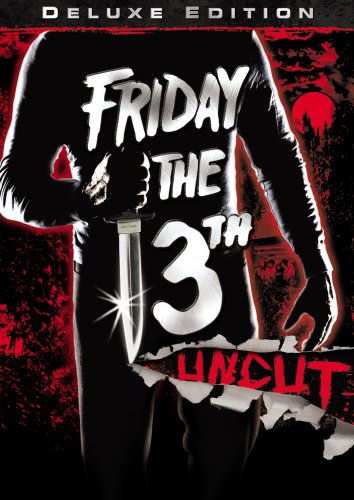
It’s 1980. The Reagan Years are upon you. The country is hopeful it will soon come out of the toilet bowl it was in for the last four years, and while things may seem bleak, you’re one of the lucky ones that still have a job, a girl, and a reason to live. As April becomes May and the days grow considerably hotter a little at a time, what better way to take a break from it all than driving you and your sweetie down to the local movie house for opening night of a new horror film you really haven’t heard all that much about entitled Friday the 13th?
Posted in: Disc Reviews by Archive Authors on January 14th, 2009
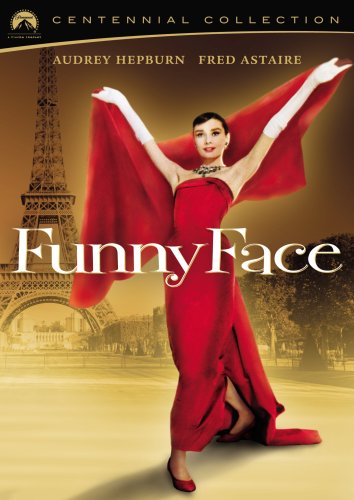
It’s hard being the bad guy, but sometimes you just don’t like a film that seemingly everyone else does. Such is the case for me with Funny Face, the classic Audrey Hepburn-Fred Astaire teaming that sees a bookish young lady go from the obscurity of her lonely library to the glitzy Paris lights as a high-profile fashion model. A little bit Cinderella and a whole lot of singing-and-dancing, Funny Face fails to engage with characters and story, relying solely on its lavish spectacle to do the trick. For legions of fans, it worked. For me, it didn’t. But like comedy, it’s all subjective, and if you’re in to fancy costumes, skilled choreography, arguably catchy music numbers, and healthy doses of nostalgia, then this one’s a no-brainer. But if story and deeply written characters are your things, sorry they don’t live here.
Astaire and Hepburn are a good pairing, and they work well together for each song-and-dance piece, but their love story gets very little chance to shine in between, and their normally solid acting abilities are buried in a heap of lifeless Broadway mini-productions that result, ultimately, in a showcase for all the wrong skills. When I watch a movie, I’ve got to be at the very least emotionally invested. If a film can engage my intelligence as well, that’s icing on the cake. Funny Face did neither. And as a fan of Ms. Hepburn’s work in Breakfast at Tiffany’s, believe me: no one’s more disappointed at that statement than me. The best thing about it is the overpowering, show-stealing performance of Kay Thompson as pushy magazine editor Maggie Preston. She dominates the camera whenever it’s on her. It’s just too bad our stars didn’t get that same chance to shine.
Posted in: Disc Reviews by Archive Authors on January 9th, 2009
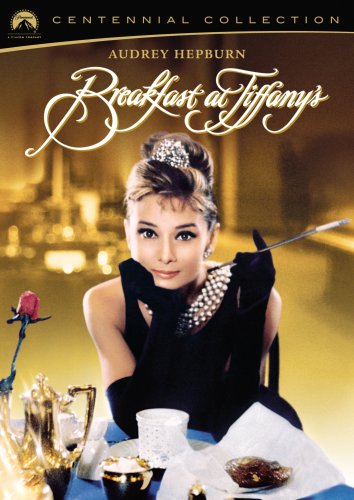
Holly Golightly is perhaps the most tragic, depressing character in all of literature and film, especially to those of us who know (or have known) people just like her. As an example to aspire to, Golightly fails miserably. She is internally and externally destructive, intentionally so. Truman Capote, author of Breakfast at Tiffany’s, the novella in which she was formed, has created in her a realistic portrait of people that fear happiness, and so imprison themselves to lives of restless and reckless abandon. She is just charming enough to make us pull for her, but equally cruel and uncaring once we’re suckered in. It’s hard to like Holly, and it’s almost impossible not to love her, if that makes any sense whatsoever. I’m sure it doesn’t. But neither does she, and so goes life.

On the other hand, the film version of Capote’s iconic work gets bogged down in insulting ethnic portrayals (Mickey Rooney as Mr. Yunioshi); studio sanitization (after all, Golightly is a call girl, but we get very little indication of that from the film); and a tacked-on happy ending that in no way fits with what’s come before it. Feel-good entertainment? Not when the audience knows better than to think things could turn out so neatly, so quickly. Still, Audrey Hepburn was a perfect choice for Golightly, and she heaps additional charm atop what was already on the page. George Peppard has very little to do as her does-she-love-him-does-she-not play-toy, but his final indictment of Holly is a stirring piece of writing, effectively delivered, that would have been a great place to end. It would have at least rung emotionally true. Unfortunately, the exchange is quickly swept under the rug by an ending that comes as close to Deus Ex Machina as one can get without actually achieving it.
Posted in: Disc Reviews by Archive Authors on December 5th, 2008
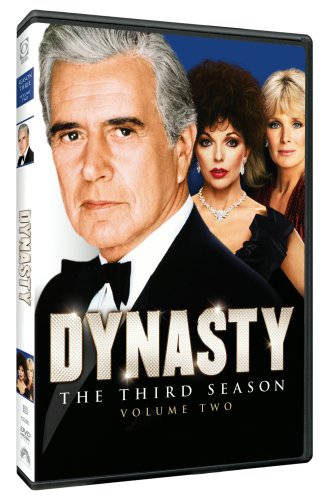
High art it isn’t, but one thing’s for sure: Dynasty is ass-in-seat television. Launched in 1981, the John Forsythe-Linda Evans-Joan Collins starring vehicle crossed lines and took chances few of its contemporaries were willing to take. For several years Dynasty defied conservative conventions with sordid tales of extramarital affairs, catfights, and the hot-button issue of homosexual parenting. It’s this last issue that is featured so prominently in Dynasty – The Third Season, Volume Two.
Those of you who are uninitiated to the Dynasty saga have nothing to fear, as each script is weighted heavily with expository dialogue sure to catch you up in no time. (“If Blake loves you, Krystle, then why did he humiliate you by castigating you that day we fought in the lily pond” – Alexis Colby) Of course, the show’s quality suffers as a result, offering ridiculous conversations involving participants who should damn well know exactly what just happened to them, especially considering the weight of their experiences, without the need of another character explaining things. In fact, about 40-50% of every conversation is retread from a previous episode. Incidentally, the acting is terrible, but one must wonder if the actors could have done any better with the material they were given. While exposition can certainly be a necessity, especially in an hour-long ongoing series, the convention is best used in very small doses at the beginning of a story, not throughout every segment between the commercial breaks.
Posted in: Disc Reviews by Gino Sassani on November 13th, 2008
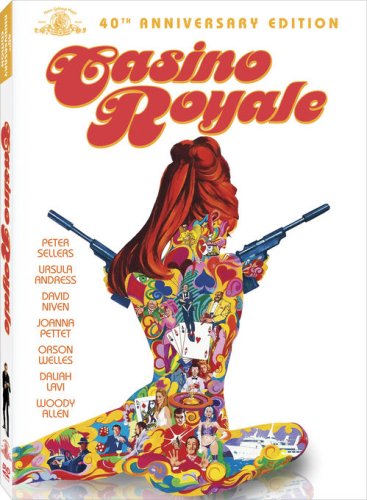
Casino Royale was the only one of Ian Fleming’s James Bond novels that was not a part of the deal with Ion Productions. It was the only Fleming story that was off limits even though it was the first Bond story written. Until recently it was never filmed as part of the official Bond franchise. However, there was a version made back in 1967 that has been deservedly long forgotten. After 40 years it remains unclear who originally came up with the idea for this farce, and after watching the results, I’m not expecting anybody to stand up and take credit any time soon. This is a James Bond film, but in name only.
Posted in: Disc Reviews by David Annandale on September 19th, 2008
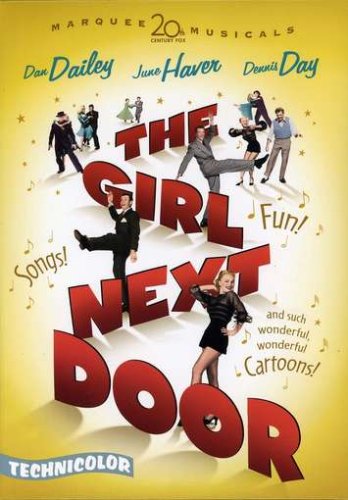
Star of song and stage Jeannie Laird (June Haver) returns from a triumphant tour to settle down in her new suburban home. Next door is widowed cartoonist Bill Carter (Dan Dailey), and sparks fly between the glamorous star and the low-key nice guy. The course of true love doesn’t run smoothly, however, due to Bill’s son Joe (Billy Gray, of The Day the Earth Stood Still), who doesn’t take kindly to the new woman in his father’s life.
Though the romance may play out as expected, it’s still interesting to see such domestic issues dealt with in the context of a musical. Meanwhile, spirited and imaginative song-and-dance routines are on order. An intriguing entry in the Marquee Musicals series.
Posted in: Disc Reviews by David Annandale on March 8th, 2008
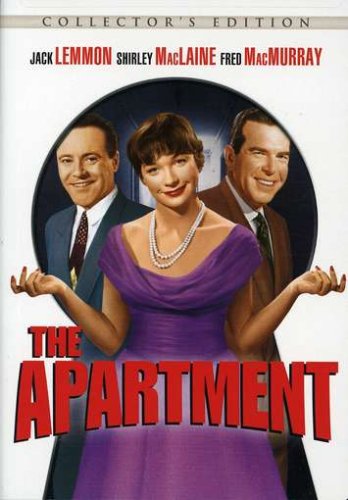
Jack Lemmon is a rather meek insurance company employee who is slowly working his way up the corporate ladder by lending his apartment to married executives looking for a place to take their girlfriends. Life is rather inconvenient, as he is locked out of his home at all hours, but things become even more complicated when the big boss (Fred McMurray) takes an interest. The good news is that Lemmon gets another promotion. The bad news is that McMurray’s affair is with Shirley MacLaine, the elevator girl for whom Lemmon is carrying a torch.
Billy Wilder’s follow-up to Some Like It Hot certainly has plenty of funny moments, most involving Lemmon’s doctor neighbour (Jack Kuschen). But the film doesn’t shy away from the darker implications of its storyline (up to and including a suicide attempt). The result is a romantic comedy-drama that is sweet without being sentimental, and hard-nosed without being cynical. And the audience’s emotions are thus sincerely earned.
Posted in: Disc Reviews by David Annandale on February 22nd, 2008
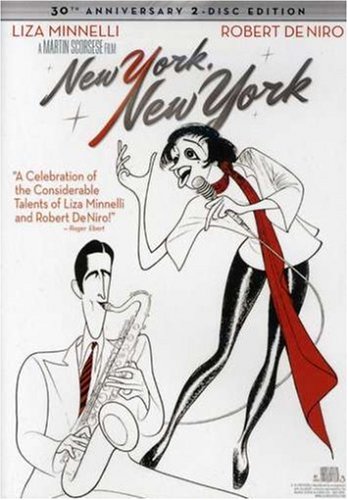
World War II has just ended, and the recently discharged Robert De Niro hits New York on the prowl for sex. He runs up against WAC Liza Minnelli, and the more she resists his advances, the more determined he becomes. There is more: he is a saxophonist, and she (of course) is a singer). So begins a tempestuous relationship between two artists whose enormous talents and equally enormous personalities mean they can neither live with nor without each other.
The idea of Martin Scorsese taking on the form of the classic musical is so bizarre that it had to happen, and here it is. Scorsese’s conceit is ingenious: all the conventions are there (the meet cute, the songs, the artificial sets and colours), but they collide with the naturalism of the performances and the emotions. A perfect case in point: wandering the streets at night, De Niro sees a sailor and his girl perform a dance together. It is a classic musical moment, but the only sound is that of a train passing. It is a scene of extraordinary beauty, grit, and cinematic truth. And it belongs in an extraordinary film.