Posted in: Disc Reviews by David Annandale on November 10th, 2010
Having made it through WWII, fellow soldiers Bing Crosby and Danny Kaye are now a song-and-dance team. Kaye is worried about the lack of romance in Crosby's life, but that problem seems likely to be resolved when sister act Rosemary Clooney and Ver-Ellen show up. These two pairs of entertainers must pool their talents in order to save the inn run by former general Dean Jagger from financial ruin.
The plot is, of course, very thin, a mere excuse on which to hang the sentiment and the songs. This is, of course, not the film which originated the title track – that was the earlier Holiday Inn (1942), which Crosby was teamed up with Fred Astaire. The holiday this time is strictly the Christmas one, and White Christmas goes its predecessor one or two better in terms of spectacle, thanks to Technicolor and VistaVision. The end result is not really the classic it self-evidently wants to be, but it and its cast are extremely likable.
Posted in: Disc Reviews by Michael Durr on May 4th, 2010
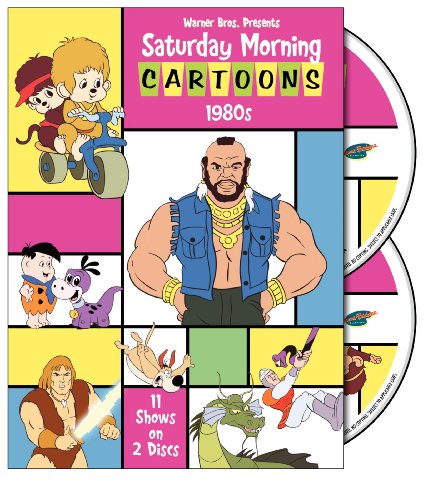
Most of my growing up and living occurred in the 1980’s. From ages five to fifteen, I grew up in an era that was famous to many different types of cartoons. It helped to shape my personality, from bad jokes to that unmistakable sarcasm. So, it was easy to attract me to a cartoon set that showcased odds and ends from that familiar era. Join me as we take a step back in history, a history that hits very close to home.
The first toon we find is one called Goldie Gold & Action Jack. They fight by air, by sea and by the seat of their pants. They aren’t kidding. Goldie is a certified lunatic: she rides a helicopter indoors, jumps out windows and talks to hobos. Doesn’t she know that she is blonde and rich? Jack really isn’t all that Action, he’s just good at being lucky. The show is very gadget heavy and has a little Scooby Doo sleuthing thrown in.
Posted in: Disc Reviews by David Annandale on November 20th, 2009
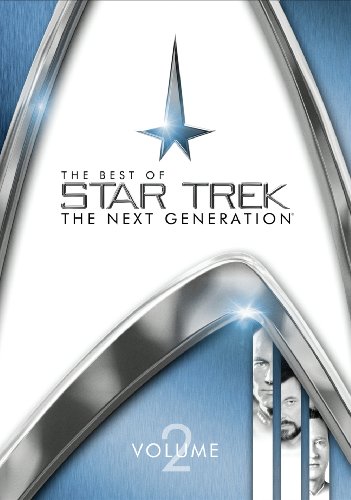
The title pretty much speaks for itself. Here are four episodes of the sequel that surpassed its inspiration in television longevity. They are as follows: “Relics” (which sees Scotty revived in this brave new world, and finding himself redundant), “The Inner Light” (an amnesiac Picard lives out an entire lifetime on a strange planet), “Cause and Effect” (the Enterprise and crew wind up stuck in a time loop, and must struggle to escape their repeated collisions with another ship) and “Tapestry” (where Picard winds up in the afterlife, which is certainly more than Kirk could say). It's a bit trickier yanking episodes of ST:TNG out of their season contexts than with the original show, given the former's greater emphasis on continuity, but these stories here are all good standalone adventures.
An odd thing is happening here. Because the original show has been so thoroughly remastered, ST:TNG is now the one that looks dated. The CGI is prone to aliasing and a lack of definition, and the image is rather soft. The colours are decent, but though I know there aren't many opportunities to get a tan in space, the flesh tones are sometimes a bit too far on the pale side of things. All of this said, the transfer is still perfectly watchable. The aspect ratio is the original 1.33:1 -- the show is still old enough that widescreen wasn't the standard yet.
Posted in: Disc Reviews by David Annandale on November 17th, 2009
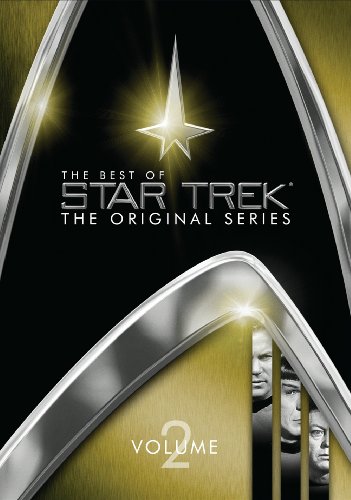
For those Star Trek fans who can't afford the complete season box sets, here's an economical alternative: a single-disc collection of four popular episodes from various seasons. Present here are “Where No Man Has Gone Before” (a propulsion expert's change to the Enterprise's engines propels the crew to the edge of the universe), “Space Seed” (the episode, it need hardly be said, that brought us Khan), “A Piece of the Action” (wherein our gang gets to dress up like 20s gangsters) and “Journey to Babel” (a diplomatic mission turns into a disaster when, among other things, Kirk is stabbed and Spock's father has a heart attack). Strong episodes from a strong series.
The show looks terrific. In fact – purists take note – it looks better than it should. Yes, these are the same remastered prints as the last set of complete season releases, complete with enhanced special effects. So the show not only looks better than it did when first broadcast, it is sharper and has better FX than its Next Generation counterpart. The viewing pleasure is high, then, just not historically accurate.
Posted in: Disc Reviews by David Annandale on August 23rd, 2009
This is a new release of the film, and its main interest, for those who already have a copy, is the meatier set of extras (even though some on the other disc are now gone). As for the film itself, what I said before still goes, so once again, I quote myself.
Posted in: Disc Reviews by Archive Authors on August 21st, 2009
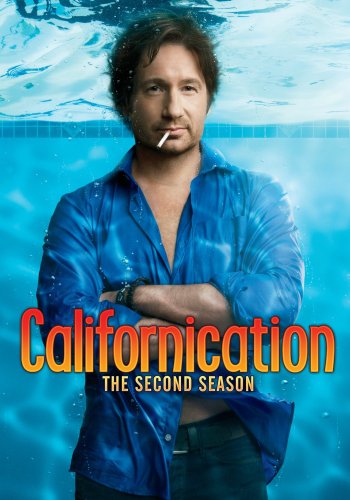
In the first season of Showtime’s Californication, we were introduced to David Duchovny’s character, bitter yet upbeat writer Hank Moody. Hank, after moving to Los Angeles on the heels of his first novel - a critical darling entitled “God Hates Us All” - has recently lost his long-time love and, by extension, his daughter, to a straight-arrow bore who makes his girlfriend Karen (Natascha McElhone) feel safe.
The first season told us the story of Hank’s attempts to win Karen back and his increasingly perilous relationship with a sixteen-year-old Lolita whose inclination for combining sex with a wicked right hook leads to one of television’s all-time great novel titles. Oh yeah, and it also featured lots and lots of raunchy sex between Hank and many gorgeous women. This was a major reason for the show’s notoriety, but what really makes the show work is Duchovny’s portrayal of Hank. He imbues him with a charming kind of good-natured nihilism and, even when he is being a grade-A jackass, we still like him.
Posted in: Disc Reviews by Gino Sassani on May 28th, 2009
"Space...The Final Frontier. These are the continuing voyages of the Starship Enterprise. Its ongoing mission: to explore strange new worlds, to seek out new life and new civilizations, to boldly go where no one has gone before!"
There sure has been a lot for Star Trek fans to cheer about of late. The new film has proven to be a commercial and critical success. The dawn of high definition has caught up with the original series, and there is the promise of much more before this year is out. Next up from Paramount we get the first 6 Trek theatrical films. This collection covers the original cast era. All of the films have been remastered in high definition, and The Wrath Of Khan has undergone a 4k restoration. Together the six films appear in two separate releases. You can buy all six as this review covers, or you can buy them in two sets of three. Whatever you decide, you are in for a treat. Almost all of the old bonus materials have been included along with new high definition material. It’s a lot of stuff, and that’s why the review has taken so long to get written.

Posted in: Disc Reviews by David Annandale on May 26th, 2009
Aging senator James Stewart and wife Vera Miles arrive in the prosperous town of Shinbone to attend the funeral of an anonymous farmer. The local newsmen want to know why. Stewart tells the story. Cue the flashback, where he arrives in a much more anarchic Shinbone as a naïve lawyer. Held up and beaten by the brutal outlaw Liberty Valance (a psychotic Lee Marvin), he is determined by bring law and justice to the town, but must come to terms with the fact that he cannot do so without the gun of John Wayne (the aforementioned farmer).
For all intents and purposes, this 1962 film was director John Ford's last western. It is an elegiac, melancholy piece (and one that makes Catlow, reviewed here a few days ago, look even more out of step with time). Like Unforgiven, it is a film whose casting is not only perfect, it is necessary. The collisions between the Wayne and Stewart characters are also the collisions between the symbols of American Myth the two icons represent. Vera Miles, as the woman torn between the two men, comes to represent the country itself, which must, for its own sake, choose the civilization and rule of law embodied by Stewart, even as it grieves over abandoning the larger-than-life figure of Wayne. He is the Old West, a figure from a more anarchic time, perhaps the light to Marvin's darkness, but in many ways not that different. He must vanish to make way for the future, but the future cannot come into being without his help and sacrifice.
Posted in: Disc Reviews by Michael Durr on May 19th, 2009
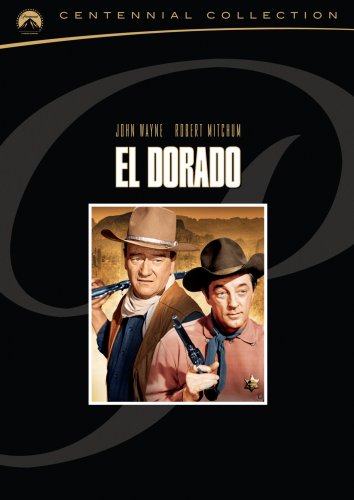
My history with Westerns isn’t exactly a vast one. I watched a bunch of Westerns with my dad growing up and I continued to watch the bigger ones of the modern era like Tombstone and Unforgiven as I progressed through my teenage years and young adulthood. John Wayne is kinda a mystery to me. He’s a huge gritty guy with a lot of patriotism and a funny way of talking. For lack of a better analogy, Sylvester Stallone is my generation’s John Wayne. Or Chuck Norris I guess. El Dorado is an interesting western flic because it was shot later in John Wayne’s career but he had still had the swagger of earlier pictures. A true classic revisited by the minds at Paramount.
Cole Thornton (played by John Wayne) is a gunslinger for hire. He’s been hired by Bart Jason (played by Ed Asner) for some help in a ranch dispute with the McDonald family. Cole rides into El Dorado and is approached by his friend: Sheriff J.P. Harrah (played by Robert Mitchum) who tells him the real tale of the ranch dispute. Cole also finds out that Jason eventually would have put him in a gunfight with the Sheriff. This is something that he didn’t want to do.
Posted in: Disc Reviews by Gino Sassani on April 2nd, 2009
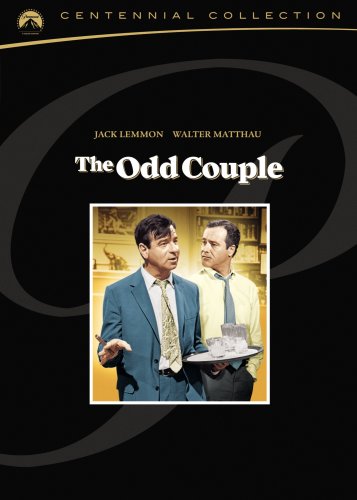
The Odd Couple began as a concept when playwright Neil Simon observed his recently divorced brother share an apartment with another divorced guy. He developed it into a very successful play. In the original play Walter Matthau played Oscar, but it was The Honeymooners star Art Carney who played Felix. Both actors were offered the parts for the film. Carney declined. It was because of the onscreen chemistry between Matthau and Jack Lemon on the film The Fortune Cookie that led to Lemmon being cast as Felix. The decision was a stroke of genius. If you look at it on its surface, there really isn’t much of a story here at all. It is the connection and relationship between these characters, and subsequently these actors, that made this film the classic that it is. Also returning from the play to reprise their roles were Monica Evans and Carole Shelley as the amusing Pigeon Sisters, roles they would actually repeat for the television series two years later.
When I watch this film, I will admit that it’s often a little hard to get the images of Jack Klugman and Tony Randall out of my mind. Most folks have had far more exposure to that 5 year television series than they have with the original film. To me, they will always be those characters. In fact Klugman replaced Matthau on the stage as Oscar before he took the role on television. Still, even with that bias, it is awfully hard not to get drawn into this film. For me characters and performances can be everything. That’s what makes this film have the lasting power it has enjoyed. Most of the film, as the play, takes place inside the apartment. There is a very limited cast, often just Felix and Oscar on the screen. Certainly there are some great moments with the poker buddies and the Pigeon Sisters, but most of the film takes place in a limited environment with just two actors. If you can make that work at all, let alone create a classic experience from it, that’s saying something. There were a few outside locations utilized in the film that were not part of the original play. These were placed there just to give the viewers a change of scenery but were totally unnecessary.