Disc Audio

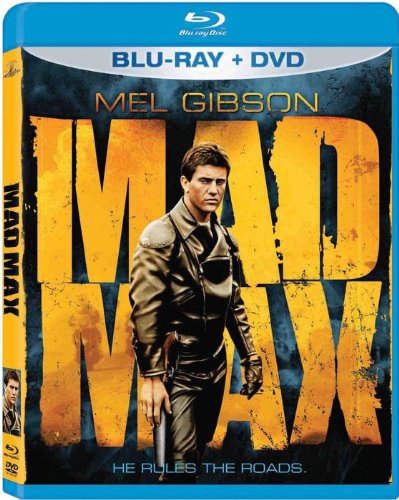
"Born with a steering wheel in his hand and lead in his foot, he is the Nightrider, cruising at the speed of fright! This is the Nightrider, and we ain't never coming back. I'm a fuel-injected suicide machine..."

Long before Mel Gibson's troubles involved real-life police officers and a bad case of "foot-in-mouth disease” that has made him his own worst enemy, Mel had more dramatic enemies to deal with. The unknown Australian actor was only 22 years old when he starred in the Outback production that would put both Mel Gibson and his native Australia on the filmmaking map. The movie was originally a very low-budget film. It was made in an attempt to show the world that America wasn't the only place you could make a non-stop action film. When American audiences got their first glimpse of the unique post-apocalyptic showcase, they still didn't get a real dose of Mel Gibson. All of the Australian actors, including Gibson, had been dubbed to lose the accents. If you saw Mad Max in the cinema in 1979 or 1980, you heard someone else's voice coming out of Mel's mouth. Too bad he didn't have that option a few years back when he was stopped for a DUI and proceeded to offer up a rendition of History of the World according to Mel, only it wasn't Mel Brooks. The anti-Jewish rant and belligerence has thrust the once-superstar into a decade where he hasn't had a real starring role.

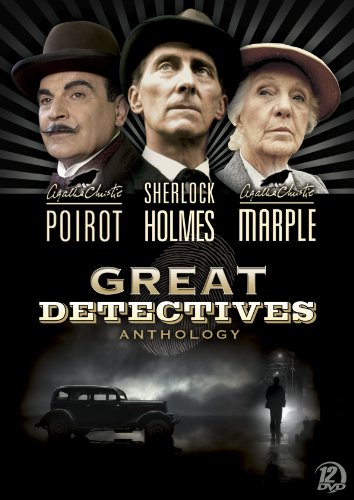
A&E has brought together a collection of television episodes from three British series that have featured prominently on the network over the years. The shows each feature one of the greatest detectives in literature. The long-running shows have used the original literary works as the basis for most of the episodes. But long before they were played on television, we knew who they were. The exploits of Sherlock Holmes, Miss Marple, and Hercule Poirot have engaged the minds of mystery lovers for nearly a century now. For the first time, you have the wonderful opportunity to enjoy them at your own leisure, together in one massive collection called Great Detectives.

Here's what you'll find in this impressive set:

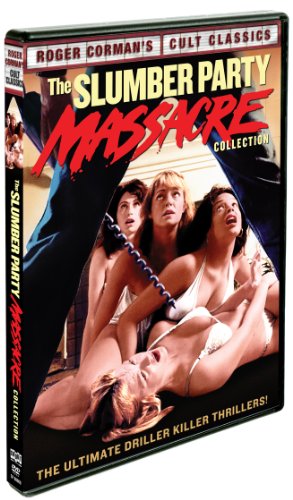
Mention the name Roger Corman and several things spring instantly to mind: boobs, blood and gore. The man has been the king of the low-budget film since the 1950's. His movies often graced the screens of drive-ins all over the country. There wasn't an idea in the movies that Corman didn't try to exploit at one time or another. He also gave some of the most successful and influential filmmakers their start in the business. People like James Cameron and Martin Scorsese started in the Roger Corman factory. When you went to see a film produced by Corman, you knew exactly what you were going to get. There were no pretenses that he was engaging in some serious film contributions. He was out to make a buck, and all he cared about was that he managed to entertain a bit along the way. The one thing you don't expect is a healthy dose of feminism. It seems kind of a contradiction in terms, but the Slumber Party Massacre films were Corman's nod to the feminist movement.

Many of the Corman films have stood the test of time. They might be good for a few laughs along the way, but they usually entertain as well today as they did upon their release. Unfortunately, I just can't put the Slumber Party Massacre movies on that list. I tried. I really tried to enjoy these films. I understand them for what they were, but they really don't hold up as well as the better Corman material. Each sequel is worse than the one before. The characters are just bad, and the story is even more absent than you'll typically find on these kinds of films. But they have their cult following, and that's the audience that this DVD collection is tightly targeted on, to be sure. If you're just a little curious, remember what happened to that cat. There are so many better Corman films to satisfy that morbid curiosity. This collection is strictly for the already-initiated who have developed some unnatural attachment to the material. Not so bad, after all. The set is considerably cheaper than the therapy necessary to cure that itch.

Two friends – Marie and Alexia– head out to the country home of the latter’s parents. In the middle of the night, a killer breaks in, slaughters the family, and makes Alexia his prisoner. Marie is locked in a battle to save her friend and not become a victim herself.

Of such simple storylines are horror classics made. Leave it to the French, who, after all, invented the horror movie, to pump such gloriously bloody life back into the cinema of atrocity. After an early bit of extreme nastiness in the opening minutes of the film, the movie gets down to serious terror and atrocity barely a quarter of an hour in, and from that point on never lets up. The murders are extremely gory and among the most brutal of recent memory. The suspense will leave viewers clawing their flesh until they bleed. The resolution won’t satisfy everyone, but on balance, it worked for me. We have recently been deluged with so many films that either remake or ape the hardcore masterpieces of the 1970s, but here, at last, is the true inheritor of the mantle of The Texas Chainsaw Massacre and Last House on the Left. It doesn’t try to recreate their vibe. It simply applies their lesson: assault the audience without pity. This is one brutalized audience member who is profoundly grateful. Forget Saw. It’s The Brady Bunch next to this.

"I never wanted a war. I just wanted people to know what happened here. 98 men, women, children ... my husband. And yet no one believed. They rebuilt the town. Life went on. But I was already dead inside. I never wanted a war."

In October 2007 30 Days Of Night was unleashed at the box office to less than stellar numbers. In fact, the film took in only $39 million off of a $30 million budget. That's not usually a good sign for any potential franchise. But the film was received very well by the folks who did like it. I was one of those people. I found myself defending the film to a lot of others who were obviously not so impressed with the take on the vampire legend. The film was about a mythical town in Northern Alaska that experiences 30 days of nightfall each winter. The residents either leave or they dig in for the duration of the month-long darkness. As it turns out, the setup was the perfect situation for vampires, who could feast on the remaining citizens without fear of a rising sun putting a wet blanket on their free-for-all picnic. The film followed a few survivors as they fought back against the creatures of the night. It was based on a cult-favorite graphic novel. It all seemed like a pretty solid idea. But it wasn't the location and month-of-darkness scenario that seemed to turn many horror fans away from the movie. What caused that unfortunate movement was the same thing that I found to be the film's strength.

Regan MacNeil (Linda Blair) is going through more than the usual puberty traumas. She pees on the carpet, curses a blue streak, causes objects to fly around the room, and speaks in the voice of Mercedes McCambridge. Her mother Chris (Ellen Burstyn) takes her to every medical professional under the sun, to no avail. With her daughter's life in the balance, she turns to Father Karras (Jason Miller), asking him to perform an exorcism. But not only is he skeptical, he has his own problems, not least of which is losing his faith. Meanwhile, Regan's symptoms of possession grow steadily worse...

The most successful horror film of all time (and, adjusting for inflation, still the ninth most successful film ever made) works as well as it does for a number of reasons. The performances, especially from Burstyn and Miller, are grounded and very convincing. The visual effects still hold up, but the sound design is as powerful as it ever was. It's also a smart, adult horror film, such that even if one disagrees with its philosophical and ideological stance, it remains no less compelling, no less interesting.

Lee Holloway (Maggie Gyllenhaal) is a young woman utterly lacking in self-confidence and given to deliberately cutting herself. She gets her first job as secretary to E. Edward Grey (James Spader), as tightly wound and ferociously self-isolated an individual as you could imagine. What happens when the sadist meets the masochist? Sparks fly. Low key and sharply sly, this winning film shows (along with Amelie and Kissing Jessica Stein) that there is life in the romantic comedy genre after all, and that original work can still be done with the formula. Spader and Gyllenhaal are superb, with Spader’s icy calm every now and then cracking with sudden spasms of emotion, and Gyllenhaal giving her all in brave, vulnerable, and utterly heartwarming performance. The plot structure is a little messy towards the end, but this winds up being of minor concern, given how delightful the film is.

Secretary is presented in its original aspect ratio of 2.35:1. The 1080p image is arrived at with an AVC/MPEG-4 codec at an average of almost 30 mbps. The format looks like 1.78:1 to me, but I suspect the original format is more like 1.85:1. What is particularly suspicious is the fact that some credits during the title sequence wind up far too close to the right edge of the screen. Even if there is some cropping, however, it is not enough to ruin the nice, deep focus compositions that are no small part of the joy in looking at Spader’s elaborate office (think Belle de Jour meets The Shining). The colors are good, with terrific shifts from the green/brown alternations of the office color scheme, to the sudden bright primary colors of Gyllenhaal’s fantasy sequence. There is quite noticeable grain in an early exterior shot, but this is the exception rather than the rule.

Gunsmoke, in all of its 20 seasons, making it the longest running prime-time drama of all time, has such a strong legacy that it feels odd to review it. Thankfully the challenge is an enjoyable one as the show is at a full head of steam in its fourth season (it was ranked #1 at this time) and each episode is still as engrossing today as it was over 4 decades ago.

James Arness plays Marchall Matt Dillon, and is the law of Dodge City. Both him and the local doctor have rather stony demeanors when it comes to death, and death seems plenty common in 1800s Kansas. More often than not the criminal behind each episodes story is shot dead by the quick draw of Dillon before they could ever see a trial. I suppose that just makes the opening narration all the more suiting as many episodes start with a stock scene of Dillon wandering through a graveyard as Dillon narrates his musings on those that have made one too many mistakes and earned themselves a spot in that yard.

It is always a different experience to watch a show in reverse. But that is exactly what happened when I watched the final three episodes of Wolverine and the X-Men on DVD. At that time, I did know there was a complete series dvd and blu-ray package coming but I wasn’t sure if I would be fortunate enough to bring that review to the loyal readers. Well, loyal readers your animated super hero guru is here and I am happy to present to you: Wolverine and the X-Men, The Complete Series on Blu-Ray.

Kitty Pride (I refuse to call her Shadowcat), Nightcrawler and Colossus are working hard in the Danger Room, the training facility of the X-Men. They are trying to last the specified amount of time to win the exercise but in the end, they all lose. Who is controlling the simulation you may ask? Why it’s Wolverine of course. It is his farewell present to the students before he embarks on another trip to destinations unknown.

"In 1539 The Knight Templars of Malta paid tribute to Charles V of Spain by sending him a Golden Falcon encrusted from beak to claw with rarest jewels --- but pirates seized the galley carrying this priceless token, and the fate of the Maltese Falcon remains a mystery to this day."

What is not a mystery today is the significant role that The Maltese Falcon has played in cinema history. The film itself was a remake. In fact, it was actually Warner's third attempt to film the Dashiell Hammett novel in a single decade. The first version came in 1931 and stared Ricardo Cortez as Sam Spade. That film also featured Dwight Frye as Wilmer Cook. The film was a moderate success but never really delivered on the potential of the source material. Five years later Warner would attempt a comedy version of the story in Satan Met A Lady. It was a total flop. It would only take another five years before the studio took its third crack at the material. In this case, the third time certainly was a charm.