Posted in: Disc Reviews by David Annandale on April 6th, 2010
If you're reading this review, you must surely already know what the movie is about. We're talking, after all, about what must surely be the single most celebrated case of mistaken identity in the history of film. Cary Grant stands up in a lounge at just the wrong moment and is mistaken for a man who doesn't exist. That utterly perverse mix of chance and paradox, leading to ever more dangerous situations for Grant, in an ever more complicated tangle of battling conspiracies, is so utterly Hitchcockian, it might just as well be trademarked.
The film is also very funny, as so much of Hitchcock's work is. Of course, much of his humour is black as pitch, and that mordant wit is certainly still present here, but there is also a joviality to the proceedings, due in no small measure to the presence of Cary Grant. Unlike the Jimmy Stewart of Vertigo and Rear Window, whose screen image of fundamental decency makes the deeply flawed, pathological aspects of his characters even more painful and weighty, Grant here keeps things light, as his character is just as aware of the absurdity of his perils as we are, and is just as likely to be amused. But if this is Hitchcock working in a lighter vein, that astounding perversity keeps poking through. What are we to make, for instance, of that creepily close relationship Grant has with his mother?
Posted in: Disc Reviews by Gino Sassani on April 6th, 2010
One might have to legitimately ask about the thinking behind this particular children- targeted release. I have to admit that I was a little uncomfortable with the idea of reviewing this film at this particular time. I have two issues that are just unavoidable here:
They both deal with the film's two central stars here. Bindi Irwin is the daughter of famed Crocodile Hunter Steve Irwin. You all remember Steve. He used to approach some of the most dangerous animals on the planet and quite casually tell us just how deadly they were while tempting them to tag him. We all suspected that Steve might one day get a little careless and get himself killed. The truth is that didn't exactly happen. It wasn't a particularly dangerous animal or any carelessness on Irwin's part that led to his rather unexpected death a few years ago. It was a usually harmless stingray that sent a barb through his heart in what can only be described as an unfortunate freak accident. Now, even before his death, the family had been preparing their very young daughter to follow in Daddy's rather unusual footsteps. Bindi's done several documentary films, including her own television show in the wake of her father's death. Here I can't help getting the feeling that the appearance is somewhat exploitive of the whole business. When I look at Bindi's mom in the extra features, I can't shake the feeling that she's cashing in here. I don't know these guys, so I'm not trying to claim that I know their hearts and minds. I can only report the feeling it leaves me with, and it's not a good one.
Posted in: Disc Reviews by Gino Sassani on April 6th, 2010
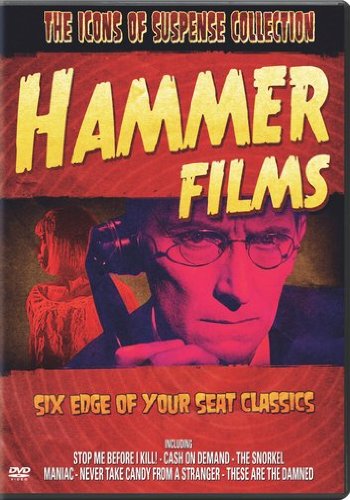
The mere mention of Hammer Studios brings to mind bloody terror to the legions of monster fans who grew up on a steady drive-in staple diet of the studio's iconic monster movies. The studio picked up where Universal left off in the 1950's and delivered a new run of the classic monsters we had been introduced to in black and white. Hammer brought these creatures to life in living ... or is that living dead … color. Dracula, Frankenstein, The Werewolf, and The Mummy were all resurrected for a new cycle of films from the British studio. The place earned its often-used nickname of The House Of Horror.
But Hammer wasn't always known as a horror factory. The company actually began in the 1930's, creating decidedly British versions of film noir. In the 1950's and 60's when the horror phase began, Hammer was also putting out other fare for a hungry public. These films often embraced some chilling elements but didn't rely on monsters for many of the scares. The films were often even crime dramas or supernatural in nature. These films often were the training grounds for some of their staple talent over the years. In this collection Sony has compiled some of these early evolving films from the House Of Horror.
Posted in: Disc Reviews by Archive Authors on April 6th, 2010
"It's New Year's Eve on the Poseidon. Partying voyagers toast the future. The future comes in a rush; a 150 foot rogue wave flips the cruise ship over. And a struggle to survive begins."
Poseidon doesn’t waste any time getting to the action, so I won’t waste any time with an introduction to this review. Yes, it’s a remake of the 1972 film, The Poseidon Adventure. Yes, it is chock full of convenient cardboard characters (a former Navy man, a fireman, a nurse, etc…). But we don’t watch movies like Poseidon for character exposition, do we?

Posted in: Disc Reviews by David Annandale on April 4th, 2010
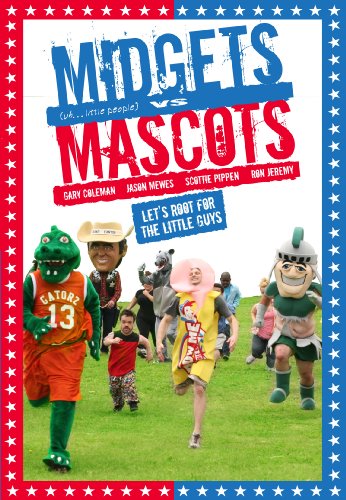
We're into the serious world of high concept now, people. Remember all those struggles D.W. Griffith and Sergei Eisenstein went through to establish cinema as a legitimate art form? Well, this here flick sure makes all those struggles worthwhile. Big Red – midget, former mascot, porn star – dies, and leaves his millions to be fought over by midget-hating son and gold-digging wife. The terms of the battle: each must coach one of the titular teams through a series of ridiculous contests and pranks.
What we have, then, is a mixture of story with would-be outrageous stunts, some real, some staged. In other words, not unlike the work of Sacha Baron Cohen. That is, if you removed every semblance of wit, intelligence and satirical bite from his work, and tossed in Ron Jeremy and Gary Coleman. The film is sophomoric and puerile, which is exactly what it wants to be, but it also works far too hard to get reach those goals. Depressing.
Posted in: Disc Reviews by Archive Authors on April 4th, 2010
Tell Them Anything You Want displays the nuances of a genius. Spike Jonze and Lance Bangs chronicle the successes and troubles of a pillar in children’s literature. Maurice Sendak became massively famous with the success of his book Where the Wild Things Are. In his career he has written over 100 children’s books and his work has been widely accepted as “brilliant, enchanting and masterful”. The film is full of intimacy; Jonze and Bangs display their obvious affection and interest in Maurice Sendak with this portrait.
The troublesome part of this documentary is Sendak’s unhealthy obsession with death. The film spends a considerable amount of time on the subject with it finally culminating with Jonze stopping the interview to give Maurice a break from the questions. Sendak elaborates on a problem with a permanent dissatisfaction with his career and how it sours his personal life. All of this comes from his personal difficulty with the enormity of the success of Wild Things. It is refreshing to see a portrait of an artist that is uncompromising with how the person is represented. All of Sendak’s work is cherished and yet there is an un-quenchable thirst that exists within him. Jonze and Bangs examine this dissatisfaction in an entirely diplomatic fashion by chronicling his personality as well as his work.
Posted in: Disc Reviews by David Annandale on April 4th, 2010
Infinity Entertainment's latest themed grouping of public domain movies deserves some props for originality: eight features that were up for Best Picture during the first decade of the Oscars. Not a single one actually won the prize, but as we all know, that doesn't mean they weren't worthy of doing so.
In chronological order, then, here are the nominees:
Posted in: Disc Reviews by Michael Durr on April 2nd, 2010
The Prisoner was a television show that ran in the UK from September of 1967 to February of 1968. It starred Patrick McGoohan as the Prisoner who was trying to understand what the Village was and how to escape from it. Enter 2009; we have a remake and this time we have Jim Caviezel in the familiar role. However, this time things go just a little bit differently.
Michael (played by Jim Caviezel) just resigned from the corporation Summakor. However, the events that follow are unclear until he awakes in a desert surrounded by nothing but sand. He struggles to get to his feet and walks for a bit until he sees an old man (played by John Whiteley) running. The man is being pursued by armed guards who shoot at him until it appears he is gunned down.
Posted in: Disc Reviews by Gino Sassani on April 2nd, 2010
"Boggis, and Bunce and Bean. One fat, one short, and one lean. These horrible crooks, so different in looks, were none the less equally mean."
Roald Dahl was one of the more eccentric writers to come upon the scene. While he often wrote for children, his work is most decidedly dark and often quite sinister. He's most known for such tales as Charlie And The Chocolate Factory. His work has not been adapted to film as often as you might suspect given his popularity. The most famous was certainly Gene Wilder's Willy Wonka And The Chocolate Factory, which was far brighter and more cheerful than the original work. It took Tim Burton and his trademark brand of darkness to create the story Dahl intended in a more recent film which used the correct title of the work. This is not the first stop motion film to be adapted from his stories. Quite a few years ago we were given James And The Giant Peach, which enjoyed little box office acclaim. Wes Anderson is obviously a Dahl fan and immersed himself in the author's world as he prepared his screenplay for Fantastic Mr. Fox. The effort shows in the way Anderson captures Dahl’s pointed wit and social sarcasm. I think that if you're looking for something Dahl himself might have created, this is your movie.
Posted in: Disc Reviews by Gino Sassani on April 2nd, 2010
"The story of a man in a mountain climbing accident who cut his own friends off the rope to save himself. Convicted of second degree manslaughter, that's compelling stuff."