Disc Audio

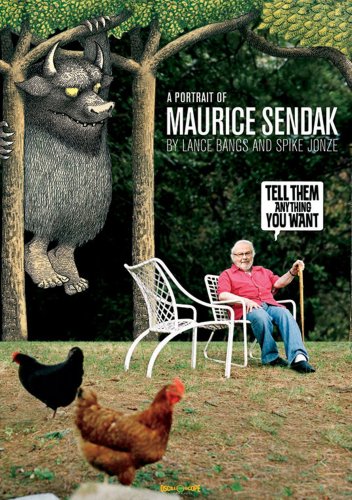
Tell Them Anything You Want displays the nuances of a genius.  Spike Jonze and Lance Bangs chronicle the successes and troubles of a pillar in children’s literature.  Maurice Sendak became massively famous with the success of his book Where the Wild Things Are.  In his career he has written over 100 children’s books and his work has been widely accepted as “brilliant, enchanting and masterful”.  The film is full of intimacy; Jonze and Bangs display their obvious affection and interest in Maurice Sendak with this portrait. 

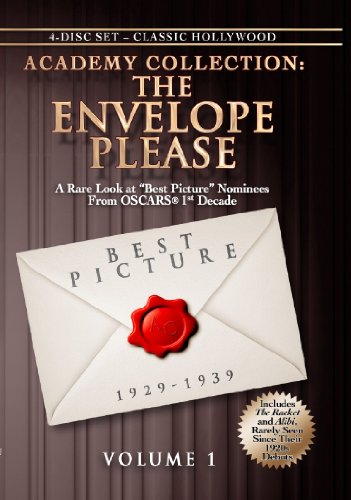
Infinity Entertainment's latest themed grouping of public domain movies deserves some props for originality: eight features that were up for Best Picture during the first decade of the Oscars. Not a single one actually won the prize, but as we all know, that doesn't mean they weren't worthy of doing so.

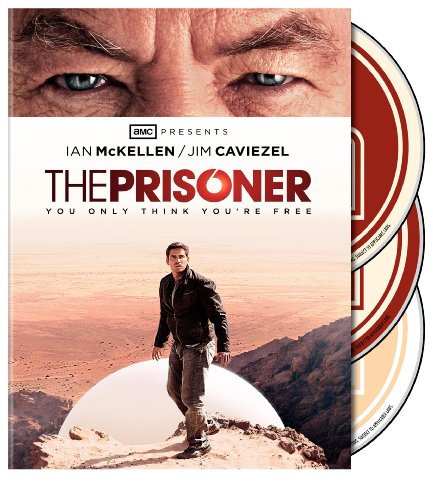
The Prisoner was a television show that ran in the UK from September of 1967 to February of 1968. It starred Patrick McGoohan as the Prisoner who was trying to understand what the Village was and how to escape from it. Enter 2009; we have a remake and this time we have Jim Caviezel in the familiar role. However, this time things go just a little bit differently.

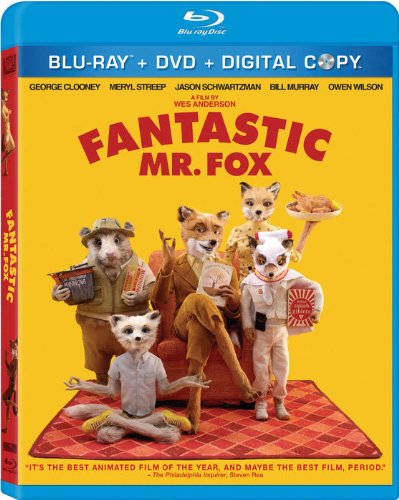
"Boggis, and Bunce and Bean. One fat, one short, and one lean. These horrible crooks, so different in looks, were none the less equally mean."

Roald Dahl was one of the more eccentric writers to come upon the scene. While he often wrote for children, his work is most decidedly dark and often quite sinister. He's most known for such tales as Charlie And The Chocolate Factory. His work has not been adapted to film as often as you might suspect given his popularity. The most famous was certainly Gene Wilder's Willy Wonka And The Chocolate Factory, which was far brighter and more cheerful than the original work.


"The story of a man in a mountain climbing accident who cut his own friends off the rope to save himself. Convicted of second degree manslaughter, that's compelling stuff."

Well... technically he took a plea bargain. This is actually pretty frightening stuff in the very real world that we live in. It's a moral question that each of us would like to believe they would make a certain way. But, the truth is, one can never really be sure. It's a circumstance that no one wants to actually find out what they would do. But, it does pose a very interesting question, doesn't it?

"In December 2005 a tragic accident began a series of extraordinary events that thrust a grieving family and the small Victorian town of Ararat into the media spotlight. This film is a record of those events."

How many movies over the last 10 years have started with that line? It scares me right from the jump, but not in a good way, when I realize I'm about to watch another "found footage" or "real event" film.

"The year is 208 AD. After 30 years of civil war, a deathly calm has fallen over northern China. One by one the rebel warlords have met their end under the sword of Prime Minister Cao Cao. Now even the Emperor bows before his power. Yet, from the south a challenge is heard. Two leaders rise against Cao Cao's tyranny. The aging Liu Bei and the inexperienced Sun Quam. So Cao Cao petitions the Emperor to brand these men as traitors and declare a new war against the peaceful southlands."

And so the stage is set for John Woo's enormous epic Red Cliff. The scale of this film is simply one that must been experienced to quite understand. It has the grandeur of any of the largest films in Hollywood's history

"More of this is true than you would believe."

What was intended as a somewhat thought-provoking quirky comedy looks a lot like something you would expect to see on a late night rerun of The X-Files. All of the subject matter has been covered there, just not quite in this way. It all started with a non-fiction book written by Jon Ronson. He claimed to have researched various government studies in human behavior that entered into the world of the paranormal. It was part of an ideology of waging non-lethal war. It was a strange combination of 1980's new age mysticism and actual studies that showed that soldiers in World War II were, in fact, quite reluctant to kill

"Maybe I'm not being clear enough. Maybe I need to be honest with you and tell you what I want. I want your soul to open up for me."

Clive Barker's name has been synonymous with horror for quite a long time. Along with Steven King, there is likely not another name out there that has been responsible for so much written terror. His stories have sold hundreds of millions of copies and inspired many films and television projects. He's been called the modern Edgar Allan Poe, and when you witness something so frightening at its very base as Dread happens to be, it isn't hard to understand how he came by that kind of a reputation.

An ancient facility beneath Antarctica becomes the launching platform to the lost city of Atlantis. Atlantis is buried beneath an ocean in another galaxy and can only be reached with an additional symbol on the Stargate. Because of power limitations this trip, at least for the time being, is a one-way adventure. A crew of scientists and military officers from many countries assemble to explore the Pegasus Galaxy from the Atlantis gate. Led by scientist Dr. Weir (Higginson) and Maj. John Sheppard (Flanigan) they take over the Atlantian command center and begin to explore.