Disc Audio

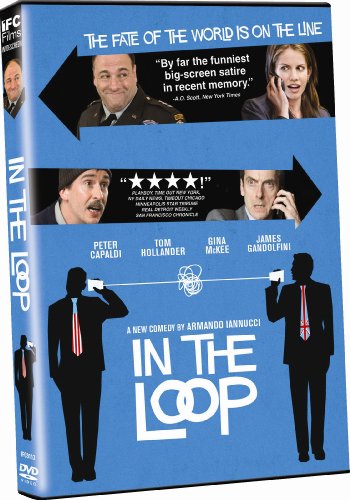
When the UK minister for International Development (Tom Hollander) has the nerve (not to mention lack of political acumen) to opine that war in the Middle-East is “unforeseeable,” all hell breaks loose. The pro- and anti-war bureaucrats in Washington see him as useful to their cause, and descend, talons outstretched. Meanwhile, the Prime Minister's Director of Communications (Peter Capaldi), a Scot who makes Don King look even-tempered and restrained, goes into apoplectic overdrive in his attempts to keep everything on-message.

Though this blistering satire leaves the precise nature, or even location, of the war-to-be is unspecified, it's pretty clear that what the film has in its sights is the collection of mangled information, doublespeak and unstoppable political agendas that led to all the fun and games in Iraq. Filled with sharply drawn characters, wonderfully creative profanity, and a bracingly cynical worldview. Not a film for the optimistic (or naïve, depending on your perspective), but the kind of black political farce that the British excel at – think Yes, Minister and House of Cards and you begin to have the idea.

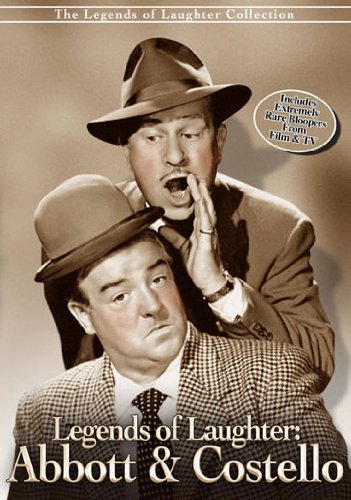
What we have here is, essentially, a great, heaping collection of public domain material from the classic comedy duo. The menu is as follows:

17 episodes of their radio show: The Abbott & Costello Show (1942-1949);

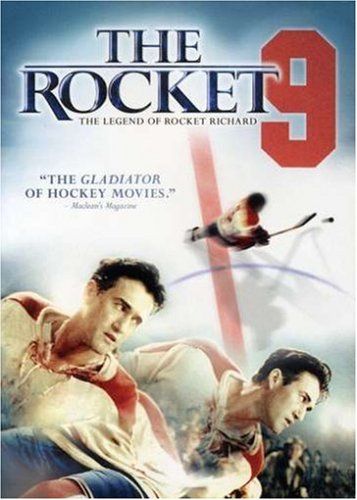
This film chronicles the career of Maurice “The Rocket” Richard, an NHL player for the Montreal Canadians, from his childhood days in a Junior hockey league, to the season in 1955 where his suspension from playing for the remainder of that season led to violent riots in Montreal. This film is more than just an examination of Richard as a French-Canadian citizen and legendary hockey player (many still argue as the greatest ever to play) but also a look at his impact as an icon and living legend to the people of Quebec.

“The Man Who Cannot Die”, better known as the Phantom was created by Lee Falk in 1936. The comic strip runs until this day, despite the creator dieing more than ten years ago. The Phantom was a costumed crimefighter that lived in the country of Bengalla. Bengalla was fictional but located in Africa. In 1996, they finally decided to create a movie based on the comic strip to find out what the “Ghost Who Walks” would do on the big screen.

The story starts when a young boy washes up on the shore of the African island known as Bengalla. He got there as the last survivor from a vicious pirate attack. In a ceremony with an ancient tribe known as the “Poison People”, he is dubbed the Phantom. The Phantom will devote his life to destroying piracy, cruelty and injustice. When the boy grows, he assumes the identity of a purple masked superhero with a brilliant horse to ride and a faithful wolf at his side.

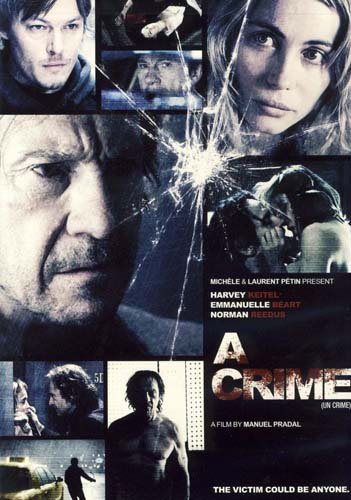
Years after his wife's unsolved murder, Norman Reedus has retreated within himself, carrying on a morose existence in a low-end apartment, gloomily taking part in unofficial greyhound racing. His neighbour, Emmanuelle Béart, is in love with him. Since Reedus is obsessed with solving the murder to the exclusion of any other human interaction, Béart decides to present him a solution. Based on the tiny bits of information Reedus has on the suspect, Béart picks cabbie Harvey Keitel as matching the profile well enough to make for a good target. She begins a relationship with him in order to put him in the frame and give Reedus, though murder, the catharsis he needs.


So goes the setup of this interesting but flawed neo-noir. As one would expect in a noir, the plan does not go exactly as foreseen, and everything becomes increasingly complex and deadly. This is to the good, and there is some nice suspense that builds up, as one is worried first about one character, and then another. Reedus doesn't have too much to do, and is too cold for audience sympathy to really develop, but Béart and Keitel's walking wounded are compelling. But if twists and contrivances are all well and good in the genre, utterly insane coincidences are harder to take, there's finally such a doozy in here that the story's credibility is torpedoed. Along the way, though, the pic makes for gripping viewing.

"My old man calls space travel a fool's game. He says human beings are 60 percent water; they eat, sleep, defecate, can't follow directions, and explode like piñata when exposed to the vacuum in space. Lately, I've been wondering if he is right."

Houston, this is Canaveral. Initiating prelaunch checklist. Please respond go/no go:

Most people who call themselves friends of mine know that I absolutely adore the combination of John Carpenter and Kurt Russell. Escape from New York is my favorite movie of all time and I even liked Escape from L.A. as well. Now that my credibility is probably ruined, I was delighted to receive Elvis, a mini-series produced in the seventies that brought together this amazing duo for the first time. Kurt Russell is the King of Rock n Roll and I can’t help to enjoy watching.

The year is 1969. Elvis Aaron Presley (played by Kurt Russell) sits in a hotel room in Las Vegas with his friend and roadie Red West (played by Robert Gray). He is about to make one of the biggest comebacks of all time. However, there is a news report on the television about him that questions whether or not he can make the comeback. Elvis doesn’t quite like that. He reaches into his pocket and pulls out a pistol and aims it directly at the television.

"This is the story about a football team. From the beginning this football team had heart and ability. But there was this one big problem. They didn't believe that they could win. And then this dog came along, and this dog could do amazing things, and suddenly, the team started winning. But the truth is, even without the dog, they were winners, each and every one of them. So, if you believe that a dog can play football, then you better believe that we're gonna win this game."

Nah, this story isn't about that. It's about me ... Baby.

"Look sharp, act sharp, be sharp. These guys coming out of prison? They're buff, been on drugs. You do what they teach you in the academy, you will die. Knucklehead wants to take your gun. So if it's you or some 300-pound naked guy on PCP, you take his ass down any way you can. You ride with me, you back your badge."

There probably isn't a group of people who have been profiled more than the men and women serving in the LAPD. It doesn't take a rocket scientist to figure out why. It's a large city with an incredibly diverse population. Oh, and it doesn't hurt any that Hollywood's a part of this particular asphalt jungle. So we get to see a lot of L.A. or New York cops on television. Even long before Jack Webb was asking for the facts and only the facts, the cops of L.A. have had more than their fair share of screen time in film and television. With that in mind, it is awfully difficult to do anything new with the LAPD.

In the 1930’s and 40’s MGM was trying to get in on the lucrative animation game. The field was dominated at the time by Warner Brothers with their Loony Tunes shorts, and of course, the iconic cast of animated characters coming out of the Walt Disney Studio. For years they had failed to find the right property to take advantage of the market. It wasn’t until the team of William Hanna and Joseph Barbera approached the studio with their first project that the times did change, at least a little, for the fledgling animation department at MGM. The project was far from an original one even for the time. It was a very basic cat and mouse adventure featuring a cat named Tom and a mouse named Jerry. There would be almost no dialog on the shorts. It certainly didn’t look like much of a hit to the studio brass, but with no better ideas on the way, they went ahead with the new shorts of Tom And Jerry. There’s a reason why the cat and mouse pair is such a classic. It’s because it works. If you can make your characters entertaining and endearing enough, you can have a hit. MGM finally entered the major leagues, and the team of Hanna and Barbera would become one of the most successful animation teams in history. They would go on to create such cherished characters as The Flintstones, Yogi Bear, The Jetsons, and, of course, Scooby Doo.

These were the days of the Golden Age in Hollywood. These shorts were not being produced for television, which hadn’t been invented when they began; rather, they were intended for theater goers. In those days going to the movies was much more of an inclusive experience. You always got a cartoon short along with an adventure serial, the likes of Buck Rogers, Flash Gordon, and The Lone Ranger. These multi-chaptered serials were the forerunners to the modern television series. It kept you coming back to the movies to see what would happen next. Each chapter ended in a cliffhanger. These early serials were the inspiration for such film franchises as Star Wars and Indiana Jones. Finally you got one, sometimes two movies, all for the price of a single admission.