Disc Audio

When the original 1987 film The Stepfather came our way, the world was a very different place. Of course, that's true with any titles that are separated by nearly 25 years of time. When reboots or remakes are attempted, as they all too frequently are today, it is often true that some allowances must be made for those inevitable changes in our world. Filmmakers attempt to make whatever adjustments they deem fit and bring the old favorite, or not so favorite, into our current collective consciousness. Like all things, sometimes it works. More often it does not work.

For ten years we watched Jack O'Neil, Samantha Carter, Dr. Daniel Jackson, and the Jaff'a Tealc' enter the Stargate. Others would join the team over the years. Each week we would follow their adventures, first on Showtime and finally on the Sci-Fi (now Sy Fy) Channel. We watched with awe as they stepped through a portal that was in reality a wormhole transporting them instantly to another world, brought online by dialing the device like an old fashioned telephone. For another five years we traveled not only to another planet, but to the Pegasus Galaxy itself to the Atlantis Base, a bright floating city left behind by the ancients, the people who created the Stargate system millions of years before


Eddie Sutton (Russell Hornsby) is an idealistic police officer, dreaming of making a real difference. His family (nurse wife and three kids) is currently living in a too-small apartment. The chance to kill two birds with one stone comes up with a program that encourages officers to buy homes in depressed neighbourhoods, and so Eddie moves his family into a spacious former crack house in the titular LA district. Things, as one might expect, are not easy. Eddie discovers (to his unaccountable surprise) that his new neighbours are suspicious of the police. His son is bullied in school. The girls have their own problems fitting in. And crime keeps rearing its ugly head. But as the series progresses, Eddie and his family make of their new house, and its neighbourhood, a real home.

Greetings here from your favorite neighborhood reviewer and Spidey-expert: the infamous Kedrix. I certainly have a habit of appearing whenever there is a Marvel or DC superhero involved, especially if the source material happens to be animated. Needless to say, when the opportunity to review Spectacular Spider-Man both volumes 6 & 7 came available, I jumped to the task. Somehow, we missed Volume 5 (I have seen the first four), but I'm sure we can pick right back up and get to the spectacular action. (one paragraph in and we are already using bad puns, tsk tsk)

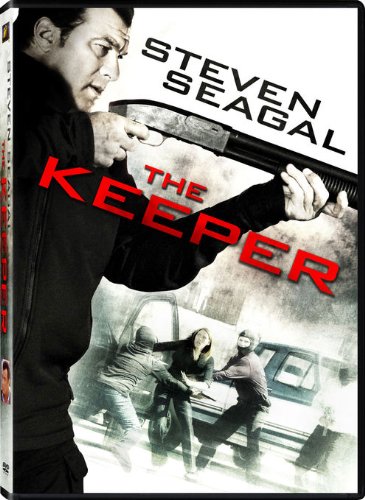
Steven Seagal plays an LA cop who is forced into early retirement after being betrayed and shot by his partner. After an astounding recovery, which included blasting his partners brains all over the hospital walls (I'm assuming it was part of his rehabilitative therapy), he is hired by an old friend to be the head of security for his friend's daughter. This family is linked to some bad dudes who are keen on uranium and kidnapping, so Seagal is forced to slowly shoot everyone near him while mumbling something about being a tough guy or whatever.

Recently, I got married to the most wonderful woman in the world. Well, the most wonderful woman I ever met anyhow. Her name is Sarah. Then I got to thinking, wouldn’t it be awesome if I included her every once in a while in my reviews? She’s very opinionated but she speaks from the heart. When our webmaster sent me New York, I Love You, I knew it was the perfect vehicle to introduce her to a mass audience.

Brian Clough (Michael Sheen) is the manager for the Leeds United soccer team, brought in to replace Don Revie (Colm Meaney), who is off to manage the England team. Clough is young, charismatic, brash, arrogant and opinionated, and has some pretty unflattering (and publicly aired) views about his predecessor and the thuggish style of play he fostered. So begin his 44 catastrophic days in 1974 as the unwelcome manager of United, and the film flashes back to the meteoric rise that brought him to this crucial pass.

Director Robert Altman here adapts David Rabe's play about a small group of recruits on the verge of being shipped off to Vietnam. The action takes place entirely in the barracks, and here we get to know African-American Roger (David Alan Grier), fitting in as best he can in a white man's army; sensitive and gay Richie (Mitchell Lichtenstein); and possibly-closeted Billy (Matthew Modine). They talk about and dance around their various fears and anxieties, and then into the mix comes the explosive Carlyle (Michael Wright), whose life on the streets and experience with racism have turned him into someone who talks and acts long before he thinks...

“In the 1940’s and 1950's the juiciest roles for actresses in Hollywood were often in B pictures that explored the dark side of life, staring roles as cool, calculating girls who could stick a knife in a man's back and make him like it."

And so Sony collects 8 of these films as part of what looks like is going to be an ongoing series. But what exactly is Film Noir? You hear the term used from time to time, but what does it mean?

"During the 1980's over 70% of American adults believed in the existence of abusive Satanic cults. Another 30% rationalized the lack of evidence due to government cover-ups. The following is based on true unexplained events."

Here we go again; at least that's what I was thinking as House Of The Devil started to unfold with the above introduction. I remember well the "Satanic Panic" that goes back to the early 1970's. It was a somewhat natural extension of the Manson Family murders. While that might not have been Satanic related, it sparked the imaginations of a fearful country, and before long there were urban legends of human sacrifice and ritualistic slayings all over the country.