Disc Audio

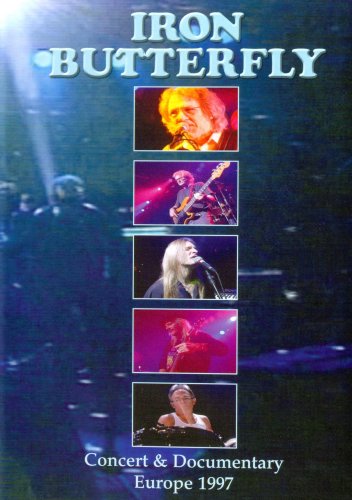
Unless you were around for Iron Butterfly's big boom in 1968, you might remember this band best as the composers of that song the organ player plays for 17 minutes in that episode of The Simpsons in which Bart sells his soul. Yes, this is how I knew them for much of my youth, and I thought of them best then too.

This DVD documents a 1997 concert of Iron Butterfly, and it did little to sway my fond memories of what was a very good Simpsons episode that was. My apologies...I shall leave that Fox program (not to be mentioned again) and focus on the band that is most famous for the 17 minute plus psychedelic adventure that is In A Gadda Da Vida.

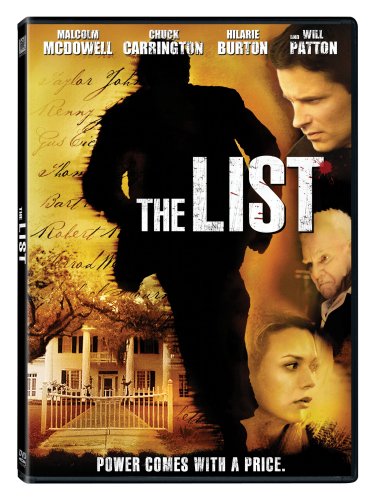
The List is adapted from a novel of the same name written by Robert Whitlow.  After returning home from his father’s funeral, Renny Jacobsen (Chuck Carrington) discovers he is the inheritor of his family’s seat in a secret society founded during the civil war.  However, Renny suspects the society’s activities are more troubling than they lead on and decides to examine them more closely.  When his inquiries are uncovered by the group’s leader (Malcolm McDowell) Renny becomes targeted by a mysterious force that has the power to destroy him and the people he holds close.


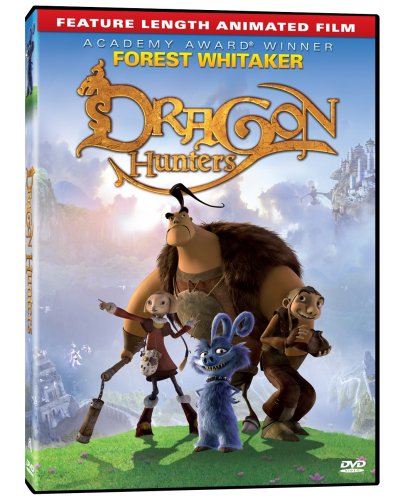
In a mythical world, a series of apocalyptic prophecies are coming true. These events presage the awakening of a world-devouring dragon. Dragon hunters are needed more than ever, but all of the knights of yore are dead or insane. The only game in town is a couple of misfits: Lian-Chu, who still bears the trauma of the night his village was destroyed by the dragon, and his friend Gwizdo, a two-bit con artist. They are accompanied by Hector, a strange little scene-stealer who might be a rabbit or a dog. Zoe, the excitable niece of the decrepit and blind king, recruits the motley crew to defeat the evil, and off they go, journeying to the end of the world to face terrible danger.

This computer-animated effort is French, but only the English language track has been provided, and I can't help but wonder if something was lost in the translation. Forest Whitaker is top-billed as Lian-Chu, but the character has very few lines, and even less expression. Zoe and Gwizdo have the lion's share of the dialogue, and these two are overly familiar figures. The dialogue moves the story along, but doesn't particularly sparkle. What does shine, however, is the look of the film. The world is a stunningly beautiful universe of floating platforms, and the detail work is tremendous. If the story isn't anything to write home about, the eye candy most certainly is.

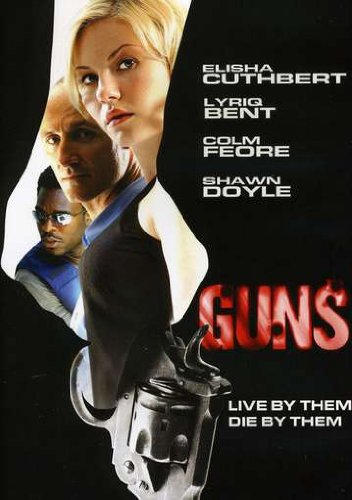
Guns is a Canadian TV mini-series that came to fruition in late 2008. The premise of the series is slightly convoluted.  Paul Duguid (Colm Feore) is a legitimate arms dealer that sells to governments around the world. However, Duguid also sells illegal weapons to gangs around Toronto as well. Duguid comes under police scrutiny when his son Bobby (Gregory Smith) goes to a street level gun dealer’s house that is under police surveillance.  Bobby also becomes implicated in the murder of the father of a U.S. Senator.  During all of these events, Bobby’s girlfriend Frances (Elisha Cuthbert) volunteers to smuggle guns across the border.  The multiple storylines on display here work well in a TV mini series.  However, when shown in 180 minutes on a DVD, they are difficult to appreciate.

I tend to wince a bit when I see these films that star wrestling names and are produced in conjunction with one of the WW A-Z’s. I’ve come to believe that WW means “Won’t Wow”. Along comes John Cena and this latest cooperative film, 12 Rounds. I have to say I was somewhat surprised to find that it was a pretty good action thriller, if a bit implausible. I’m willing to overlook certain aspects of inplauability, if you take me on a thrilling enough ride and try not to totally insult my intelligence. For the most part I found that to be the case here. Cena doesn’t feel the need to work in impractical wrestling moves on his opponents. In fact most of the action is not the hand to hand tripe these movies tend to lean toward. You’ll find plenty of action sequences. There’s a pretty cool runaway rail car, plenty of car chases with the expected carnage that follows, and enough gun play to drive home the point. Renny Harlin, the director, worked on the second Die Hard film, so you know he has a good eye for this kind of action. And while no one will confuse him with John Woo, I think you’ll get enough of an adrenaline hit here to make the 2 hours worthwhile… until we get to the end. More on that later.

A sting to bring down a dangerous terrorist goes horribly awry when the fed’s informant has a sudden change of heart. The result is a lot of shooting, chasing, and dead guys on both sides of the law. Patrol officer Danny Fisher (Cena) is one of the cops drawn into the chase and eventual takedown of the chief terrorist, Miles Jackson (Gillen). In the mayhem that follows, Jackson’s wife is killed. Jackson blames Fisher for the death and vows his revenge.

“Believe me, that weren’t no shark.”

Sea Beast began life with the title Troglodyte, but I’m not sure what that had to do with anything on this movie. Perhaps someone just thought it was a clever name, but realizing they didn’t have a clever film to go with it, they decided on the more mundane Sea Beast. Whatever the reason and whatever the title, nothing can change the fact that this is one really bad horror film.

“If you look closely, you’ll find that everything has a weak spot, where it can break….”

The same can be said for Fracture. There are plenty of flaws, and if you look hard enough you can find a lot of problems with everything from the story to the performances. Thankfully these flaws are quite minor and require the kind of scrutiny that would likely ruin almost any movie experience. I taught law for about 7 years and make it a bit of a (bad?) habit to look for the errors in court and legal procedures. I found plenty here, but they aren’t all that obvious or that detrimental to the plot. You’ll find errors in such trifles as chain of custody for evidence and the admissibility of certain types of testimony. If you’re a student of the law you’ll take note, as I did, and then hopefully move on. There’s too much compelling stuff here to allow yourself to miss out because of some rather common legal mistakes.

When Terence Malick's latest effort hit the theatres, he had trimmed it down to 135 minutes. Early critics had seen a version running 150 minutes. This version is longer yet, clocking it at 172 minutes. Most of what I said about the previous DVD release holds, and so I'm reproducing it here, with additional comments as necessary.

Virginia, 1607. English ships arrive and a colony is set up, but with considerable difficulty. Famine and disease take their toll. Captain John Smith (Colin Farrell) heads off to seek help from the Powhatan. He is captured, sentenced to death, but waved by Pocahontas (Q'orianka Kilcher, whose character is never actually given that name). So begins a fateful relationship.

In the 1930’s and 40’s MGM was trying to get in on the lucrative animation game. The field was dominated at the time by Warner Brothers with their Loony Tunes shorts, and of course, the iconic cast of animated characters coming out of the Walt Disney Studio. For years they had failed to find the right property to take advantage of the market. It wasn’t until the team of William Hanna and Joseph Barbera approached the studio with their first project that the times did change, at least a little, for the fledgling animation department at MGM. The project was far from an original one even for the time. It was a very basic cat and mouse adventure featuring a cat named Tom and a mouse named Jerry. There would be almost no dialog on the shorts. It certainly didn’t look like much of a hit to the studio brass, but with no better ideas on the way, they went ahead with the new shorts of Tom And Jerry. There’s a reason why the cat and mouse pair is such a classic. It’s because it works. If you can make your characters entertaining and endearing enough, you can have a hit. MGM finally entered the major leagues, and the team of Hanna and Barbera would become one of the most successful animation teams in history. They would go on to create such cherished characters as The Flintstones, Yogi Bear, The Jetsons, and, of course, Scooby Doo.

These were the days of the Golden Age in Hollywood. These shorts were not being produced for television, which hadn’t been invented when they began; rather they were intended for theater goers. In those days going to the movies was much more of an inclusive experience. You always got a cartoon short along with an adventure serial, the likes of Buck Rogers, Flash Gordon, and The Lone Ranger. These multi-chaptered serials were the forerunners to the modern television series. It kept you coming back to the movies to see what would happen next. Each chapter ended in a cliffhanger. These early serials were the inspiration for such film franchises as Star Wars and Indiana Jones. Finally you got one, sometimes two movies all for the price of a single admission.

“Out here the rules are different.”

Corporate retreats have come a long way from the closed door seminars where you’re asked to fall backwards and trust your colleagues to catch you. Well… the backwards part still applies, but here that describes the locals at the isolated camp where 8 hapless video game company executives are planning a weekend of paintball and bonding. These locals are straight out of Deliverance. (Insert your favorite banjo lick here.)