Disc Audio

The French Connection had one of the best film endings a show of this kind could ask for. There was absolutely no need for a sequel. Obviously the success of the first film laid the groundwork for another adventure. In reality the case was rather left open, so there was certainly room to follow up the action. The problem is that none of the elements from the first film remain in the second beyond Gene Hackman’s portrayal of Popeye Doyle and the return of Fernando Rey as the villain Charnier. Friedkin would not return to direct, and even though he was replaced by an even greater director in John Frankenheimer, not much of the original crew remained. Neither Egan nor Grosso were used to consult on the film, and of course, Grosso’s character along with the corresponding Roy Scheider were gone from this film. The gritty streets of New York were replaced by the streets of France. Even the Poughkeepsie line used in the film’s early minutes is a throwaway line meant merely as a wink to the audience. The film has none of the police procedural drive and passion that the original had. In short, this sequel lacks almost everything that made the first a great film. But in spite of all it did not have, it managed to at least be a good film.

None of this film occurs in New York. We begin with Doyle (Hackman) arriving in France to track down “Frog #1”, Charnier (Rey). He doesn’t attempt to hide his contempt for the French and so does little to endear himself with the local police here. Instead they’ve invited him merely to be a target to lure Charnier out of hiding. It backfires, and Doyle is captured instead and hooked on heroin so that Charnier can find out what they know. The film becomes far more of a personal journey for Doyle and less about catching the bad guy. Fortunately Hackman is up for the job and puts in a highly emotionally charged performance. He has to play Doyle, first as a forced junkie, then in the throes of detox. Here we find the film’s best moments. He has a rather long interaction with a French detective (Fresson). This scene is priceless and alone worth the price of admission. In the end it’s a film about obsession as large as the great white whale in Moby Dick.

Autism is commonly defined as a brain development disorder characterized by impaired social interaction and communication, and by restricted and repetitive behavior. Sometimes, due to that lack of social interaction and repetitive behavior, the people affected develop a special skill or heightened senses. The results can be amazing. However, in film, autism is rarely shown as what it truly is, a disorder. To find a film that not only embraces the special skill as well as show the difficulty it takes to exist and function normally is pretty rare.

Zin (played by Ammara Siripong) is involved with Yakuza Boss Masashi (played by Hiroshi Abe). There is just one problem with that. She was previously the girlfriend of a gangster simply known as No. 8 (played by Pongpat Wachirabunjong). No. 8 in his own jealous rage decided to shoot his own toe and forbid Zin from ever seeing Masashi again. She decides to flee and tells Masashi to not follow.

This is actually a very charming situation comedy that harkens back to the days of The Cosby Show, but is actually far more honest and less about one liners. While everybody loves the Cos, the show got cluttered and rarely dealt with real life issues in any serious way. In My Wife And Kids, I get the sense of a real family here. The cast makes it work, but credit the writers for coming up with a comedy that did not rely on one liners. Don’t get me wrong, the jokes are there, and they sometimes fly fast and furious, but one always feels there’s more to any given scene or situation. The show is completely family friendly. I’m a little sorry that I stumbled on it after it was already gone.

Michael Kyle (Wayans) lives a comfortable life. He’s quite content. He makes good money, so they live in comfortable style. His wife, Jay (Campbell) is pretty much a stay at home mom and day trader. They have three children: Kady (Posey), Junior (Gore II), and Claire (Raycole). The younger child has a Hispanic nanny, Rosa (Forte), who doesn’t like Michael at all. But life is about to change in the Kyle household. Jay’s trading skills have gotten so good that she’s offered a job as a full time broker. Michael wants to be supportive, but he’s gotten used to having a housewife around. Now Michael will have to adapt and share some of the parenting. His own brand of common sense and efforts to advise the children tend to be where much of the show’s comedy is mined.

Season two marks the actual first complete season of Nash Bridges. It’s time for the show to deliver on the high octane, high attitude it was to be famous for. This was also the year that both of the main actors reunited with their former partners. Tommy Chong and Philip Michael Thomas both guested on the episode Wild Card. The show paid homage to both of the former partners. Chong plays a pot dealer, and Thomas plays a hotshot gambler friend of Nash's who likes to dress up like the Vice characters did . It was a pretty sweet episode on top of everything else. It might be the best Nash Bridges episode ever, definitely for this season. Don Johnson also got to stretch his acting chops a bit in an episode where he believes Cassidy, his daughter, has been killed in an accident. Nash also goes up against the infamous Zodiac killer in an episode crosses real life surreal episode. In Till Death Do Us Part, Joe thinks he’s only got a couple of days to live after he’s exposed to a deadly toxin. Cheech Marin really works this for all it’s worth. Marin also has an incredibly good episode in Inside Out, where he goes undercover as a prison inmate to take down a Mexican gang leader. In Knock Out, we learn that Nash’s sister is gay. Given an entire run of episodes, Nash has finally arrived for real in the second season.

When Miami Vice finally left the air in 1989, Don Johnson was a very hot commodity indeed. He decided to try and parlay that success into a film career that never really brought him the breakout roles and fortunes he envisioned. Not too proud to return to his roots, he signed a deal with CBS that gave him pretty much a blank check to star in whatever kind of television series he wanted. It was a rare deal that forced CBS to air, or at least pay for, whatever Johnson came up with. Many of us were expecting pretty much a Miami Vice clone when it was announced he would once again be playing a cop. It was all sounding pretty familiar. Bridges was a super cool cop, this time from San Francisco with a rather tattered personal life. He was going to be teamed up with a partner, who wasn’t going to be a cop, but an investigator whose cases would cross paths with Bridges’. It was rumored that the partner might not survive the pilot, thereby killing the buddy cop routine that was beginning to sound very much like Johnson’s previous show. It appeared doomed to failure, and even CBS was at first looking to back out of the deal. They tried to buy Johnson off, but he was by now very excited about the new show and insisted he get his episodes. But how could this new show not be compared to the old? How could anyone have the kind of chemistry with Johnson that John Diehl had? On March 29, 1996 everyone held their collective breaths as Nash Bridges appeared on the scene. Cheech Marin ended up with tons more chemistry with Johnson, helped by the fact the two had been friends for over 25 years. In short order Nash Bridges had arrived, and television audiences everywhere found themselves saying: “Miami Who?”

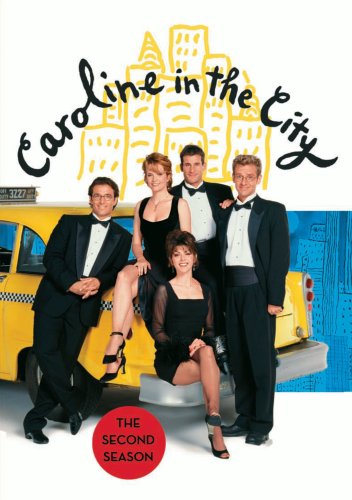
While nowhere does anyone actually say it, Caroline In The City is obviously inspired by/ripped off from the popular newspaper comic strip Cathy. Each episode, for a time anyway, would begin with an animated scene from one of the “Caroline” strips. The topic mostly deals with the pitfalls of being a single New York City girl. From these roots there was an often awkward attempt to create a warm and fuzzy romantic comedy that never seemed to find its own focus, let alone footing. It didn’t help matters that the title character was played by Lea Thompson, best known for her role as Michael J. Fox’s mom in the Back To The Future films. Here as she was there, Thompson is relatively unemoting, a tragic flaw in a romantic character. She’s a good enough actress, but she does appear to be missing charisma in the role. Caroline was joined by her comic strip colorist, Richard, played by Malcolm Gets. Here again we have a pretty reserved actor. Now we’ve got a couple of very low key actors playing a couple where sparks should be flying, and it never works. Most of the laughs, in fact, don’t even come from our leads. Instead Amy Pietz has most of the funny lines as intrusive next door neighbor Annie. Annie’s a cast member in the then huge Broadway production of Cats. She would often barge into the apartment where Caroline and Richard are working/sniping at each other and offer the comic relief in this situation comedy.

What’s most disappointing about the show is that it comes from minds like James Burrows, who brought us so many great moments on Cheers. On the surface there really isn’t anything wrong with Caroline In The City. There are many funny moments, but most of the time it simply hangs there leaving you waiting for the punch line, until you realize you’ve already heard it. I found the characters somewhat charming, but there’s no dynamic or chemistry there to suck you into these characters’ foibles. In the end it neither pleases nor displeases; it was merely just there. Gone soon and as quickly forgotten.

Family Ties is likely remembered most as the series that launched the career of Michael J. Fox. There’s no question that he owes a great debt to Alex Keaton. It’s almost a bit awkward now to watch him as this young, extremely conservative teenager after Fox has spent so much of his life as a liberal poster boy in the last couple of elections. Politics aside, it’s hard not to credit his performances in Family Ties and the Back to the Future films for launching him into a well deserved lucrative career. The Michael J. Fox issue, however, might hide some of the other assets the show had going for it in its time. For one of the first times parents were portrayed as humanly flawed, and families were not the perfectly functional institutions most of these shows described. Up until Family Ties, these households were either perfect little examples of American ideal or they were so dysfunctional that they could hardly be considered families at all. This show obviously went for a bit of realism.

In addition to Alex there was Dad Steven (Gross) and Mom Elyse (Birney). They were former hippies who now had the responsibilities of adulthood and family. Sister Mallory (Bateman) was portrayed as a girl with more fashion sense than common sense. She was always worried about how she looked and not so much about school. Sister Jennifer (Yothers) was underused most of the time. She was a balance between the other siblings and often got left behind in the stories. Newest kid Andrew was starting to grow up now, and Alex often tried to take him under his wing, hoping for a miniature version of himself. The kid would now be played by Brian Bonsall, who would later play Worf’s son on Star Trek: The Next Generation. Skippy (Price) was a neighbor kid with a crush on Mallory.

I get worried when I see box art make claims like they have on the recent release of Dorothy Mills. It claims that this film is a contemporary take on The Exorcist. The problem is that we don’t really need a contemporary take on that classic film. It’s a bit pretentious and arrogant to think that this low budget affair can come close to reproducing what that film did back in the 1970’s. Why can’t the folks who make these kinds of films allow the film to stand on its own and aspire to something unique and exciting for its own merits? Fortunately the box art is just marketing hype, probably written by some advertisement executive who never actually even saw the film. This isn’t The Exorcist, nor does it actually try to be. Truth be told, the film doesn’t play out like your normal run of the mill possession films at all. It has a rather clever angle that might be more Sybil than Exorcist.

Come and listen to my story about a man named Jed. Poor mountaineer barely kept his family fed. Then one day he was shootin’ at some food and up from the ground comes a bubblin’ crude. Oil that is… Black Gold…Texas Tea…”

Who doesn’t remember the Clampetts, those lovable Beverly Hillbillies? The show has been revived in a film, rap songs, and a Weird Al parody of Dire Straits’ Money For Nothing. Terms like cement pond have lingered in our pop culture. The song was a genuine Billboard hit at the time and is still instantly recognizable some 40 plus years after the show aired.

I used to think that any movie that Robert De Niro attached his name to had to be good. And that used to be true. I was willing to take a chance on low budget or blockbuster films, knowing that De Niro wouldn’t lead me wrong. Then along came Stardust, and honestly, the man hasn’t been in a good film in some years now. Still, my loyalty remains, and What Just Happened looked to be interesting enough that my buddy, Bobby D couldn’t disappoint me again. So, what did just happen? He let me down.Films about filmmaking are always a hazard. We all think that we want to see inside the true Hollywood, don’t we? Gossip programs and internet sites would seem to indicate that we can’t get enough of the inside poop. So, the temptation to deliver accurate films that portray these inside aspects of Hollywood come along every once and awhile. We peek, because we think we want to know. The truth is that voyeurism gets boring pretty quickly. We all want to eavesdrop on other people’s private moments. I’ve done it both professionally as a private detective and even for fun with a scanner that allowed me to listen to cell phones back in the old analog days. You know what? People are boring. It was exciting at first and my friend Mike and I would sit and listen to stuff for hours. We would get together and talk about what interesting things we heard. Before long we both realized that most of it was so painfully mundane that we just sort of stopped doing it. That’s what these films remind us. No matter how exciting the world of movie stars, directors, and producers might look from the outside, 90% of it is pretty pedestrian stuff. Unfortunately this film doesn’t spend much time in the 10% that might be exciting. In the end, not even some good casting could save this picture from making me feel like I did listening to those cell phones.

Robert De Niro is Ben, a big time producer and power broker in Hollywood. He’s dealing with two films at the moment. One is already shot and stars Sean Penn. The film’s director, Jeremy Brunell (Wincott), is a temperamental pill addict. When the advance screening doesn’t go so well, he’s told he has to redo an ending that shows a dog get blasted dead by the film’s bad guys. He doesn’t want to compromise his artistic integrity, but the studio boss, Lou Tarnow (Keener) will pull the plug on his Cannes premier if he doesn’t play ball. Ben’s upcoming film stars Bruce Willis, who shows up for his fitting appointment overweight and sporting a “Grizzly Adams” beard, which he refuses to shave. The studio bosses insist they’ll shut the film down and sue everybody involved if Willis won’t shave the beard and work out to lose weight. Willis’s agent is a crazy hypochondriac who is deathly afraid of his client, so Ben can’t get him to lay down the law. The agent is played wonderfully by quirky character actor John Turturro. Ben needs both pictures to work out because he’s supporting two ex-wives who are used to fancy living at his expense. The film is mostly told from Ben’s point of view, often through De Niro’s narration, as he attempts to save both pictures and deal with the more recent of his ex-wives. They’re actually in therapy to learn how to live without each other.

Most of you know that video games are very near and dear to my heart. When it comes to video games on my TV, I’m usually restricted to G4’s X-Play or perhaps somebody got a hold of a license and turned it into a bad movie. Sure, there are times when they try to turn video game comedy into a sitcom of some sort. Game Over even though it was awesome, only lasted six episodes. In fact, Code Monkeys is the only current sitcom I know of that is using video games as a primary source of material. Needless to say, I was very interested when I saw Videogame Theater on my review list. I found my expectations to be too high.

Ever wonder what would happen if various video game legends were made into puppets and given a more real world approach to their character? There is Pac-Man who must be addicted to “Power Pills” and have a broken family. There is Donkey Kong and Mario who work at a construction site and fight over the foreman’s daughter. Lara Croft, well she’s part of a college sorority and in danger of expulsion if she can’t pass the archeology final.