Disc Type

"In northern California, the Santa Lucia Mountains, dark and brooding, stand like a wall between the peaceful agricultural town of Salinas and the rough-and-tumble fishing port of Monterey, fifteen miles away It's 1917 just outside of Monterey."

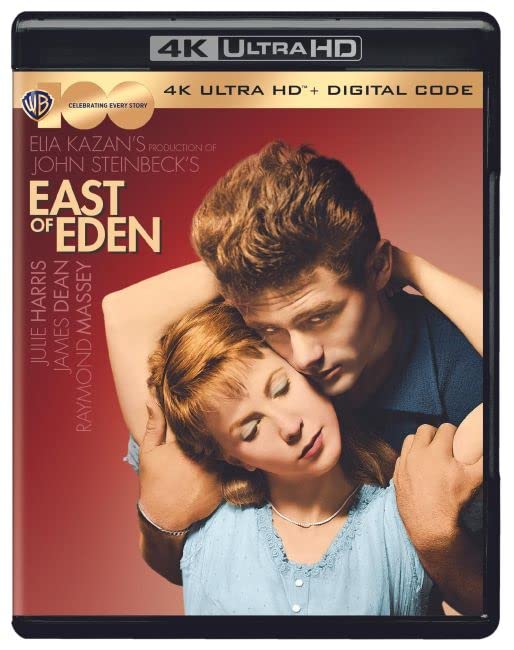
James Dean was somewhat of a brief candle. Very much like Marylin Monroe, he came upon Hollywood so bright and hot only to burn for a short time. And while Norma Jean had a few good years in which to shine, Dean would have less than a handful. In those few years he made three incredible films. His last was Giant, and before that was perhaps his best known, Rebel Without A Cause. East Of Eden was the first of this trilogy of films that would pretty much make up the career of James Dean. All three films were made in the years 1955-1956, and just as suddenly as Dean had come upon the scene, billed as the next Marlon Brando, he was gone.


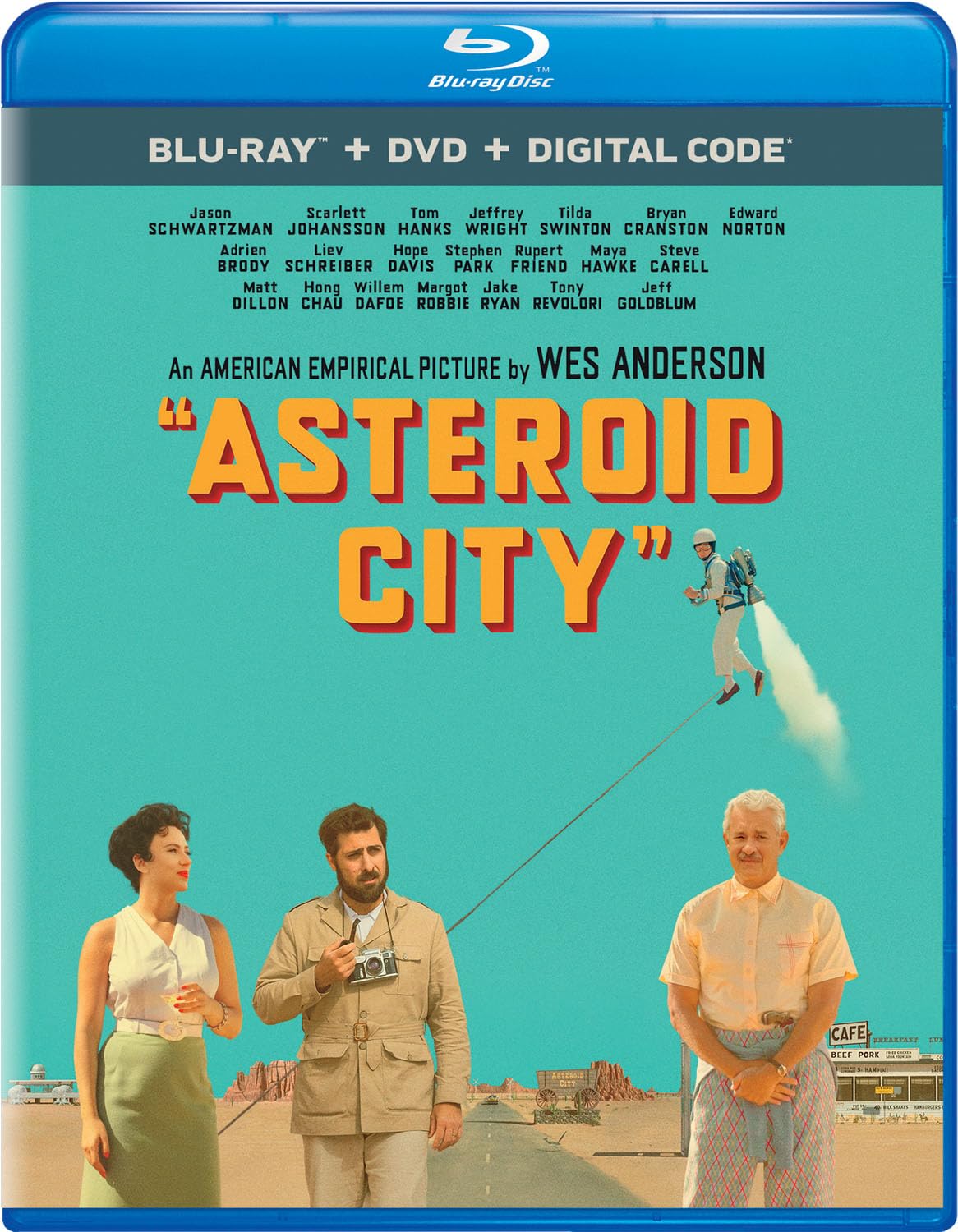
Wes Anderson is pretty much the perfect example of being a cinematic auteur. He has such a unique style that you can simply look at a couple seconds of his work, and you just know immediately you’re watching a Wes Anderson film. Even from his early days with Bottle Rocket and Rushmore to The Fantastic Mr. Fox and now Asteroid City, these films are all very different, but still one would say are uniquely Wes Anderson. His films are a bit divisive, and I completely understand, but those who are fans tend to really love his work.  Personally the only my favorite from him is Moonrise Kingdom; it was a perfect blend of style, charm, and heart; then he has a film like The French Dispatch that got plenty of critical love, but I just couldn’t really get into it. That brings us to his newest release, Asteroid City, which boasts a huge ensemble cast with many familiar faces from his previous films and some big-name stars we get to see him work with for the first time.  Is this a trip to the desert worth taking, or should you simply take a viewing detour?

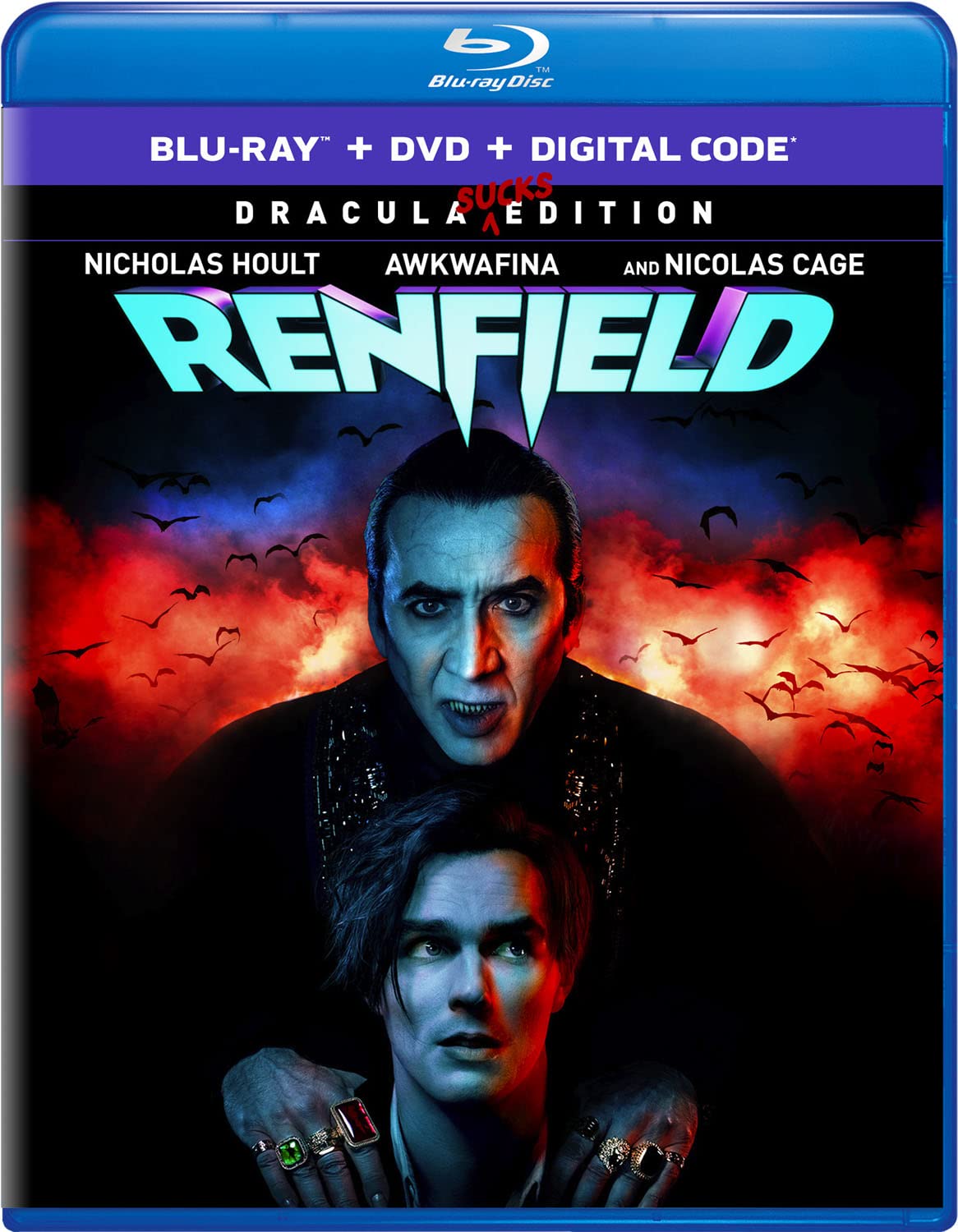
"Hello. My name is Robert Montague Renfield. And just like these decent folks, I'm in a destructive relationship. When I met him, I was a real estate lawyer hoping to make a deal that would change my life and my family's lives forever. Oh, and it certainly did."

After nearly 90 years, the Universal horror cycle stands as one of the most enduring collection of horror movies today. Their influence on modern horror is unmistakable. There have been literally thousands of incarnations of Dracula, the Wolf Man, and Frankenstein's Monster, but the first image that comes to your mind will always be the nightmare creations of those Universal films. Studio head Carl Laemmle, Jr. was trying to break away from his father's control and create a studio culture of his own. The results would start in 1931 when an unknown Hungarian actor named Bela Lugosi jumped from the stage to the screen in Dracula, directed by Tod Browning.

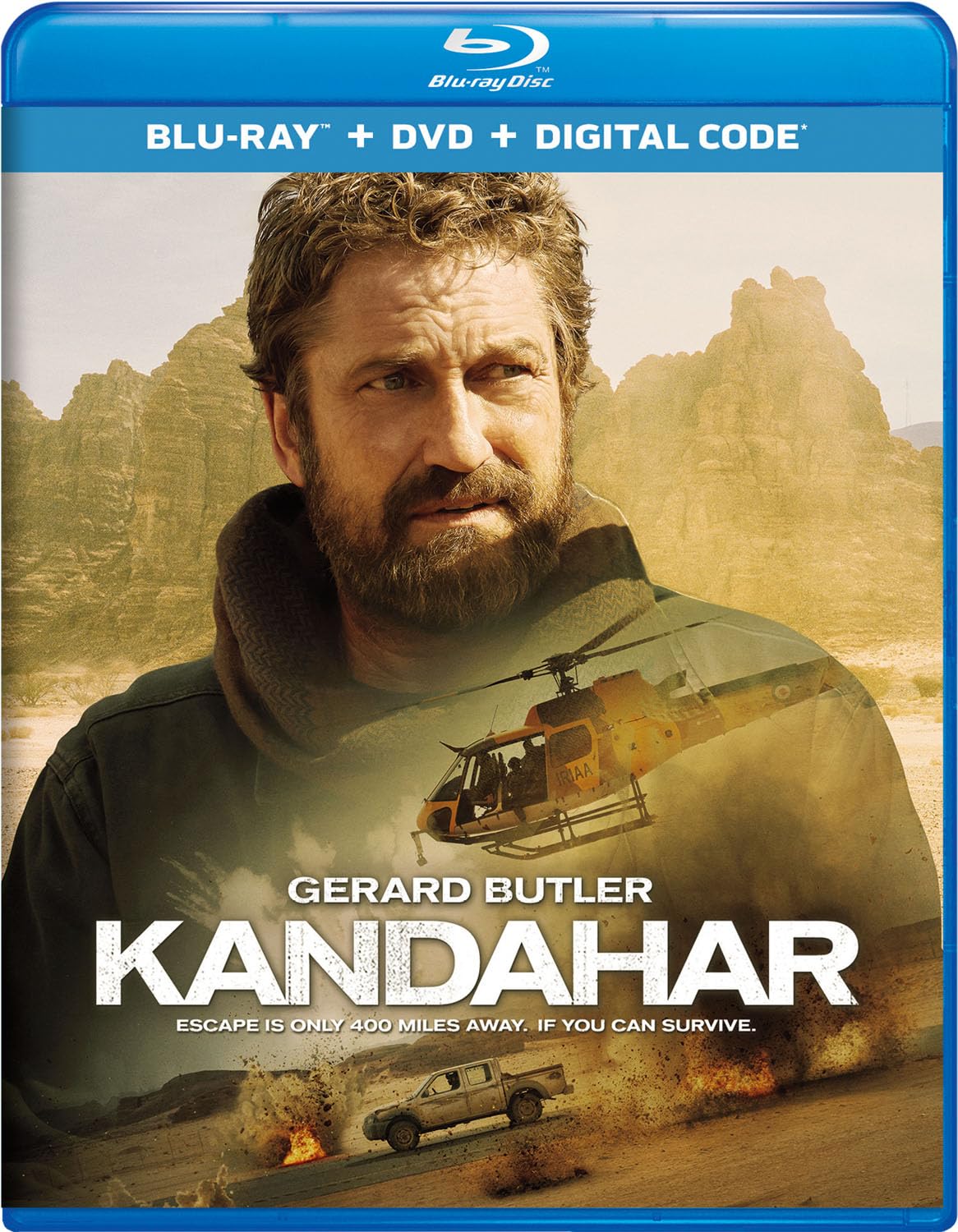
Well, I’d say this film was right in Gerald Butler’s wheelhouse. Teaming with Ric Roman Waugh for the third time of his career (it’s worth noting that two additional partners are already planned in the form of sequels for both the Has Fallen franchise and Greenland 2), Butler plays a undercover CIA agent who finds himself on the run and hunted. With only one ally, he has a little more than a day to traverse dangerous terrain while trying to stay one step ahead of those who hunt him. So while the concept of this film is not really original, the film does make up for the lack of originality by providing a adrenaline-filled experience with a healthy does of suspense. Joining Butler are Vikings’ Travis Fimmel and Navid Negahban, both of whom provide excellent backup to Butler.

“Never accept death when suffering is owed.”

So I think it safe to say that when it comes to the Fast and Furious franchise, it is no longer about cars or street racing any more. In the beginning it felt like we were getting a window into a secret underground world that spanned multiple continents. However, I would say that is no longer the case. Dom and his family have gone legit. Not only have they gone legit, but they now unofficially work for the government in some capacity. No, it is no longer about the cars and street racing any more. In fact, I would go as far as to say that we aren’t tuning in to see them use their skills on the behalf of the government, either. There is one thing that keeps us coming back for more. We want to see what over-the-top, outrageous, death-defying, impossible stuff they are going to do next.

“In the 1940’s, a new genre – film noir – emerged from the world of hard-boiled pulp magazines, paperback thrillers, and sensational crime movies. These films, tough and unsentimental, depicted a black and white universe at once brutal, erotic, and morally ambiguous.”

Film Noir officially started in the 40’s, but the movement was well underway by the early 30’s. You can trace its roots to the Great Depression and the arrival of the dime pulp magazines. These were highly stylized, mostly mystery stories that provided cheap escapism for the masses who were not having a good time of it. Writers like Raymond Chandler crafted the mold that was easily transferred to the silver screen. These were low-budget films that were intended to be second billing with the more mainstream releases. They were shot quickly. Many have a very flat look, created intentionally. The lighting was often minimal, crafting odd shadows and unusual textures. The dialog wasn’t intended to be natural or realistic. These characters usually spoke in clichés and had names like Mac, Griff, or Dollface. There was often a shade of gray to these characters.

"There ain't any jail of steel or stone that can hold a body prisoner as tight as one built of old age ... and lack of money."

If I Had A million is a rare kind of film for 1932. The industry was barely out of the silent era, and stories needed to be tight and usually short. Short was the word of the day for this film. It became the first feature film to be released as an anthology with plenty of A-list stars and several directors, each taking on their own little piece of the pie. It was a rather brilliant idea for the time, but sadly this style of filmmaking wouldn't really start to catch on until the 1970's, starting almost exclusively with horror films and later creating its own little niche genre in mainstream filmmaking.

"I cannot - yet I must. How do you calculate that? At what point on the graph do "must" and "cannot" meet? Yet I must - but I cannot!"

Often it seems some films were made to collect a mantle-full of awards. For some it's the Oscars they covet. For others it might be a Golden Globe award or even a People's Choice Award. As a member of two critics’ guilds, I have to make these assessments every year. I know how important these accolades can be for a film and the people who created it. But there's one award that films (almost) never set out to obtain. Still it can provide endurance for a film and help new audiences to embrace it. I'm talking about those Golden Turkey awards, and few films ever made deserve the Golden Turkey than 1953's Robot Monster. When you hear folks talk about how monstrous that movie is ... they're not talking about the creature itself.

In 2017 What the Waters Left Behind made some waves as a horror film that came out of Argentina.  It was shot on a pretty low budget, but it seems it was successful enough to warrant a sequel. I actually stumbled across What the Waters Left Behind on a streaming service one late night when I couldn’t sleep. The film is pretty much made for late-night viewing; it has a fun midnight movie vibe. The first film follows a group of documentary filmmakers that are traveling to the town of Epecuen that was wiped out in the 80’s, and the filmmakers want to check out the ruins of the town. What follows is a fun Texas Chainsaw Massacre meets The Hills Have Eyes romp filled with plenty of gore and the terrible demise of this film crew that wandered where they didn’t belong. Now it is five years later, and we have the sequel What the Waters Left Behind: Scars.  This was unexpected, but just what did I think about this Latin-flavored bloodfest? Well, it’s pretty much what I expected, and that’s a good thing.

"Man gets shot that's got a gun, there's room for reasonable doubt. Man gets shot that hasn't got a gun, what would you call it? But, you knew that already; otherwise you wouldn't have set things up the way you did." 

Rio Bravo (1959) stars John Wayne as John T. Chance, a small-town sheriff facing the fight of his life. His town is infected by a gang of 30-40 men, professional bad guys on the payroll of Nathan Burdette (John Russell), whose brother, Joe, Chance has locked up for murder. Burdette is dead-set on freeing Joe, and the only help Chance has got is his former deputy, Dude (Dean Martin), who’s been drunk for two years since he got involved with the wrong kind of woman, and Stumpy (Walter Brennan), an old, trigger-happy cripple. The trio has six days until the U.S. Marshall comes to collect Joe, but that’s a long time to wait when you’re surrounded by the enemy.