Disc Type

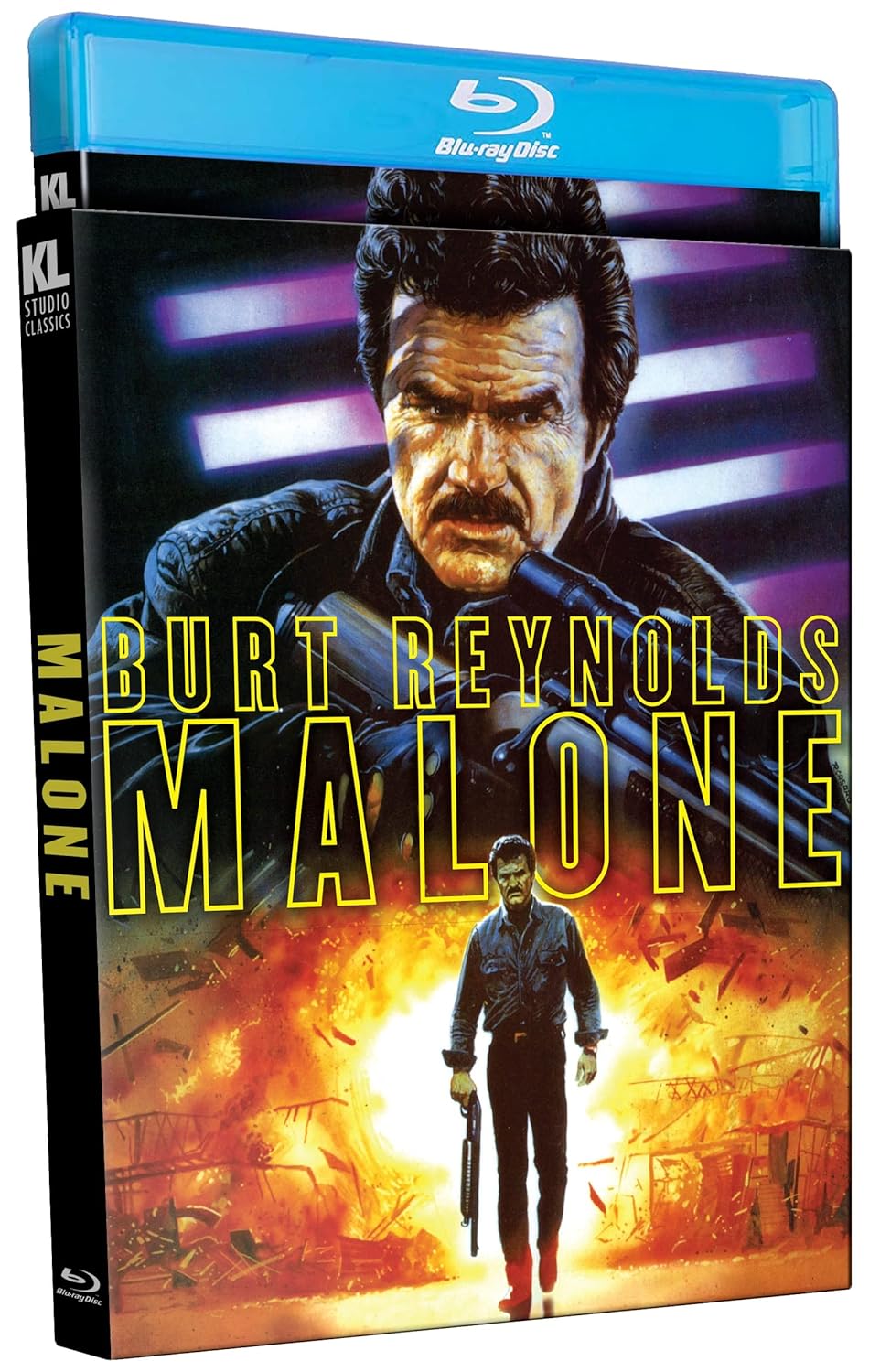
This 1975 Burt Reynolds film is nothing like I expected, and for the most part I’d say that is a good thing. When I first picked up the title, I pretty much expected this to be a fun yet somewhat forgettable action film from the 70s, something in the same vein as Stick or Gator, but instead this is a more complex story that takes many strange twists and has an ending that was pretty unexpected. The film was directed by Robert Aldrich, who was fresh off of directing The Longest Yard and also to his credit directed one of my favorite war films, The Dirty Dozen.  Aldrich is one of those directors who I’d put in the same category as Don Siegel who were just fantastic at directing “tough-guy” films that just oozed testosterone in just about every frame.  In other words, directors that Hollywood would try to cancel in a heartbeat if they were working today. That being said, this is one of those films that is a product of the time it was made, and it has enough offensive moments that would make a modern audience want to stand up and protest, and, well, it’s what makes me like this film a little more than I should.

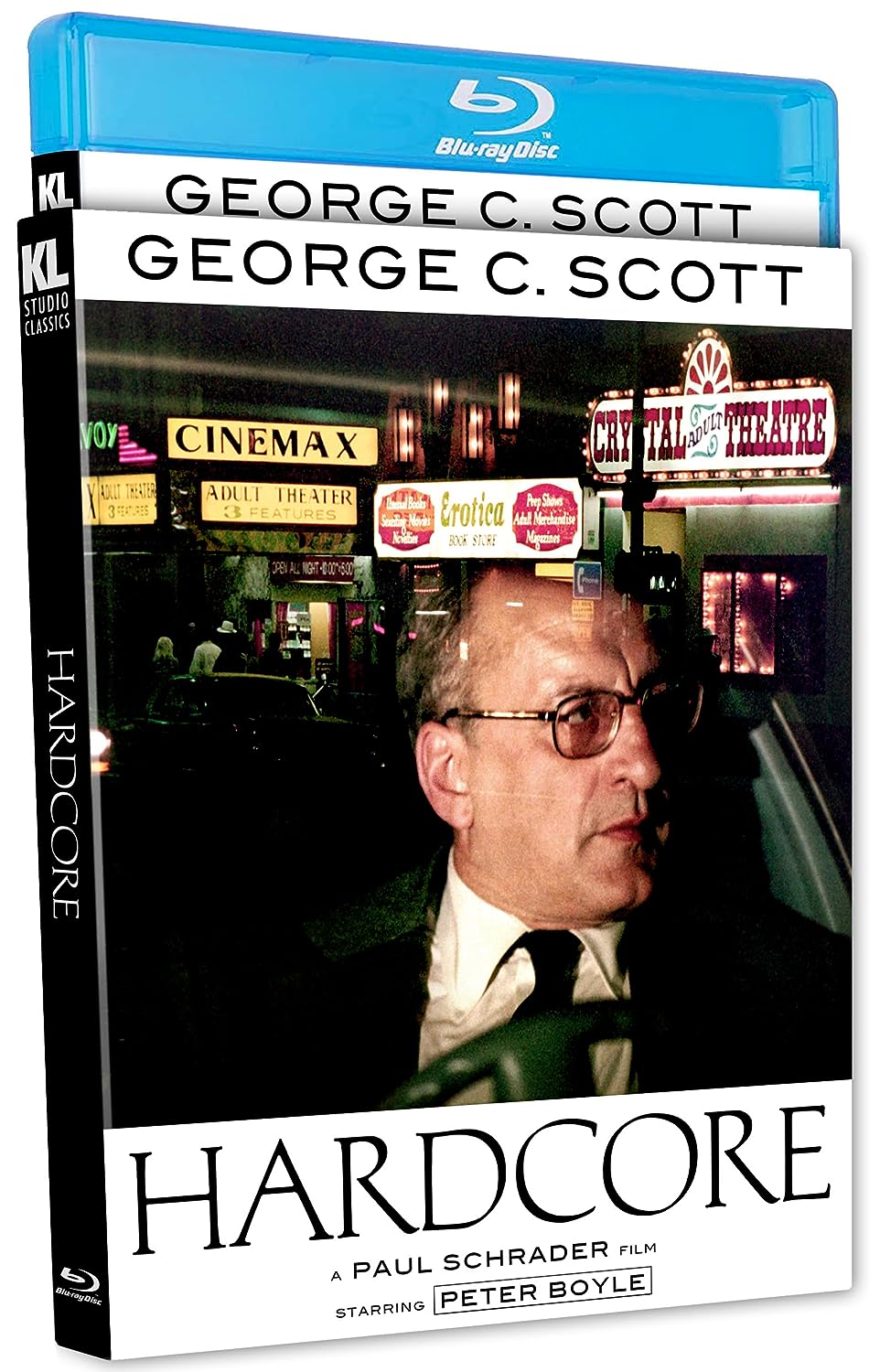
The film opens up with a bunch of kids having a trip to the beach, and they discover a dead girl has washed onto shore. Det. Phil Gaines (Burt Reynolds) is put on the case that at first seems like an open-and-shut suicide case, but instead it’s only the beginning of a complicated case that delves into the seedy and corrupt underbelly of Los Angeles. When Marty Hollinger (Ben Johnson) comes in to identify his dead daughter, he’s not willing to accept that she simply committed suicide, and he then decides to embark on an “investigation” on his own.  The storyline with Marty, oddly enough, is pretty similar to the storyline of the 1979 film Hardcore, where we see a father delving into the seedy underbelly of society and uncovering a salacious career his daughter had before dying. Then there is the relationship Phil is having with a call girl, Nicole (Catherine Deneuve) and one of her clients being a corrupt mob attorney who may or may not be involved with Phil’s case.  This has plenty of the hallmarks of being a cool noir film, but it doesn’t quite deliver in that department, and that is one of the film’s problems. It suffers from a bit of an identity crisis where it simply doesn’t seem to know what kind of a film it wants to be; the tone is simply all over the place.

“How everyone thinks we can solve any problem with magic. There are limits! This isn’t some bedtime story; this is the real world!” 

Well not quite, but still very sound advice. Which is what our heroes find out in this adaptation of the popular tabletop game. I’m becoming convinced that there is no such thing as a truly great cinematic adaptation for a tabletop or role-playing games. Think about it? Warcraft, Battleship, the previous Dungeons and Dragons adaptation. All of them failed to hit the mark. When you think about it, it’s not surprising. These games are incredibly nuisance and detailed, it would be more surprising if their entirely was actually able to be encompassed in a matter of hours. In the case of the latest Dungeons and Dragons adaptation, Honor Amongst Thieves, I think it is a case of good movie/decent adaptation. Based on the Forgotten Realms settings, the film follows Chris Pine as Edgin Darvis, a former Harper turned thief. While I do claim to be an expert in the world of D&D, Darvis does appear to have some basis in the game itself. Backing Pine up, we have Michelle Rodriguez as barbarian Holga, Hugh Grant as conman Forge Fitzwilliam, Justice Smith as a fledgling elf sorcerer Simon Aumar, Sophia Lillis as druid Doric, and Rege-Jean Page as paladin Xenk Yendar. I was expecting Page to have a bigger role as he was featured prominently in the film’s promotional materials, but I will go into further detail about that down the road.

This remake of the 1936 screwball classic My Man Godfrey very much works as a snapshot of the time and how the wealthy as well as the social elite acted.  In many ways we can still see this behavior on display when we look at some of the modern celebrities (looking at you, Kardashian family) we can view it as harmless privilege or simply an abuse of wealth. Either way, when watching this film, though it has plenty of charm, there is plenty to cringe about when viewing the behavior of some of these characters.  When watching this, it’s best to go into it thinking of it as nothing more than a silly story and just ignore how improbable any of this could actually be. The film opens up with a chase taking place. Irene Bullock (June Allyson) is in hot pursuit of her sister, Cordelia Bullock (Martha Hyer) as they speed through the back streets of New York.  Irene is trying to catch up with her sister who has stolen a goat that she intends on using for a scavenger hunt. It’s when the pursuit is taken to a pier where the ladies encounter Godfrey Smith (David Niven) who is posing as a vagrant but in reality has illegally jumped ship when traveling from Austria in search for a new life. Irene is immediately smitten by Godfrey and how he is willing to stand up to her sister, and she decides she’s going to bring Godfrey in as her “animal” in hopes of winning the scavenger hunt. She then offers him a job, to be her butler, which he reluctantly takes, and then of course more screwball hijinks occur.

Though Irene is a bit of a spoiled brat, she is very charming at times, but my biggest problem is we never really get to see just what it is that makes her fall so easily for Godfrey other than it seems she likes the notion that she found herself a stray off the street and wants to be his savior … though it is quite obvious she needs saving from herself with her behavior when things don’t go her way. If it weren’t for Allyson in this role, I feel Irene would simply be an unbearable character. Then there is the continued feud with her sister. You can almost understand why Cordelia is frustrated with Irene’s antics, but she’s just as spoiled and really doesn’t have to face any consequences for her actions, that is until Godfrey calls her out on it.

"There is an old saying that blood is thicker than water."

We've had Keeping Up With The Kardashians, Gene Simmons with his Family Jewels, and even Snoop Dog's Father Hood. It's become a bit of a trend to follow these celebrity families around and watch the drama of their privileged lives unfold on our television screens. You might think it's a relatively recent phenomenon, but would you believe they were doing it back in the infant days of television when we followed around a musician named Ozzie and his wife way back in 1952? No, we're not talking about Ozzie Osbourne and his family. I'm talking about Ozzie and Harriet Nelson. They were television's darling family before we ever heard about Lucy and Desi. The show actually started on radio like many of the fledgling industry’s early hits including the likes of Gunsmoke. Four years after the radio brought us The Adventures Of Ozzie And Harriet, they moved to television. While their two sons were played by actors on the radio, both David and Ricky Nelson joined the television show, and it went on to make television history, breaking records, some still held today. It was the first television series to ever hit 10 seasons, finishing with 14 still a sitcom record. It lasted from 1952 to 1966, with 436 episodes. Until The Simpsons, it was the longest running scripted television comedy and remains still the longest live-action scripted comedy ever on television. And while the stories were, of course, fictional, most aspects of the show were quite real. Their television home was modeled after their real home. Many of the family's life stories found their way to the series. The four family members were quite real, and you just couldn't fake these relationships.

"This is the territory of Wyoming. The year: 1866. On this soft, solitary day of early summer, men from two different worlds have come together to talk. There is bitterness here, suspicion, and distrust. You remember your friends and loved ones who have been killed. You've seen the bleached ribs of their wagons. And still they come, pushing west with a vision, a vision of farms and of towns of land they can call their own. They come by the hundreds to reclaim the wilderness under your protection, the army of the United States."

George Sherman was one of the most prolific filmmakers in American cinematic history. Between 1938 and 1973, he made over 100 such films, including classics like Big Jake (director) and The Comancheros (as a producer), both with John Wayne, as well as episodes of television westerns like Rawhide with Clint Eastwood and Daniel Boone with Fess Parker in the iconic role that made coonskin hats a fad at the time. He was great at using little known locations to squeeze out extra production value with a limited budget and the real skill of making smaller films; he worked fast and usually ahead of schedule. While Tomahawk might not be one of his better known films, it's actually quite a gem and worth checking out.

"In all the bloody pages of history, no bloody chapter was more bloody than the bloody era of the buccaneers. Over the seven seas the Brethren of the Coast, as these bloodthirsty pirates called themselves, roamed at will. Killing, plundering and looting. Writing their names in blood across the bloody record of time. They were a murderous, bloodthirsty crew who feared neither men nor the Devil. But the bloodiest of all these bloodthirsty buccaneers was the bloody pirate: Bloodthirsty Dave."

There's more blood in that prologue than the entire Friday the 13th franchise. Throw in Michael Myers and Freddy Kruger and you still won't get enough blood. But take heart, mates. The film itself is a friendly spoof of the pirate film, and the only casualties are the ones who died laughing. Donald O'Connor was a kind of poor-man's Danny Kaye, and it doesn't take long to see the resemblance, if not in stature, then in technique. What we have here is a rather silly little story with some high seas action and more than a few laughs.

"Till I run up against you, Nazi was just a word in the newspapers to me. Now it's another way to spell cockroach. Well, this place needs cleaning up, and for the next two minutes, I'm a one-man Board Of Health." 

Lucky (Ladd) runs a New York crime gang. He's dealing with two very big problems. His second, Slip Moran (Leonard) is trying to have him killed, so he employs lookalikes and doesn't let on to Slip that he's wise to his efforts. Also, his number has come up, but it's not because of Slip. It's WWII calling, and he's trying to dodge the draft. His lawyer tries one scam after another, but nothing is working. He even hires an old lady, Ma (Paige) to pose as his dependent mother but blows the scam when he gives a grand a week as his payments to her. There's nothing to be done. Lucky is going into the army, and Slip is going to be taking over the mob.

Last season saw huge changes, and now the sixth season of SEAL Team hits DVD from CBS Home Entertainment. For the first four seasons the show has enjoyed a pretty well-rated run on CBS's prime time schedule. Season 5 started out exactly the same way until after the first four episodes. The series was switched suddenly from the television network to the Paramount + streaming service, and with the switch there are several huge changes. The first is in the number of episodes shot for each season. On CBS most shows run from 20-24 episodes a season. Last year because of it being a hybrid year, you got 14 episodes. Starting this season, you will get only 10 going forward. Another change is that the production values are going up, with a wider span of locations for the team's missions. Finally, you will notice they can now do and say things they could not on network television. They make a pretty big deal of the first time they dropped an F-bomb, and there are several now as the sixth season progresses. Mostly it's good news, with the exception of the episode count. You can judge for yourself here in the first completely streamed season.

All David Boreanaz does is create iconic television characters. He has had no trouble getting work over the years. He has had the ability to jump from one successful series to another and enjoy longevity in those roles. Unlike many actors who have had big television roles, he doesn't get at all pigeonholed or typecast. In Buffy the Vampire Slayer he originated the role of the vampire Angel, who spun off to his own series for several years. Immediately after that he took on the role of an FBI agent and partner to the title character on Bones. That job lasted a decade. Before the remains of Bones could be laid to rest, he was already working on his next new series. Now he's the field leader of a Navy SEAL team, and he's going to be dodging bullets and RPG's for the foreseeable future. CBS has a big tradition of long-running shows, and I wouldn't be surprised if a decade from now I'm talking to you about the 16th season of SEAL Team.

"During the war between Maximillian and Juarez in 1865 there was a small territory on the Mexican side of the Rio Grande River known as Zona Libre - Free Zone. It was dominated by a man who called himself General Eduardo Calleja, and he made it a haven for any man outside the law. This is the story of Zone Libre."

Clete Mattson (McCrea) is swimming across the Rio Grande to the place Zona Libra with Union cavalry soldiers hot on his tail. They're shooting at him while men on the Zona Libre side makes bets on whether he'll make it. One of those bets is placed by Carmelita (De Carlo). She rushes to his side as he collapses on the riverbank. He's alive and is taken to be cared for. The General (Armendariz) agrees to meet with the man calling himself Jim Lake. But he already knows his real name and why he's here. He's a Confederate leader who has stolen $2 million in gold from the Union troops. He's here to use that gold to buy arms and supplies for the Confederate army. Of course, the General would very much like to get his hands on the gold for himself. He's not the only one. As word spreads, quite a few of the town's population of crooks want in on the deal. Clete demands fair exchange for the money and is willing to hold out until he gets it. Once a deal has been made, it's time to retrieve the gold. All the while he has been getting closer to Carmelita, who is the General's girl. But too many people know about the gold, and the film becomes a chase to get the gold.

The name Shirley Temple is about as iconic as it gets when it comes to film history, and despite how many films I’ve seen in my lifetime, I had somehow managed to never see a film with Shirley Temple in it. When I volunteered to check out this film, I honestly thought it was going to be the 1980 version of the film that had Walter Matthau and Julie Andrews, simply because I didn’t realize that there were at least three versions of the film that were made. Despite the mixup, I was happy to get a chance to see the film and find out for myself what made Shirley Temple such a cinematic darling on the screen and made her memorable enough to even have a drink named after her. Personally, I’m not sure if this is the best example of her work, but it is certainly a product of its time.

“Sorrowful” Jones (Adolphe Menjou) is a bookie who has seen it all and has heard every excuse in the book from those looking to make a quick buck at the horse races. The Great Depression is still going on, and people are desperate, and the mob is doing fine taking advantage of all the gamblers. Plenty of gamblers are coming in to place bets with IOUs, and many of these bets Jones has to reject.  Things get interesting when a gambler comes through with an IOU and leaves his spunky daughter behind as collateral. That daughter turns out to be Marthy “Marky” Jane (Shirley Temple).  As luck would (not) have it, the father loses the bet, and he never returns, which leaves Marky in the care of Jones. We later discover that her father has committed suicide, and Jones just doesn’t have it in him to turn over the girl. Bear in mind that this version of the film isn’t rated, and though there is plenty of dark material, this is still treated as though it is a lighthearted comedy. Then there is “Big” Steve (Charles Bickford) who is the big kingpin who runs the races and his girlfriend who is also a lounge singer, Bangles Carson (Dorothy Dell) who is easily charmed by Marky and becomes somewhat of a matriarch figure for her.