Disc Type

"The Colosseum. The Roman Empire distilled to its most basic essence. It is a symbol of conquest. It's a symbol of dominance. It's a symbol of imperial power radiating throughout the Roman world. Any emperor had the Colosseum at his disposal to use as a tool to reassert his power and authority. The message of the Roman people is that life is a combat. It was also a judicial warning: do not test the power of Rome."

After over 2000 years of both heavy use and neglect, much of the structure still remains. It survived the many sacks of Rome and its rebirth as a Christian empire. The building survived the bombings and invasions of two World Wars, and it remains. Its history is a testament to the best and worst of human nature. Now History has given us a series of eight television episodes that explore both the mystery and the majesty that was the Roman Colosseum.

One of the things that stands out to me the most about Voodoo Macbeth has very little to do with the true story about how Orson Welles, who at the time he was only 20 was hired by the Negro Theater Unit to direct  a stage production of William Shakespeare’s Macbeth with an all black cast in Harlem. What’s more intriguing to me is that the film was actually the first feature film to come out of USC and gain theatrical distribution, but the film is listed with having 10 directors and eight screenwriters. With hat much ego and creative talent, it is impressive that they managed to squeeze out a cohesive story, and one that looks pretty good, though it does have some issues.  I applaud the ambition to tackle a period piece and also a story that is a bit of both film and theater history, considering this was one of the first and most wildly successful stage productions with a black cast, but is also the production Orson Welles  helmed before stepping behind the camera to direct his first film, a little thing called Citizen Kane.

The film is pretty straightforward as a mostly historically accurate telling of how the play came together. It glosses over how the Federal Theater Project was established during the Great Depression to fund live artistic performances, in this instance to fund the Harlem theater district. Rose McClendon (Inger Tudor) runs the Negro Theater Unit and is eager to get Macbeth into production. Her partner, John Houseman (Daniel Kuhlman) comes up with the inspired choice to bring in Orson Welles (Jewell Wilson Bridges) to direct the project which he is hesitant to take on until his wife, Virginia Welles (June Schreiner) convinces him to do the project. It’s also his wife who gives him the idea to shift the setting from Scotland to 1800’s Haiti and give it a voodoo theme.

"There is an old saying that blood is thicker than water."

We've had Keeping Up With The Kardashians, Gene Simmons with his Family Jewels, and even Snoop Dog's Father Hood. It's become a bit of a trend to follow these celebrity families around and watch the drama of their privileged lives unfold on our television screens. You might think it's a relatively recent phenomenon, but would you believe they were doing it back in the infant days of television when we followed around a musician named Ozzie and his wife way back in 1952? No, we're not talking about Ozzie Osbourne and his family. I'm talking about Ozzie and Harriet Nelson. They were television's darling family before we ever heard about Lucy and Desi. The show actually started on radio like many of the fledgling industry’s early hits including the likes of Gunsmoke. Four years after the radio brought us The Adventures Of Ozzie And Harriet, they moved to television. While their two sons were played by actors on the radio, both David and Ricky Nelson joined the television show, and it went on to make television history, breaking records, some still held today. It was the first television series to ever hit 10 seasons, finishing with 14 still a sit-com record. It lasted from 1952 to 1966 with 436 episodes. Until The Simpsons, it was the longest running scripted television comedy and remains still the longest live-action scripted comedy ever on television. And while the stories were, of course, fictional, most aspects of the show were quite real. Their television home was modeled after their real home. Many of the family's life stories found their way to the series. The four family members were quite real, and you just couldn't fake these relationships.

"Inspired by the global threats of the Second World War, the U.S. Navy welcomes a surge of aspiring aviators ready to fight in what they called The Big Show. But now it's 1950, and after five years of peace, a true conflict is growing at the North and South Korean border. This is a story from America's forgotten war."

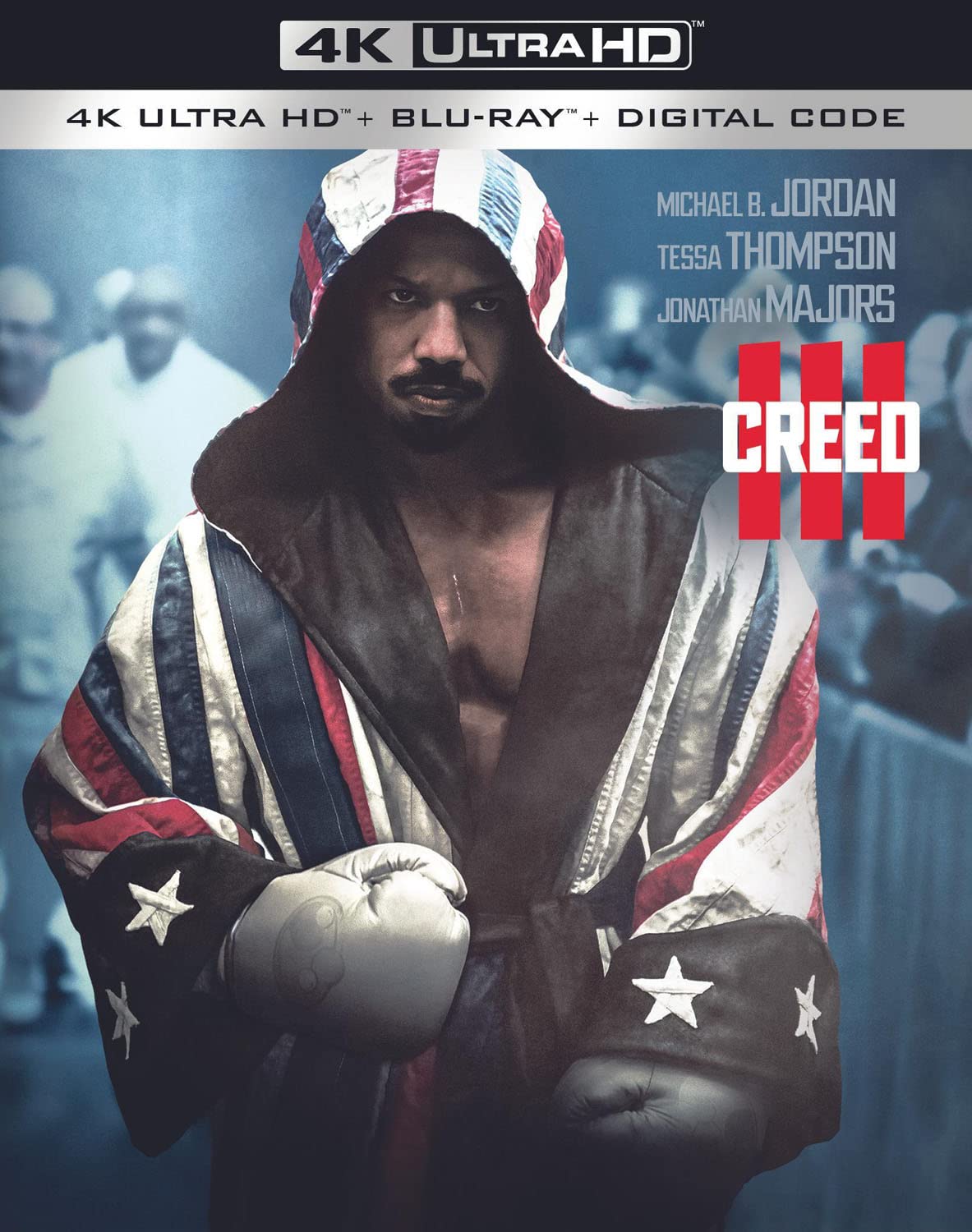
One of the best things about this job is that we get to see some of the up-and-coming talents as they evolve into superstars. I was lucky enough this week to get a double dose of one of the most dynamic young stars out there. Of course I'm talking about Jonathan Majors, who plays US Navy aviator and hero Jesse Brown. Just one night after watching the UHD/4K disc for this review, I was treated to my second dose of Majors at a press screening for the upcoming Creed III, where Majors plays the antagonist Damien Anderson. The roles could not have been more different, and Majors stole every scene in both films. I already can't wait to see him once again. I missed our screening of the new Ant-Man & Wasp film, so I have his portrayal of Kang to look forward to. The buzz I heard was that he had been the best part of the film, and I believe it after Devotion and Creed III. I'm sure there'll be more to say about this talented young actor, but let's talk about Devotion out on UHD Blu-ray in 4K from Paramount.

"King Kong ain't got nothing on me."

Training Day stars Academy Award-winning actor Denzel Washington in the role of Alonzo Harris. Harris, who is one of the meanest, baddest cops in the city of LA, is a person who cruises the streets in his customized Caddy. Harris, in one of the film’s opening scenes, meets Jake Hoyt (Ethan Hawke), a young cop whose dream is to be promoted to the elite narc squad. Naturally, this is Jake’s first day of training, and he is thrown into the arms of Harris. Alonzo tries to show him the streets so he can understand everything. He has Jake smoke pot just because he can. In one interesting scene, possibly Alonzo being a tough-ass to Jake, he doesn’t arrest two rapists like Jake wants to, but instead, proceeds to beat the living crap out of them.

“We deal in lead, friend.” 

In the fall of 1956, Anthony Quinn watched a special screening of Akira Kurosawa’s The Seven Samurai and had an epiphany: this Japanese masterpiece, inspired by the great American westerns of John Ford, would, itself, make a great American western. Quinn acquired the rights and contacted his then close friend Yul Brynner and pitched the idea of him playing the bad guy and Brynner the good guy. Brynner screened Kurosawa’s film and called in producer Walter Mirisch, who in turn contacted director John Sturges (Bad Day at Black Rock, Gunfight at the OK Corral, The Great Escape). Sturges loved the concept and immediately set about acquiring the rights, ultimately forcing Quinn out of the picture. Quinn sued, but lost.

"Life is not like the movies."

Maybe sometimes life is exactly like the movies. You know the old phrase of art imitating life and that kind of thing. That's exactly the territory that's covered in Steven Spielberg's latest film The Fabelmans. It's an autobiographical film where the names are changed to protect both the guilty and the innocent. It's also the first time that Spielberg has directed his own writing in over 20 years. In those 20 years Spielberg has become something of a moviemaking machine, and I think he felt it was time that the machine walked away from the spotlight for a minute and allowed the man behind the machine to show his face again. It used to be about heart; lately it's been about box office, and more recently it's been about surviving after the hit the industry took with COVID. I think Spielberg had a lot of things to get off his chest, and it looks like he might have found the time and place to do just that. While the film is a love letter to people who still think movies are a kind of wizard's magic, it was also a little bit of therapy for this particular wizard. Like all autobiographies, it's not really finished, and that's the most profound takeaway I had when the film ended.

This may come to a surprise for some, but there was a time that comic book movies just weren’t taken seriously. We had Richard Donner and his Superman The Movie film, and then there was Tim Burton’s take on Batman.  Every other movie that was based on a comic book property was treated as cheesy camp fodder that no one took seriously. Wes Craven’s attempt at adapting Swamp Thing was slightly impressive for the time, but in retrospect I’m just not really a fan of the film despite how much I like the DC character. As for the sequel, The Return of Swamp Thing, I know I’m in the minority when I say how much I enjoy this camp classic.  The first Swamp Thing I felt took itself too seriously and was lacking in the fun practical FX department, but to be fair, it also had a low budget and felt the need to be an origin story. Helming the sequel is one of the B-movie workhorses of the industry, Jim Wynorski, who is responsible for the 80s kill-bot classic Chopping Mall. It’s time to return to the bog and deep dive into the camp classic from 1989, The Return of Swamp Thing.

The film wastes no time getting things started when a group of hunters are attacked by Leech Man in the swamp, and it is Swamp Thing (Dick Durock) that comes to the rescue.  I’m a fan of these practical FX suits, and just seeing this fun showdown in the film’s opening minutes definitely sets the tone for the rest of the film. If this sequence leaves you groaning and rolling your eyes, well, to be fair, this film just isn’t for you.  But if you like your old TOHO man-in-suit battles, and enjoys some goofy B-cinema from Roger Corman or Lloyd Kaufman, then this film you are going to eat up.  From the get-go we know this film is very tongue-in-cheek, and sure, I one day want to see a straight-up horror adaptation of the character, but till then, this is what we got.

"On the day America remembers its dead, a special salute today for the war dead in Vietnam. An American serviceman who died there took his place today in a place of honor, The Tomb Of The Unknown Soldier. Almost 10 years after the last American left Saigon, the men who fought in Vietnam got their parade. Muffled drums and dirges. A coffin and a flag wrapped in plastic to protect it from the rain. Families of the men still missing in Vietnam waited for the coffin and remembered. They wonder if their sons are still alive and why the world sits back and allows the Vietnamese government to flagrantly violate the Geneva Convention. Rumors of physical and mental torture have made the wait more agonizing."

If the story sounds somewhat familiar, there are two reasons for that. The first Missing In Action film was released in 1984, so you've had about 40 years of imitations and knock-offs along the way. The other is that the film shares more than a little history with the Sylvester Stallone film Rambo: First Blood Part II. When Sly was shopping around his original ideas, Cannon Film Group was one of the places that listened to the pitch. So it's not a complete coincidence that the films went into production at the same time, with Missing In Action beating the Stallone vehicle to the box office by a few months. Both films did well, and they started a genre of war films that involved rescuing Americans still missing in Vietnam. It was in the early 1990's that the plight of missing servicemen in Vietnam was brought to the public's attention. Ronald Reagan gave it a bigger voice than had been given earlier, and he made it a point to address the issue. It shouldn't come as much of a surprise that Hollywood was on it as fast as they were. The franchise would become one of Chuck Norris's more iconic franchises, and the rest is, shall we say, history. Now Kino Studio Classics have brought the original three films together in a much deserved Blu-ray collection.

I get it. At first glance Ghost Warrior seems like a movie that is easy to disregard, but if you are looking to step outside the mainstream and dip your toe into the murky waters that is B cinema, Ghost Warrior is a heck of a fun place to start. The film is produced by Charles Band. He’s pretty much royalty when it comes to B cinema. His biggest claim to fame is the creation of Full Moon Features, and if you were around in the mom and pop video store days, you more than likely passed plenty of his work on the video store shelves. Movies like Puppet Master and little gems like Sorority Babes in the Slimeball Bowl-O-Rama were Band’s bread and butter, and he’s been successful enough to produce well over 350 films. When it comes to Ghost Warrior, this is before Full Moon became notorious for low-budget horror, but this film does show that he could produce a quality film on a thin budget and have a running time of only 81 minutes.

The film opens up in Japan with Yoshi (Hiroshi Fujioka) as a samurai attempting to protect the woman he loves, but in the process he falls from a cliff and into a frozen lake where he remains frozen for 400 years until he is discovered by a pair of hikers. This opening sequence is a good looking sequence, and that is thanks to the cinematography from horror great Mac Ahlberg. Let me take a moment to just say that it is criminal that Mac Ahlberg isn’t a household name with horror fans, Just to name a few of the great horror films he shot: Hell Night, Re-Animator (personally my all time favorite horror film), House, From Beyond, and countless others. The look of this film elevates it to the point where it can hold its own with bigger 80s films released at the same time, and seeing the image cleaned up for this release, it looks really good.