Disc Type

Coming off the success of James Cameron’s The Terminator, just about every studio was looking to piggyback off that gold mine, and what followed was a parade of knockoff films that for the most part failed to match The Terminator in quality and in box office draw. One of those bottom-of-the-barrel knockoffs is the 1987 film Programmed To Kill, also known as The Retaliator. While in the 80’s this was a film that could be appreciated  in drive-ins and later on late-night cable, nowadays the unexpected draw for this film is that it has the late Paul Walker in one of his earliest roles playing Jason, the son of the film’s lead character, Eric Mathews (Robert Ginty). Former CIA agent Eric Matthews is hired to lead a group of mercenaries to rescue a pair of kidnapped kids from a group of terrorists. In the process of performing the extraction, Samira (Sandahl Bergman), one of the terrorists, is critically wounded. For some reason, the mercenaries bring Samira with them. Samira is then brought to a group of government scientists who do experimental brain surgery and in the process turn her into a cyborg with one goal in mind, to use her to eliminate the head of the terrorist cell that she was a part of. This aspect of the film for obvious reasons has me thinking about Robocop. Even when we get to see things through her perspective, it is like a cheap imitation.

For the record, the first 40 minutes are a bit dull, but thankfully there is enough action in the sequence where the mercenaries rescue the kids to make the first half bearable. Where things do pick up is when the government first dispatches their cyborg assassin to kill the terrorist leader and her former lover. Things obviously don’t go as planned, and of course their robot assassin becomes a killing machine with one goal in mind, to eliminate all those responsible for making her what she is. The second half of this film is fun.  It’s a shame the filmmakers decided to play this so seriously, because let’s face it, the film is nowhere near the quality of The Terminator or Robocop, and the result is just unintentionally silly.

"What about the old American social custom of self-defense? If the police don't defend us, maybe we should do it ourselves."

Vigilante justice has always been a popular subject in our movies, television shows, literature, and even comic books. Batman is nothing more than Bruce Wayne out to get back at criminals like the ones who murdered his parents when he was a kid. Batman is the ultimate vigilante. And let's be honest. Haven't you ever once fantasized that you could cross that line and punish some injustice or another that crossed your path? The subject has been around since stories have been told. There are those landmark tales, however, that for some reason or another reach the soul of the masses. For good or evil? You can decide that for yourself. But one of those iconic vigilante films has to be the original Death Wish with Charles Bronson. There's some extra visceral element that isn't in so many of the imitators, remakes, or even sequels. The film has its own storied origin tale and long history of roadblocks before it ever hit box office gold in 1974.

The 1980's saw a resurgence of the themes and styles of the earlier film noir genre but with more modern themes and situations. Films like Alan Parker's DeNiro/ Rourke Angel Heart and Paul Schrader's Richard Gere/Laura Hutton American Gigolo are two of the finest examples of what has become known as neo noir. The genre has existed since the 1960's, but there was a certain style to these 1980's films that brought us the peak of this style of filmmaking. It crossed other genres as well. Ridley Scott's Bladerunner is absolutely the best science fiction representative of the style, and that film's impact on sci-fi going forward still has a huge impact today. It's all about style: lighting, cinematography, and themes that often blur the line between good and bad. No Mercy returned Richard Gere to the genre, and while No Mercy was a box office flop, it has endured more than some from the era, and now Kino Lorber gives us a chance to revisit one of the better examples of neo noir on Blu-ray. It's worth a look, and I'm going to tell you why.

Richard Gere plays Chicago detective Eddie Jillette. He and his partner Joey Collins (Basaraba) have been undercover at a car wash for several days. They are getting inpatient for a good bust and end up rushing into an arrest that nets them a simple pot dealer. They cause a lot of damage making the pop, and the result is more than a little disappointing to the brass. Things appear to turn around when the perp claims to have been contacted about doing a hit. He has a meeting that night, and so Eddie decides to leave the brass out of the picture and stand in for the hitman, who hasn't met the contact yet. He shows up at the meet where he's confronted by Allan Deveneux, played by William Atherton, and his "girl" Michel Duval, played by Kim Basinger. Eddie decides to act like a tough guy, and it all ends up with more mayhem and his partner getting killed. Now he wants to go to New Orleans where the hit was supposed to take place and track down the people who killed his partner.

"My son dreamt of a better world. That's why he saved me. But the world was only a better place with him in it. Khandaq needed a hero. Instead, it got me. All this power. And the only thing I can do with it is hurt people. I will speak the word my son gave me, and I will give up my power. And when I do, you must ensure I never speak it again. Shazam."

Black Adam was a unique experience. It was an occasion where a being who kills without hesitation is viewed as more of a hero than those who exercise restraint while fighting for justice. This is a principle that was leaned into during the film’s marketing campaign, which for me generated a great deal of intrigue, and I was glad that it was not just a marketing ploy. The fact is that Black Adam is very much an anti-hero. However, he did not start out that way. He was initially just a supervillain, one that was and likely still is intended to serve as the primary antagonist to Zachary Levi’s Shazam. For this film, he embraces the role of anti-hero, which is in keeping with his comic book roots, which saw the character shift from villain to anti-hero. Simply put, he is a dark hero, someone you love watching even when he is doing morally questionable things. Who better to embody that idea than Dwayne Johnson. During his wrestling days, Dwayne Johnson, then known as The Rock, did stints as both a face (a good guy) and a heel (bad guy). Even when he was a heel, he was among the most popular superstars of that era. He could make you cheer for him, even when he was cheating. He had presence. And in Black Adam, Johnson very much calls on those talents.

"From the green hills of Vermont to the verdant canyons of Arizona, people all over the country are beginning to realize it's nearly over. We have almost beaten COVID, and the best news of all? Things are finally getting back to normal. Infection rates are at an all-time low. New stronger vaccinations have ebbed the tide. And we humans are cleaning up the mess and finally getting on with our lives But as we start to get back to our jobs and schools, one question remains: What lingering effect will the pandemic have on our children?"

This has been a tough year for everyone. Productions all around the world have been uprooted because of the pandemic. I guess I thought there might have been one place on this planet that was safe. OK, I made that last part up. We always knew that South Park was going to have a field day with COVID. Let's be honest; the amount of material for the irreverent show is simply off the scales. There's nothing like a global catastrophe to bring out the sharp wit of Trey Parker and Matt Stone. The pandemic meant we saw the long-running animated series limited just like everyone else. So instead of a 10-episode run, the 24th season of South Park was made up of two double-length "Pandemic Specials", but just for whats and giggles, let's call it South Park The Complete 24th Season, and then there were two Post COVID specials, and that's what we have next, a look at it in Blu-ray.

I am not usually into serious zombie movies or television series. I am not a particular fan of The Walking Dead or The Night of the Living Dead.  I do allow exceptions for, say, the Resident Evil series, or perhaps something funny like Shaun of the Dead.  So the first time I saw Paranorman probably about half a dozen years ago, I wasn't expecting much.  Thankfully I did not let my biases creep in, and to be honest, quite enjoyed myself.  So I was very excited when I saw the 4K slide across my desk.  Let's dive in.

This is a feature presentation.  We join a horror movie already in progress.  There are monsters, lost of squishy stuff, and some bloodcurdling screams.  Then the zombie goes munch munch on the brain matter of the blonde heroine.  Rumor was that it was far from satisfying.

I grew up hearing about Bob Hope and Lucille Ball. It was more about his television credits and hosting accomplishment. I’d say hosting the Academy Awards 19 times, which to my understanding is a record that still holds up to this day, is something to be proud of. Hell, his next closest competitor is Billy Crystal, who is still ten behind him. Then there is Lucille Ball, who is obviously most notable for her popular television series, I Love Lucy. I hear about these comedic icons all my life and now through Fancy Pants, the second of four films that these two collaborated on. I got to see them in action. And while there is much about the film’s brand of comedy that went over my head, it was easy to see the appeal of these two, as individuals and as a comedic pairing. Based on a musical by the name of Ruggles of Red Gap, Hope stars as Humphrey, real name Arthur Humphry, a struggling American actor masquerading as British to be part of a British acting troupe. When another British actor enlists the cast to pose as an aristocratic family in order to impress visiting Americans, Effie and Agatha Floud (Ball), Humphrey, pretending to be the family butler, finds himself in the employ of the visiting family, as he is tasked with refining both Effie’s husband and the tomboyish Agatha. While attempting to provide the two with a measure of culture, sparks begin to fly between Humphrey and Agatha, but their budding relationship may be threatened by his false identity. Meanwhile, a misunderstanding of Humphrey being a “gentleman’s gentleman,” leads the rural townsfolk to mistakenly believe him to be an aristocrat. Humphrey finds himself forced to maintain multiple deceptions: he has to pretend to be a British butler for the Floud family while also pretending to be a politically savvy Englishman for the townsfolk. All of which becomes further complicated by a visit from President Theodore Roosevelt.

The plot was a bit busy for me at times. However, I did enjoy watching Hope as he juggled what amounted to be three characters in one role. To his credit, I do believe he was convincing in each performance. As they were meant to be humorous and he was expected to struggle to maintain the lie, this worked to his benefit. Ball had it a bit easier, but even so her quick-wittedness carried the dialog for me. She is surly and sarcastic, which are traits that I hold in high esteem. My knowledge of Ball is limited only to the few I Love Lucy episodes that I’ve seen, but this role seemed to play right in her wheelhouse. The film is a bit campy at times, such as when Humphrey samples the punch which is so spiked that his breath made a portrait of the Leaning Tower of Pisa stand upright. This is a bit cheesy and over-the-top. Even so, it is in keeping with the film’s slapstick nature.

LAIKA Films has produced some amazing movies which have elevated the wonderful world of stop motion animation.  Paranorman, Boxtrolls, Kubo and the Two Strings, and Missing Link (all underappreciated by mainstream movie audiences).  But one movie stands above those fine films and is the one for LAIKA that started it all.  Coraline.  Today, I received the Steelbook edition (along with Paranorman) in brilliant 4K.  I can hardly contain myself.  Let's take a look.

As the credits start to roll, we see a doll being undressed as well as un-stitched.  Then that doll is filled up with sand and re-stitched.  A couple of buttons are carefully selected and hair is sewn-in.  It is finally thrust into the world.  Hey, that kinda looked like Coraline, who we will meet shortly.

Over the past decade we’ve seen a resurgence in reboots, remakes, and anthologies, so it isn’t much of a surprise that the beloved horror anthology Creepshow would get the reboot treatment. To be fair, this is an extension from what the first films set out to be, though the big difference is instead of just being a film with a few stories, it is now a TV series, each episode containing two tales to horrify and entertain. When I first heard about the series, I was cautiously optimistic. The first two films I consider classics, as do many other fans of the horror genre.  Then there was that third Creepshow that I feel we all just want to forget and pretend never really happened. Without George Romero being around, I just wasn’t even sure I’d want to see a show that could possibly just water down everything that was great about the films and simply turn out to be a cheap imitation.  The first two seasons of the series I enjoyed, and they offered plenty of promise for things to come. How do Greg Nicotero and his creative team deliver on their third season endeavor?

Episode 1 is a bit of split bag. The first story, Mums, is a fun little revenge tale that involves some carnivorous plants, and the second story, Queen Bee, is a bit of social commentary about fans idolizing their celebrity heroes and going a bit too far in the name of fandom. The revenge aspect of Mums certainly makes this a fun story. I don’t want to spoil much with it, but it is definitely the stronger of the two stories. My biggest issue with Queen Bee is the actual creature effect. This is one where less would have been more, because I simply wasn’t a fan of the creature design, and it just took away from the potential creep factor of the storyline.

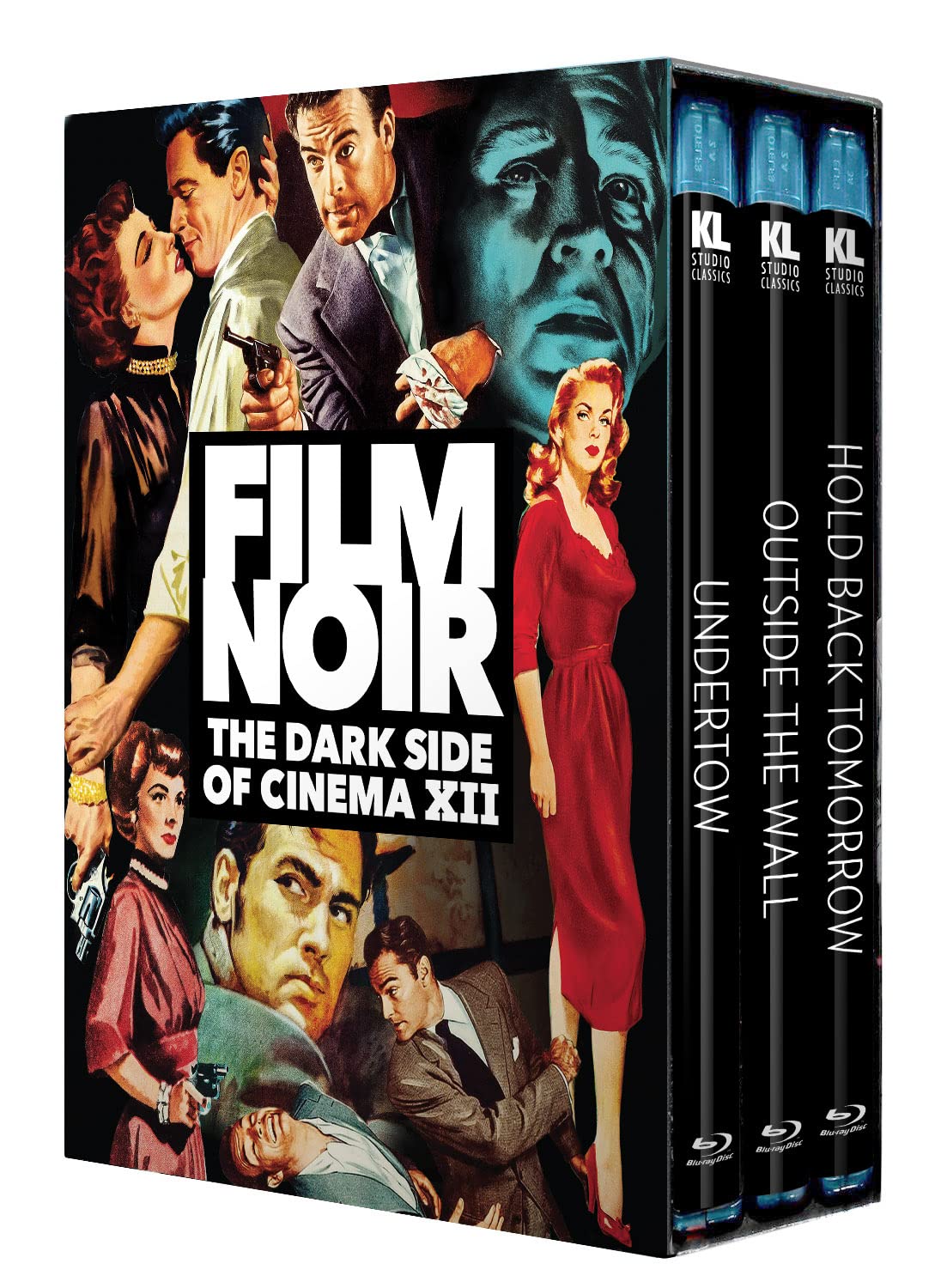
“In the 1940’s, a new genre – film noir – emerged from the world of hard-boiled pulp magazines, paperback thrillers, and sensational crime movies. These films, tough and unsentimental, depicted a black and white universe at once brutal, erotic, and morally ambiguous.”

Film Noir officially started in the 40’s, but the movement was well underway by the early 30’s. You can trace its roots to the Great Depression and the arrival of the dime pulp magazines. These were highly stylized, mostly mystery stories that provided cheap escapism for the masses who were not having a good time of it. Writers like Raymond Chandler crafted the mold that was easily transferred to the silver screen. These were low-budget films that were intended to be second billing with the more mainstream releases. They were shot quickly. Many have a very flat look, created intentionally. The lighting was often minimal, crafting odd shadows and unusual textures. The dialog wasn’t intended to be natural or realistic. These characters usually spoke in clichés and had names like Mac, Griff, or Dollface. There was often a shade of gray to these characters. Good and evil were not always so clear-cut. Gangsters became common themes of the genre. And while the dialog might have been cheesy, the cinematography was often gritty and almost ultra-realistic. At times the films played out like documentaries, often including narration. The narrator would always be a voice of authority; often film-reel stars were used. The films were heavily influenced by German Expressionism, perfected by the likes of Fritz Lang in the silent era and carried over to more modern themes. The films always contained a steady supply of stock characters and actors. It was smoky rooms and neon lights. It was a reflection on the times. It was Film Noir.