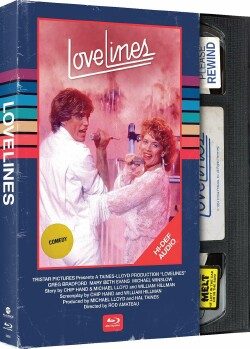
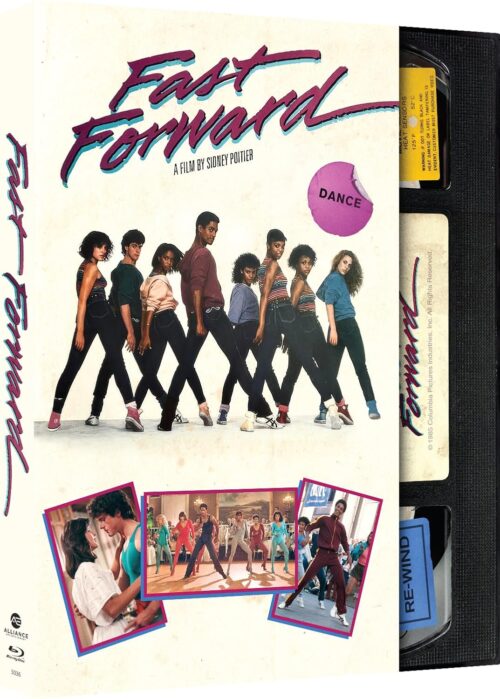
Disc Type

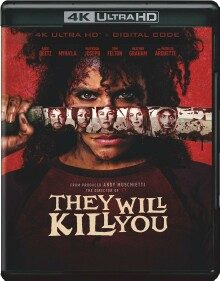
"It's funny how much training I've had in taking a life. Years with the 3rd Calvary, the Regiment, Special Ops. A lifetime of experience. I can tell you to the exact second how long it will take you to bleed out if I make an inch-long incision in your carotid artery. Tactics. Weapons. Munitions. Covert ops. Black ops. Battlefield triage. The logistics of death. I've studied it all in great depth and detail. I've been taught all there is to know about taking a life."

If any of this sounds like something you've heard before, you're not too far off. It calls back to Liam Neeson talking to the guys who are in the process of kidnapping his daughter. He's telling him all about that "specific" set of skills he happens to have to make their brief remaining lives pretty brutal. That's what we get from Milla Jovovich. She's a highly trained killer, and now some bad guys have kidnapped her daughter. She gets there almost in time to stop it, but just not quick enough, and you don't have to read this or any film synopsis. You don't need to read any spoilers to know you're about to go through 90 minutes of this one-woman army trying to save her daughter and leaving a lot of gory destruction in her wake.

“Hello, Sidney. Did you miss me? Nice little town you found, you and your pretty daughter. Reminds me of where we grew up.” 

Honestly, after the last film, in which the creators broke the tradition that the three O.G. characters (Sidney, Gale, and Dewey) always made it to the final credits, I thought was going to be the end for the franchise after all. Because if there was one thing I knew, which had held true for five films, was that those three were not to be touched. So when the powers that be made the decision to kill off David Arquette’s character (I know I shouldn't be revealing spoilers; however, if you haven’t seen the previous film, you shouldn't be reading a review for its sequel, so sorry not sorry), I was of the opinion that there was nowhere else for the story to go.

“So, you wanna give that thing to a good person so they can save the world. I understand. But in order to save that good person, you’re gonna have to give it to a really bad person. In all my years, I've only ever seen one man come out on top in Vegas. We go to do it like he did. He rigged the game.”

I know what you might be thinking. It was going through my mind as well. It sounds a little bit like "Save the cheerleader. Save the world." Admit it, that's exactly where you were going with this thing. Even at its best ... or worst, Heroes was never as intense or dark as the video game television series adaptation of Fallout on Prime. With all respect to Zachary Quinto and his portrayal of Syler, Syler would be running home cryin' to mama if he ever came across Walton Goggins as The Ghoul in Fallout. Don't believe me? Now's your chance to find out, because Alliance and Prime have teamed up to bring the second season of Fallout to home video.

Lucille Ball was originally a radio personality starring in a popular comedy, My Favorite Husband. It was here that she began to develop the character she would continue to play for decades in television through several shows, all bearing her name in one form or another: I Love Lucy, The Lucy Show, Here's Lucy, and Life With Lucy. See the pattern? Anyone who was a fan of the radio show would instantly recognize the red-haired actress even though they had never actually seen her on the radio. That exaggerated cry was already a staple of her physical comedy, even when she couldn't be seen. She had also toured for many years with her real-life husband Desi Arnaz. When they could not convince a network to film a pilot of a show featuring both of them, they made it on their own dime. CBS was so impressed with the pilot that they reimbursed the couple, and in 1951 I Love Lucy hit the airwaves.

"Jack Shindo has made it back alive from Mars. but his reappearance will raise more questions than it answers. He has a secret that cannot be shared. He can tell no one that he is Ultraman, a savior from the stars."

Ultraman is a huge part of Japanese culture and pretty much has been since the original live-action show in 1966. Perhaps Godzilla started the ball rolling, but Ultraman brought us these monsters on a regular basis. In Japan, Ultraman is like our Superman. He’s an iconic hero and a huge part of the pop culture. Since the 60’s he has appeared in many forms, most of them animated. But it is this 1966 series that made a ton of us kids fall in love with him and an entire genre. Yes, there were many from the era: Space Giants featured a giant fighting robot who fought monsters and sometimes converted into a spaceship

"Welcome to Derry, home of Paul Bunyan."

I can still remember the It miniseries from a few decades ago. I thought Gary Oldman was just wonderful as Pennywise the clown at the center of Stephen King's novel of the same name. What I really never took into account was that being wonderful really wasn't the point of the character at all. With much love to Oldman and the many characters he's brought to life over the years, I never realized until 2017 was who Pennywise the clown was truly meant to be. Andy Muschietti and his sister Barbara went to work on a two-film attempt to bring It back to life, this time on the big screen. Like most people I was pretty skeptical of the whole thing, and a lifetime of failed Stephen King films that never lived up to his written word was the evidence I cited. Can't be done, I said. They'll only run it into the ground to be resurrected badly as if it had been buried in King's Pet Semetary.

“You are a pig!” / “I’m a rural farm boy. It’s part of my charm.”

The quote above really sets the tone of The History of Sound (2025). It is a charming movie, a cinematographically soft motion picture, subtle and intimate in execution. It was directed by Oliver Hermanus and written by Ben Shattuck, premiering at the Cannes Film Festival on May 21, 2025. The movie has since won three awards and been nominated nine times. After watching it, I can see why, and I immediately knew I wanted to write an affectionate review for such an affectionate film. That said, I could write what the movie was about, and I could write what the movie was really about. The nuance in interpretation may sound minute, but worth exploring to understand in depth. The film is a soft gay romance, showing how two men fall in love. It centers around these two men, Lionel (Paul Mescal) and David (Josh O’Connor), although the story is essentially told from Lionel’s point of view. It is set at the brink of World War I in 1917 when David is drafted into the military.

Lurker (2025), written and directed by Alex Russell, presents itself as a subliminal film that examines the toxicity of pop culture through an allegory of parasitism in the emergence of fame. At its core, it leans into themes of parasocial obsession, identity construction, and celebrity as a kind of social system. Rather than relying on spectacle, the film grounds itself in perception and lived experience. This comes through most clearly in its use of diegetic characterization, where elements within the film are not just stylistic choices but extensions of the story itself. One of the more interesting ways it does this is through its soundtrack. The film features a bi-layered original score by Kenny Beats, made up of both non-diegetic music and diegetic tracks performed in-character by Archie Madekwe as the pop star Oliver. At first, the songs can come off a bit corny, but they start to click as the film unfolds. “Sweet Talk” plays into charisma and appeal, “Snakes in the Garden” taps into paranoia within the entourage, “Domicile” reflects in-group dynamics, and “Love and Obsession” leans directly into parasocial tension.

“We just did what we're programmed to do. Human or AI. We all make mistakes ... and we learn.” 

This film feels like what would happen if Minority Report and Source Code had a baby. Chris Pratt and Rebecca Ferguson give it their all, and while the film can be exhilarating at times, it wasn’t a mind-blowing experience. The premise is as follows: in the not so distant future (2029 to be exact), Los Angeles establishes Mercy Capital Court in response to a surge in crime using artificial intelligence (AI) judges to try defendants for violent offenses. To assemble evidence, all devices are registered to the municipal cloud to allow the AI judge to pass judgement. The AI judge also gives the defendants all available resources to find and provide all the evidence needed to prove their innocence in 90 minutes or be executed via a sonic blast. Pratt’s character finds himself in that very predicament, facing execution for the alleged murder of his wife.

It's Planet Of The Apes meets Cujo, and it sure isn't pretty. Part of me actually loves this kind of thing, but it has more to do with when the film is than how good or bad the film happens to be. For a lot of critics, we have just spent the better part of our last year being inundated by awards bait in one form or another. Everyone wants your attention right then. I have to vote in two guilds, and honestly by the time it's over and I've managed to cram 60-70 films or more into my holiday activities, I'm more than a little burned out. So after that little break as the new year begins, I always welcome those first films that asks nothing more of me than to sit there and soak it in. There aren't going to be any Best Picture nominations here. No one is going to be buzzing about Primate when we start talking Best Actors and Cinematography.