Comedy

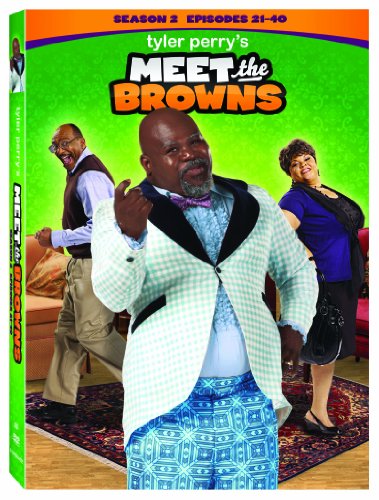
Season 2 of the Tyler Perry-created series continues misadventures of Leroy Brown (David Mann), who, last season, opened up a seniors’ residence. This season has all the characters firmly in place, and the stage is set for no end of misguided schemes and misunderstandings, all of which conclude with lessons learned and heartstrings tugged.

If the above sounds a little generic, that’s because so is the series, and furthermore, I’m referring to an archaic quality to this series’ generic nature. Put another way, this is an unapologetic (though it should be deeply ashamed) throwback to situation comedy’s dismal era of the 1980s. The performances broad, unfunny caricatures, all squealing yelps and bugging eyes. The laugh track comes in on every other line, underscoring just how desperately unfunny the dialogue is. As for the plots, I cry mercy. Brown hopes to get rich marketing his family’s barbecue sauce, Brown becomes an over-demanding patient after being grazed by a bullet, Brown wins twenty bucks in a lottery and becomes a gambling fiend, and so on and so on and so forth. Storylines that would creak even if the main character were named Ralph Kramden, overlaid with thudding sanctimony and Real Social Issues.

"This is a simple story, but not an easy one to tell. Like a fable, there is sorrow. And, like a fable, it is full of wonder and happiness."

Roberto Benigni has been somewhat of a staple in Italian cinema for nearly 40 years. He has a solid reputation not only as a talented actor but as a writer and director, as well. He has been known mostly for his comedy, and that's exactly how many people see Life Is Beautiful. On first glance you might read the description and be somewhat skeptical about watching a comedy about the Jewish Concentration Camps during World War II. But Benigni manages to mix just the right amount of whimsical comedy into a very serious backdrop. It isn't very easy, and I know of only a handful of cases where serious material has successfully translated into comedy. Hogan's Heroes and M*A*S*H stand out as notable examples.

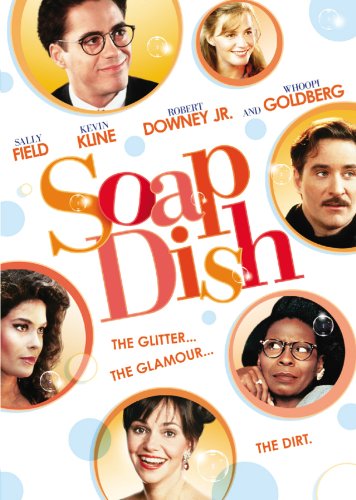
An aging soap opera starred, played by Sally Field, is the target of a jealous supporting cast and a conniving producer (Robert Downey Jr.). The head writer of her show (Whoopi Goldberg) seems to be the only ally she has as a former love's character (Kevin Kline) is recast to throw her off her game, along with a mysterious family member barging into her world and work life.

Soapdish relishes in Soap Opera story tactics just as much as it wishes to lampoon them. Twists, secrets, romance, backstabbing, tears, sex changes, melodramatic speeches...all of these elements are parodied in the show within the film, but also work their way into the real-life drama of these characters. The success of this film relies on being able to display how ridiculous soap operas can be while still selling the audience a complete (and often over-the-top) soap opera tale. This is truly a soap opera world as nothing is grounded in reality (Abandon all hope, Vittorio De Sica fans who enter here). The plot twists are painted in broad strokes and the physical comedy bits are motivated by pure nonsense. That considered, it is a truly funny journey peppered with some outstanding yet subtle visual gags (constantly panning past beefcake actors in the production hallways for example).

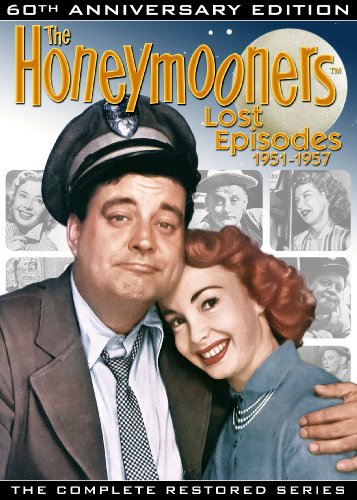
It's hard to believe that one of the most popular comedy shows of the 1950's was not really a show at all, at least not in the way that we think of a television series today. The show began its life in 1951 as a segment on the popular Cavalcade of Stars. At that time only Jackie Gleason and Art Carney starred in their familiar roles. Alice was played by Pert Kelton.  The series took its more recognizable look when it became part of The Jackie Gleason Show in 1955. That's also when Joyce Randolph joined the series as Trixie Norton. The series would take up a half hour of the slot. The second half was taken up by a larger variety of pieces, usually a series called Stage Show. The show would come and go, with other cast members coming and going over time. Even Art Carney had left The Jackie Gleason Show at one time, only to return in 1957 to the role. The show's history is a complicated one to which entire books have been devoted over the years. It wasn't until syndication that the series was really a show unto itself. The original 39 episodes were joined with nearly 70 re-edited versions of the other various incarnations of the show have made up what most of us today think of as The Honeymooners. The final original versions of the show ended in 1971; both Audrey Meadows and Joyce Randolph were gone by then, replaced by Sheila MacRae and Jane Kean respectively.

But this show that wasn't really a show had legs. The syndicated versions became hugely popular, and new generations of fans were being indoctrinated with each new package. The show even survived on pay television at Showtime for a while in the 1990's when the 70 newly-formed "Lost Episodes" first aired. But the fever just never died. The show would influence a large number of series that would follow. Even the animated world of cartoons wasn't safe. The Flintstones would come along and become a prehistoric cartoon show that was basically the same down to the characters. Fred and Barney couldn't have been closer to Ralph and Norton if their names had been the same. Today, comedians constantly recall The Honeymooners and Jackie Gleason as their inspiration. To more than one generation of television viewers, Gleason really was "The Great One".

We all remember Ed O'Neill as Al Bundy from Married With Children. It's an iconic role that he'll never be able to shake no matter what he does for the rest of his life. After that series ended its 11-year run, he even attempted to get out of comedy and take more dramatic roles. I'm sure there was a deliberate intent to try to distance himself from Al. It's not that he likely didn't love playing the role. He just wanted to avoid getting forever typecast in the mold.Those efforts weren't all that successful. But now he's back where he belongs again in a pretty solid sit-com. He's not playing Al Bundy any more, although you won't have to look very hard to find some of Bundy in Jay from Modern Family.

I have become somewhat frustrated over the television comedy genre for a lot of years. It seems that they all take the same path no matter what the show's actual concept might be. It's usually the same jokes, just in a different environment. I don't have children, but I expect that it must be near impossible to sit down and watch a comedy with your family any more. If I were a stranger visiting this planet for the first time, I would quickly come to the conclusion that sex is about the only thing that's funny here. Thank God that once in a while something fresh comes along and swims against the current tide of innuendo and toilet humor. Modern Family is the kind of show you can enjoy with the entire family. And guess what? It's pretty darn funny on top of it all.

John Candy has always been one of my favorite movie comedians. Something about Candy, regardless of whether he was doing a sketch in SCTV, playing Uncle Buck, or a private investigator in Who’s Harry Crumb, he just seems like a guy that is the friendly uncle everybody loves. It could be the meanest character on paper but he comes across as a big teddy bear. Today, we explore a title called Planes, Trains and Automobiles. He plays a Shower Ring salesman, that sounds like a teddy bear to me.

New York City, two days before Thanksgiving. Neal Page (played by Steve Martin) is busy waiting on his boss to make a decision about which cosmetics ad to go with. The guy just can’t make up his mind and Neal has a 6:00 plane ride to Chicago to catch. Finally Neal is able to leave and runs out the door and goes down the elevator out to the street. There is a very long line to deal with to get a cab and it looks like Mr. Page is going nowhere fast.

Leslie Nielsen was once a serious actor. He starred in one of the most important science fiction films ever made, Forbidden Planet. He was a staple on the 1950’s television dramas. His unique features and voice made him a busy character actor all the way until the 1980’s. That’s when the cornball kings Jim Abrahams, David Zucker, and Jerry Zucker cast him as the “don’t call me Shirley” Dr. Rumack in Airplane. From that moment on Nielsen went from being a serious actor to becoming the face of an entire comedy genre of corny films. If there was a subject to spoof throughout the 80’s and 90’s, you could count on Leslie Nielsen having a prominent role. Two years after Airplane he had a television series, for all of 6 episodes. It was a cop show spoof called Police Squad. In the show he stared as Detective Frank Drebin, a modern day Inspector Clouseau. He would bumble his way through the show’s unique cases, always finding a way to stumble on the solution. The only case he couldn’t crack was how to get people to watch the show. The brand of humor that Nielsen is now famous for has a very narrow niche. You either get it or you don’t. You either like it or you don’t, and most of America decidedly didn’t.

So what do you do with a miserably failed television show that ran just 6 episodes? You make it into a series of major motion pictures, that’s what you do. Six years after the series was gone and forgotten, the Abrahams/Zucker team decided to take it to the medium they’ve had so much success in already. What didn’t work at all on television appeared to have new life at the box office. The film brought in an impressive $79 million, which was a phenomenal number for a comedy in 1988. It went on to become the 8th highest grossing film of 1988. With a production budget of only about $20 million, this was a cash cow Paramount couldn’t afford not to milk. They did indeed go to the well twice more, with the bottom falling out on the third try. The audiences loved it, but they could only take so much.

The spoof film means something different to audiences today than it did in the early 80s. Anything, if done enough times over, starts to become stale. For instance, the first Scary Movie, while having a couple of really lame scenes, was actually pretty funny overall. With each sequel, however, came diminished returns. At this point, I wouldn’t be surprised to see a film that spoofs spoof films (though I’m not sure how one would do that).

Airplane!, however, was the first of the genre. Not only that, but the argument could also be made that it is the best. This film, from the people responsible for the hilarious Kentucky Fried Movie, was a send-up of the popular airplane disaster films of the 60s and 70s. At the time, nobody really knew how to do a film like this, or even how to describe it. In fact, it was pitched to the studio as “Animal House on an airplane”, which of course it was not. However, the studio bought in to the idea, and a comedy classic was born.

Ever wonder what the kids of South Park might be like if they ever made it to adulthood? While I’ve not seen that many episodes of the FX series It’s Always Sunny In Philadelphia, that was the first observation that came to mind. These are the South Park kids all grown up. They’re crude, raunchy, mean, and most importantly, they are as politically incorrect as ever. If you need an example, I can offer one right from one episode. The guys have a Christmas tradition that dates back to their childhood of throwing rocks at moving trains. An episode I caught a while back had two of the guys going to an abortion rally because they suspected that pro-choice chicks gotta be easy. Sound like anyone we know? If you love irreverent humor that’s not afraid to cross over the line, this F/X series has everything you’re looking for, and without those silly construction paper animation limitations. These are real dudes.

The best way to introduce you to the world here is through the characters. The Philadelphia setting and all of the other trappings really don’t matter. You could put these characters any place, doing almost any jobs, and the series would pretty much be the same. The actors and some cleverly written dialog really make the show.

Romantic comedies are the bane of most male's movie watching lives. Imagine everything that turns your stomach into sour grapes. A handsome leading guy, a wining leading lady and more holes in the plot than that one pair of underwear that you just can't get rid of. Well, despite the court restraining orders, despite the risk of self-mutilation, I review a harrowing title today named simply Love, Wedding, Marriage. May the gods help us through this one.

Love, it is a many splendid thing that causes men to act like complete idiots. Enter, Charlie (played by Kellan Lutz) who is on camera and trips over his tongue a bunch to proclaim his love to the woman of his life. Who is this woman you ask, well that would be Ava (played by Mandy Moore). We are soon treated to the wedding where Ava's father Bradley (played by James Brolin) leads her down the aisle while Bradley's wife, Betty (played by Jane Seymour) looks on.