Posted in: Disc Reviews by Gino Sassani on February 23rd, 2010
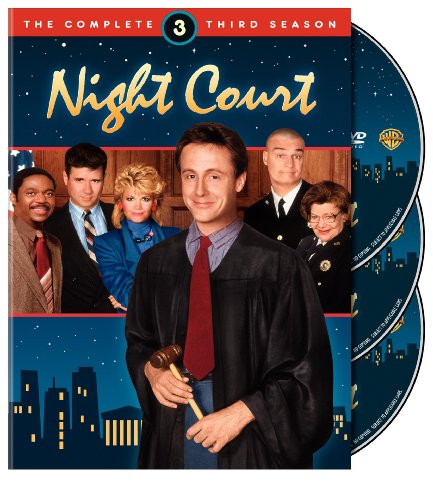
Night Court appeared on the docket at NBC in 1984 and was to last 8 seasons. If you thought it looked and sounded a lot like Barney Miller, you won’t be surprised to learn that a number of key people, including creator Reinhold Weege, came from that classic cop comedy. Several key elements of Miller can be found in Night Court. The themes are almost identical, with both beginning with an easily identifiable bass run. The most important imported element from Miller was the constant parade of the kookiest and craziest criminals this side of the Cuckoo’s Nest. From a hick farmer played by then beginner Brent Spiner to hookers with hearts, Night Court relied heavily on the eccentric character to provide most of its laughs.
Harry Stone (Anderson) is a young hip judge who almost blunders into a judgeship of a Manhattan evening session courtroom. The role appears tailor-fit for Anderson’s style of humor. The character even retained Anderson’s flair for amateur magic. He was always trying to bring levity to even the most dire of circumstances. Joining him in his courtroom was prosecutor Dan Fielding, played by the extremely funny John Larroquette. He was a material man with an overactive lust for the ladies. He was self centered and always looking to gain from someone else’s misfortune. He would often find himself having to suck up to the young judge, who he found too footloose with the law. His groveling always brought the judge a perverse pleasure. The court was presided over by two bailiffs. Bull was played by Richard Moll. He was a mountain of a man with a bald head. While he might look and act like a monster who would eat little babies, he was in fact, a gentle and often childish character with an IQ lower than his shoe size. His partner and mentor was Selma, played by the raspy-voiced Selma Diamond. Selma was a no-nonsense, say what she wanted to, chain smoking authority in the courtroom. Unfortunately, Diamond passed away after the second season. Replacing the gruff character and actress was Florence Halop playing Florence Kleiner, but she would only last this season. Charles Robinson joined the cast in the second year as the court’s new clerk. He was likely the most “normal” member of the cast. Throughout its run there were a rather large number of actresses to play the public defender role in the series. Eventually that role went to Markie Post, who kept it for the longest time. In season two it was Billy Young playing a very awkward Ellen Foley. The character never clicks with any of the others, and she would also be gone at the season’s conclusion.
Posted in: Disc Reviews by William O'Donnell on February 23rd, 2010
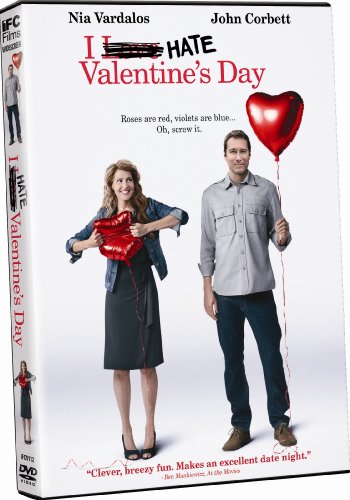
Nia Vardalos casts herself across from her My Big Fat Greek Wedding love interest James Corbett, in an attempt to rekindle the magic that was the unlikely Big Fat phenomenon. As star, writer, and director, the weight of the film falls onto her shoulders and thankfully she has enough carry to drag a rather sparse plot from beginning to end with a some genuine laughs.
Posted in: Disc Reviews by Gino Sassani on February 22nd, 2010
Remember the blaxploitation films of the 1970's? These films generally played on the ghetto stereotypes that would likely not be as well tolerated today. The films were populated with fur-adorned pimps driving in purple Caddys. The street language was almost indiscernible. The black population sat around drinking from large malt liquor bottles in brown paper bags. In a day where almost every potential racist remark is pounced upon, it's hard to imagine that this kind of thing could have existed at all. But the point was that these films weren't feeding into the stereotypes for the most part. They were making fun of them. They were showing us how ridiculous they looked when taken to such extreme. What's more, the films offered the first real star vehicles for so many talented black actors. Certainly, the genre has always had its detractors, but they never seemed to cause a stir among the members of black leadership. The truth is that these films no more depicted black culture than mafia movies depict Italian culture. It's just a lot of fun to poke fun. You gotta let your hair down, or frizz out, sometimes.
The genre was important during the time and its influence began to be felt in mainstream pictures of the era. Characters like these began to show up everywhere. Starsky And Hutch was a white cop , but their streets were often populated with these characters, most notably the Huggy Bear snitch. Even James Bond suspended his international fight with global domination crooks to tackle a gang of blaxploitation drug dealers in Live And Let Die. In the 1970's you couldn't get away from it. Some of these films became huge. Shaft and Super Fly became huge hits. The recently departed Rudy Ray Moore created Dolemite, a bad Kung Fu/kick butt and take names, F Bomb droppin' bad dude. There's no question that Moore's character was a huge influence on Black Dynamite.
Posted in: Disc Reviews by Michael Durr on February 17th, 2010
Recently, I got married to the most wonderful woman in the world. Well, the most wonderful woman I ever met anyhow. Her name is Sarah. Then I got to thinking, wouldn’t it be awesome if I included her every once in a while in my reviews? She’s very opinionated but she speaks from the heart. When our webmaster sent me New York, I Love You, I knew it was the perfect vehicle to introduce her to a mass audience.
Most of you are quite aware how I start my reviews, but this is going to be something of a departure. Traditionally, I start with a long narrative about the movie. We describe the movie and then I offer some quips and informative points after that. The problem is if I sit here and explain all of the ten stories presented then I might as well compile a book on the subject. I really don’t want to torture my reading audience like that.
Posted in: Disc Reviews by Gino Sassani on February 15th, 2010
So, this guy goes to see three rabbis....
No, that's not the start of some insensitive anti-Semitic joke. It's the rather offbeat idea behind the latest film by the Coen brothers. Of course, off the wall is business as usual for Ethan and Joel Coen. Fans of the brothers' work already know to expect the unexpected. You're likely not looking for the same kind of logical coherence that you might otherwise demand in your movies. The films often share a modern allegory to some classic fable or tale. There is certainly an element of a parable to this film in particular. It is not at all unlike the biblical tale of Job. Don't look for higher meaning in this tale of a man in search of a higher meaning. Instead, be prepared to become a fly on the wall in a life that is far from ordinary, yet anything but extraordinary.
Posted in: Disc Reviews by David Annandale on February 15th, 2010
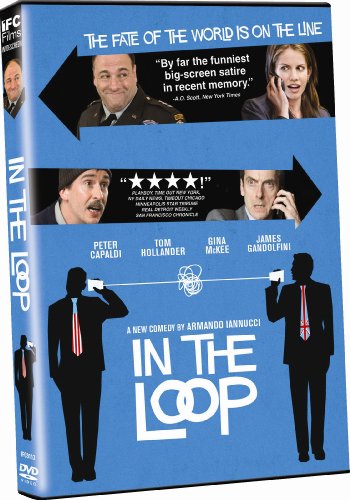
When the UK minister for International Development (Tom Hollander) has the nerve (not to mention lack of political acumen) to opine that war in the Middle-East is “unforeseeable,” all hell breaks loose. The pro- and anti-war bureaucrats in Washington see him as useful to their cause, and descend, talons outstretched. Meanwhile, the Prime Minister's Director of Communications (Peter Capaldi), a Scot who makes Don King look even-tempered and restrained, goes into apoplectic overdrive in his attempts to keep everything on-message.
Though this blistering satire leaves the precise nature, or even location, of the war-to-be is unspecified, it's pretty clear that what the film has in its sights is the collection of mangled information, doublespeak and unstoppable political agendas that led to all the fun and games in Iraq. Filled with sharply drawn characters, wonderfully creative profanity, and a bracingly cynical worldview. Not a film for the optimistic (or naïve, depending on your perspective), but the kind of black political farce that the British excel at – think Yes, Minister and House of Cards and you begin to have the idea.
Posted in: Disc Reviews by David Annandale on February 15th, 2010
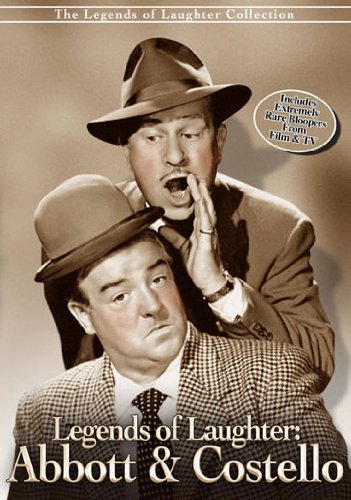
What we have here is, essentially, a great, heaping collection of public domain material from the classic comedy duo. The menu is as follows:
17 episodes of their radio show: The Abbott & Costello Show (1942-1949);
Posted in: Disc Reviews by David Annandale on February 1st, 2010
Before SpongeBob SquarePants, before The Family Guy, before South Park, before even The Simpsons, there was Mighty Mouse. This revival of the Terrytoons character was a short-lived, but creatively vital series that ran in 1987-88. It wasn't an adult show, like many of its spiritual successors would be, but it was something that hadn't been seen in the world of television animation in a long, long time: it was witty, smart, and expected its audience to be smart, too (and that includes smart kids, at whom the series was ostensibly aimed). However G-rated the show was, it also featured just the kind of manic humour and inventiveness you might expect from a collaboration between the man who brought Fritz the Cat to the screen (Ralph Bakshi) and (among others) the man who would shortly give us Ren and Stimpy (John Kricfalusi). If some of the look of the series is by now familiar (half of the offerings on Nickelodeon share its background design), this is, as Kricfalusi points out on one of the commentary tracks, where that look begins. The show might not have survived long, but creatively it cast a long shadow indeed, and having the entire wonderful series in one spot is a terrific treat. As far as the creative possibilities for TV animation are concerned, Mighty Mouse surely did save the day.

The menu features some pretty ferocious aliasing, which had me worried about the cartoons themselves. Fortunately, that concern was misplaced. The shows looks great, with only the occasional, very minor grain to deal with. The image is very sharp, and the colours equally strong. The series looks as good as, if not better than, it did on the day of its broadcast.
Posted in: Disc Reviews by Gino Sassani on January 29th, 2010
Madea's been everywhere. She's even been to jail. But I Can Do Bad All By Myself is not actually a Madea film, per se. She has a cameo, of sorts, but this film is based on a series of stage acts that Perry has collected under the single title of the film. So much of this movie has been out there on stage. I'm not really a fan of Perry's Madea character and the collection of films she/he's been involved in. I had a friend once who used to get them for another friend of his, and he used to joke about making me a copy. Now you know why we're not friends any more. But this film is very different from anything you've seen from the Madea character, or honestly out of any of Tyler Perry's previous film projects.
When the film begins, it looks like it's going to be another haphazard Madea adventure. She's asleep in her bed when she hears a crashing sound downstairs. Someone done broke into Madea's house. You're already starting to feel sorry for the crooks. That is, until we find out they are three young children. Apparently their parents are dead, and they've been living with their grandma, but she's been AWOL for over four days. Madea does the only thing she can. She feeds the kids, much to the discontent of Perry's other alter ego, her husband Joe. "You feed them and they keep comin' back," he warns. Once she's heard their heartwarming tale, she takes them to their Aunt April (Henson). April is working as a singer at a local nightclub but is ruining her own life on booze and an abusive relationship. Madea comes knockin' while she's trying to sleep and lays the bad news on the wannabe star. April's got no room in her life for three kids, and on top of that, her church has sent over a homeless Mexican named Sandino (Rodriguez) who needs a place to stay and can pay by doing jobs around the house. We all know from the beginning that grandma’s not coming back, so I'm not really spoiling anything for you there. April will be faced with making some changes in her life, both for the kids and for herself. It's through music and faith, and a little help from Sandino, that she manages to open her heart to her new family.
Posted in: Disc Reviews by William O'Donnell on January 23rd, 2010
Many of the original talents behind the popular Mel Brooks' spoof Spaceballs have not returned for this sort-of sequel, but its spirit of relentless parody and often corny schtick lives on. While it may not hold a candle to the original source material, this animated series has a few shining moments that will hopefully keep the diehard fans from being too offended.