Documentary

Ken Burns has achieved a rare feat in the world of filmmaking: he makes clean, concise, uncontroversial documentaries and yet has somehow become a household name, or as close as any documentarian can get in this society. It also depends, I suppose, on the ratio your household's television is tuned in to PBS compared to, say, Spike TV. Burns has made his name making huge, sweeping films that take in gigantic aspects of American history and culture, like The Civil War, Jazz, and my personal favourite, Baseball. His latest documentary, which he co-directed with Lynn Novick, ranks right up there with his best work. Prohibition is vast, covering a huge time period in American history, contains tons of detail, and still manages to be focussed, concise, and tremendously entertaining.

The first part, A Nation of Drunkards, starts its story before the Civil War. It sets the scene by painting a picture of a nation obsessed with alcohol. Saloons are such an integral part of the landscape that huge numbers of the working class and immigrant labourers were giving up most of their pay buying liquor. Spousal and child abuse was rampant, and Temperance Unions grew out of the need to protect and shelter women and children from abuse and neglect as much (or more) than they did out of religious zealotry.

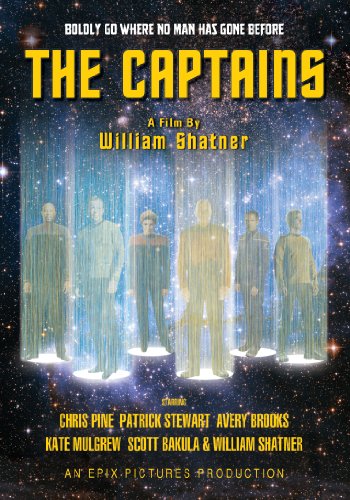
"Boldly go where no man has gone before."

Is there anyone out there who hasn't noticed that William Shatner the actor has become William Shatner the character over the years?  Give the man some credit for finding ways to reinvent himself. After Star Trek he was the only actor to find himself another regular television character and shakes the typecasting that most actors in the franchise have been victimized by. When TJ Hooker was gone he found a few other shows and ways to take advantage of what could have been fleeting fame. By the time he did Boston Legal he had completely reinvented himself as a somewhat humorous character and wonderful mate for James Spader. But all along there was and always will be more than a little Captain Kirk in the actor. And over time the two began to meld into a being that has been the fodder for jokes for most of the world. Shatner's laughing, too, but not in the way you might think. Shatner's been laughing all the way to the bank.

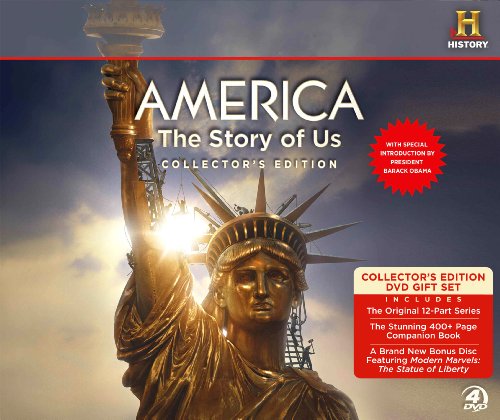
"We are pioneers and trailblazers. We fight for freedom. We transform our dreams into the truth. Our struggles will become a nation."

I was really looking forward to this release. From the moment I was made aware that it was going to be arriving here for review, I made a mental note to put it at the top of my viewing list. Fact is, I'm a history junkie, particularly American history. I taught the subject in AP and honors classes along with American Government and Law for over seven years. The History Channel is also one of my favorite places on the dial. There are many thought-provoking and informative shows to be found there to help you explore almost every aspect of history. I truly expected this to be one of those milestone releases. Unfortunately, it isn't.

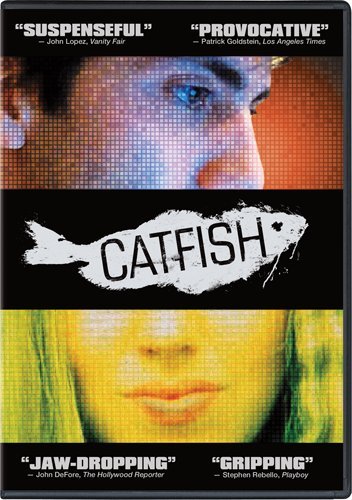
Two young filmmakers from New York city, Ariel Schulman and Henry Joost, start documenting the burgeoning relationship between their roommate (and brother in the case of Ariel) Nev and a family from Michigan. Said relationship exists only through online correspondence and phone calls. As a romance seems to be arising between Nev and Meghan, who is oldest daughter in the family, the filmmakers decide to make a trip to meet the family in person.

As the months pass, the story becomes so elaborate and strange that many critics have questioned the authenticity of this film as a documentary. I personally find it is worth looking past any doubt or beliefs and simply enjoy the mystery bubbling under the surface of the romance plot, as well as surprising level of pathos and intriguing character drama one receives from this story.

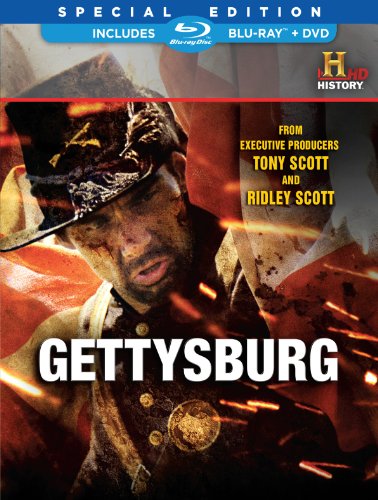
"It's the summer of 1863, more than two years into our nation's devastating Civil War, and the stakes have never been higher. The Confederate Army of Northern Virginia, led by Robert E. Lee, crosses into Pennsylvania. Trailed by the Union's Army of the Potomac, Lee's 75,000-strong army heads toward Harrisburg, but the forces meet instead near Gettysburg, a quiet farm town that would become synonymous with the epic battle that all but decided the outcome of the American Civil War."


The Civil War is still the bloodiest war that Americans have ever experienced. The battle at Gettysburg was the bloodiest battle of that war. While the war raged on for two more years, there is little doubt that the turning point came here at this place and time. It's not really a surprise to find that History put together a riveting documentary about the pivotal battle. It's a bit surprising that they pulled out all of the stops and created quite an epic documentary produced by the famous Scott Brothers Ridley and Tony.

A mockumentary is a piece of satirical entertainment that is shot like a documentary except it is fictitious and never really happened. Like my first marriage, HEYOOOO! (okay, not really) They can be funny or serious but they are often shot to be of the former. Sometimes, they can be pretty interesting or funny but more often than not, they tend to be just like most documentaries. Boring, pointless and liable to cure insomnia. We shall proceed to investigate Brother’s Justice which mocks movie making.

Dax Shepard has an idea. He calls one of his best friends, Nate Tuck who is a producer and tells him to come right over with a camera. Nate says he will need a couple of hours to get things together, Dax asks if he can make it a half hour, the producer says I will try to be there in forty five minutes. At this point, I am already wishing for Nate to slam down the phone and walk away.

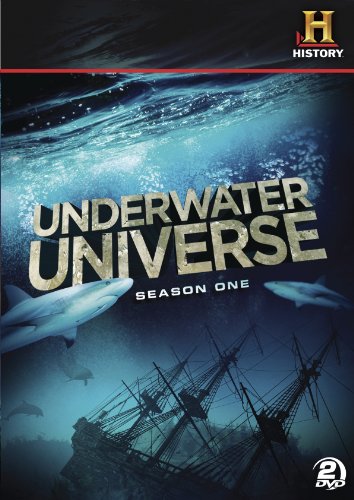
Somewhere between Spike TV and the Discovery Channel lies the History Channel's take on nature programs. Underwater Universe is the collision of sensationalist and informative television. 5 episodes profiling the deadliest attributes of the Oceans, all told with melodramatic statements, fast editing but still plenty of experts offering scientific analyses to the “hows” and “whys” of what each episode is featuring.

Each episode is a compilation of CGI recreations, interviews with experts and those that have encountered deadly animals or elements, and stock footage of those same animals and elements at work. The subjects (and episode titles) are “Killer Shockwaves,” “Predators of the Deep,” “Fatal Pressure,” “Tides and Currents of Death.”

Courtesy of the website of the same name (check it out at http://trailersfromhell.com/index.php) comes this collection of trailers of horror, SF and exploitation films. The collection is eclectic, following no particular theme (though there are several Hammer films present), and the era covered ranges from 1941 (The Invisible Ghost with Bela Lugosi) to 1998 (Trauma’s Terror Firmer). Present are the likes of The Devil-Ship Pirates, Gorgo, Donovan’s Brain, Deep Red, Flesh Gordon, and so on. Twenty altogether.

Normally, commentaries would be dealt with below, but this case is an exception. Not only does the disc default to playing the introductions and commentaries, but these are the primary attraction of the release. The commentators are a high-powered lot: Roger Corman, Guillermo del Toro (who discusses Deep Red in both English and Spanish), John Landis, Joe Dante, Lloyd Kaufman, Jack Hill, and more. There are a couple of weaker moments here – Mary Lambert’s musings on Mothra vs Godzilla are disappointingly inarticulate, and she talks about Godzilla as a nuclear metaphor as if this were news; John Landis has a rather supercilious approach to the excellent Gorgo – but these are more than offset by the strengths. Brian Trenchard-Smith, Del Toro and Dante essentially give entire film courses in two minutes – no mean feat. This is a great, informative collection.

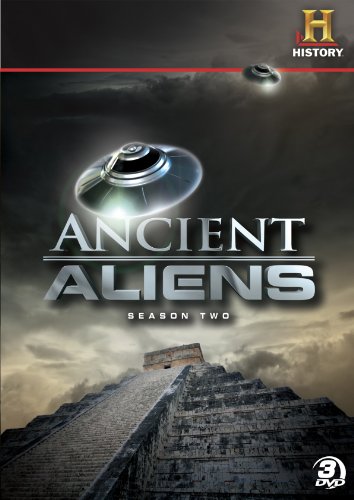
"Millions of people around the world believe we have been visited in the past by extraterrestrial beings. What if it were true? Did ancient aliens really help to shape our history? And if so, what if there were clues left behind, something hiding in plain sight? What if we could find that evidence?"

Ever since Eric von Daniken released his speculative book and its subsequent 1970 film Chariots of the Gods, there has been an entire field of study created around something commonly called Ancient Astronaut Theory. The idea is that extraterrestrials have visited many of our ancient civilizations. The theory continues that these visitors had a hand in shaping our development, whether it be through technology or even manipulation of our very DNA. These believers point to a world of evidence to support their claims. There are tons of images from earlier civilizations that could certainly be interpreted as depicting modern devices, concepts, or even space men. There is plenty of speculation that some of the knowledge and accomplishments of these peoples could not have been possible without some outside interference. There are even those who believe that aliens best explain our religious beliefs and that God himself was/is an extraterrestrial being. Whatever your own beliefs on the subject, there are certainly some fascinating points to be made. There is no question that the speculations and observations bring up some interesting queries that deserve our attention. This series attempts to document much of this evidence and the beliefs these findings have inspired.

Written by Bamboo

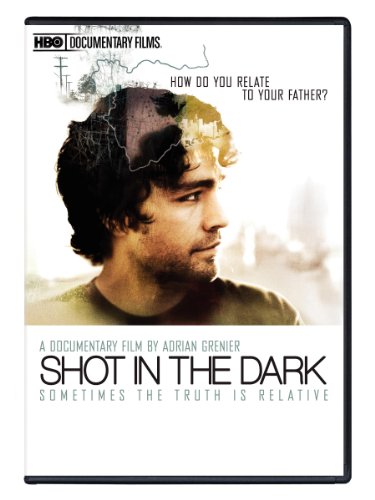
Shot in the Dark is a very well done documentary by Adrian Grenier (before he starred on HBO’s Entourage) about what it means to be a father. The film starts as a series of interviews with random people in New York, as well as Adrian’s friends and family members. Adrian has not seen his father in over eighteen years.  He feels as though he doesn’t know what it means to have a father or how he should feel about not having a father around while he was growing up. Adrian hopes to gain some insight through this documentary.