Documentary

"When, in the course of human events, it becomes necessary for one people to dissolve the political bands which have connected them with another, and to assume among the powers of the earth, the separate and equal station to which the laws of nature and of nature's God entitle them, a decent respect to the opinions of mankind requires that they should declare the causes which impel them to the separation."

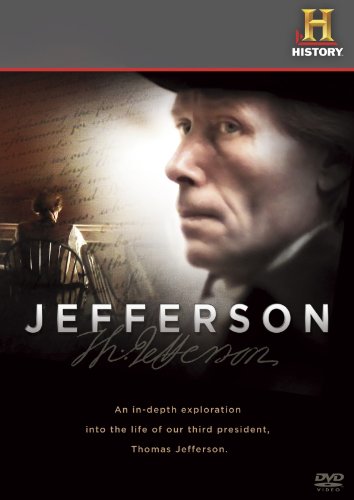
Of course, that declaration would be heard the world over as thirteen small British colonies began an experiment that would change the face of the world. The words came out of a Continental Congress, more specifically a committee that included Ben Franklin and John Adams. But it is neither of those men from whose pen came the liberating words of the Declaration of Independence. That honor belonged exclusively to the young wordsmith Thomas Jefferson. He would put words to the spirit of rebellion that consumed a small corner of a great continent. He would become our third president and the first to expand the country by more than double with the purchase of the Louisiana Territory from Bonaparte in France. His concept of the separation of church and state would become known as Jefferson's Wall and become one of the most abused and misunderstood rights of the Constitution. He was an inventor. He was a naturalist, cataloging hundreds of new species of plants and animals. He was a meteorologist, leaving us the first accurate records of America's climate. He would die on the Fourth of July at the 50th anniversary of his famous document.

"Earth: a unique planet. Restless and dynamic. Continents shift and clash. Volcanoes erupt. Glaciers grow and recede. Titanic forces that are constantly at work, leaving a trail of geological mysteries behind."

I saw a bumper sticker recently that read; "Geologists dig classic rock". I should have taken it as an omen that I would be spending some quality time with a few geologists over these last couple of weeks. It started with the excellent BBC mini-series How The Earth Changed History and culminated with the 13 episodes of the second season of How The Earth Was Made. It might be easy to confuse these titles in your video store. But make no mistake about it. They are very different shows down to their core, pun intended.

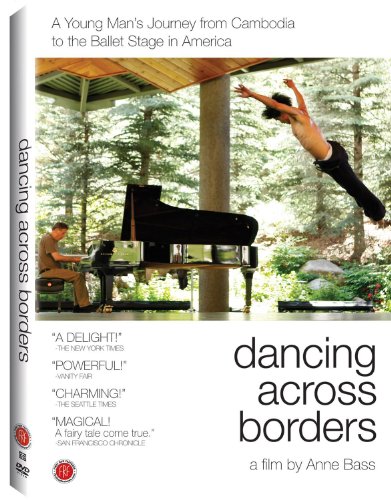
A young Cambodian boy, named Sokvannara “Sy” Sar, is spotted performing a traditional dance by the film's director and American Dance patron Anne Bass. She immediately takes note of his smooth talent and figures he has massive potential as a classical ballet dancer. Sy is given a rare chance to audition at the School of American Ballet in New York and then proceeds on a unique and fast-paced journey through a new world of dance, in a nation that is completely alien to his homeland.

This film would be interesting simply for the fact that it displays many parts of what it means to train as a professional ballet dancer and student, but is all the more engaging because of S's situation; that being the lone Cambodian to take on such a quest. Sy may come from poor roots, but his is by no means a sob story of an underdog, but that does not make it any less special or rare an opportunity. This film gives us the chance to see more than just his home, family and friends, as well as the many stages he earns a spot performing on, but we are privy to what can happen when chance falls upon the sort of  person who has the passion to take hold of it and elevate themselves in something that was a total unknown to himself and his fellow countrymen.

Allen Ginsberg is often regarded as one of the most important poets of the 20th century. He is seen as a symbol of the Beat Generation and contributed to the San Francisco Renaissance. His most important work, Howl has created both worldwide controversy and praise. It escalated into a 1957 obscenity trial of the poet and Lawrence Ferlinghetti who had published Howl along with other selections from Ginsberg. The film is a celebration of Ginsberg’s life as well as the results of this trial.

In 1955, an unpublished 29 year old poet presented his vision of the world as a poem in four parts. His name was Allen Ginsberg (played by James Franco) and the poem was Howl. In 1957, Allen and his work would be put on trial for obscenity. The trial would be prosecuted by Ralph McIntosh (played by David Strathaim) and defended by the prominent Jake Ehrlich (played by Jon Hamm). Judge Clayton W. Horn (played by Bob Balaban) would preside over the proceedings and render judgment.

"In the beginning there was darkness. And then bang, giving birth to an endless expanding existence of time, space, and matter. Now, see further than we've ever imagined. Beyond the limits of our existence. In a place we call The Universe."

Up until now these History releases have been season sets of the documentary series. This release is the first which appears to be a planned series of specific subject titles. It does create a bit of confusion when you see a series called The Universe and all of the episodes on the set deal with our own back yard, a place we call the Sol System, or Solar System, for those of you unfamiliar with the name of the star that happens to brighten your afternoons, particularly for us here in Florida on an August day. But while it's true that the series itself has explored most of the known, and quite a few of the unknown, corners of creation itself, this set once again focuses on those objects that orbit the star Sol. The Sun is at the center of our system, and the same can be said for this season of The Universe. Our local star is featured on several of the episodes on this collection. If there's a theme here, Sol would be the theme.

Written by Diane Tillis

Magic is a source of great debate. From the great magicians like Harry Houdini to the modern magicians like David Blaine, they continue to force their audiences to pick a side of the debate. Should you believe the truth of the trick? On the other hand, you could forget the truth and believe in the magic. Which side would you choose?

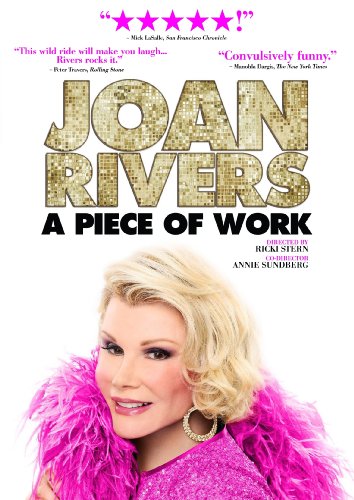
This documentary tracks a year in the life of Joan Rivers. We begin at a relatively low ebb in her career, with her finding it difficult to land desirable gigs. She throws herself into the production of an autobiographical play that debuts in Edinburgh, and her hope is that the London reception will be glowing enough to provide enough momentum for a Stateside production. Meanwhile, she and daughter Melissa are contestants on Celebrity Apprentice. As the film follows the ups and downs of these efforts (concentrating particularly on the play), Rivers opens up about her life and career.

This is a very smart, enormously entertaining, and very funny documentary. There is plenty of footage of Rivers in performance from all stages of her career. For those whose exposure to her has been limited to snippets of red carpet interviews and jokes about her plastic surgery (and I am one of those benighted souls), this film will be a revelation. There's a reason why this woman became famous in the first place – she is one ferocious stand-up comic, and as good as the footage here is, it leaves the viewer hoping for more. That's a good thing. There are, though, one or two less felicitous gaps in an otherwise very revealing doc, most notably what, precisely, was behind the erratic behavior and unexplained disappearances by Rivers' long-term manager. But this is a trivial quibble. The film is a piece of work indeed: sterling work by directors Ricki Stern and Anni Sunderberg, and brave work by Rivers.

Countless documentaries and dramas chronicle the life of John Lennon. They make each film unique from all the others by taking different approaches, use different archival materials, or new first-hand interviews. LENNON NYC explores a time in Lennon’s life that is rarely exposed. It focuses on Lennon’s life in New York City from 1971 to his death in 1980.

In 1971, after the breakup of The Beatles, John Lennon and wife Yoko Ono moved to New York City. The nine years Lennon spent in the city was a time for him to focus on family. While he did create some of the most acclaimed songs and albums of his career, Lennon wanted to be a proper father to his young son, Sean. A strong icon in the count-culture movement, Lennon was very active in anti-war protests and other political causes.

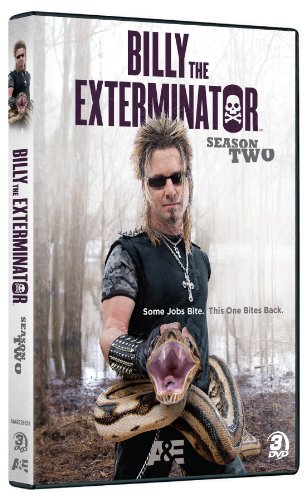
“As an exterminator I'm called upon to curb the destruction by beasts both great and small, be it eliminating a deadly menace or safeguarding a lake from ruin. But sometimes one wrong turn on the job can become a question of life or death."

Billy Bretherton is the owner of Vex Con Pest Control in Shreveport, Louisiana. It's a family run business. Mom is the office manager and takes all of the service calls and then dispatches the technicians to their various jobs. Dad is the office mascot. He's had a heart attack along with a few other medical scares, so he's not really very hands-on. You might say his main job is to worry and complain. Mary is Billy's wife. She quits halfway through the first season, appearing only a couple of brief moments in the second season. Still, she's a part of the opening credits. Ricky is Billy's brother and often his partner on many of his two-man jobs. It's interesting that we're constantly told that Ricky is deathly allergic to wasp stings. One sting and it's an airlift ride to the ER, Billy is always reminding us. But when a wasp call comes in, who do you think Billy takes along to help? Of course, it's Ricky. Mom always reminds us of the allergy and admonishes Billy to be sure his brother doesn't get stung. It's things like this that make this the most frustrating A&E series I've ever watched.

Written by Dave Younger

This is an entertaining and informative biopic of the American icon.  Starting with a $600 loan from the bank, he parlays his good fortune of coming across Marilyn Monroe pay-the-rent nudes into an I-gotta-see-this magazine.  Along the way he publishes some great fiction – Ray Bradbury says nobody wanted his Fahrenheit 451, so he sells it to Hef for $400 – and non-fiction: groundbreaking interviews with Jimmy Carter, Miles Davis and John Lennon.  His road was filled with battles, because America in the 50s was staunchly conservative. And racist, so imagine the shock of seeing blacks and whites mingle on his TV show Playboy’s Penthouse.  (Sammy Davis Jr. is given a puppy for Christmas by the eternally suave Hef – “Oh, hi, I didn’t see you come in.”)