Documentary

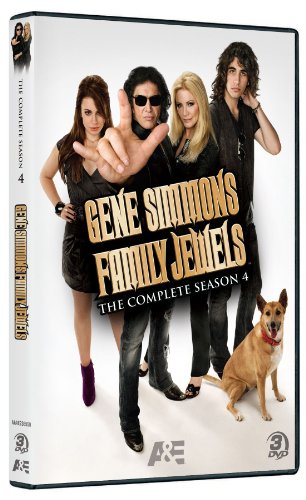
KISS fans will likely feel like they’re in heaven with this quasi-intimate look at the long-tongued demon of rock. All others might be tempted to stay away, and yet, that might be a mistake. Let me first admit that I’m no fan of reality television or KISS. With that said, you might be expecting me to trash this particular program. Wrong! Honestly, as an outsider I have the unique ability to judge the show without all of the trappings of the band’s fame and history.

I’m not sure if it’s a case of morbid curiosity, but I ended up somewhat liking the show. At about 21 minutes an episode, it’s just the right length. Even if I did find this stuff entertaining, there was only so much of Gene’s family I could take in one sitting. The premise is simple and has been done to death by now. Cameras follow some famous person or family in the hopes of providing compelling drama for millions of viewers. OK, so that’s a bit of an exaggeration, but so is the idea that we’re going to get an intimate inside look at these folks while the cameras are rolling. It’s a lot like wrestling. If you don’t buy into that what you’re seeing is actually real, you can get a few laughs out of the whole thing. I will also admit this show destroyed a lot of the Gene Simmons mystique for me. Let’s face it. Can you ever watch the stage persona in the same light again after watching Gene scoop kitty litter or wash his dog by throwing him in the pool? Let’s not even talk about an attempt to get semen from a bull. Still, Gene turns out to be an interesting character very much removed from the one we’re so used to seeing. While Gene dominates the show, there is plenty of time given to wife Shannon Tweed, from Playboy and soft-porn films.

Thierry Guetta has the habit of filming everything he does in his entire life. This habit did not shake while filming the, technically illegal, work of his cousin 'Invader' who is a street artist that pastes up images from and inspired by the video game Space Invaders. Guetta quickly fell head over heals for this underground movement of creating street art and started documenting some of the most famous street artists in the entire world, including the ever (in)famous 'Banksy.' It was Banksy who questioned Guetta as to what his plans were for all of this footage, which was originally nothing, and encouraged him to make a documentary about street art as it is a temporary medium (since it is considered vandalism, all pieces are removed or destroyed soon after being created) and these pieces deserved to be recorded for history's sake in a formal film. Guetta's attempt at the film was deemed unwatchable and so Banksy took over the film and turned the camera on Guetta so that his personal story would be told along with displaying many artists' work.

Some speculations state that this film is an elaborate prank being pulled by Banksy. Remaining anonymous as he directs this film, who is to say that the art made by Guetta is not in fact created by Banksy as a way of demonstrating that pop art is the last vestige of the under-talented, and yet they can make millions if hyped just right. Indeed, the climax of the documentary is Guetta putting on an epic gallery opening in Los Angeles as his new moniker “Mr Brainwash” (a name that has been seen as evidence towards Bansky's message of how hype can brainwash the masses and disguise lack of depth or meaning). I do not subscribe to this theory, as this film seems more like a jab at those (Mr Brainwash being central) who use marketing and gimmicks to make money from something that should be about expression and not profits.

"Compulsive hoarding is a mental disorder marked by an obsessive need to acquire and keep things, even if the items are worthless, hazardous, or unsanitary. More than three million people are compulsive hoarders. These are two of their stories."

The reality television craze has entered its second generation. In the beginning, shows merely found folks who were willing to put themselves in odd circumstances for the chance to earn some big payday. That first wave included such shows as Big Brother, Fear Factor, and Survivor. These shows quickly evolved, or devolved, depending on your point of view, into the relationship game. Instead of cash, these contestants went looking to marry, most often a millionaire. It turns out that Chuck Barris actually invented the reality show in 1965 with The Dating Game and later with The Gong Show. He discovered, way ahead of his time, that we wanted to see real people make complete fools of themselves for love or money. When the writers’ strike hit, these shows became a gold mine to network executives looking to fill prime-time slots. That's when everyone noticed just how cheap these shows were to make.

Most people remember the Bee Gees from their disco days and Saturday Night Fever. They sold a lot of records and achieved more fame than at any time in their careers. But the Brothers Gibb had been performing since the 1950's as children. They would headline automobile races and appear on local radio and television shows. They would quickly gain attention for their harmonies and eventually for their own songs. By 1967 they had begun to gain international attention, appearing on the national rock-and-roll shows. The brothers would become known then for their power ballads and love songs. Hits like “Words” and “How Can You Mend A Broken Heart” put their particularly unique voices on the charts around the world. But by the 1970's the sound was already beginning to fade. The Beatles had broken up, and the era of the vocal bands appeared to have died, at least for a time. They saw their stardom plummet almost overnight.

Then came the disco scene and the movie that launched both the Bee Gees and John Travolta into instant superstardom. The album of the film's soundtrack would go on to be the best selling album in history until Michael Jackson's “Thriller” came along. Before anyone knew it the world was in a disco frenzy, and for many of us who grew up in the 1970's, music died for a while.

Written by Diane Tillis

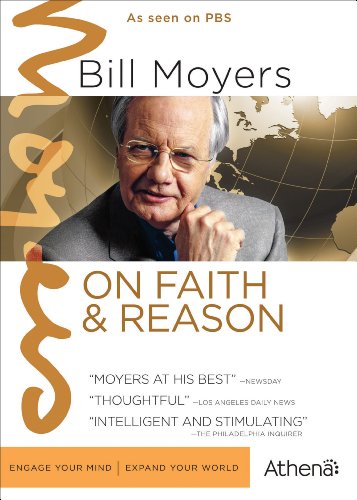
One hundred writers gathered together at the PEN World Voices Festival in New York to discuss faith and reason. PEN is a literary and humanitarian organization that is composed of poets, essayists, and novelists. Its chief concern at the festival was the threat to freedom of speech and conscience from religious extremism. Writers from diverse backgrounds and perspectives came together in an open forum to discuss their experiences with faith and reason. Bill Moyers: on Faith & Religion is a collection of interviews with twelve renowned authors who were among the speakers at the PEN World Voices Festival. Bill Moyers interviewed them on their background, literary works, how they related to faith and religion, and what they hoped to see for the future.

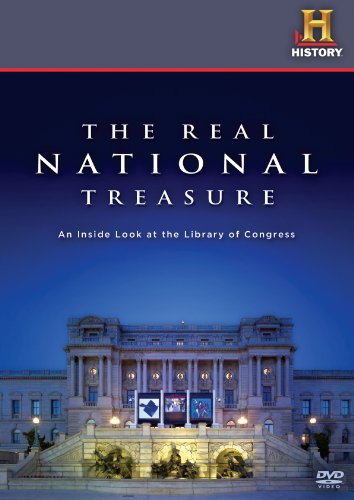
When I first put this dvd into my player, I had no idea of how much information and research the Library of Congress was responsible for. I, like most people, assumed that it’s a big building where members of Congress go to conduct research. This may be so, but there is so much more to the Library that it practically boggles the mind, which is the ultimate goal of The Real National Treasure.

The Real National Treasure is actually an episode of History Channel’s series, Modern Marvels. It focuses on every aspect of the Library of Congress, from its layout to the services it provides. There are some fascinating items showcased in the episode, including original texts handwritten by the founding fathers.

"Millions of people around the world believe we have been visited in the past by extraterrestrial beings. What if it were true? Did ancient aliens really help to shape our history? And if so, what if there were clues left behind, something hiding in plain sight? What if we could find that evidence?"

Ever since Eric von Daniken released his speculative book and its subsequent 1970 film Chariots of the Gods, there has been an entire field of study created around something commonly called Ancient Astronaut Theory. The idea is that extraterrestrials have visited many of our ancient civilizations. The theory continues that these visitors had a hand in shaping our development whether it be through technology or even manipulation of our very DNA. These believers point to a world of evidence to support their claims. There are tons of images from earlier civilizations that could certainly be interpreted as depicting modern devices, concepts, or even spacemen. There is plenty of speculation that some of the knowledge and accomplishments of these peoples could not have been possible without some outside interference. There are even those who believe that aliens best explain our religious beliefs and that God himself was/is an extraterrestrial being. Whatever your own beliefs on the subject, there are certainly some fascinating points to be made. There is no question that the speculations and observations bring up some interesting queries that deserve our attention. This series attempts to document much of this evidence and the beliefs these findings have inspired.

They’ve been called The Greatest Generation, and who are we to argue the point? Sitting here writing reviews from my comfortable seat in a state-of-the-art home theater, I’m in no position to lay claim to the title. They fought in the bloodiest conflict in modern human history. Over 20 million were killed. That’s a staggering number. If you’re like me, it’s not even real. I can honestly say that those facts have never really reached home as much as they did while watching this footage.

World War II has been a favorite topic for Hollywood films since before the war itself ended. There have been some truly remarkable efforts and some equally unremarkable disasters. Many of these films have been long forgotten. Heck, many of them deserve to be forgotten. But something that should never be forgotten is the stuff of this footage. To do so would be a sacrilege of the worst kind. But these war films, no matter how startling the scenes, no matter how real we might think they are, no matter how visceral the experience might appear, nothing can ever capture the reality like this footage has done.

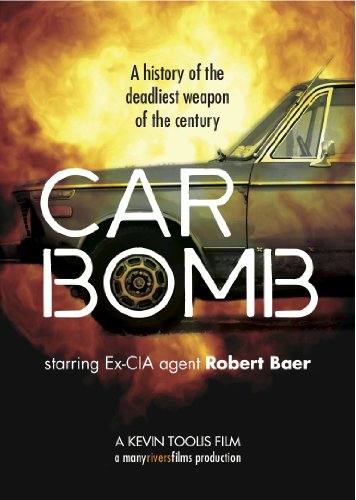
"My name is Bob Baer. I used to be a CIA agent stationed in Lebanon during the Civil War. It was chaos. Bu, the real threat was always the car bomb."

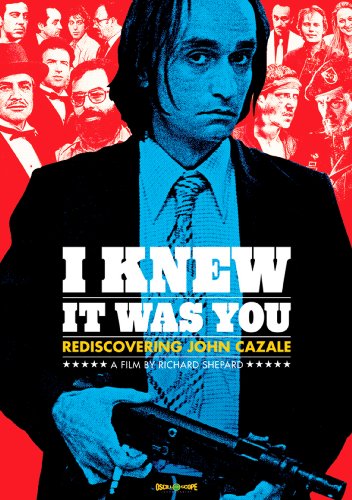
Mention the name John Cazale and most people will shake their heads and answer, "Who?" But mention Fredo from The Godfather and recognition is sudden and complete. Bring up Sal from Dog Day Afternoon and you're liable to get an "I remember that guy" response. He was known by Stan in both The Conversation and The Deer Hunter. Meryl Streep was impressed enough with him to get involved with the unknown actor. She lived with him up until the day he died. John Cazale was only in five movies. But every one of them received an Academy Award nomination for Best Picture. Three of them won the prize. You may not know the man, but you know his movies; everybody knows his movies.

Cazale worked with some of the best actors of his age. The names include Al Pacino Robert De Niro, Gene Hackman, Meryl Streep, Marlon Brando, Christopher Walken, and Robert Duvall. He worked for some of the best directors including Francis Ford Coppola and Sidney Lumet. All of them considered him one of the best actors they've ever worked with. His name didn't stand out because he could make a part so completely his own that the line between actor and character was lost so absolutely in the portrayal. He became that role. John Cazale was never the focus. He was generous to other actors. He was always willing to build up his co-stars and take the dark spot just to the side of the spotlight. One can only imagine what films he would have made had he not died of lung cancer at just 42 years of age.