Documentary

"For centuries the prophecies of Nostradamus have been part of the historic record. While highly speculative and controversial, their author's legacy endures."

"USS Enterprise, aka The Big E, a fighting city of steel. She is the most revered and decorated ship of World War II. On this 360-degree battlefield, where threats loom on the seas, in the skies, and in the ocean depths, The Enterprise's enemies could be anywhere. Now follow this sea-bound band of brothers through four years of hell. From Pearl Harbor to the doorstep of Japan, there's nowhere to run, when the war is all around you."

"We are pioneers and trailblazers. We fight for freedom. We transform our dreams into the truth. Our struggles will become a nation."

I was really looking forward to this release. From the moment I was made aware that it was going to be arriving here for review, I made a mental note to put it at the top of my viewing list. Fact is, I'm a history junkie, particularly American history. I taught the subject in AP and honors classes along with American Government and Law for over seven years. The History Channel is also one of my favorite places on the dial. There are many thought-provoking and informative shows to be found there to help you explore almost every aspect of history. I truly expected this to be one of those milestone releases. Unfortunately, it isn't.

This documentary follows four different families as they await the date for a charter school lottery in Harlem. As the date approaches, we bear witness to the heated debates that go on between those that wish to implement more charter schools (a charter school being one similar to public schools but relies on stringent academic results and standards from its students and operates as an autonomous public school) into a “project” area, and members of the community who believe that their children would be excluded and object to the idea of closing public schools who have failed to produce positive results.

This film clearly has an agenda, and so comparisons to the likes of An Inconvenient Truth have been made. The key difference between this film and Al Gore's, aside from style and topic, is that The Lottery allows both sides to speak their minds and address their concerns. It is the difference between simply saying the other side is wrong versus allowing them to speak so that the folly in their arguments will present themselves naturally. Harlem Success Academy is the organization running the charter schools, and have proven their worth to both the neighbourhoods they exist in, and the nation as a whole. The debates they enter can be frustrating to watch as they are often vicious attempts to mudsling (politicians) or ignorant bravado (community members led by a hired protest group) versus reason (Harlem Success Academy) and endorsements (members of the Harlem community whose children have all been accepted into the schools despite parental history of prison, drugs, lack of money etc.). If they are not entered into unnecessary and hurtful debates, they are also bogged down by bureaucracy and challenges presented by the teacher's unions.

This documentary is a mainly a sea of praise for the late guitar legend, as it promises to not focus on “drudging up scandal and outworn hypothesis about his lifestyle and ultimate death.” historical footage tells the biographical portions while high-profile interviws with the likes of Lemmy Kilmister (Motorhead), Eric Clapton, Mick Taylor (Rolling Stones), Stephen Stills (Crosby, Stills & Nash) and moany more, plus narration by super-fan Slash (Guns N Roses).

As the early history of Hendrix is told, namely when he was brought to England, where he made a name for himself, a baffling series of celebrities' names are dropped as noted admirers. For example, one London club concert featured in its first few rows, all of the Beatles, most of the Rolling Stones, Cream, Steve Winwood, and The Who...all there to see Hendrix redefine the sound of the electric guitar. The filmmakers use this explosion of legendary names to gain interest in the audience, which is a fine tactic. They save biographical details for the second act but never let up on the limitless line of admirers, celebrity or otherwise. As a matter of fact, the amount of praise borders on being redundant for it seems relentless, but such a subject truly deserves every word the interviewees have to say.

"I'm Rick Harrison, and this is my pawn shop. I work here with my old man and my son, Big Hoss. Everything in here has a story ... and a price. One thing I've learned after 21 years? You never know what is going to come through that door."

"In the beginning there was darkness. And then bang, giving birth to an endless expanding existence of time, space, and matter. Now, see further than we've ever imagined. Beyond the limits of our existence. In a place we call The Universe."

Up until now these History releases have been season sets of the documentary series. This release is the first which appears to be a planned series of specific subject titles. It does create a bit of confusion when you see a series called The Universe and all of the episodes on the set deal with our own back yard, a place we call the Sol System, or Solar System, for those of you unfamiliar with the name of the star that happens to brighten your afternoons, particularly for us here in Florida on an August day. But while it's true that the series itself has explored most of the known, and quite a few of the unknown, corners of creation itself, this set focuses on those objects that orbit the star Sol.

"They rob, kill, and terrorize, and they've left their mark on our nation's history."

Michel Gondry is a director whose work has been characterized by its originality and personal vision. The likes of Eternal Sunshine of a Spotless Mind and The Science of Sleep have marked him as a filmmaker with a distinct vision. Here he makes what must be his most personal film yet, as it is a documentary about his family. More precisely, it is about his aunt Suzette, a strong-willed, redoubtable matriarch who worked as a schoolteacher in some of the most remote regions of France. Gondry and crew follow Suzette as she revisits her former schools, working her way through the decades and chronicling her life, that of her family, and, along the way, that of France.

As personal and culturally specific as the movie is, I fear that it might not translate very well for a North American audience. Some minimal familiarity with the context might be necessary to really get into the movie. Granting that, the film, with its mixture of new footage, model train transitions, and super-8 family movies, is fascinating and moving.

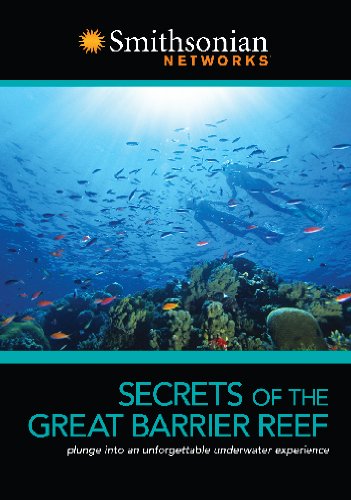
There have been a ton of specials to come out over the last few years dealing with some of the planet's extraordinary places and life. From The BBC to National Geographic, these specials have populated the science networks, and have even begun to shine in beautiful high definition. In just this last year I feel like I have been transported to some of the most spectacular sites on Earth and witnessed many of the most extraordinary creatures that inhabit this planet. Few of these places compare to the Great Barrier Reef that lies off the coast of Australia.

The Great Barrier Reef contains some of the most diverse collection of species on the entire planet, from the largest sharks currently roaming the seas to the tiniest micro-organisms which make up the coral, providing the superstructure of the reef itself. We've been there many times before, often in glorious high definition. That's what makes this Smithsonian special somewhat mundane, even if the subject is anything but. While the forty-some minutes do provide some great photography, it's nothing new. To make matters a bit more ordinary, it's all in rather unspectacular standard definition. The narration is one of the most bland that I can remember. Twenty years ago, this might have been quite a show. Today it is rather underwhelming.