Documentary

Posted by Ken Spivey

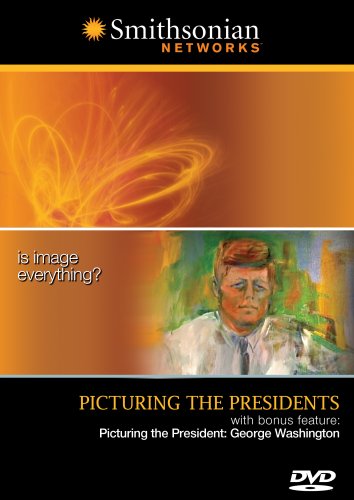
“Picturing The Presidents” is a glimpse into the Presidential Portrait Gallery found in the Smithsonian. A painting of each leader of our nation holds many meanings. The various ways of seeing these portraits are determined by the painter, the one being painted, and the ever changing audience viewing the art. The documentary begins by discussing the portrait of Washington and how he defined how a President was to appear: noble, strong, yet not regal. They contrast this with Clinton's portrait, which shows the less formal man with rumpled jacket and a tired, earthy stare. This highlights how few people are truly pleased with any presidential portrait; many view the Clinton portrait as too natural, while Washington's is often criticized as nearly appearing supernatural. The film then explores the relationship between president and artist, and the eventual evolution of the portraitist as propagandist.

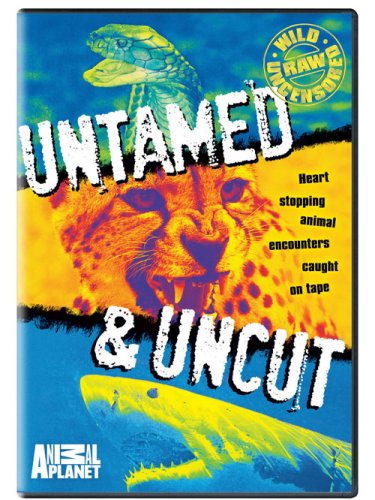
The unforgettable Forrest Gump once said: “Stupid is as stupid does”. No better line describes the absolute idiocy of some of the people in The Animal Planet’s Untamed & Uncut series. On the surface it’s an animal show, like all of the network’s wares. But the real show is the actions of many of the humans who find themselves in unfortunate circumstances where their lives are at risk because of an animal encounter.

Case in point: The first story covers a venomous reptile collector who is bitten by a monocled cobra. As a person who has bred and handled reptiles for almost 20 years, I know a little thing or two about the subject. While I don’t breed venomous animals, I have worked with them on a limited basis. I also have many personal friends who are collectors of these snakes. Certainly there is no argument that these animals can be very dangerous. That’s why it requires training and careful attention to detail if you’re going to handle these creatures. Fortunately, the folks I know are extremely careful and treat the animals with a healthy dose of respect. We won’t mention the time I was in a “hot room” working with a dealer I won’t name here, when a pair of young green mambas escaped. We managed to wrangle them without incident, but that’s exactly the kind of thing you don’t want to happen. If you watch the guy in this video, he very casually flips the cobra into an enclosure and casually flops the rubber lid on the cage. He’s surprised when the cobra lunges and tags him on the stomach. The only surprise here is that it hadn’t happened before. If you’re a herper, this guy’s actions will make you cringe. No wonder there are folks out there attempting to regulate a trade that for the most part is made up of far more responsible people. This wasn’t the victim of a vicious animal. This was an idiot who was asking for trouble.

Posted by Ken Spivey

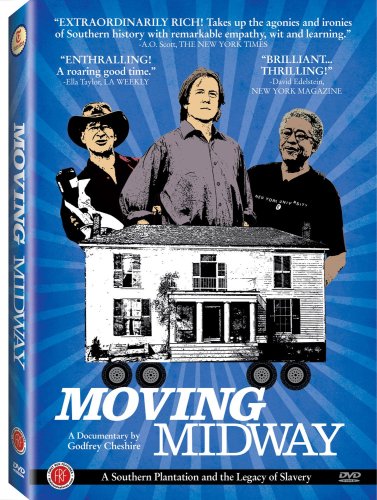
Filmmaker Godfrey Cheshire returned to his ancestral home, Midway Plantation, in 2003. When he arrived he found his cousin, Charlie Silver, about to move the southern mansion to make way for a shopping complex. “Moving Midway” is the story of Midway's past, present journey, and future home.

In 2004 Morgan Spurlock released the controversial documentary Super Size Me. In the film he goes on a 30 day fast food only diet. His purpose was to alert the public of the danger to health the fast food industry has become. The film was more about the obesity problem in America and less about the evil McDonald’s Empire, but he makes several points which one might interpret as being pro-fast food regulation. Spurlock became somewhat of a cult figure among the health conscious crowd and was considered a hero, of sorts. It appears he suffered severe kidney and liver problems during the diet, but soldiered on.

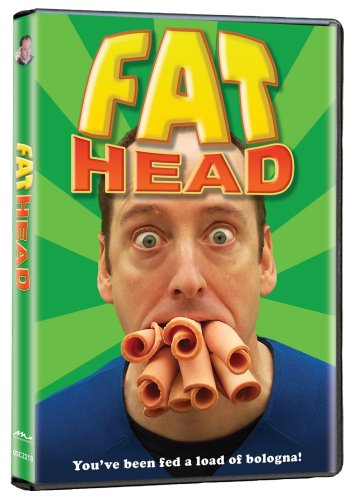
Along comes Tom Naughton, who found some faults with that film. So, Tom decides to go on a 30 day fast food diet as well. The difference is that he will pay attention to his calorie, fat, and carb intake and attempt to eat somewhat sensibly during that month. Tom has somewhat better results that Spurlock did. He actually lost weight, reduced his fat count, and improved his cholesterol situation, making his physician a little unhappy at what he was proving. Is Tom Naughton saying that eating a full slate of fast food is good for you? No, that’s not his point. He’s really preaching personal responsibility. He makes that point by spending an entire day hanging around the outside of fast food restaurants, waiting for someone to drag him inside and force him to eat. Obviously, that doesn’t happen. He also films a segment where a McDonald’s employee asks the age old question, “Would you like fries with that”, to which Naughton replies, “No”. He shows the feigned surprise when the employee accepts his answer. The point, again, is that no one is forcing you to eat anything you don’t want to eat. He challenges Spurlock’s contention that these chains make it hard to get the nutritional information on the food. It turns out that most provide it right there. If not, every single chain provides it on their web site. No computer, you say. Naughton shows us just how easy it is to use one at the local library. Still too hard? He went to his small town’s smallest bookstore and found 5 books in short time that published the information.

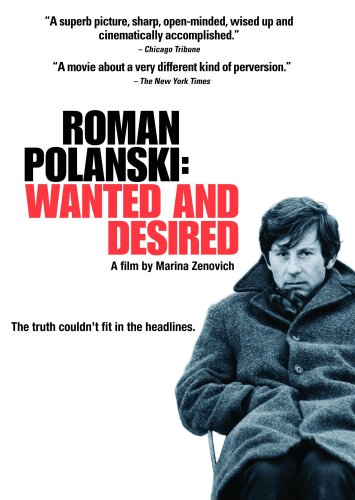
In America, he is wanted. In France, he is desired. Worldwide, his films are praised for their ethereal, disturbing, and sometimes humorous qualities. But his life overshadows his accomplishments. He survived a concentration camp. His parents did not. He found Hollywood success with films such as Rosemary’s Baby, The Tenant, Repulsion, and The Fearless Vampire Killers. His marriage to wife Sharon Tate ended in a brutal homicide that took both her life and the life of their unborn child.The case would later introduce the world to Charles Manson, a crazy-eyed charismatic with a thirst for blood, and his murderous followers. It would also create a disdain in Polanski for the media, one that grew in the wake of an underage sex scandal several years later.


This is another of Cult Epics’ entries in their new Rene Daalder Collection. His most recent film, it’s a documentary about conceptual artist Bas Jan Ader. The brief body of work he left behind is best known for using gravity as a medium (so, for instance, he did a number of filmed pieces of himself or objects falling). He was lost at sea in1975 while attempting to cross the Atlantic in a minuscule boat as part of a piece to called “In Search of the Miraculous.” Daalder’s 68-minute film retraces Ader’s life, but does so in part through the filter of Daalder’s own parallel experiences as an expatriate Dutch artist. The film is very interesting, though I would have like a bit more analysis of Ader’s work, in order to have a better understanding of exactly what it was doing, and Daalder’s speculations about what Ader’s final thoughts might have been are a little too definitive. Still, a strong documentary.

Audio

Imagine waking up in the morning and opening your eyes only to be greeted by more darkness. You feel your way out of bed. Scoot your feet slowly across the floor to make sure you’re not bumping in to anything. You make it to the kitchen and feel around for cabinets. Based on the shape of the objects you find inside them, the sounds those objects make (if any), the texture of their contents, you manage to make breakfast. The rest of the day consists of listening to the TV or radio and more feeling and sensing your way through life. Now imagine having such an affliction while living in abject poverty and being looked upon by the dominant culture as demon-possessed and deserving of your state.


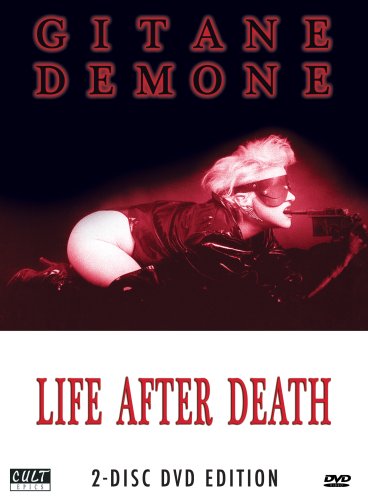
Gitane Demone was one of the lead singers for seminal deathrock band Christian Death before going solo in 1989.  This 2-DVD set is a record of her various solo efforts, tracking various incarnations, most notoriously (and most prominently featured in the release's packaging) being the fetish performances for the likes of the DeMask club and Skin Two magazine. Present here is a mix of television interviews, one video, and a raft of live footage.

Given the necessarily raw, semi-underground nature of the material (more one the picture and sound quality below), this is not really a release for the previously unconverted. The fuzzy picture and muzzy sound is not likely to draw in viewers who don't already have an investment in the subject. That said, the interviews are interesting, with Demone, in most articulate fashion, clearly situating herself within various scenes and phases of her life, and explaining how all this has affected her art. As for those who are fans, this is a very valuable record of a decade of performances.

While many of us think that President-elect Obama might have more important things to be concentrating on right now, I don’t know, like maybe the economy, we’re hearing a lot about his search for a new doggie. Of course, with a child who is allergic to dogs the search is complicated by the need for a hypoallergenic dog, if such a thing exists. No matter; it is certainly a tradition among most occupants of  the White House to have pets. Most, of course, were dogs, allergies included.


You would think that an apparent 2 hour documentary on Bob Dylan would feature, I don’t know, maybe Bob Dylan. If you figured that’s what you’re getting here, think again. There are maybe 3-4 minutes total Dylan footage, and it’s almost always silent and looks like it came from a camcorder in the nosebleed sections of an arena. Even the constant music being played throughout these interview clips is not from Dylan, but rather the tribute band that happens to be run by the film’s producer and interviewer, Joel Gilbert. Gilbert struts around in the beginning striking a Dylan pose, and he looks somewhat like the folk star. After watching this film, I’m sure that he wants very much to be Bob Dylan.