Documentary

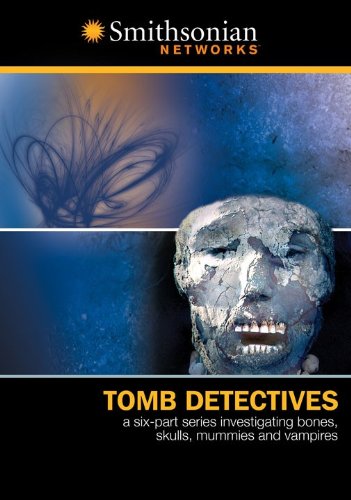
The whole trick to watching the new educational series from the Smithsonian Channel is to keep your head. Someone once said that was the key to battle, to keep your head while those around you are losing theirs. Well, it appears a ton of folks have been losing their heads for centuries. On the surface Tomb Detectives is a real life Bones. The half hour episodes explore ancient bodies, usually merely skeletal remains, and attempt to answer some basic questions: How did they die? What was their life like? What kind of cultural traditions might have been involved with the death? Was this an execution or an inevitable result of battle? Where these ancient victims the willing participants in a religious sacrifice, or were there criminal elements at play? The series gives you a close up look at these remains and then introduces you to a team of scientists who will attempt to answer these burning questions. It’s sort of like the team from CSI trying to solve murders that are as much as 2000 or more years old. Of course, there is no statute of limitations on murder. We follow the team into the lab where various experiments provide clues to these answers. There are often very low budget dramatizations of the various theories the scientists come up with. The first two stories deal exclusively with ancient beheadings, and the theme pops up pretty consistently throughout the rest of the series. Someone has a serious head fetish here.

The episodes pretty much play out as your standard cable documentary with a bit more drama added on for effect. As we are introduced to each scientist there’s a freeze screen and an X-Files scroll that tells us who they are and what their specialty happens to be. Unfortunately, even in 26 minutes there is a ton of repetition in these shows. We see the same dramatization scenes over and over. There’s a lot of dry in the lab talk that might put you to sleep if the images themselves weren’t enough of an eye-opener. The show attempts to delve into a little history surrounding the discoveries in an attempt to put the find into some historical perspective. The narration, however, tends to point out the obvious and isn’t incredibly entertaining. In the end it’s a matter of seen one, seen them all kind of a thing. Your best bet is to try and catch the episodes on rerun at the Smithsonian Channel.

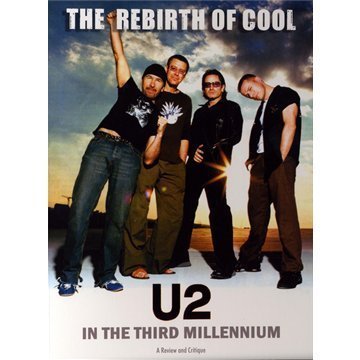
U2 was formed in 1976. Back then they were just teenagers figuring out how to play their instruments. But by the mid-80’s, they were one of the best bands in the world. Currently, they have sold more than 145 million albums worldwide and have won 22 Grammy awards. Rolling Stone has them listed as #22 in the greatest artists of all time. They appear frequently at the head of many human rights causes promoting social justice like Bono’s DATA (Debt, AIDS, Trade in Africa) campaign. The Rebirth of Cool: U2 in the Third Millennium takes a look at the band from the failed release of “Pop” to their reborn commercial success in 2000 with “All That You Can’t Leave Behind” and continued superstar greatness in “How to Dismantle an Atomic Bomb” in 2004.

“Pop” was released in March of 1997. It was an attempt at combining techno, dance and eletronica with U2’s traditional hard rock sound. It was unfortunately a failure in the overall scheme of things. It sold the least among any U2 album (1+ million in the US, 2+ million worldwide) and distanced a lot of fans from the band. U2 knew they had to take a different direction. They quite simply had to reapply for the job of the best band in the world.

“The power of the Sun drives the seasons, transforming our planet. Vast movements of ocean and air currents bring dramatic changes, create some of the greatest wildlife spectacles on Earth.”

The Planet Earth series from the BBC brought with it critical acclaim and 11 hours of some of the most spectacular video footage from around the globe that we’ve seen on television. It was a particular treat to anyone who was fortunate enough to catch it on an HD broadcast. Not content with that work, the same team assembled once again to create this follow-up series, Nature’s Most Amazing Events. At first I was a bit skeptical and more than a little worried when I read that the series was going to focus on the effects of global climactic phenomena. I immediately expected another propaganda piece on global warming. If that’s what you fear/hope for out of this series, it’s going to surprise you. Instead the BBC crew takes the Planet Earth cameras to some of the most extreme climactic places on Earth. The piece examines not so much the climate, but the animals that thrive under these intense conditions.

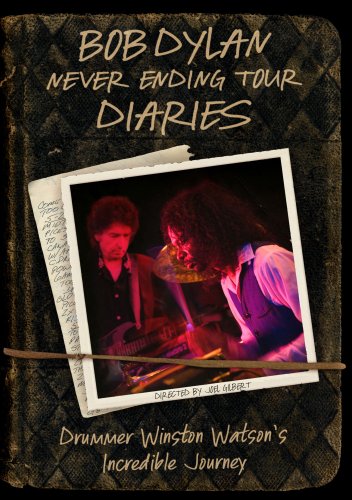
Bob Dylan: Never Ending Tour Diaries outlines the five year journey of tour drummer Winston Watson. The documentary is limited to Watson’s perspective with great super 8 tour footage spliced into his interviews.  Watson toured with Bob Dylan for over 400 shows and helped Dylan launch his “Never Ending Tour” which continues to this day.  Winston Watson’s charisma and originality make him very likeable, which is crucial when chronicling an unheard perspective. This is not a typical rock documentary; there is very little music and no music videos at all.  However, what this film lacks in typical form, it makes up with entertaining stories and great footage.


I’ve had to watch and review a lot of crap in my nearly decade long life as a reviewer. Usually there’s something good to say about almost anything, no matter how bad the title is. I have officially gotten the absolute worst piece of garbage that has ever arrived on my front door in Hollywood The Dark Side Collection. Honestly, that’s all I have to say…..

Editor’s note: We finally tracked Gino back down and “requested” that he complete this review. We apologize for any delay this might have caused. –Ed.

The Kings: Anatomy of a One-Hit Wonder tells the story of a Canadian rock band's rise to fame. The documentary discusses the creation of their one hit "This Beat Goes On/Switchin' to Glide" as well as donates a significant amount of time to the aging rockers. The original band members all provide interviews throughout the film: David Diamond (lead vocals, bass), Sonny Keyes (keyboards, vocals), Max Styles (drums) and Mister Zero (guitar). This is an example of a rock documentary of a group that had some minor success and whose claim to fame is playing on Dick Clarke's American Bandstand.

The overall documentary is depressing. All of the band members are now entering their sixties and most of the footage is them reliving their glory years of touring. The music video montage of "This Beat Goes On/Switchin' to Glide" at the beginning of the film is well done and captures the essence of the band in five minutes. However, once the reality of the band not having any other credentials sets in, the question arises. Why make a documentary? The public seems to be infatuated with the "where they are now" VH1 style program. Unfortunately, most viewers could care less what the Kings are up to. The documentary runs roughly over 40 minutes in length and audiences ask another question. That's it? This question seems to have plagued the band since its inception in the late 1970's.

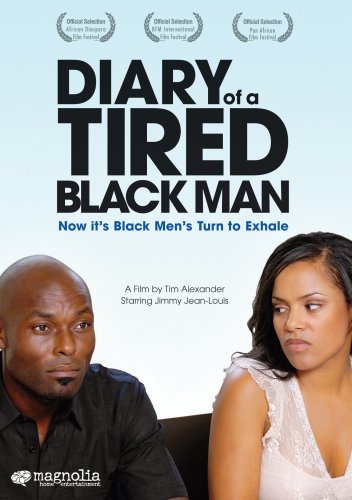
With Robert Rodriguez releasing films where he directs, writes, scores, edits and produces some people humor themselves into believing that anyone can do the same.  With Diary of a Tired Black Man, Tim Alexander attempts to accomplish a similar feat.  Jimmy Jean-Louis headlines the small cast as James who recently divorced his wife Tonya (Paula Lema)of four years. Alexander directed an internet clip that dealt with this relationship and from that 3 minute clip he adapted it into a feature film.  The story evolves into a complex investigation of relationships from the black male perspective. 


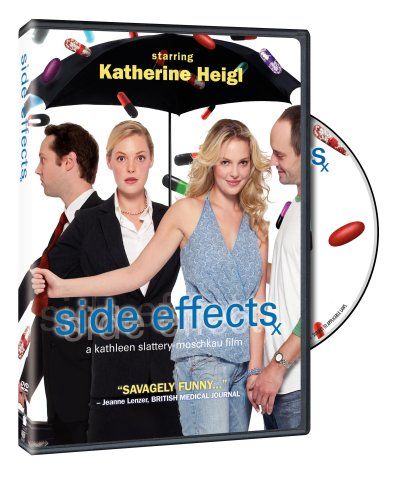
My paying job in life is spent as a computer system administrator (unfortunately it is not writing reviews and columns). Often, I have wondered why I’m in the cubicle jockey life and not tried to find some job where I could use my writing skills more effectively and get paid for it. There is also a lot of bs and chicanery in the corporate world that annoys me to no end. It is little wonder that I was interested in the movie Side Effects which deals with the pharmaceutical sales industry. I wasn’t interested in pharmaceuticals but I was interested to see how one deals with the corporate crap that does go on. It made for an interesting experience.

Karly Hert (played by Katherine Heigl) is a pharmaceutical sales rep. Basically she pushes pills to hospitals and doctors whether they need it or not. Karly has a hard time of it and her sales are not doing well. She meets a fellow sales rep, Zach (played by Lucian McAfee) who decides to quit after the first week. A relationship forms between Karly and Zach as he challenges her views on her work and her life. As a result, she decides to quit her vocation but not for six months. She keeps track of the days on a white board above her bed.

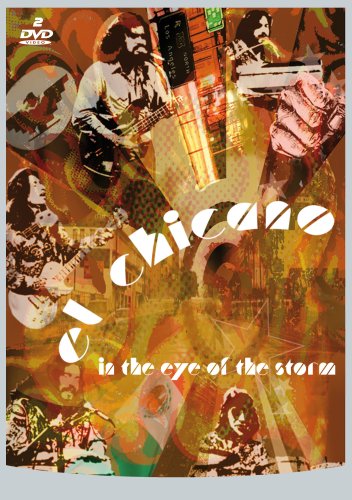
"Chicano" is a term for a Mexican American (US born with Mexican ancestry).

El Chicano was and is a band that started in the late 60s as club players called The V.I.Ps (playing after hours at a Japanese restaurant in East Los Angeles) who became popular because of their jazzy approach to Latin rock. This musical approach was really defined by this band, as well as by Santana who started about the same time, and their songs became the anthems for the "Chicano Movement" around the late sixties and early seventies.

The WTO or World Trade Organization came into being on the 1st of January in the year of 1995. It was the successor to GATT (General Agreement on Tariffs and Trade) and was designed to supervise and liberalize international trade. In their ministerial conference of 1999, they decided to have the conference on US soil. The site chosen was Seattle, Washington. The WTO had drawn criticism from protestors around the globe that proclaimed that the WTO was pursuing commercial interests ahead of human principles. In 1999, the WTO convened at the Washington State Convention and Trade Center. Protestors came by the thousands and soon despite their peaceful efforts, riots ensued. There was mass police involvement. It also gave way to some of the more horrific scenes of innocents and guilty arrested alike. Battle in Seattle is a docu-drama directed by Stuart Townsend that mixes a drama-thriller with the real events that surrounded the days that followed November 30th, 1999 in Seattle, Washington.

Jay, Lou and Django (played by Martin Henderson, Michelle Rodriguez, and André Benjamin) are three activists who are planning a mass protest at the 1999 conference of the World Trade Organization in Seattle, Washington. Meanwhile, a SWAT cop named Dale (played by Woody Harrelson) gears up for that same conference in order to keep the peace. His mind is not on the protestors, instead his mind is focused on his wife, Ella (played by Charlize Theron) who is five months pregnant.