Posted in: Disc Reviews by Archive Authors on February 19th, 2006
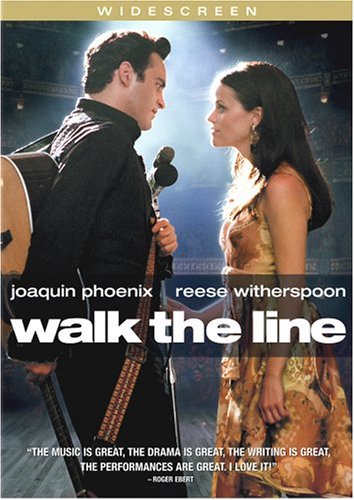
Riding on the coattails of the successful and acclaimed film Ray comes the life story of Johnny Cash. Walk the Line, adapted from the novel The Man in Black, places Joaquin Phoenix in the role of the legendary country singer. Similarly to Ray, Walk the Line has garnished critical acclaim for both the film (which was a surprise omission in the Best Picture category at the Oscars) and the lead roles of Phoenix and Witherspoon (both of whom won best actor/actress and the Golden Globe..., and are nominated at the Oscars).
More then the music, this film focuses on the downward spiraling emotional state of Cash, and his addiction to drugs to try to constrain his inner demons. The story starts with a glimpse into Cash’s childhood where we see a strong bond with his brother and meet his emotionally abusive father. After his brothers accidental death, and the emotional scaring his father puts him through, we fast forward to Johnny’s moving away from home.
Posted in: Disc Reviews by Archive Authors on February 18th, 2006
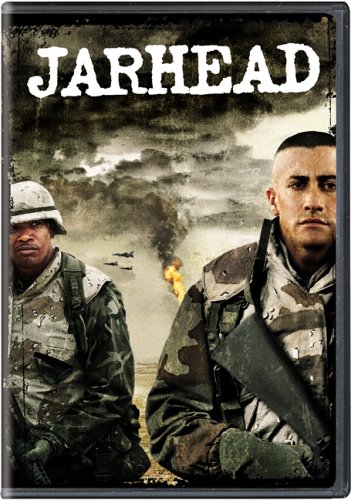
In the era we live in, the eventuality of a movie about a soldier’s experience in war was going to come, whether or not we wanted to see the film. Since the war in Iraq is such a hot button topic with a majority of people, regardless if you were for the war or against the war, Universal thought this would be the perfect moment to capture our interest in war. Enter director Sam Mendes (American Beauty) and stars Jake Gyllenhaal (Brokeback Mountain) and Academy-Award winning Actor Jamie Foxx (Ray) ...nd you know you have a movie that will pique the average person’s curiousity. But was Jarhead made too soon? Would people really want to see what our soliders are going through? Read on to find out.
Jarhead is based on the 2003 memoirs of Anthony Swofford who is portrayed by Gyllenhaal. Swofford served in the first Gulf War. The film is obviously about a war, but what makes the film amazing is that it is a war film that rises way, way above the concept of a war to tell an intriguing story of exhaustion, boredom, lonliness, obession and drama.
Posted in: Disc Reviews by David Annandale on February 13th, 2006
Synopsis
Jane Fonda plays Lilliam Hellman. She is living in a beach house with Dashiel Hammett (Jason Robards), struggling with a play (The Children’s Hour, though the film is ridiculously coy about mentioning its title). She is also worried about her childhood friend Julia (Vanessa Redgrave), who is caught up in the struggle with the rising tide of fascism in 1930s Europe. Hellman loses contact with Julia, but on a trip to Europe in the wake of her play’s success, she is contacted by friends ...f Julia’s, asking her to take on the risky job of transporting bribes to Hitler’s Berlin.
Posted in: Disc Reviews by Gino Sassani on February 9th, 2006
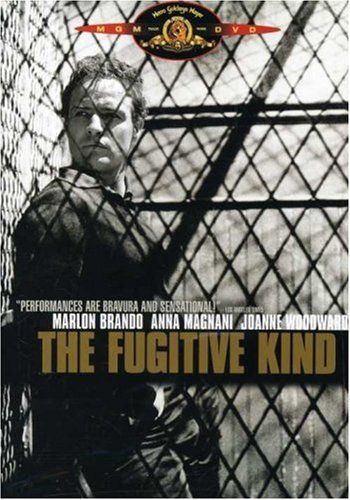
Long before Marlon Brando was making us an offer we couldn’t refuse, he was making his bones in James Dean-like portrayals of the young troubled spirit. It isn’t hard to see why Sidney Lumet chose him for the role of Val Xavier in The Fugitive Kind. Ultimately Brando is miscast in the part. He is obviously struggling to get a feel for the character. Instead of a classic Brando performance we are tortured, having instead to watch him try to make the job more than it is.The film is based on the Tennessee Williams pl...y Orpheus Descending. Williams himself co-wrote the screenplay, which likely explains the terribly contrived dialogue and moody atmosphere. The southern town is nothing more than a 1950’s stereotype. The awkward pacing makes this film quite difficult to watch.
The film, like the play, is basically a character study. Brando plays a troubled 30 year old man trying to grow out of his rebellious youth. His arrival in a sleepy southern town stirs up a nest of discontentment. His presence seems to bring out the worst in those around him. Pain both past and present, real or imagined, is rocketed to the surface. It doesn’t take long for us to figure out that this one can’t end pretty. Brando carries around an apparently valuable guitar. More a symbol of his sordid past, it doesn’t seem to be damaged by pouring rain and a little slapping around. One of the women affected by Val’s influence is Carol Cutrere, played quite abrasively by a young Joanne Woodward, very annoying to watch. She plays like an overdriven 1920’s flapper. It’s no wonder no one in town seems to care much for her.
Posted in: Disc Reviews by Archive Authors on February 7th, 2006
A sequel to Ingmar Bergman’s 1973 classic Scenes from a Marriage, Saraband reintroduces us to Marianne (Liv Ullman) and Johan (Erland Josephson) after 32 years apart, when Marianne decides it’s time to pay her ex-husband a visit. Upon arrival, she becomes involved in strained family relations between Johan, his son Henrik (Borje Ahlstedt), and Henrik’s daughter Karin (Julia Dufvenius). There are implications that Henrik and daughter share an incestuous relationship, highlighted by a scene where they lie...in bed together, and another where they share an open-mouthed kiss. This tension and madness is complicated by the death of Anna, Karin’s mother and Henrik’s wife, who had been the functioning glue holding them together and preventing the likelihood of a three-way steel cage death match. With her out of the picture, these three are allowed to let their dysfunctional lights shine. Marianne – for whatever reason, perhaps an unknown feeling of obligation to Anna – gets involved in the proceedings, but soon finds out that people will die the way they live, and there is just no getting through to anyone in the long-term – especially in the moments of their lives depicted here. “Too set in their ways,” is understatement with regards to Johan, Henrik, and Karin. And as is often the case when a well-liked loved one dies, Anna’s absence brings out the worst in everyone.
While film is a visual medium, Saraband does not treat it as such. Its problem has nothing to do with incompetence from Bergman’s direction, nor does it involve inadequate performances from the actors. The central issue at hand is the script’s poor use of dialogue. The words are well-written, but their overall function goes against what film is designed to be, and are better suited for the stage than the screen. I would venture a guess there are more words of speech in this film’s two-hour running time than in a novelist’s entire manuscript. Accompanying the wordiness is the urge for exposition. I understand budget restraints may have prevented the film from showing all it wants to show, but that still doesn’t make the extensive expository dialogue interesting. While this film could be a fantastic play, as a movie, it’s a sluggish viewing experience. Still, I do get the feeling from Bergman this is a deep, personal film, which was made for his own benefit rather than the pleasure of any audience. As such, it succeeds in tackling the issues and emotions Bergman feels at this point in his life, as he draws the curtain on a long, glorious career. But that also illuminates what is, perhaps, the film’s greatest weakness – it’s simply too personal to be interesting.
Posted in: Disc Reviews by Archive Authors on February 5th, 2006
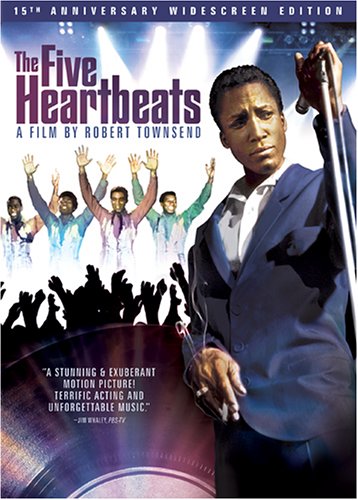
The concept of the musical biopic is nothing new. We have seen many films come and go, some good and some bad. A majority of these musical biopic films try to tell the rising of a group, whether or not the group is a reality, in a manner that will connect with the audience. Robert Townsend’s The Five Heartbeats is a prime example of a film that connects with its audience by taking this concept of the musical biopic just that one step further than we might expect from a film like this.
The Five Hea...tbeats are a nineteen-sixties Motown type singing group that consists of lead singer Eddie (Michael Wright), songwriter ‘Duck’ Matthews (Robert Townsend), ladies’ man J.T. Matthews (Leon), bassman ‘Dresser’ Williams (Harry J. Lennix), and tenor ‘Choirboy’ Stone (Tico Wells). These guys start out by singing on streets corners. Enter big shot manager (Chuck Patterson). Potter nails them a record deal and gets them to perform everywhere leading to super exposure and stardom. Naturally with stardom, comes the rocky road one travels on. The road consists of internal conflict between the band members and producers, drug addiction, racism, and even a close death. This all occurs before the groups untimely end in the mid nineteen-seventies.
Posted in: Disc Reviews by Archive Authors on February 3rd, 2006
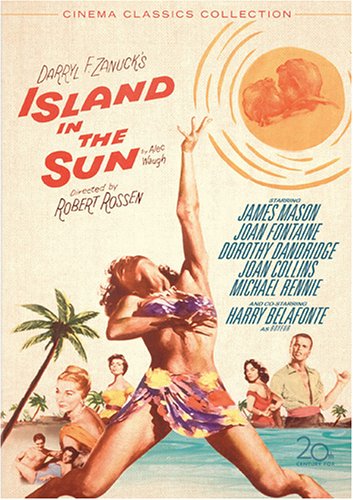
Harry Belafonte stars as an ambitious young politician, who refuses to fear the white majority that holds a foothold over his island home, in Island in the Sun. Along the way, he strikes up a romance with Joan Fontaine. Incidentally, we are supposed to believe Ms. Fontaine’s character is younger than Belafonte’s, despite the fact that she looks ten years older. Dorothy Dandridge also stars as a pharmacy clerk, who falls in love with the white aide to the island’s governor. If this seems like it’s all over the ...lace, that’s because it is. While the film was ahead of its time in factors such as race relations (with the two interracial romances above to speak of), it took a huge leap back when it came to the old standbys of narrative logic and a well-developed plot. But while I clearly did not enjoy this film, I will admit it has its values when viewed in the proper context.
The role of Island in the Sun as a classic is largely dependent on its subject matter and the time period in which it was released. A drama tackling interracial love in 1957 was hardly something that would go unnoticed, or be easily forgotten. However, when dissected by today’s audiences, the film proves to be pretty lightweight. For one, affection between interracial couples was limited to only the occasional embrace. In no way could the couples share an on-screen kiss, even if it were simply a peck on the cheek. Secondly, the story wanders about with no real plot to speak of. It’s as if the filmmakers had some ideas of what they wanted and forged ahead without the security of a well-constructed script – truly disappointing for a motion picture considered so groundbreaking. You can tell this film had Oscar aspirations. It simply didn’t realize how important a story was to achieve such lofty goals. Of course, today such omissions would not disqualify it, so long as it had an Academy-friendly agenda to support. However, there were higher standards in those days, and producer Darryl Zanuck relied on his message – and an admittedly incredible cast – to do all the work for him. The results are mediocre at best.
Posted in: Disc Reviews by David Annandale on February 2nd, 2006
Synopsis
Blair Underwood plays Bob Richardson, who moves from Alabama to California with his brother and parents. The African-Amercian family has high hopes of finding a new land of opportunity, but racism and poverty are just as prevalent here. Richardson becomes a reporter, and he is on the scene for the Watts riots of 1965. Families and friends are torn apart in that violence, but his reporting is a landmark work.
Posted in: Disc Reviews by Gino Sassani on February 1st, 2006
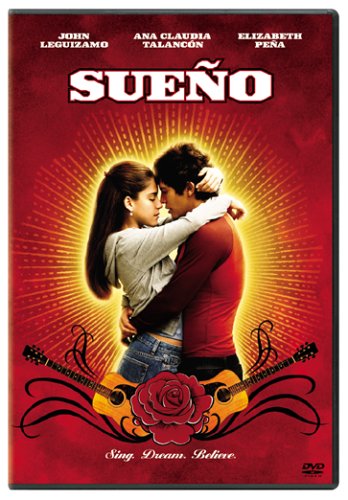
The opening titles of this film are a bit misleading. The font is a colorful, comical display played against animation more suitable for the opening of a Pink Panther film. Instead of a comedy, we are presented with a film likely to appeal to a very limited audience. To the film’s credit, it doesn’t abandon the themes and style it intends to portray in an effort to gain more mass appeal.
Antonio is a young man living in Mexico. His dreams are filled with playing music. Like most young ambitious music...ans he longs for the “big time”. When his mother dies, Antonio travels to America where his uncle has painted a picture of a golden field of dreams which turn out to be a rundown taco stand. We’re not really told if the move to America was under legal circumstances or not. Still, Antonio uses every spare moment to capture his musical career. The chance comes in a Latino band competition. The prize is $10,000 and a chance to perform with a big “mystery musician”. Suddenly we have a film with an abundance of clichés. Throw into the mix a mistaken romantic triangle and the stage is complete. It’s no real surprise how any of this turns out.
Posted in: Disc Reviews by David Annandale on January 31st, 2006
Synopsis
Sarah Miles is the spoiled young daughter of Leo McKern. In the troubled Ireland of 1916, she falls in love with, and marries, middle-aged schoolteacher Robert Mitchum. Their marriage hits troubled waters when she begins a passionate affair with a young English officer, which is a politically delicate move, to say the least.