Drama

Synopsis

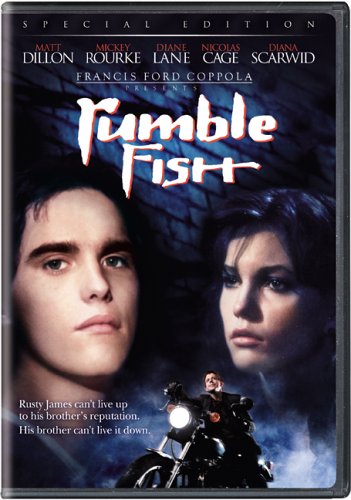
There was a period in Francis Ford Coppola’s (The Godfather, Apocalypse Now) life where he went through a bit of a phase, where he was making films based on relatively obscure material. And he went through another smaller phase in the early ‘80s where he was making films from source material of author S.E. Hinton (The Outsiders). And Rumble Fish was one of those.

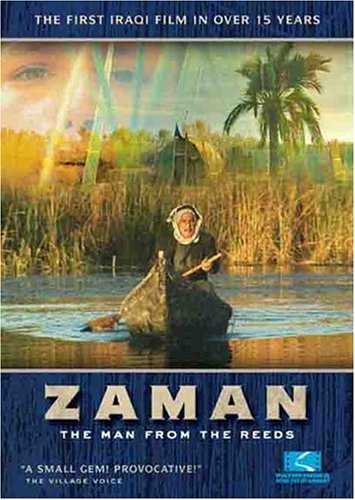
In the light of today's world - all the changes that are going on in Iraq, and with hostilities toward America for our involvement being the naturally derivative baggage - I fully expected a piece of anti-American propaganda with Zaman: The Man from the Reeds. However, I was pleasantly surprised upon the discovery that director Amer Alwan, regardless of his political feelings, has instead told a simple, sweet story of love and sacrifice.

Spirituality does play a part of Zaman's character, but keep in mind before any rushes to judgment that Zaman's family is very poor. He and his wife and their adopted son live in a floating village of huts deep in the marshlands of Iraq. All they have is each other, whatever the land supplies them to live on, and their beliefs. The film implies in its presentation of Zaman's family how important one's faith is, especially when it's the only source of hope. But the film does remain blissfully ambiguous in endorsing any one belief system, and opts instead for telling a general tale of faith and love that can appeal to all audiences, who consider themselves spiritual people. While it lacks depth and complexity, its simple nature is refreshing and recommends at least one viewing.

Ben Cross (D.L. Hughley) is a former teacher with a dark past and some anger issues. He still sleeps with his ex-wife, but she’d rather be elsewhere. When Ben gets a call from an old colleague who asks him to teach at a juvenile prison facility, Ben figures it’s a good stepping stone to get back into teaching.

After meeting his unruly class, Ben realizes that a good way to get the kids focused is for them to express themselves through rap and poetry. One student named Gabriel (Jose Pablo Cantillo), with who... Ben connects, is good enough to go toe-to-toe with Eminem in 8 Mile.

Every now and then, a film comes along that I really think is something special, but for whatever reason, the movie-going public doesn't agree. For me, The Truman Show is one of those films. Maybe it was because this was Jim Carrey's first serious role. Maybe it was because it felt too gimmicky with the popularity of The Real World at the time, and being released around the same time as the similarly-themed film EdTV. Maybe it was because the premise was just a little too far outside of the norma... summer box office fare.

The fact is, the reasons that I like this movie are pretty similar to the reasons that others may not have. Jim Carrey was simply fantastic in this film, and his bold performance proved my theory that it is much more difficult to be a great comedic actor than most people believe. Carrey was handed the unenviable task of being made to carry a film that was about a lot of things at once. This is a film about big government. About secrets and lies, what it means to love someone and discovering who we are as humans. This is a film about limits, about control, and about the media. It's about knowing what to believe, what not to believe, and how to tell the two apart. It is about the importance of being the same person at work, in the home and everywhere in between.

Written by Clayton Self

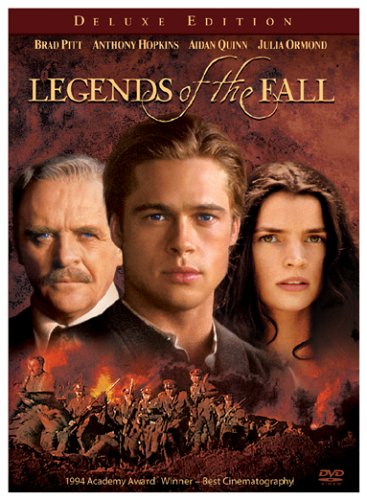
Legends of the Fall is one of those movies that sets its own standards for greatness and actually achieves them. That is very rare in cinema. Legends has a great Director, Edward Zwick, who brought the recent hit The Last Samurai. The performances are amazing, and the cinematography superb. This is a movie that has aged very well since its release in December of 1994. So, here we are eleven years later, with a movie that still captures the heart.

Cinderella Man tells the heartwarming true story of heavyweight fighter James J. Braddock, a man thought to be washed-up, who rises from the ranks of the forgotten to rebuild the life and potential he lost somewhere along the way. It's also one of Ron Howard's finest films, and with a body of work which includes Backdraft, A Beautiful Mind, Apollo 13, Far and Away, and Ransom, this is a fine accomplishment. Unfortunately, this film's success never rose to the level anyone ant...cipated, and there's nothing worse than when a well-crafted piece such as this falls victim to bad press -- especially when said bad press has almost nothing to do with the film. Firstly, Cinderella Man suffered from the now famous idiotic outburst of its star Russell Crowe. Secondly, there was the debacle over Howard's portrayal of Max Baer, and how that portrayal affected and offended Baer's still-living son (the former Jethro Bodine of TV's Beverly Hillbillies, and successful film producer). Finally -- and perhaps most important of all -- was the lackluster marketing campaign, which made the film look so dull even I was ready to wait for the video. These three factors added together to cause the film an almost embarrassing performance for all there was to recommend it (two Oscar winners in the starring roles, an Oscar winner behind the camera, another Oscar contender in a supporting role -- Paul Giamatti -- and perhaps one of the most inspirational tales in American history).

At one time, James Braddock was a contender. He had the world on a string, a woman who loved him, and several adoring children. But somewhere along the way -- an injury here, a few decision losses there -- his career and his world took a nosedive. After injuring his hand and coasting through a boring fight, he loses his boxing license, and consequently, his meal ticket. At one point, the sky was the limit. But now, left to a dark and desperate world, he struggles to keep the heat on during a brutally encroaching New York winter. He's forced to send his children away just to save their lives from the harsh weather. And at his lowest point, he succumbs to the very thing he stands against -- welfare. After finding himself all but forced to sign up for social assistance, he becomes determined to turn it all around. All he needs is the opportunity, which comes in a supposedly one-time shot against a top heavyweight contender. No one expects Braddock to win, but when he does, it sets in motion a chain of events, which position him into a very real chance for a shot at the deadly world heavyweight champion Max Baer, who was responsible for the deaths of more than one man in his storied career. Whether Braddock becomes one of those victims, I will leave for the uninitiated to discover. But the enjoyment of Cinderella Man depends not on winning or losing, but on the inspiration of Braddock's overwhelming comeback. He rose from the proverbial canvas at the same time as a nation did, and it's not entirely implausible that he lended a hand -- however small -- in getting this country back on its feet.

Synopsis

Robert Redford narrates, but his on-screen avatar is Craig Sheffer. He and Brad Pitt are the sons of Presbyterian minister Tom Skerritt. The sons react to their stern father’s teachings in different ways. Sheffer is the good boy who becomes the scholar, while Pitt is the hell-raising journalist with the bad gambling debts. But both brothers do inherit their father’s love of fly fishing, and that is the act that bonds the three men together.

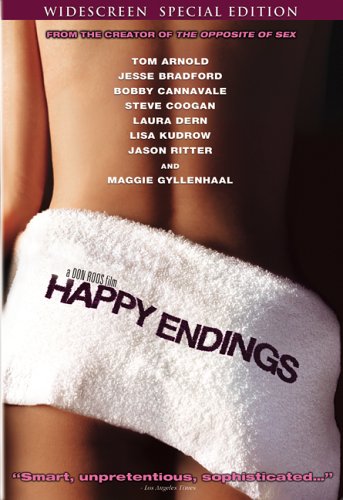
Happy Endings is one of those films that makes you rethink being a DVD reviewer. I sat through this excursion into pretentious observations about the way the world is, and the way "average people" are, and thought, "Yeah, sure, this is a slice-of-life. I bet." Oh, I don't mean to say the characters' lives are way too screwed up to be believable. Lord knows, under every ordinary average guy... or gal... there lurks a whole slew of skeletons banging their bony fists against the inside of the closet door. But the extent to which these screwed-up folks bang into one another like aimless bumper cars at a county fair makes one say, "Enough already."

Lisa Kudrow heads a weak cast, despite name recognition and the merits I'm sure each of the performers possess. With other capable stars such as Laura Dern, Maggie Gyllenhall, Tom Arnold, and Jason Ritter attached, one would think acting is the least of the film's worries. The problem with that? Everyone gets so caught up in the hipness of it all they come across with obnoxious self-indulgence smeared over their faces like the feces permanently plastered to the walls of my old college dorm's public restroom. And it's as if writer-director Don Roos wants to remove it from that wall, but he feels too intimidated to cross the ex-Phoebe Buffay and Mr. Roseanne Barr.

Synopsis

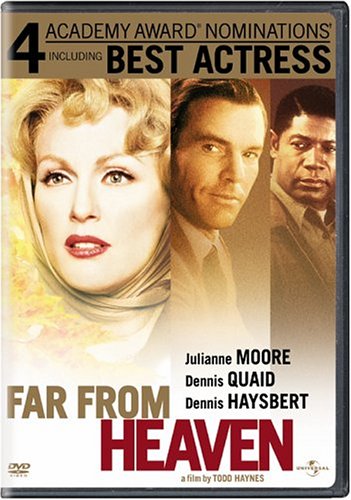
I haven’t seen The Hours. And I haven’t seen Chicago. And while all the Oscar talk seemed to revolve around either Kidman or Zellweger, after seeing Far From Heaven, I’ve gotta think that the wrong woman got the brass ring. Or gold little guy, whatever. Julianne Moore (who was also nominated in The Hours) does an outstanding job in this movie, set in 1957 Hartford. Moore plays Kathy Whitaker, the wife of a man (Dennis Quaid, Innerspace) who she surprises at work w...th dinner one night. The tables are turned when she discovers him in the arms (and mouth) of another man. What sets this movie apart from other films which are set in the 50’s or 60’s is the amazing grasp that writer-director Todd Haynes (Velvet Goldmine) has on the times in terms of his story. The word "homosexuality" isn’t uttered for some time after Kathy walks in on Frank. Frank (Quaid) seeks therapy after consulting his wife, and he talks of his "problem" as if he were talking about alcoholism. Moore’s friend Eleanor (Patricia Clarkson, The Green Mile) talks about another person being "light in the loafers." Eventually, Moore finds comfort when interacting with her gardener, Raymond (Dennis Haysbert, 24), who is widowed, with a daughter. The looks and reactions she receives from the townspeople when it comes to her talking with, even touching Raymond, are astonishing, almost ridiculous. Frank even voices his displeasure at this in a jaw-dropping scene. All the while, Kathy tries to maintain the good appearance of her household, holding a dinner party for guests, keeping Frank’s behavior a secret to the public, and later, almost accepts Frank’s homosexuality in order not to disrupt the life she’s become accustomed to. After the dinner party, Frank hits Kathy, and Eleanor comes over the next day, to find the bruise on Kathy, and Kathy’s reticence in not admitting the fact that Frank hit her, disappoints Eleanor, and to a lesser extent, Kathy. There is a scene where Kathy and Frank are in Miami, and we see Kathy at the swimming pool, wearing rose colored sunglasses. Those sunglasses sum up Kathy’s existence, doing what she can to keep up her good community standing, despite robbing herself of the pleasing times she has with Raymond.

Synopsis

On its surface, Almost You is potentially interesting. Considering the mid-‘80s production, you have Griffin Dunne, about to appear in Scorsese’s After Hours, but had already appeared in An American Werewolf in London. In this film, he is married to Brooke Adams, a.k.a. Mrs. Tony Shalhoub (Monk), but before that, had appeared in Terrence Malick’s Days of Heaven, and had her own experiences in horror, appearing in The Dead Zone. As husband and wife, Dunne’s ...haracter Alex feels rapidly disenchanted with their marriage, and says so just before they are about to leave on a trip to Erica’s (Adams) parents.