Genre

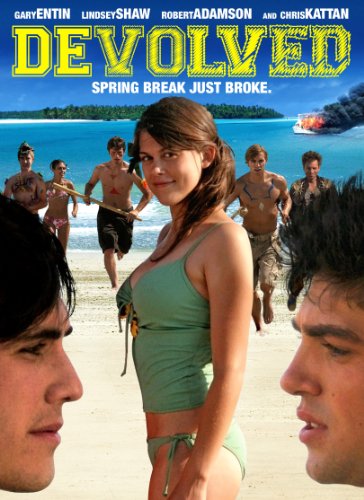
A Spring Break whale-watching cruise goes off-course and then blows up, thanks to the stupidity of the popular kids, and two groups of high schoolers find themselves washed up on a deserted island. The aforementioned populars, led by the egomaniacle The Rog (Robert Adamson) immediately establish their dominance, squandering supplies and tormenting the unpopulars. These unfortunates turn to reluctant leader Flynn (Gary Entin), who begins planning a revolution. Pulled between the two groups is Peggy (Lindsey Shaw), cheerleader and girlfriend to Rog who nonetheless has too much intelligence and self-respect to remain satisfied with either role.

The feature-length directorial debut of Severin's own John Cregan sheds new light on that company's interest in 80s teen comedies. But Cregan's touchstones go deeper than that. Obviously, the proceedings are very Lord of the Flies, but there is also a hint of Massacre at Central High (1976) with the idea that deposing one tyrant might simply lead to the rise of another. Devolved doesn't go all the way in plumbing those depths of darkness, though. It is, first and foremost, a comedic satire, and its touch is quite assured. The writing is sharp, and the action is frequently interrupted by a reality-TV-style narrator who portentously comments on the events, occasionally providing helpful animated diagrams.

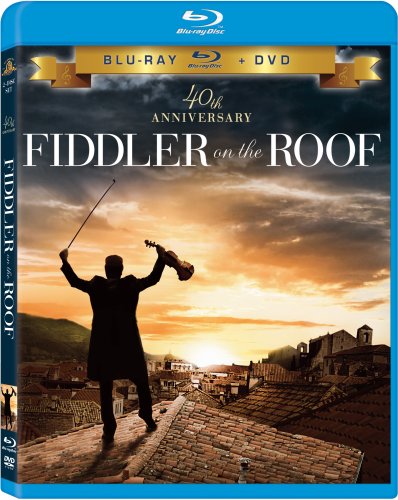
Adapted from the hit stage musical, Norman Jewison’s film version of Fiddler on the Roof has established itself as a classic over and over again since its release in 1971.

“He loves her. Love, it’s a new style… On the other hand, our old ways were once new, weren’t they?” I’ll hardly be the first to write it, but the reason Fiddler on the Roof, a story about Jewish people and their culture, is so popular, is that its themes have universal appeal. In fact, in a way it hardly matters that the characters are Jewish. As we learn from a famous anecdote, when the first Japanese production of the stage musical opened, the show’s creators traveled to Japan to meet the producer. He said to them, “I don’t understand, I don’t know how this piece can work so well in New York. It’s so Japanese!”

"Jonathan Brisby was killed today. It is four years since our departure from NIMH, and our world is changing. We can not stay here much longer. Jonathan was a dear friend. I am lost in knowing how to deal with his widow. She knows nothing of us or the plan."

When Don Bluth left Walt Disney, he led an exodus of some of the studio's top talent. They were becoming disenchanted with the product Disney was producing at the time, and it is generally accepted that this was the dark ages of the studio. The group of animators joined Bluth and formed their own company, and the first film to come out of that collaboration was The Secret Of NIMH.

Rory Gallagher was somewhat of an enigma in the British music scene. While he never did have the breakout hit or career that he worked so hard to achieve, he has managed to develop quite a cult following over his troubled career. His roots went deep into the British blues scene where he first received some notice in the band Taste. But Rory was a force of nature and couldn't be contained in the local scene. He grew up in the small town of Cork in Ireland and managed to fight his way onto a world stage by the time he reached his 20's. His music was a unique blend of blues and hard-edge rock and roll. His voice wasn't ever described as smooth. He belted his words out in screams and shrieks. He was all about the energy, connecting with the audience live far more effectively than he did through his recordings. He was the kind of guitarist that flew across a fret board like a supersonic jet flying over clear calm skies.

Rory Gallagher died of liver failure in 1995. He lived hard, and it obviously took its toll on his heath. He didn't really get into the drug scene, but he could put away the ale. He was a man forever in motion. This concert/documentary from Eagle Rock is a perfect window into the lifestyle and music that was Rory Gallagher.

Dennis Mitchell always means well when he wants to help out his parents, or good ol' Mr. Wilson, but he also just wants to have a good time. ¼ helpful young lad but ¾ mischief, Dennis made the leap from the beloved comic strip by Hank Ketchum to the small screen for four seasons.

Compensating for when ABC took over Leave it to Beaver from CBS, Dennis the Menace was the attempt to grab some audience back for CBS. Jay North is the titular Dennis, and does well to carry the spark of this character's “menacing” namesake. Each episode sees Dennis with the best of intentions, but always managing to create more damage than his help is worth. Along for the ride are his best friends Tommy and Joey (the latter seeming to be a strange mute boy), his rival Margaret, his parents played by Herbert Anderson and Gloria (who could not look closer to the original characters) and Joseph Kearns as the ever-frustrated Mr. Wilson.

Roger Corman has never let an exploitable opportunity slip by. A case in point is what we have here. In the wake of the first two Godfather films came this rise-and-fall tale. And because the Godfather movies were handsome, expensive and classy, then this Corman-produced effort is also a nice-looking piece of cinema, even if the budget-conscious element shows through with the use of leftover footage from The St. Valentine's Day Massacre.

Ben Gazzara plays Al Capone, moving up from street-smart hood to mob kingpin through cunning and violence. His mentor is Johnn Torrio (Harry Guardino), who works to unite the various ethnic Chicago gangs, but lacks the bloodthirstiness necessary to impose his will. Capone has the right ruthlessness, and betrays Torrio, taking his place. But Capone has his own right-hand man with high ambitions: Frank Nitti (Sylvester Stallone).

A stern, hectoring narrator laments the state of the Young People of Today's Modern World, and ascribes their terminal amorality to their having come of age during the World War Two. Having set the stage, he then withdraws until the end, that we might draw the proper moral conclusions from a trio of tales (inspired, loosely, by actual cases) that show the terrible depths to which the Young People of Today's Modern World have plunged.

The first is set in France, where a group of teens head off for a day in the countryside. Their goal is to murder one of their own, believing that a) he is about to betray them by taking off to Canada; and b) that all his fanciful tales are true, and that he is fabulously rich. In the second story, a young man from a good home in Rome is involved, for no very good reason beyond selfishness, with cigarette smugglers. Barely escaping from a police raid, he guns one man down and is badly injured himself. We then follow him through the day as he slowly stumbles toward his destiny. The last story takes us to England, where a fellow, utterly convinced of his own superiority, courts a newspaper's interest first by letting a reporter know about a body he has found, and later by boasting he killed the woman himself, believing that his crime is so perfect that he can confess to the police and then recant without suffering any particular inconvenience.

Since this week it appears I am taking on a U.K. flavor for my reviews, I decided to throw one more British drama review ripped straight from their local tele programs. This one involves a lawyer who turns into a judge and dons the infamous powdered wig. To my shock, it isn't even labeled as a comedy, so why am I already laughing? Well, before I go mad as a hatter, let's proceed forth with The Guilty. We will see if this judge is a cheeky bugger or a wanker. I'm guessing on the latter.

Steven Vey (played by Michael Kitchen)is quite the lawyer in England. He wins case after case and he is surely a lock to be the youngest person to ever be asked to be a judge. One night after a big win, he chats up a conversation with his new secretary, Nicky (played by Caroline Catz). They end up having dinner together and go back to her place for a midnight cup of joe. One tiny fact might be important at this juncture, Mr. Vey is very married. That cheeky bugger.

Saying there is an “elephant in the room” often means someone is ignoring some enormously obvious truth. To say that Patrice O'Neal can be ignored is foolish...and to say that he speaks the truth...well, you'd have to be pretty jaded to take this man seriously when he flips one PC view of the relationships between men and women on their heads.

The less enlightened viewers might write off O'Neal as misogynist as he explains “mooshing” and his advocacy for a “Harassment Day” (where office workers can make sexual passes at their female coworkers without fear of reprimand) but that would be like dismissing Lenny Bruce as racist for telling jokes about races. Of course, O'Neal is no Lenny Bruce, but the point stands that everything he says is done so with tongue firmly placed in his cheek, or purely as satire.

"You can't keep a good dog down."

Baby here again. Yeah, that's right. I'm the German Shepherd/Chow mix that runs security here at Upcomingdiscs. I make sure only the best movies get through my complicated security system. And that spells F A N G S. Okay, I made that last part up. I try to keep them all out, but let's not talk about that right now.